Associate Professor, PhD, group leader in Cellular & Molecular Pediatrics, Comparative Pediatrics & Nutrition, Uni.Copenhagen. 🧬👨🔬🌈⚽️. Opinions are my own.
Really interesting paper in Nature Immunology today (Broquet et al.)
They found that people who recover from sepsis have a reduced cancer risk in the years that follow (vs. matched people with non-septic infections):
This was recapitulated in a controlled setting in mice - mice that recover from sepsis suppress tumours better than uninfected mice:
The mechanism depends on immune reprogramming in sepsis: macrophages trained during sepsis recruit and establish tissue-resident T cells, which go on to perform long-term cancer surveillance
There's a lot more detail in the paper: https://t.co/EaOShVQxua
Do not use @BioRender. Do not let abusive practices spread!
There is an alternative! Use & Contribute to @simonduerr 's open Bioicons! https://t.co/kNc7l50oft
Illustrations are free to use and reuse, and they are available in SVG vector and PNG format without fees!
🚨New paper alert! Restrained memory CD8+ T cell responses favors viral persistence and elevated IgG responses in patients with severe #LongCOVID https://t.co/ZK9kxBcVJ2 a thread 1/6.
A question I've had since I began studying the #breastmilk#microbiome: what to do about sterilized donor milk?
New study from @lisafstinson et al explores "milk microbiome transplantation" - using a bit of mom's milk to colonize donor milk.
Super cool!
https://t.co/F65pJOm86k
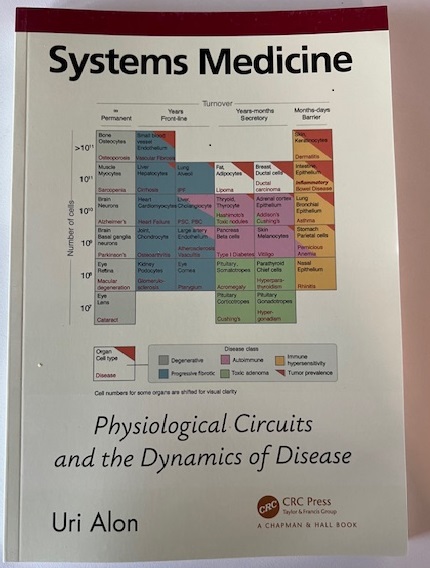
Why do we get certain diseases whereas others do not exist?
This new book builds a foundation for systems medicine. Starting from basic laws, it derives why hormone, immune and aging circuits are built the way the are, culminating in a periodic table of diseases.
…will further examine how nutrients and BCG vaccines confer protective effects against neonatal sepsis in preterm piglets, used as the model of preterm infants (the population with highest risks of infection and sepsis).
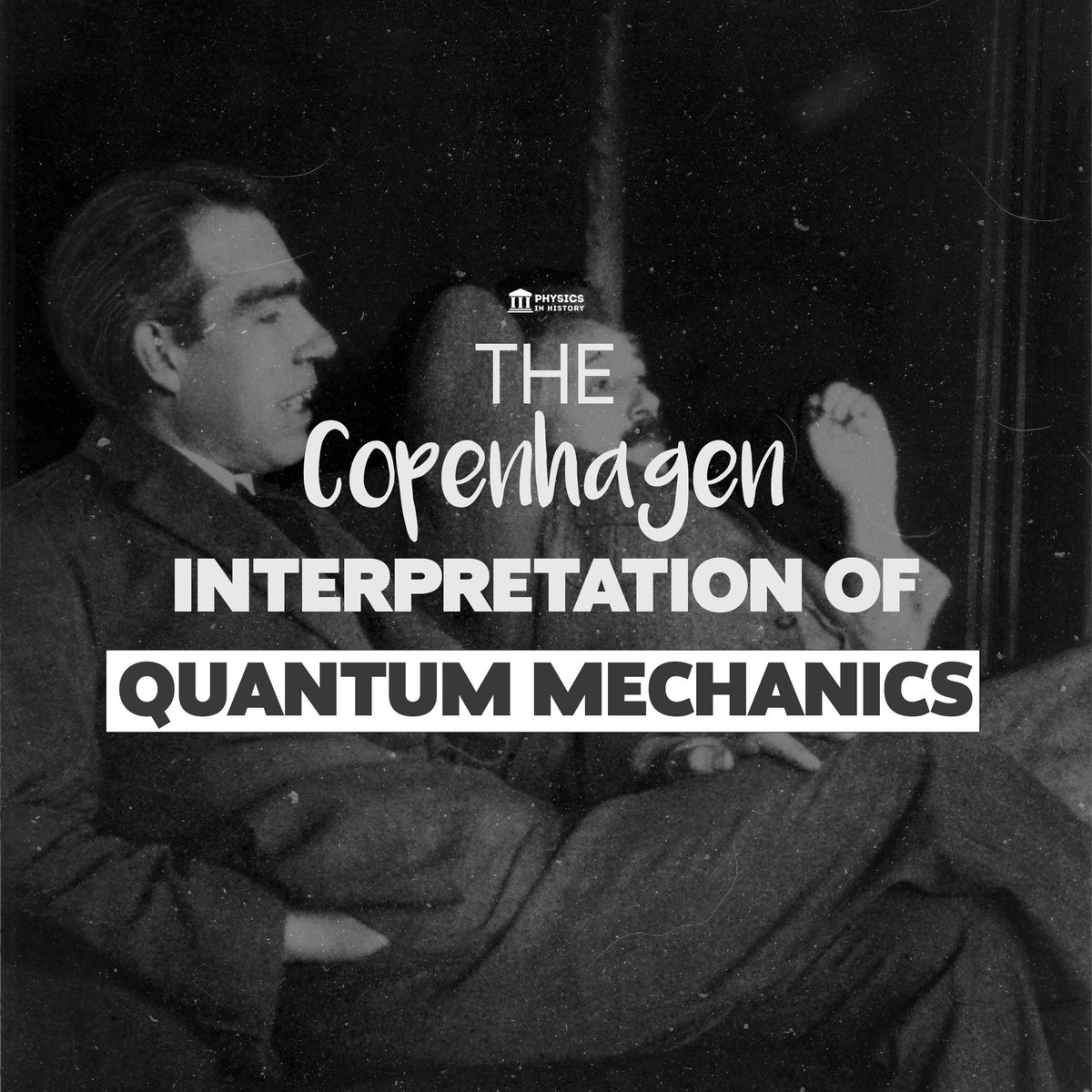
The Copenhagen interpretation of quantum physics is one of the most influential and controversial views on the nature of reality. In this thread, I will explain what it is, how it developed, and why it matters.
A thread ✍️
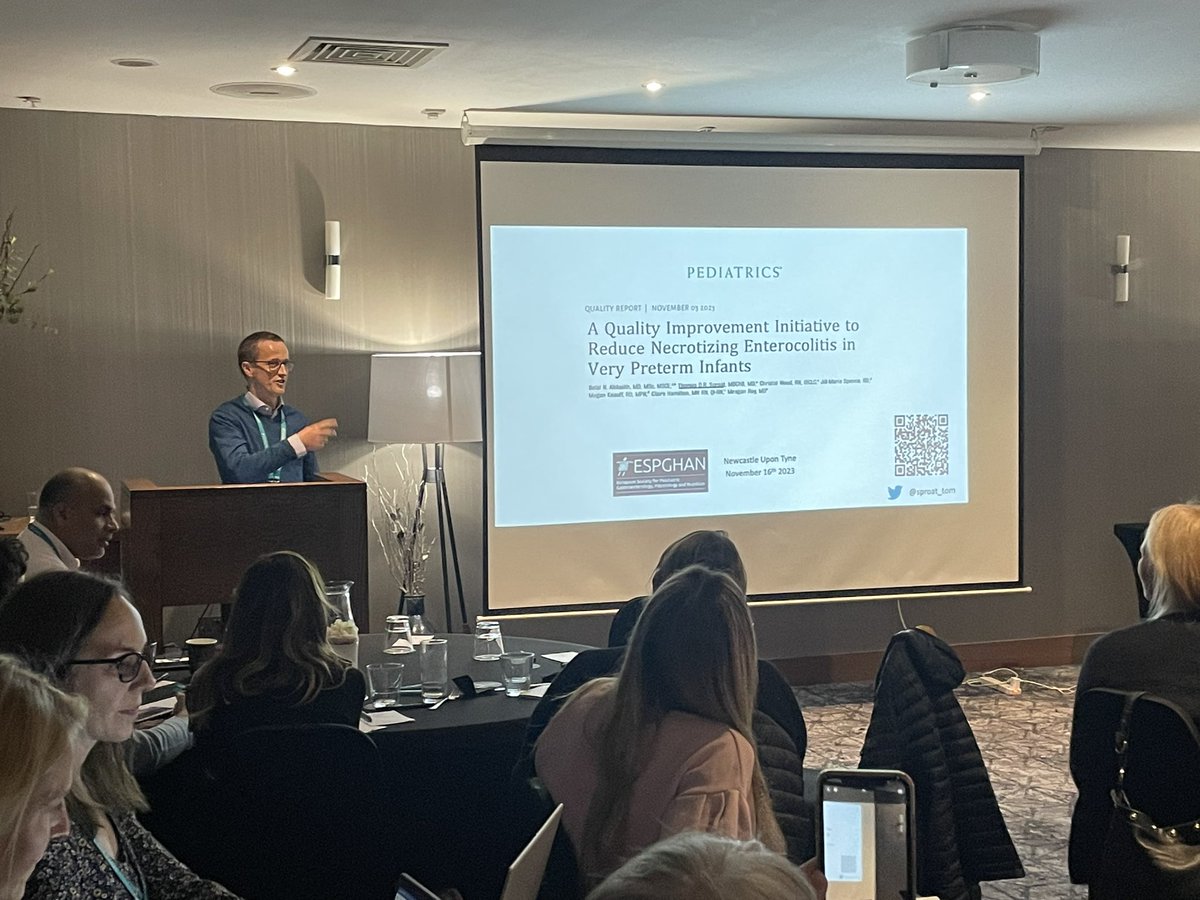
So many fantastic and thought provoking talks from a diverse faculty with some really engaging discussions!
The @ESPGHANSociety NEC conference has been a real eye opener for a basic scientist, like me!
#weareESPGHAN
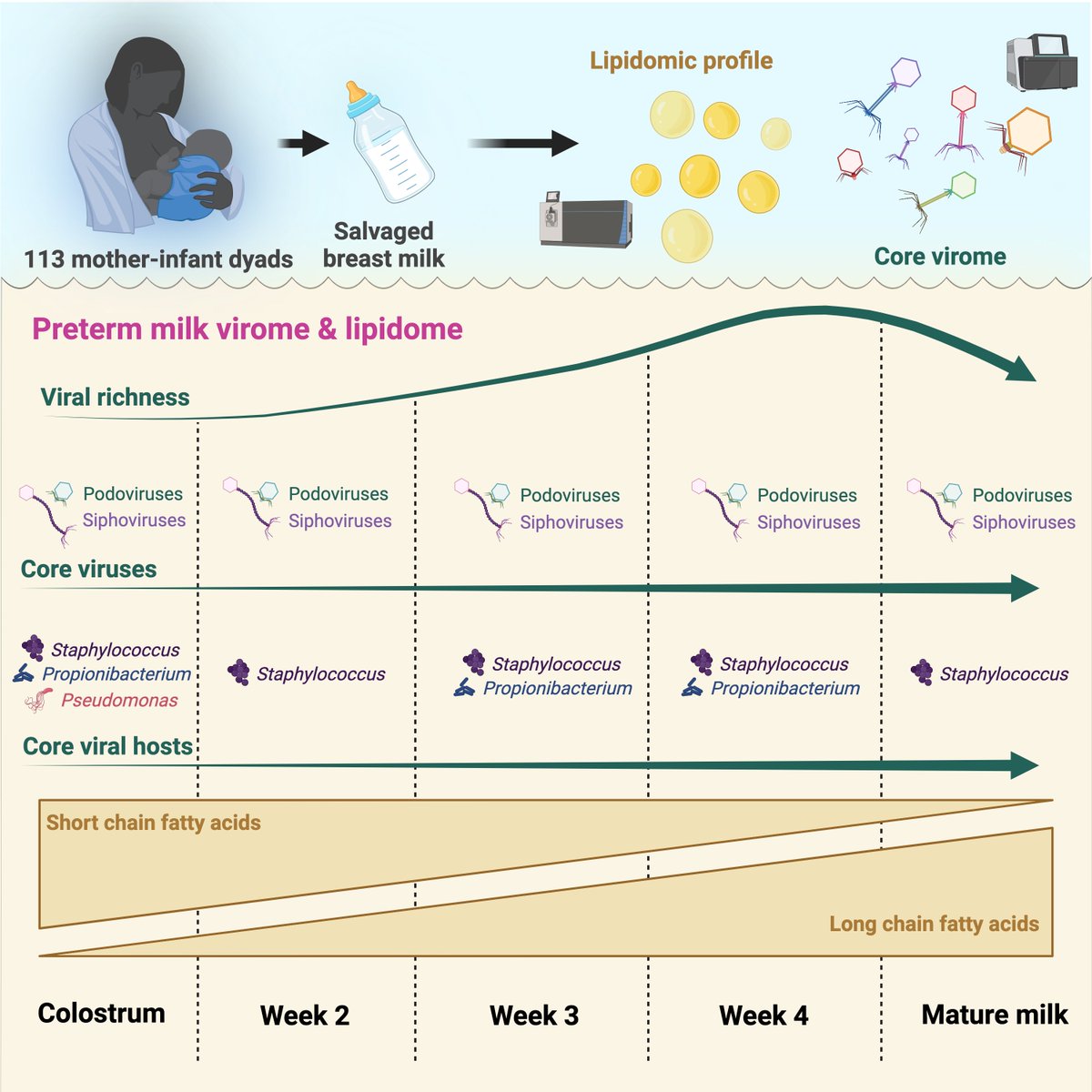
New research paper from the team at Northumbria/Newcastle Universities in Cell Reports. It studies the development of a core community of dsDNA phages in preterm infant mothers milk over the early weeks of lactation and association with milk lipids. https://t.co/fuOXfs65tE
Are you and your co-authors editing the abstract of your paper again and again before submitting to get it just perfect?
👇 Use this template instead and save yourself hoursss!
A thread. 🧵
If you are a corresponding author affiliated with a participating institution, the Royal Danish Library agreement means you can publish your article open access in Springer Nature's portfolio of hybrid journals with fees covered. Find out more about your eligibility.
A mind-blowing paper has come out today in @Nature
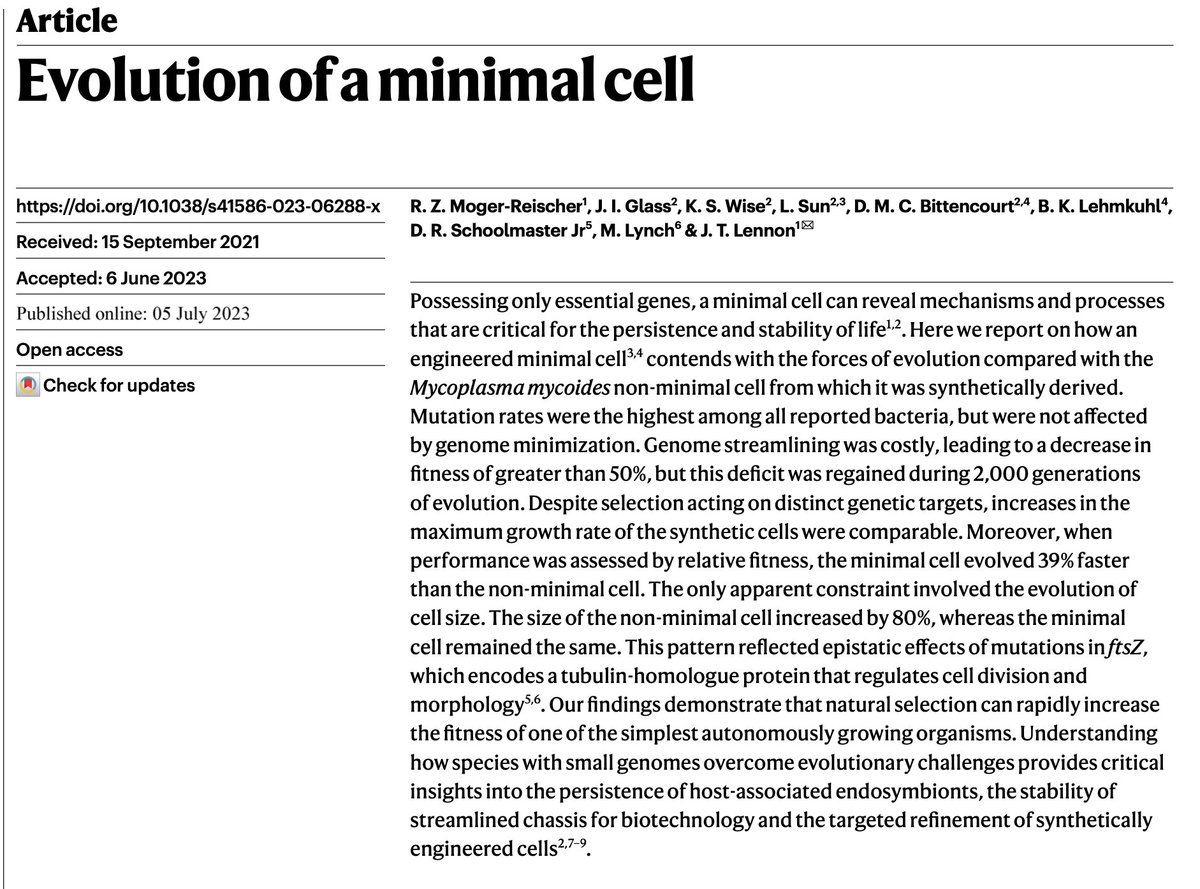
In 2016, JC Venter Institute scientists trimmed a bacterial genome to its barest minimum required for life to synthesize what they called a "minimal genome" (https://t.co/Rk8oZJ0bUj).
Today, a group of scientists from Indiana University reports how that minimal genome evolved over 2000 generations in comparison to the non-minimal genome.
The authors found that even when you reduce a bacterial genome to its absolute minimum where every nucleotide matters, the genome undergoes mutational events generation after generation as much as the non-minimal genome. One simply cannot stop the evolution.
Just over 300 days of evolution (equivalent to 40,000 years in humans) the minimal cell has gained everything it lacked in fitness on day one in comparison to the non-minimal cell.
When comparing the evolved traits between the minimal and non-minimal cells, the scientists found something striking. The evolutionary process increased the cell size of non-minimal cells but not that of the minimal cell. But that is not the striking part.
The scientists were able to identify the key mutation that resulted in cell size evolution. And it turned out that the mutation that helped the non-minimal cells to grow bigger is the same that helped the minimal cells to stay smaller. Growing bigger had a survival advantage for non-minimal cells and not growing bigger had a survival advantage for minimal cells. So, the mutation had a context-dependent effect. This just demonstrates that the evolutionary effects on traits have no absolute direction. All that matter is what is beneficial for the organism's survival.
The conclusion of the paper is metaphorically a quote from the Jurassic Park movie:
“Listen, if there’s one thing the history of evolution has taught us is that life will not be contained. Life breaks free. It expands to new territories, and it crashes through barriers painfully, maybe even dangerously, but . . . life finds a way". (https://t.co/UlxRlb86CT)
https://t.co/zA9OAqSoAu
We are recruiting a PhD student to work with us within Molecular Lipid Metabolism. Deadline for applications August 10. Please share with relevant candidates: https://t.co/qtiQTUHenM
Excited to share our work using phages to identify bacterial pathogens in sepsis. Because phages are highly specific for their bacterial hosts, they offer strain-level resolution that could enhance cell free DNA diagnostics
https://t.co/J6GKwNeDVh
Back in early 2020 there were no COVID 19 vaccines so we joined an international effort led by
@nigeltwitt to investigate whether BCG could provide some non-specific protection against COVID19. The results of this RCT are out today in the New England Journal of Medicine.
There is a new AI search engine ideal for researchers: Perplexity.
It's like a (factual!) ChatGPT mixed with Google Scholar.
Get references and insights at the same time:
👇