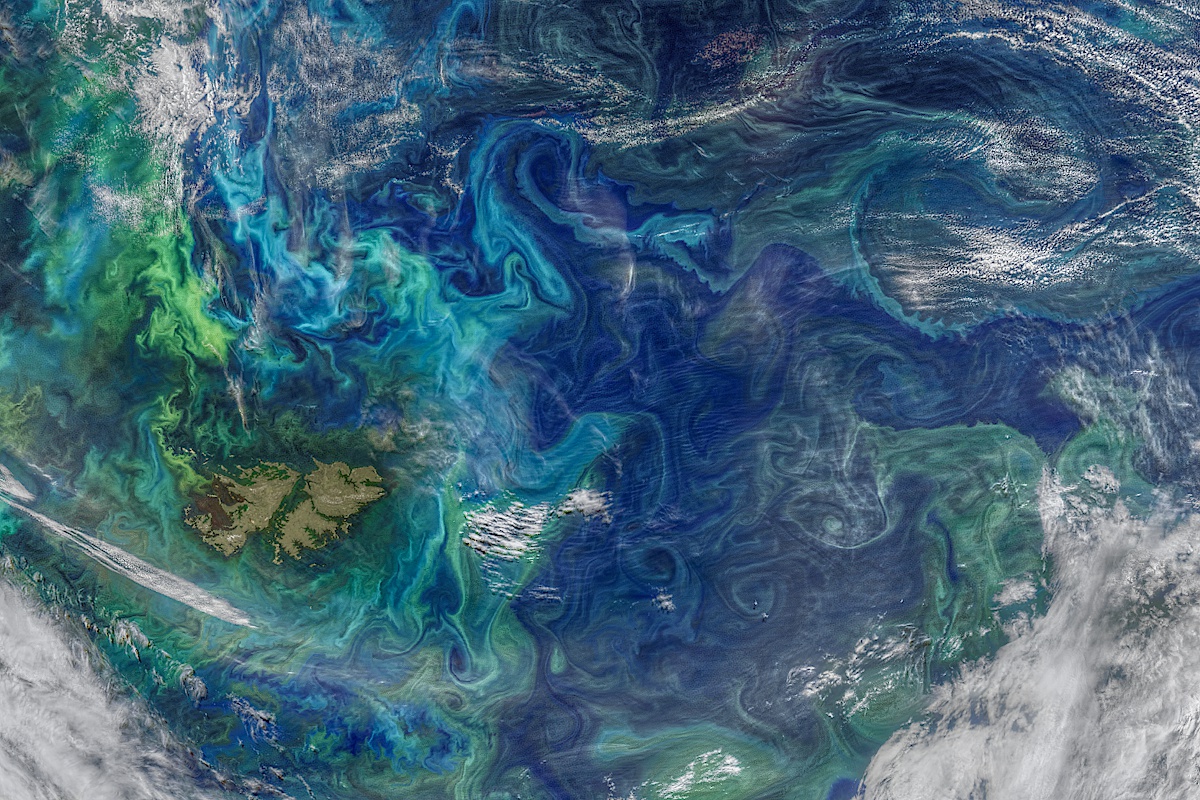
@JuliusBusecke @wcrpcmip or Fig. 2 of Hewitt, H., Fox-Kemper, B., Pearson, B., Roberts, M. & Klocke, D. (2022). The small scales of the ocean may hold the key to surprises. Nature Climate Change, 12(6), 496–499. https://t.co/Q3GTiK6ozw
@JuliusBusecke @wcrpcmip How about Figure 4 of Haidvogel, D. B., Curchitser, E. N., Danilov, S. & Fox-Kemper, B. (2017). Numerical modelling in a multiscale ocean. Journal of Marine Research, 75(6), 683–725. https://t.co/sjVYxO2PJh
Using data from 30+ years of satellite observations, researchers predict global sea levels will rise 20 centimeters by 2050.
The science is clear: climate change is already impacting our communities. NASA is doing its part to help protect planet Earth. https://t.co/NMLLhJtYo7
Victor Zlotnicki of @NASAJPL describes his upbringing in Argentina, joint study of marine geophysics @eapsMIT and @WHOI, and a research career enabled by satellites and imaging radar to study ocean physics and ice melt dynamics on a warming planet Earth
https://t.co/dCDjdbjhAL
***Opportunity to work for NASA at @NASAJPL of @Caltech***
We are looking for a candidate to study the general interactions (broadly defined) between climate and solid Earth. Drop me a line if you are interested.
Please spread the word!
https://t.co/I6A5xVr6V4
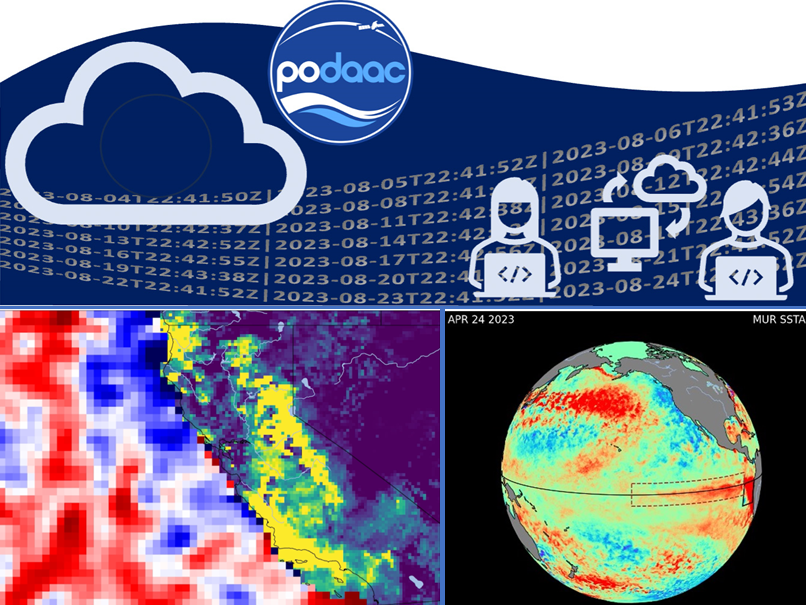
Are you interested in #CloudComputing ? Join us on Wednesday, August 23 at 2PM EDT (UTC-4) to learn how to set up and use cloud services to run analyses on physical oceanography data at NASA's #PODAAC.
#oceanography#OpenScience@NASAOcean
Register: https://t.co/hiP2Sa0uLU
July 2023 was the hottest month on record, according to our global temperature analysis. Overall, July was 0.43°F (0.24°C) warmer than any other July in @NASAEarth's record, and it's likely due to human activity. Details: https://t.co/2DTIfL8S1Q
Sea levels around the world are rising – and at an accelerating rate – as a result of human-caused global warming. 🌊
Global sea levels have risen about 10 centimeters from 1993 to 2022, as seen in this @NASAViz animation.
Get the @NASAClimate data: https://t.co/GcNKPl66sK
There’s space for everyone this #PrideMonth, and we’re celebrating the LGBTQI+ employees who help us reach for the stars, examine humanity’s place in the universe, and study our home planet: https://t.co/kyxdrH1Ecs
Peep the new cover photo 👀 🌊
Today is the start of #NationalOceanMonth!
Throughout June we’ll be celebrating Earth’s stunning and dynamic ocean and sharing how @nasa studies the seas.
#Oceanography#AGUpubs : The Atlantic Meridional Overturning Circulation at 35°N From Deep Moorings, Floats, and Satellite Altimeter
https://t.co/TN9pUE59Vk
It's here! 🤩
SWOT has sent back the first taste of the detailed data it will provide about Earth's surface water. The joint @NASA -@CNES mission launched into orbit last December. More on this early data: https://t.co/CZS8Bgseou
A whole new view 🤩 🌊
First taste from the SWOT mission shows Earth’s water in higher definition than ever before. The spatial resolution of SWOT ocean measurements is 10 times greater than sea surface height data gathered over the same area by seven other satellites combined.
New from the @NASA Sea Level Change Team (N-SLCT)! Phil Thompson (U. of Hawaii) has built a flooding analysis tool along with his N-SLCT team led by @chrispiecuch and with @DangendorfSonke, @TWahl1981 and others. 1/5 https://t.co/pvmuliC5pC
Did you miss the first OSD mini-workshop "Adjoint models, uncertainty quantification, & observing system design" with @NoraLoose?
Find the recording at https://t.co/vkPEhoLnau
Watch this space for the next webinar in the OSD Mini-Workshop Series 2023: https://t.co/8gHEEEj3gU
Why is sea level rising?
Global sea levels are rising as a result of human-caused global warming, with recent rates being unprecedented over the past 2,500-plus years. @NASAJPL’s Ben Hamlington explains how our warming planet is causing sea level rise. https://t.co/0mqsEXrGW2