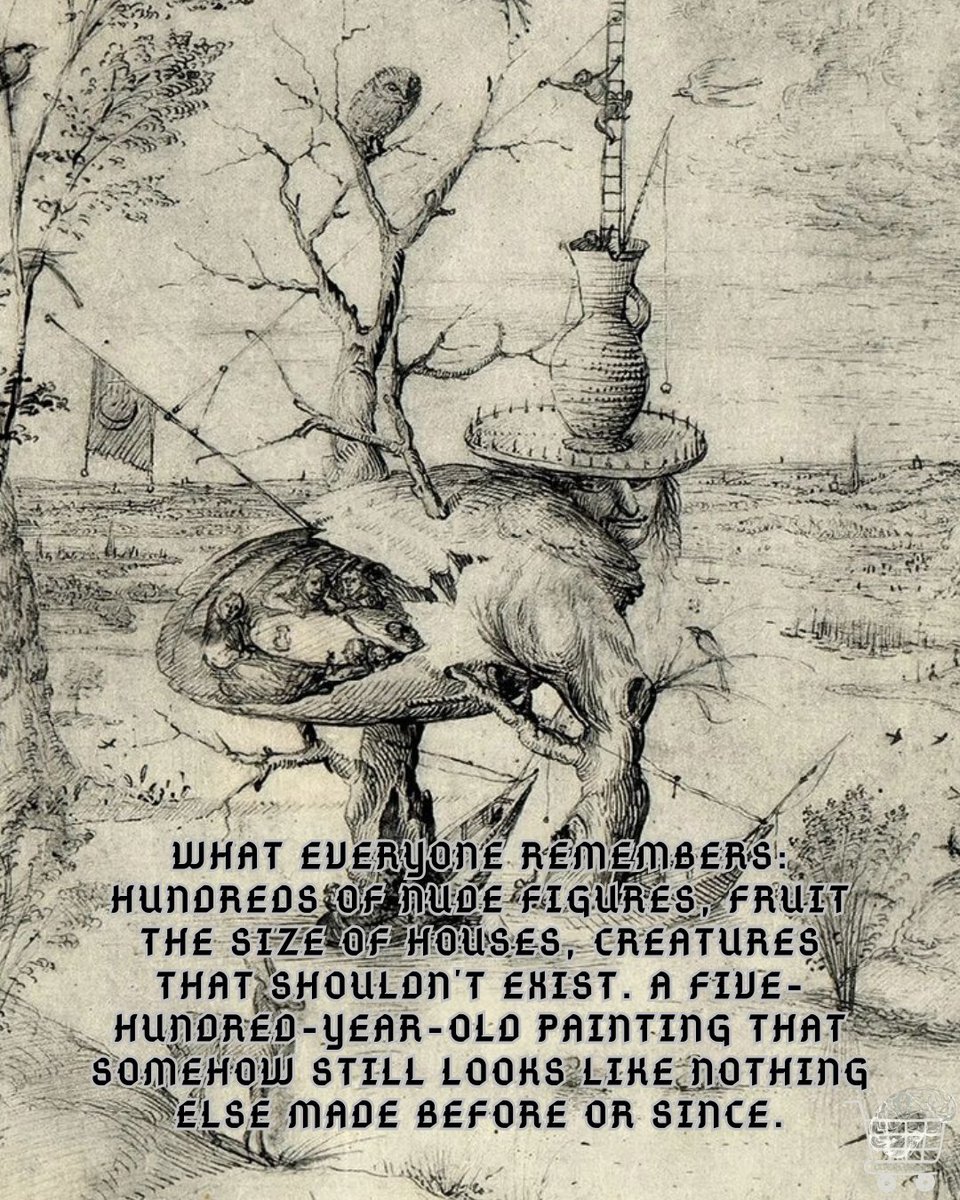
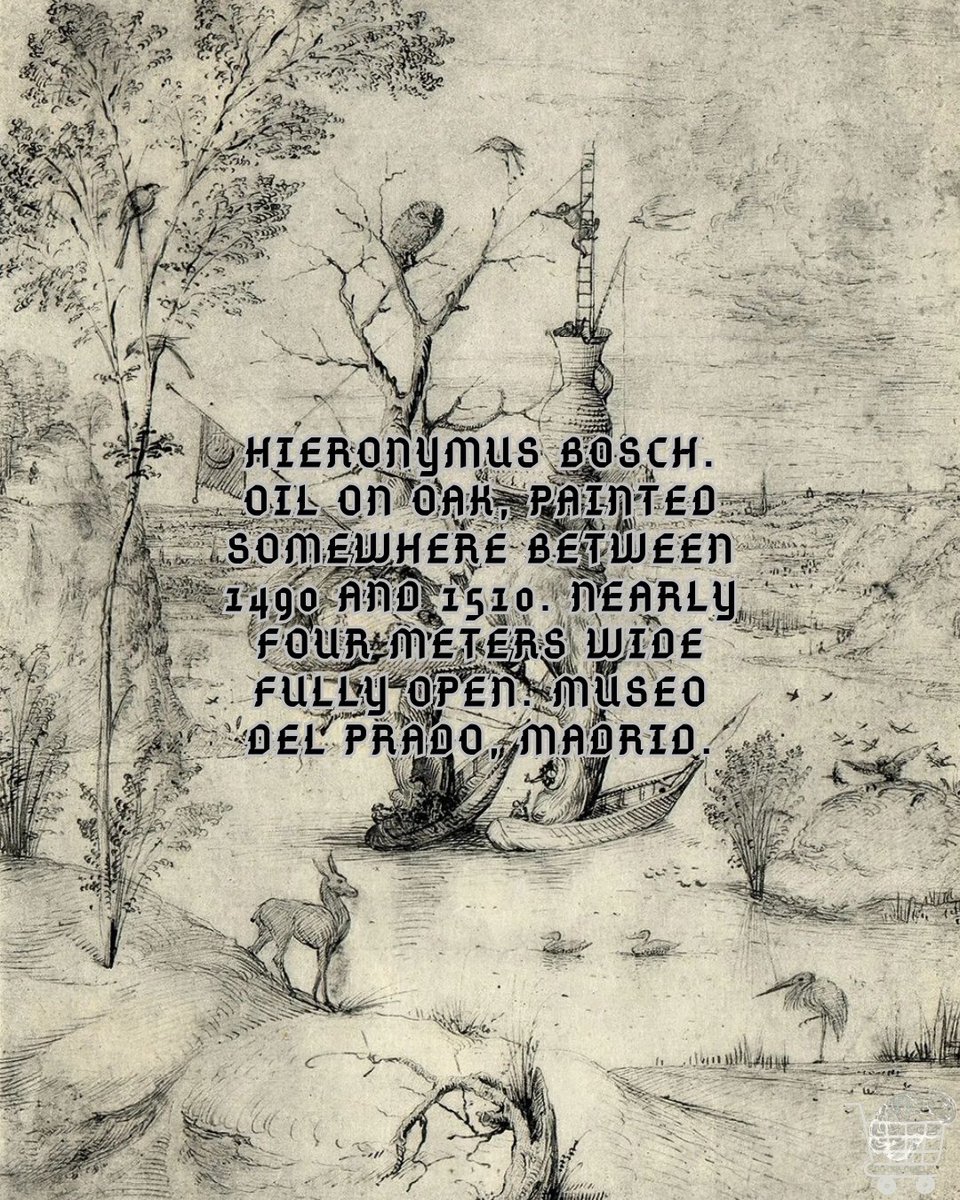
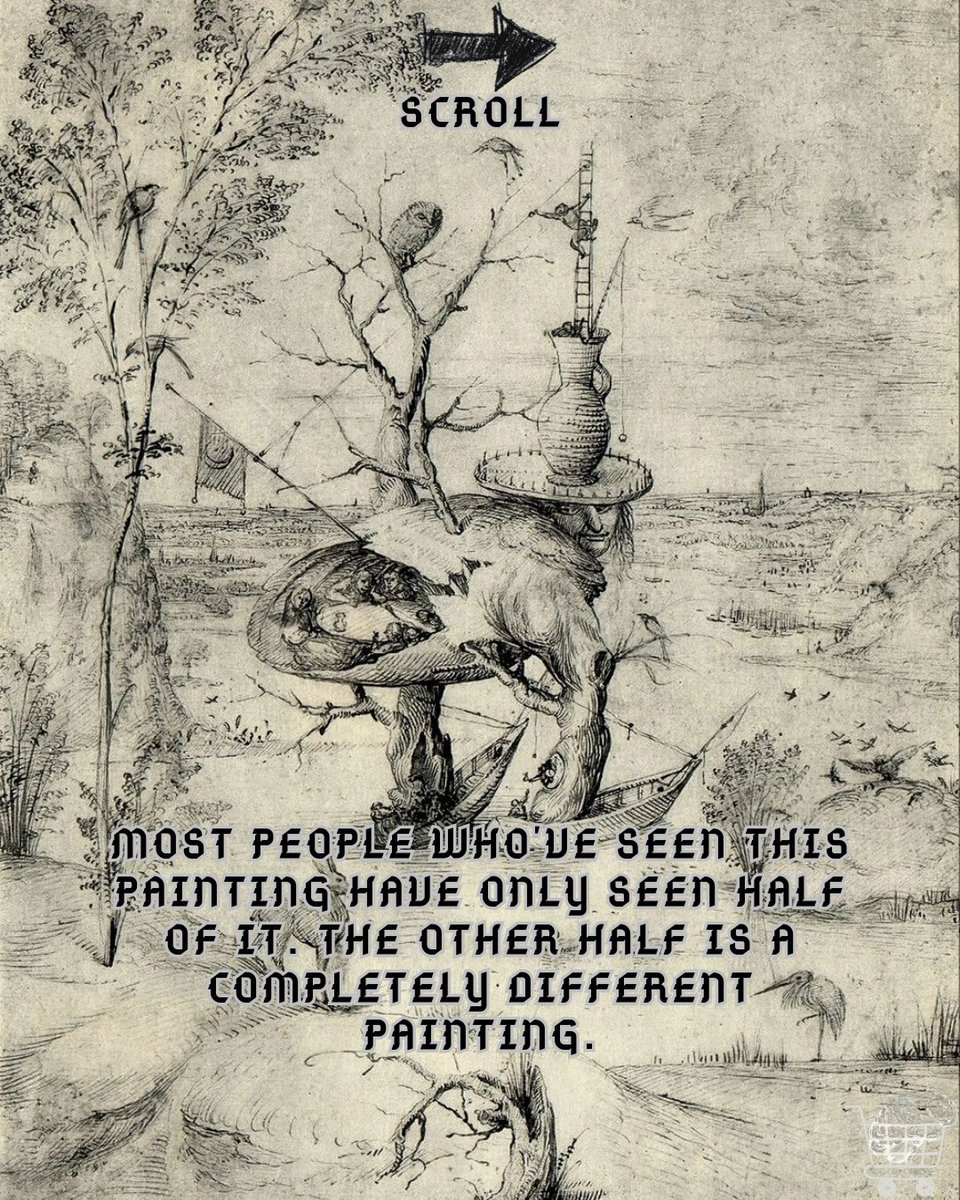
There's a real, playable piece of music hidden on a tortured man's backside in this 500-year-old painting. Someone finally transcribed it and put it online.
There's no neutral seat at the table. The moment you're looking at a system, you're already inside it.
I tried to just "observe" the order book on a thin altcoin pair - no position, pure research. Placed a $200 test order to check the real spread. Moved the price 1.4% on my own. There was no version of me watching from outside. The watching was already a trade.
Same thing happens with a trading journal. You don't get an honest record of your behavior and then separately decide to change it. Writing the entry down that same day is already the intervention - the log changes what it's logging, every time.
Runs one level up in AI too: querying a model to 'just check' its output on a live system can itself become the training signal, the thing the next version optimizes against. There's no version of checking that doesn't also touch the thing you're checking.
Stop looking for the neutral vantage point. It doesn't exist. Plan for your own presence in the system, because it's already there.
@historyinmemes The origin claim is well documented (auto industry PR, 1920s). This specific poster isn't industry PR though - it's a government WPA safety poster from 1937. A decade later, the state was enforcing the reframe as settled fact. That's not the origin story, that's the ending.
@artinsociety Worth adding: the border characters aren't meaningful - Van Gogh lifted them from different, unrelated prints purely for visual effect. He copied the look of language without the language.
Worth knowing: these small chapels are usually private property, not the church's - built by one family as a vow, often a sailor's, and kept up by their descendants ever since. Makes the photo land differently - that's not scenery, it's a promise someone's family has been keeping for generations.
@impression_ists Real: he trained as an engineer, and it shows in his structure. Invented: no source claims he "mapped the exact physics of a raindrop." A true credential wearing a manufactured superlative - the same shape most fabricated details take.
@AncientHistorry Most of his fellow Visigothic kings never made it onto this building - Elisabeth Farnese had a recurring nightmare about the statues crushing her, and had the majority pulled down to Plaza de Oriente instead. Theodoric is one of the small handful that's actually still up there.
What's wild isn't just the size - it actually generates its own weather. Clouds form inside, and in some chambers it rains, straight down onto a jungle growing 200 meters underground through a collapsed section of ceiling. Cut off that one skylight and the whole internal ecosystem stops existing.
The cave also evolved its own species that exist nowhere else - eyeless white fish, spiders, centipedes - because that one collapsed ceiling section is the only thing connecting an entire underground ecosystem to the outside world.
@Hana_b30 The layers are 350 million years old. The stack itself isn't - it separated from the mainland in a single storm in 1393, recorded in the Annals of the Four Masters. A family was living on top when it happened and had to be rescued by ship's ropes across the new gap.
@AMAZlNGNATURE Real feature, imprecise name - those are modified feathers (rictal bristles), not hair. The function converged with mammalian eyelashes; the mechanism didn't.
@Math_files Franklin made the bet, but she left the dart game early - Serge Rudaz stepped in and actually beat him. Ellis still honored the forfeit either way. Also, the chalkboard is wrong: W/b/s/t are particle names, not weight/balance/support/tension.
@thinkingwest The robe he's wearing - a banyan - didn't become a fashion staple until decades after Descartes died in 1650; it peaked in the 18th century. The quote is genuinely his. The portrait is a generic 'scholar in his study' painting from a different century entirely.
@PhysInHistory That equation n=3 - isn't the part that took 358 years. Euler solved that case in the 1770s. What took until 1995 was proving it for every exponent at once, which needed tools that didn't exist until the 20th century.