I am thrilled to announce that our paper (joint work with my outstanding colleagues @lmillischer & @Tatiana_Evd) has been published in Energy Economics. Financial markets do have an important role in the transition to a greener economy.
https://t.co/YIWBhjfALr
You're starting a new Data Analysis project with #rstats or #pythonprogramming.
➡️How do you organise your work files? 🤔
Here is a thread about how I do it.
Any other best practice you use??
🧵
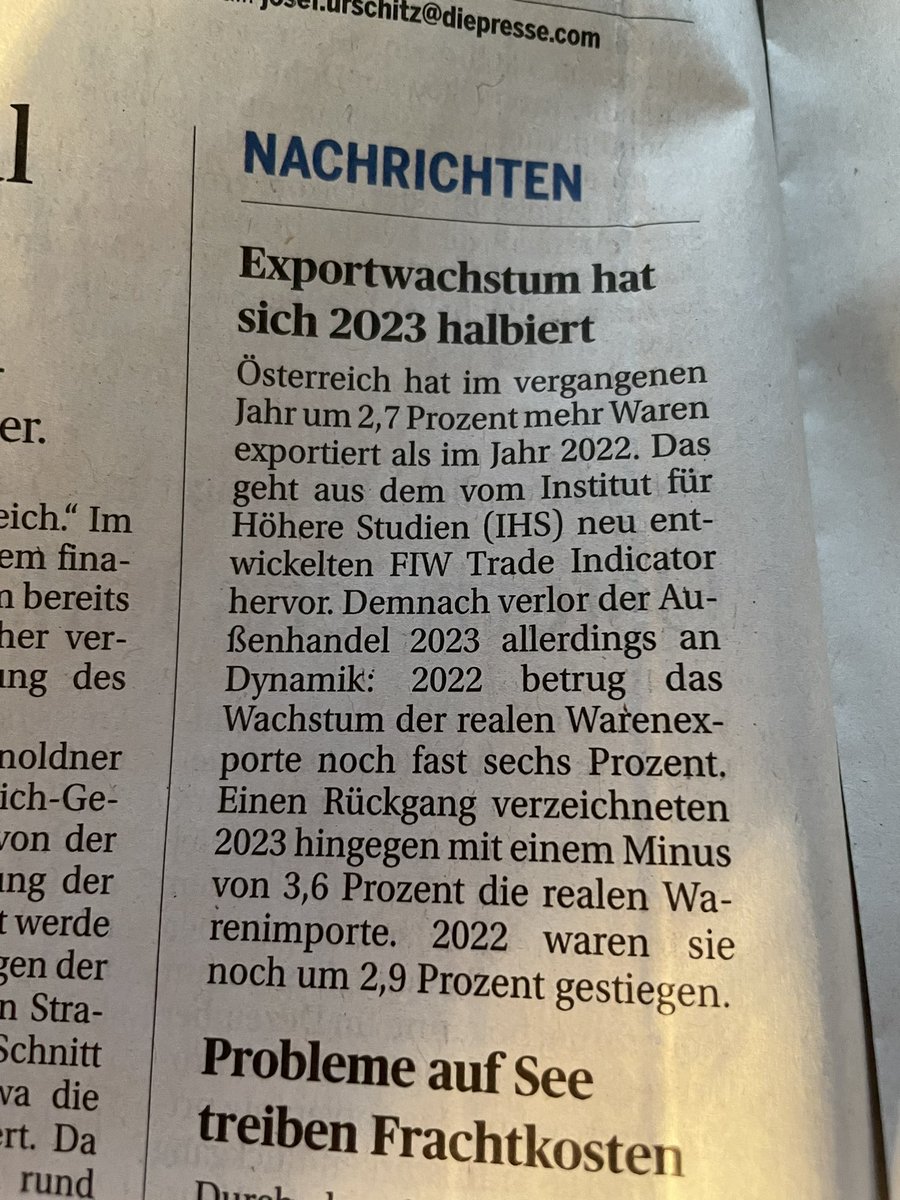
Wir sind online mit dem FIW Trade Indicator, einem neuen Nowcast für Österreichs Außenhandel. Ab April zeitaktueller monatlicher Update hier:
https://t.co/y7NOUTmFEH
https://t.co/rE1LAZT5Fo
@IHS_Vienna@Koch_Sebi
Don't know how to explain long-term bond yields synchronization dynamics in Europe? Then check out this brand NEW PAPER by our Jesus Crespo Cuaresma and @Oscarfergue98 in Economic Modelling! https://t.co/2DCLChU0wU
Happy New Year!! 🥳🎉🥳
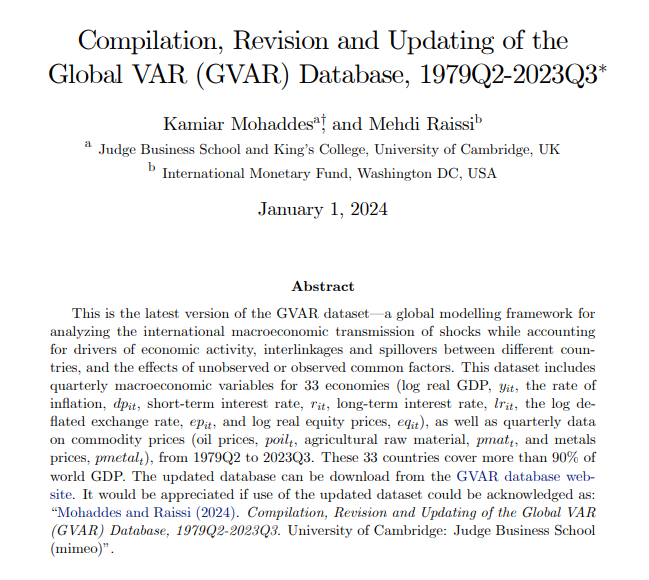
We're pleased to release the latest version of the Global VAR (#GVAR) dataset, which includes quarterly macroeconomic variables for 33 economies over the 1979Q2 to 2023Q3 period, available from: https://t.co/uPa48Lg4OU
GVAR is a global modelling framework for analyzing the international macroeconomic transmission of shocks while accounting for drivers of economic activity, interlinkages and spillovers between different countries, and the effects of unobserved or observed common factors.
This dataset includes quarterly macroeconomic variables for 33 economies (log real GDP, the rate of inflation, short-term interest rate, long-term interest rate, the log deflated exchange rate, and log real equity prices, as well as quarterly data on commodity prices (oil prices, agricultural raw material, and metals prices), from 1979Q2 to 2023Q3. These 33 countries cover more than 90% of world GDP.
@mraissi80 (@IMFNews) and I are very grateful to and @HPesaran (@USC & @TrinCollCam) and Hayun Song (@USC_Econ) for all the help, comments and suggestions in this latest update.
Sign and magnitude/ranking restrictions are commonly used to identify structural shocks and their impact in VARs. Joshua Chan, @yu_xuewen, and myself have a new paper that proposes an algorithm to drastically improve numerical efficiency of such inference, making it possible
🚨🚨🚨 The UK Monetary Policy Event-Study Database is now live!! 🤩
HF monetary policy surprises from a variety of asset prices (& factors!) since BOE independence in 1997, continuously updated & free to use 🙌
https://t.co/6bjOPJPC69
With @robin_braun & Tuli Saha
🧵👇
My column this week is about the different ways we have of measuring r*.
It's a bit mean of me to say that none of them are good - it's a really *really* hard thing to measure...
https://t.co/CcibA9S9uQ
Is the current monetary contraction depressing future potential output? Interesting piece by @PrestonMui, drawing on recent academic research.
https://t.co/trzBYG8uE3
Creating tables with Overleaf has never been easier! Our newest feature helps you create/edit tables in your project without writing code — you can also copy and paste tables and formatted text directly into Visual Editor, without losing the formatting! https://t.co/C4digQSRGv
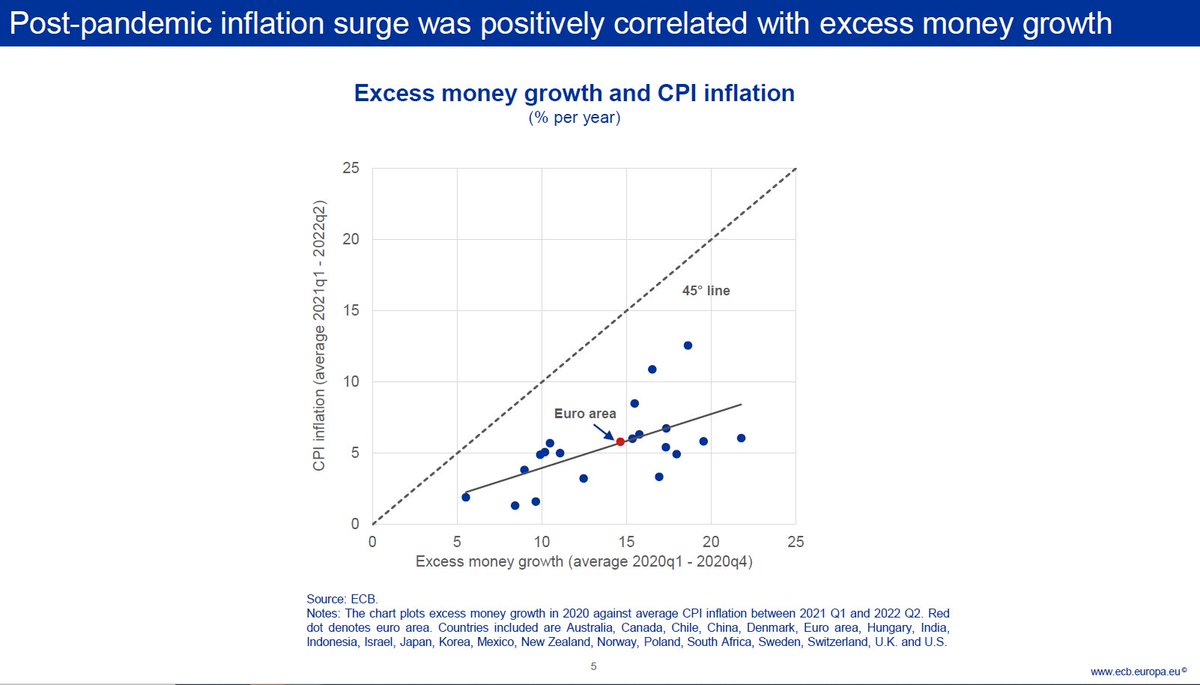
The instability in the empirical link led to money playing a smaller role for central banks, reinforced by the rise of New Keynesian models. But the correlation between money growth and inflation reappeared after the pandemic, putting the quantity theory to a new test. 5/23
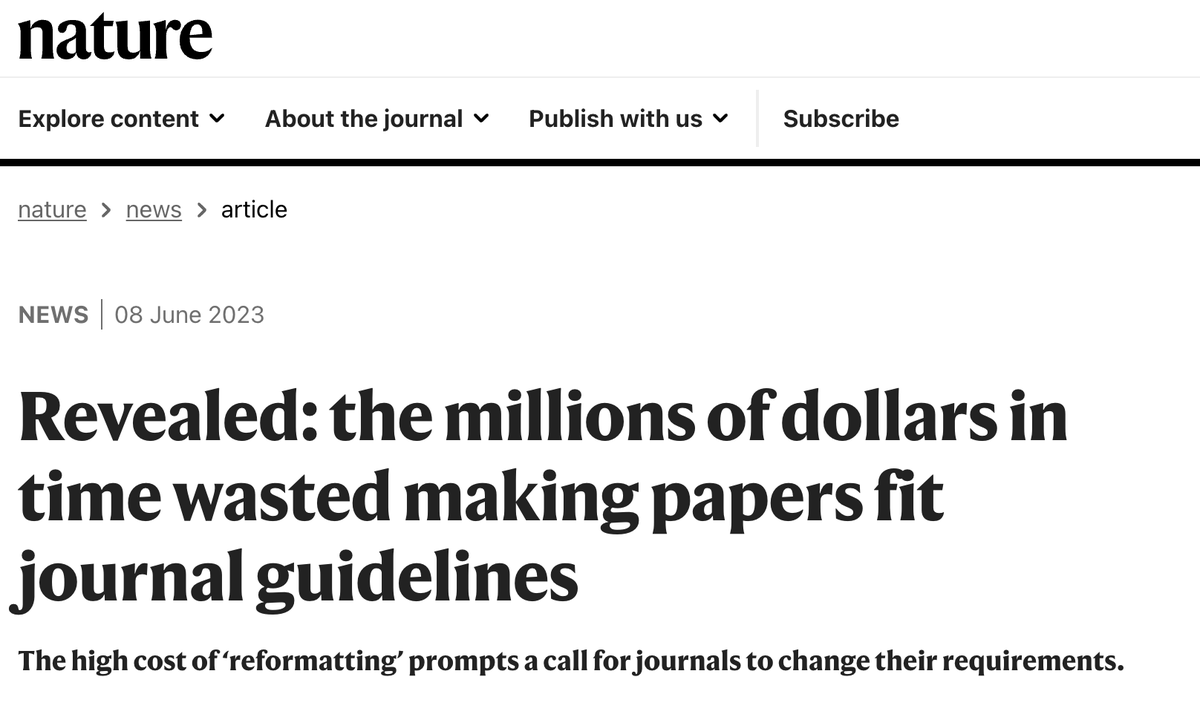
I wish as academics we could focus on producing evidence and not waste time reformatting. I am glad this has now been quantified. But I would like to think these may reflect a lower bound on the true cost as there is an extensive margin as well.
I have a whole trail of perfectly fine and IMO important papers that I just cant bother to reformat to submit. It should not be that way. Its all just data, code and well, a bit of thinking.
https://t.co/wooDziwsa5
Does monetary policy leave economic scars?
=> New research suggests *yes*
Should monetary policymakers do anything about it right now?
=> Probably *not*
Other policymakers should be paying attention though!
https://t.co/bqahsRhXFE
FED’S POLICY PARADOX: TOO-SLOW GROWTH THREATENS INFLATION FIGHT (Bloomberg)
Faced with only limited signs of a slowdown in US demand despite more than five percentage points of interest-rate hikes, logic would say the Federal Reserve needs to do more.
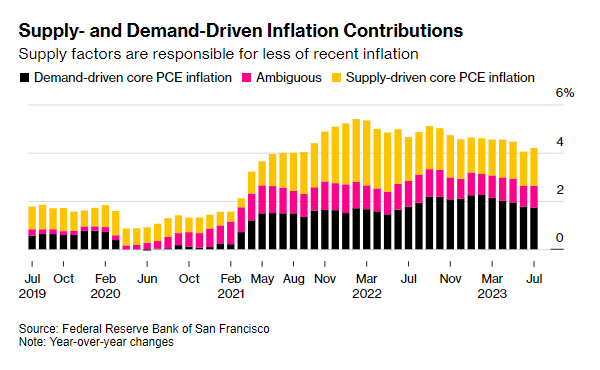
But policymakers and Fed watchers are now giving more attention to a new line of argument, that central banks need to take account of what their actions mean for the supply side of the economy. The implication: Too-high rates could actually undermine the inflation fight, by squelching the benefits of increasing supply — which are just now coming on stream.
It’s a cornerstone of macroeconomic theory that monetary policy works mostly on demand. Raise rates, borrowing gets more expensive, and demand falls — damping inflation. Recessions are the ultimate tough medicine for too much demand and getting prices under control.
But a group of frontier economists is warning that monetary policy can have an important impact on supply, which influences the economy’s longer-run trends. Fed Chair Jerome Powell and central bankers from around the world heard the argument in a key paper at the annual Jackson Hole symposium last month.
Evidence shows that interest-rate surges affect financing conditions and the appetite for risk, constraining the supply side of the economy by inhibiting innovation, Yueran Ma and her co-author Kaspar Zimmermann found in the paper.
1/ How can Economics help tackle the colossal challenge of Climate Change?
Last week, we had fun at the @CEMFI Summer School, learning from John Hassler (@hasslerjohn) and Per Krusell (@KrusellPer).
Lots of fascinating things to digest. Here are a few of them👇#ClimateEconomics