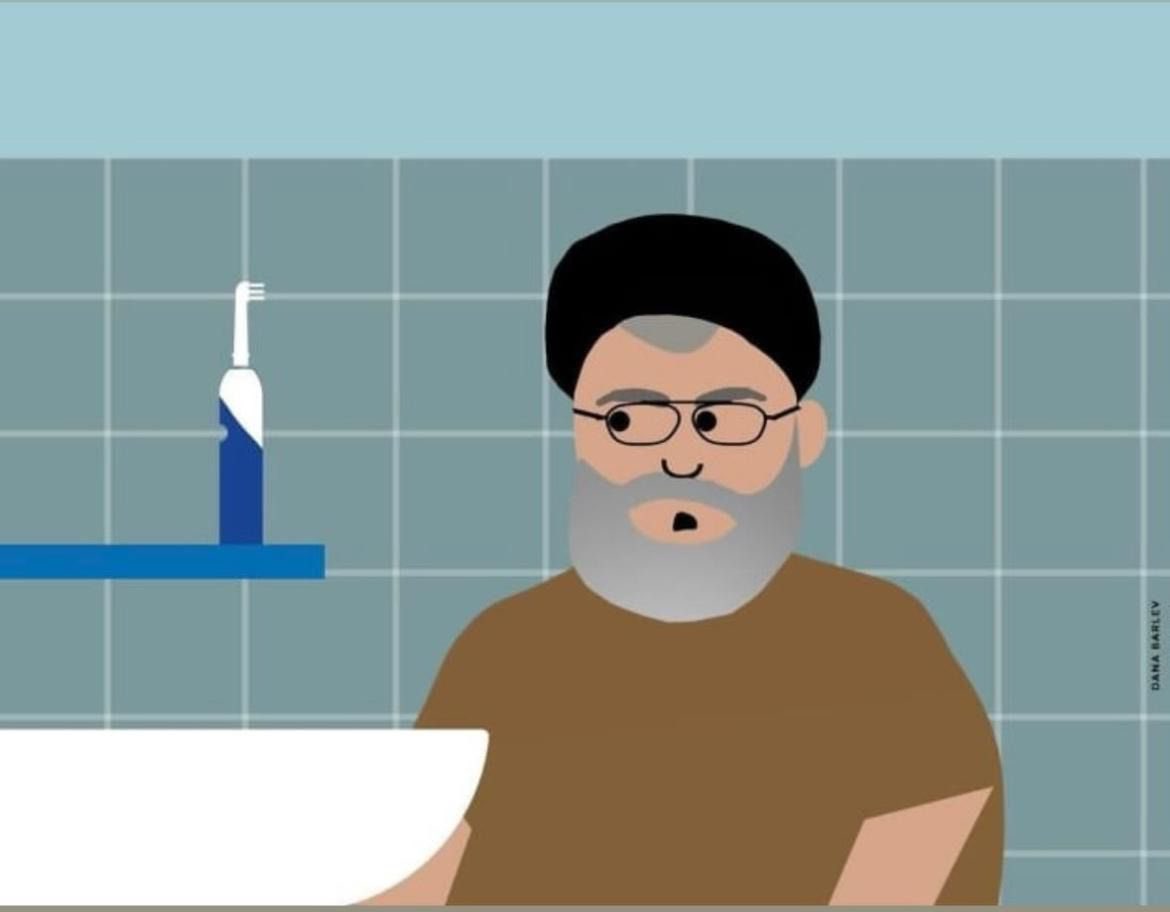
Blague juive pour démarrer la journée :
Un agent du Mossad demande à un iranien : « Es-tu prêt à travailler avec Israël et les USA pour défaire le régime théocratique de khamenei ? »
L’iranien: « Je suis prêt ! »
L’agent: « Parfait, 100 000$ ! »
L’iranien le regarde embêté : « Je n’ai pas tout cet argent… ça vous dérange si je paie en plusieurs fois ? »
Crédits : @SVimaire
#Iran #IranWar
« JE SUIS L’IRAN », le nouveau titre de l’artiste iranien Shervin Hajjipour, diffusé vendredi 6 février 2026 en hommage aux « personnes tombées et aux cœurs endeuillés des proches des victimes du mois sanglant de Dey (janvier) »
« Condoléances au peuple noble et cher d’Iran 🖤 »
#Iran and the USA - toward a decision point
As the aircraft carrier USS Abraham Lincoln makes its way toward the Gulf, the United States and Iran are approaching a critical decision point.
Despite the belligerent rhetoric on both sides, diplomacy has not been taken off the table. The same actors in Tehran, Washington, and across the region who halted a military strike last Wednesday are likely using this window to explore diplomatic pathways that could de-escalate tensions and open the door to a political understanding between the United States and Iran.
At the same time, the arrival of a U.S. carrier strike group dramatically expands Washington’s military options. These range from aggressive pressure measures, such as targeting Iranian oil shipments that sustain China’s energy supply, to direct military action against Iranian assets. The deployment is designed to maximize leverage, not necessarily to signal an imminent attack.
Yet this show of force does not resolve the administration’s core dilemma: whether to rely on deterrence and diplomacy to force Iranian concessions on the nuclear issue, or to pursue kinetic action aimed at fundamentally changing the regime’s behavior—or the regime itself.
More broadly, the concentration of U.S. power in the Gulf does not solve the deeper strategic question facing Washington: how to achieve a decisive and politically meaningful outcome without becoming entangled in a prolonged and costly conflict. And if regime change were to occur, how can the United States ensure that what follows is not worse than the current regime an outcome with serious implications for regional stability
From Tehran’s perspective, the pressure is mounting. The arrival of U.S. forces significantly raises the threat perception among Iran’s leadership, particularly in light of public discussions about potential threats to Supreme Leader Ali Khamenei himself. This helps explain President Pezeshkian’s unusually sharp rhetoric in recent days, alongside open source indications that Iranian forces are operating at elevated readiness levels.
Iran, like the United States, now faces a defining choice. It can "surrender" to U.S. demands by accepting painful compromises, including forgoing uranium enrichment, or it can stand firm and risk a military confrontation with the United States, a scenario Tehran has long sought to avoid.
Ultimately, the decision rests with Khamenei. The central question is whether this leader who has built his legitimacy on defiance of the “Great Satan” is willing, despite years of public rhetoric, to make a profound strategic retreat, or “drinking the poisoned chalice”, in order to preserve the Islamic Republic. And if he is unwilling, it remains unclear whether any internal actor possesses the authority to compel him to do so, particularly given doubts about how fully he grasps the severity of the current moment.
For Israel, this is a moment of both opportunity and risk. The unprecedented U.S. military posture in the Gulf and the American president’s personal engagement with the Iran issue bring Jerusalem closer to its long-standing strategic objective: a fundamental change in Iran’s behavior, if not the regime itself. Yet the same dynamics raise the possibility of a renewed nuclear agreement that may fall short of Israel’s security requirements.
As always, opportunity carries danger. Iran will not necessarily target Israel in every escalation scenario, but in almost any military confrontation involving Iran and the United States, the likelihood of Israeli involvement increases significantly.
In short, these are days of strategic waiting. Diplomacy and military action remain equally viable paths, and the choices made in Washington and Tehran in the coming days may shape the regional order for years to come. The crisis is far from over.
From @WSJopinion: Israel is offering unprecedented strategic concessions and risking its soldiers’ lives to free hostages. U.S. pressure should be on Hamas, which took the hostages and murders them. https://t.co/OucgkEPIMT https://t.co/OucgkEPIMT