⚡️🔬📣 Excited to share our new @Nature article building and evaluating PathChat, a multimodal generative AI copilot and chatbot for human pathology. Article: https://t.co/OAIG31ofWJ Open Access Link:
https://t.co/tvw6W6qmT9
We leverage our previous success in building foundation models for computational pathology such as UNI / CONCH and combine it with the advancements of large vision language models and generative AI to enable PathChat to answer diverse pathology-related queries. We assessed PathChat using both multiple choice diagnostic questions and open-ended questions.
Congratulations to @MYLu97@chenbowen118 @DFKW_MD @richardjchen and everyone else who contributed to this work.
Also see blog post from @MYLu97 about this work: https://t.co/exjpKMnrQp , also teasing the development and preview of PathChat 2, a successor to PathChat 1 bringing new capabilities and substantially improved performance to the state-of-the-art.
I’m 24.
I used to be stressed out of my mind and wasted years of my life making the wrong decisions.
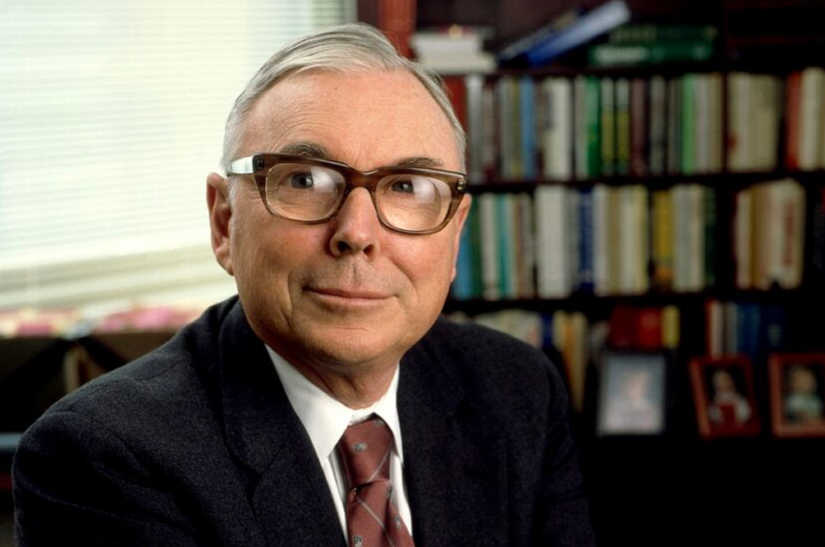
Then I spent 100+ hours studying Charlie Munger’s letters to learn his mental models on decision making.
Here’s what I found:
Discovery of a new class of antibiotic using AI, shown to be effective against MRSA in mice!
Incredibly cool work from Jim Collins’s lab at @MIT in @Nature
Leonardo da Vinci loved quality over quantity.
He didn’t write paintings in quantities like we write #research papers today.
He always invested time, craft and artistry into each of his masterpieces.
For example, Mona Lisa took at least 4 years to paint and (most probably) another 10 years of refining.
It was ordered in 1503 by a cloth merchant Francesco del Giocondo, who asked for a portrait of his wife, Lisa. But Leonardo was a slow worker and finished the painting quite late. At that time, he started to work for the King Francis I of France, so apparently Leonardo gave the painting to the King as a gift.
▫️
Now, imagine he would have been ‘producing’ 10-20 paintings a year.
Moreover, imagine he would have hired younger painters and, without investing time into their training, asked for drafts? Just to turn painting into a “printing machine”.
Would his work have stayed in history for 500 years?
▫️
‘Quality over quantity’ goes well beyond science.
It’s in art.
It’s in long-lasting engineering.
It’s everywhere.
▫️
Don't publish for the sake of publishing.
Quality over quantity. Even if the academia pushes you into the opposite direction.
It’s what makes us, the humankind, progress and prosper.
And this is what makes history.
#AcademicChatter #AcademicTwitter
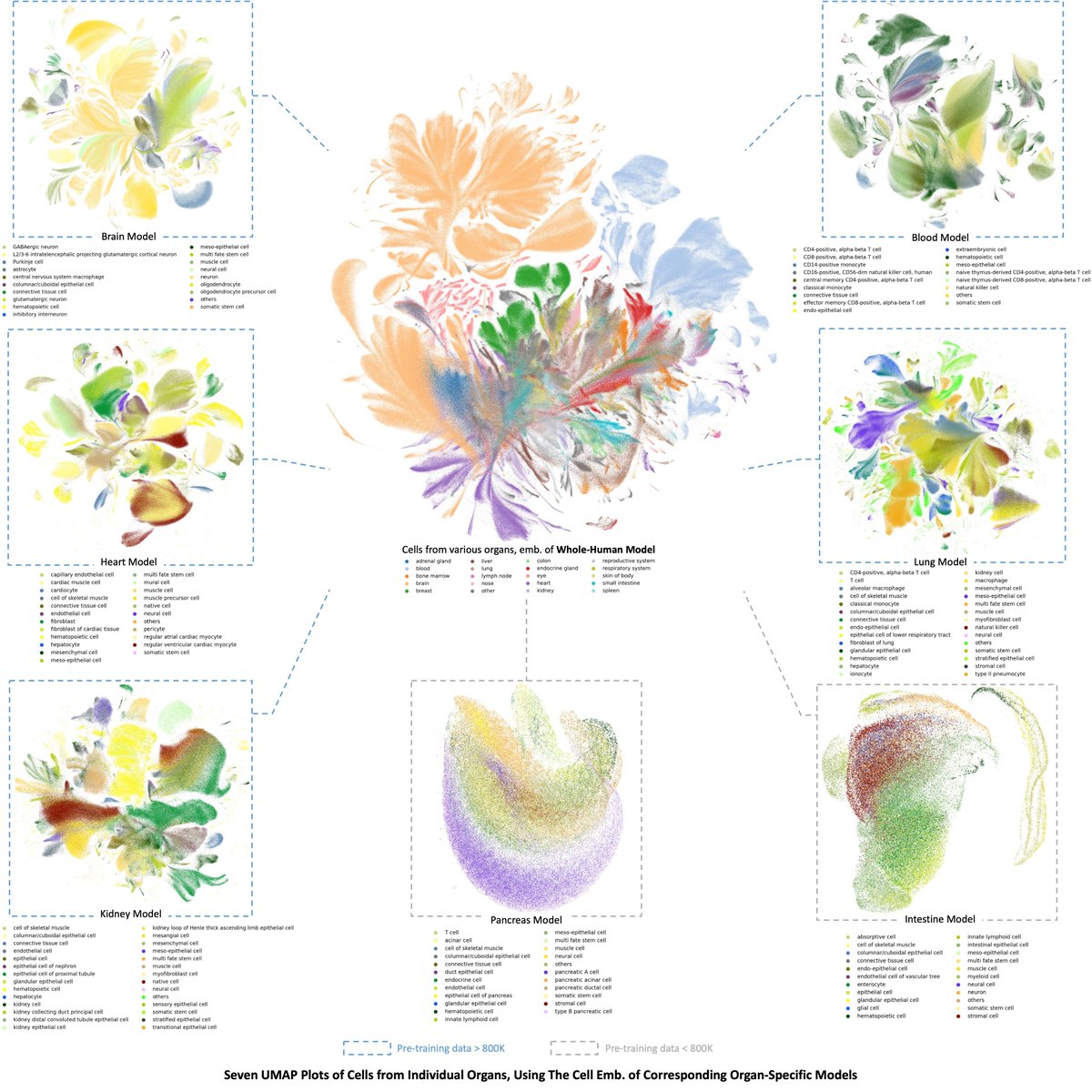
🎉Exciting Update of scGPT 🎉: After receiving significant attention from the community since our April release, we're thrilled to announce the first major update for scGPT - a foundation model for single-cell multi-omic data.
This update integrates community feedback and leverages the latest data release from @cellxgene. It boasts larger pretraining data, and more robust models, and expands the range of application tasks.
Pre-print (V2) available: https://t.co/4aB2c4ZgJy
Access our open-source code and models here: https://t.co/13n0bJvgT2
Detailed tutorials: https://t.co/enNqXqXkdY
Highlights of this update include:
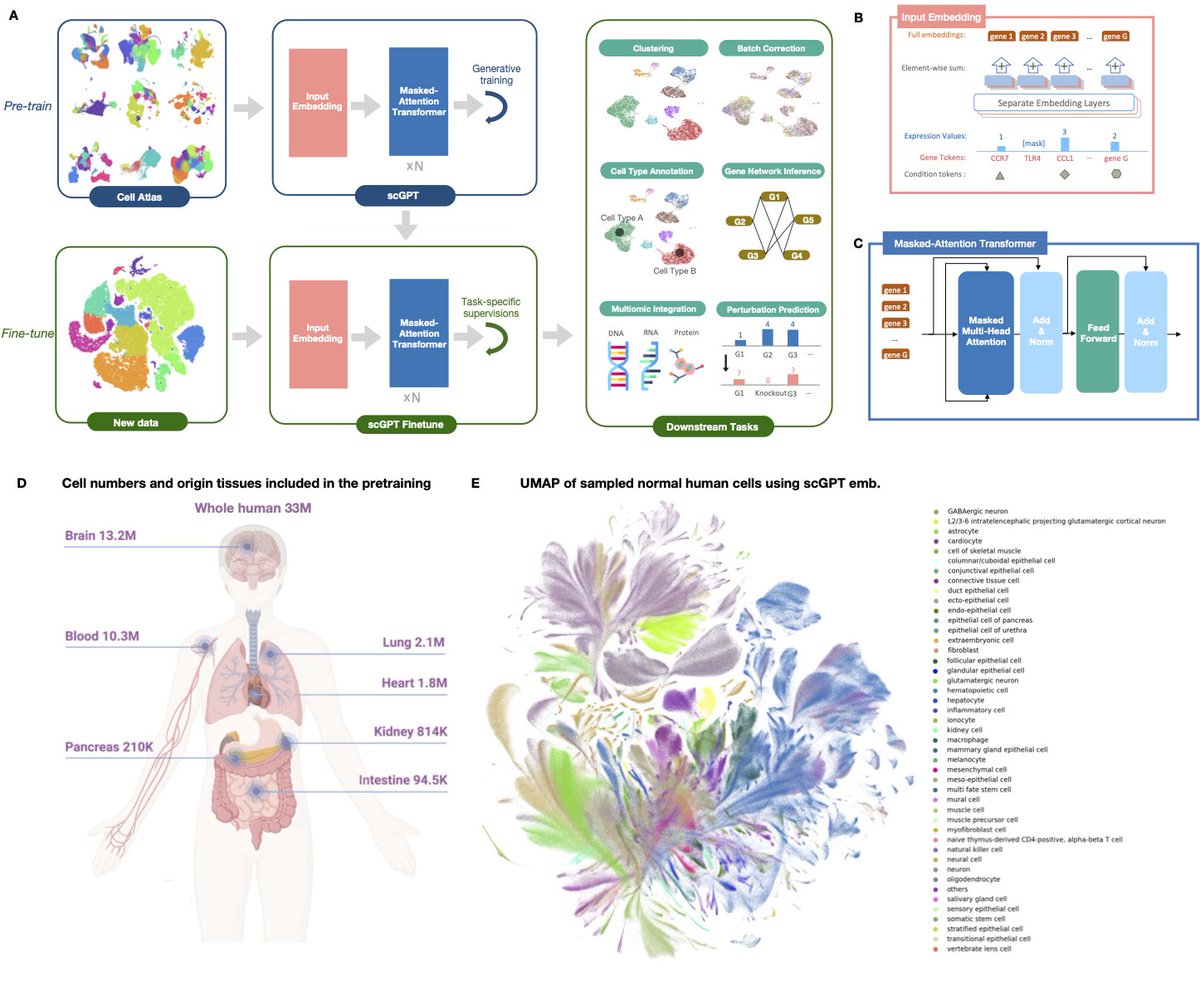
🔬 Introducing the first GPT-style foundation model for single-cell multi-omic data, pretrained on over 33M human cell atlas data.
💡 Our generalist approach enables one model to accomplish multiple tasks in single-cell analysis, including multi-omic integrative analysis and perturbation prediction.
🧬 Discovering gene-gene interactions specific to various conditions using learned attention weights and gene embeddings.
🚀 Uncovered a scaling law showcasing continuous model performance enhancement as data volume increases.
🐾 scGPT model zoo (see github) now offers multiple pre-trained foundation models for various solid organs and a comprehensive pan-cancer model. Begin exploring your data with the most fitting foundation model.
We welcome your thoughts on specialist vs generalist approaches in single-cell studies. Many thanks for the following technical analyses of scGPT:
1. Excellent twittorial by @simocristea: https://t.co/ICq3V78oxG
2. Comprehensive review on LLM in cell biology by @s_batzoglou: https://t.co/xtl5WCXijC
3. Insightful blog by @SalvatoreRaieli: https://t.co/7v8PRv9NNc
Kudos to Haotian (@HAOTIANCUI1) & Chloe (@chloexwang1) for their exemplary work on this project. @VectorInst@pmcc_ai@UHNAIHUB@bradwouters@drbarryrubin@UofT_TCAIREM@UofT_LMP@UofTCompSci@uoftmedicine
🔬🌟Step-by-Step Guide to Creating Striking and Unique Scientific Figures!🎨✨
🧵 Thread: Step-by-Step Process for Captivating Scientific Figures 🖼️
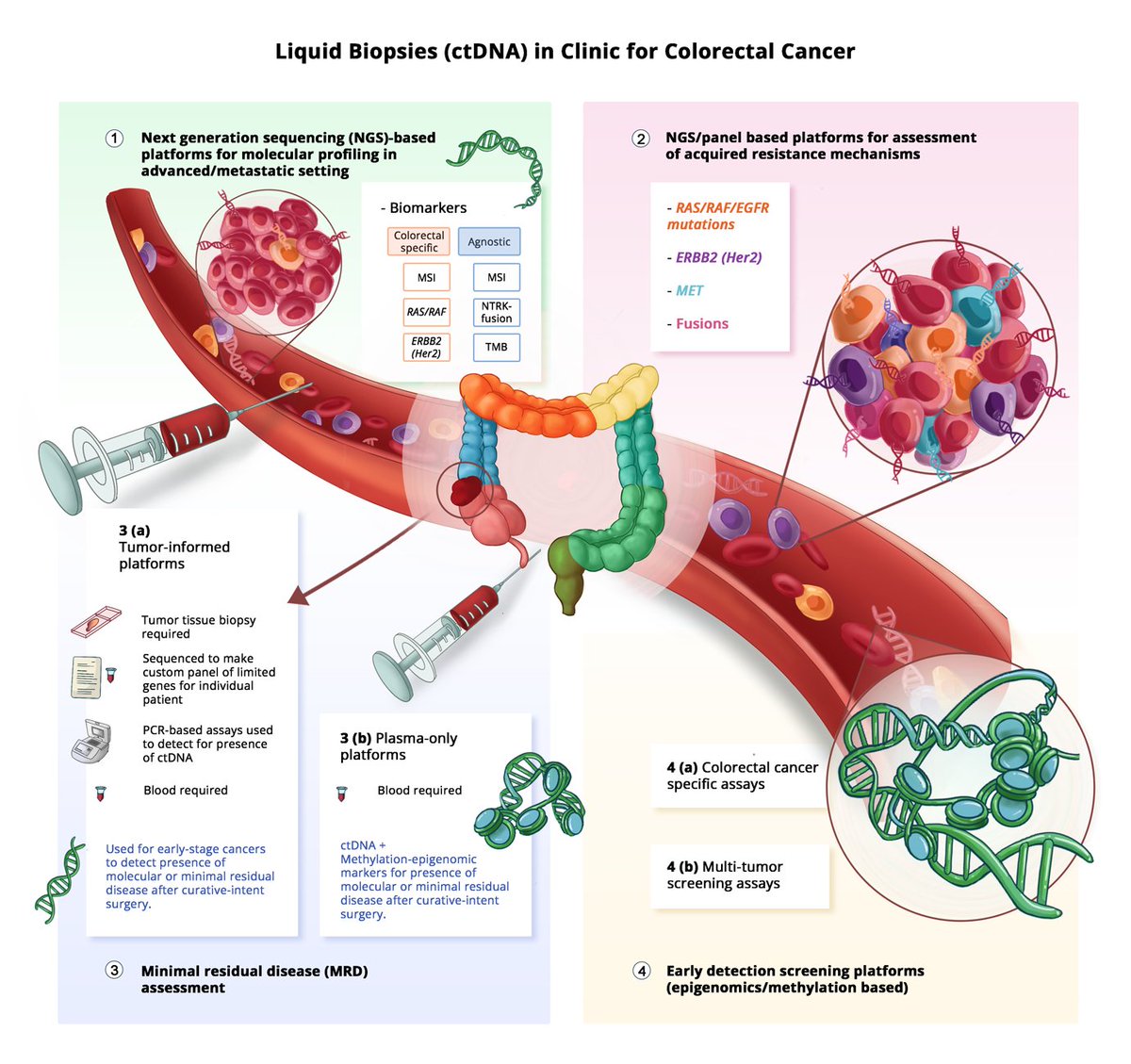
Figure for @pashtoonkasi on "Liquid Biopsies (ctDNA) in Clinic for Colorectal Cancer" #DrawImpacts#sciart
I started learning how to code only 10 months ago.
I am NOT a very talented coder. But with the help of:
- AI tools
- Automation platforms
- No-code tools
...I can build nearly anything I want.
Here are the exact tools I used to learn how to code (all are free):
ChatGPT is used by only 2% of people who have access to the internet.
During this time some people use the right prompts and save a lot of time.
Copy-paste these advanced ChatGPT prompts to get on top of the game:
Academics read and annotate papers daily.
With Annotator you can search and connect these annotations!
Here is how to use it:
(A game changer, if you are used to Zotero.)
👇
Don't use ChatGPT for academic writing. It's not designed for academic purposes and generates fake citations.
Instead, install an AI-powered editor for academic writing inside your MS Word.
Here's how to do it:
Current mission:
Help 1 million people start writing online.
And this thread has everything you need to:
• Build a writing habit
• Generate endless ideas
• Capture and keep attention
• And most importantly, develop the Ship Daily mindset
Grab a cup of coffee and dive in:


![bengalielonmusk's tweet photo. [THREAD]: WHAT IS HAPPENING IN BANGLADESH RIGHT NOW ? 🇧🇩 https://t.co/jZhxoO2Zbq](https://pbs.twimg.com/media/GSuNnZPWwAAFPmP.jpg)
![bengalielonmusk's tweet photo. [THREAD]: WHAT IS HAPPENING IN BANGLADESH RIGHT NOW ? 🇧🇩 https://t.co/jZhxoO2Zbq](https://pbs.twimg.com/media/GSuNnZNXsAAxa0v.jpg)
![bengalielonmusk's tweet photo. [THREAD]: WHAT IS HAPPENING IN BANGLADESH RIGHT NOW ? 🇧🇩 https://t.co/jZhxoO2Zbq](https://pbs.twimg.com/media/GSuNnZGXUAAm3dR.jpg)




![bengalielonmusk's tweet photo. [THREAD]: WHAT IS HAPPENING IN BANGLADESH RIGHT NOW ? 🇧🇩 https://t.co/jZhxoO2Zbq](https://pbs.twimg.com/media/GSuNnZaWoAAMQ3H.jpg)