Our @joyscompounding teachers are Biotech's New Builders, Peter Harwin and Tomas Kiselak of Fairmount Funds Management - PERHAPS THE GREATEST BIOTECH INVESTORS IN THE WORLD TODAY and yet you’ve likely never heard of them. 🧬 🚀
And this is their FIRST EVER INTERVIEW of any kind! 🤫
In just 10 years, they've achieved a net MOIC of well over 20X and net IRR's over 35%. But as you’ll hear on this episode, just HOW they’ve done it is even more wild and inspiring. 🤯 📈
If you are a longtime listener of ours, you know Paul and I are kind of obsessed with the idea of enduring excellence. We’re convinced that to be great and stay great requires constant evolution - a trait not commonly embraced in the investing industry.
When Fairmount began, it looked a lot like other institutional quality biotech hedge funds. Investing mainly in public stocks and perhaps an occasional private crossover investment. But the DREAM was never really about picking stocks. It was always to BUILD great businesses that BUILD great drugs that ultimately improve the quality of life and standard of care for patients.
Against all odds and little external support, they began to experiment, tinkering with licensing and drug development via SPVs until eventually the *distraction became the focus*.
Today, Fairmount has founded 17 companies, with 15 already public translating into a combined market cap of over $50 Billion. In concert with their wholly owned incubator, Paragon Laboratories, Inc., they have developed an incredible 55 drugs with 27 already in the clinic and one receiving FDA approval. Companies like @CogentBio , @dianthustx, @ViridianThera , Oruka Therapeutics, @spyretx and of course Apogee Therapeutics, which was recently acquired by @abbvie for close to $11Billion. And in doing so, they have also accomplished something almost singular as investors, literally building their own opportunity set, with close to 95% of their portfolio now invested in Fairmount-founded companies.
Whether you are a biotech investor or not, there are so many valuable lessons in Peter and Tomas’ journey. I’m just so proud of these guys for all they’ve already accomplished for the benefit of humanity and I feel privileged to call them friends and partners.
Grateful for our sponsors @eightsleep and @portraitanalyst as well as our partners @colossusmag and @patrick_oshag
TIMESTAMPS:
(00:00) Peter Harwin & Tomas Kiselak, Co-Founders at Fairmount Funds
(01:37) The best biotech investors you’ve never heard of
(04:17) Betting on biotech when 85% of drugs fail
(12:28) When waiting felt riskier than starting
(17:15) The vision hidden in Fairmount’s first letter
(24:28) Trying to license a drug with no experience
(27:37) Why you don’t need a PhD to master biotech
(33:11) How Peter found his way into biotech
(37:39) How biotech boomed, crashed and recovered
(46:15) How an idea becomes an approved drug
(53:38) Why a new drug takes a decade and a billion dollars
(56:58) Why drug development is harder than building a skyscraper
(01:01:13) Building their first company on a $500K check
(01:13:54) What building companies taught them as investors
(01:22:45) How Fairmount compounded to $7.5B without new capital
(01:29:49) The biotech playbook built around not failing
(01:36:17) Why the job’s not done
(01:41:07) Paragon, the engine behind Fairmount’s companies
(01:45:35) Finding people who can handle setbacks
(01:49:57) How Fairmount moves faster than the rest of biotech
(01:53:26) How Apogee became an $11B exit
(01:59:19) Why it’s still too soon to call AI in biotech
(02:04:47) What Fairmount’s next 10 years look like
(02:09:10) “Everything starts as nothing”
I sat down with Luca Ferrari (@luke10ferrari), Co-Founder & CEO of @bendingspoons, to understand how he’s been building a business designed to compound for decades.
Bending Spoons has a different approach to building companies. Instead of launching products from scratch, it acquires established businesses with product-market fit, integrates them into a shared operating platform, and focuses on making them better.
Luca says the company has grown annualized revenue per Spooner from around $1M to over $4M in roughly three years. Spooners are members of its highly selective core team.
The operating philosophy is just as interesting. Despite managing a growing portfolio of businesses, 99% of decisions are made by the teams running them. Luca believes talent density and extreme ownership beat layers of management, rules, and centralized decision-making.
AI is becoming another major advantage. Bending Spoons uses proprietary technology and internal AI agents to automate analysis, access business data, produce documentation, and help its teams operate with greater autonomy.
Luca believes this could allow the company to grow revenue 10x while increasing headcount by just 3x at most.
We also covered:
- Why Bending Spoons buys product-market fit instead of building from scratch
- How to build a company for 20-30 years instead of chasing a 3-4 year exit
- Why extreme ownership and talent density are the foundation of its culture
- How the company integrates acquisitions without centralizing every decision
- Why proprietary technology takes years to develop and cannot be bought with money
- How AI changes the economics of acquisitions and operating businesses at scale
- Why Luca believes patience and urgency must coexist when building something exceptional
The central idea: Build an exceptional operating platform, acquire great businesses, improve them, and reinvest the cash flow. Then repeat.
TIMESTAMPS:
(00:00) Luca Ferrari, Co-Founder & CEO at Bending Spoons
(00:38) Becoming the best operator in the world
(03:34) From $1M to $4M revenue per Spooner
(06:33) The upside of starting with almost nothing
(11:48) Why copying others leads to mediocre outcomes
(16:53) Building a culture of extreme ownership
(23:03) Is Bending Spoons centralized or decentralized?
(28:48) The AI edge in buying companies
(31:31) Why build when you can buy?
(35:52) Why investors obsess over organic growth
(38:42) Why chasing market trends is a losing game
(44:26) Why Luca would buy shrinking companies forever
(47:27) Beating the law of large numbers
(52:39) How AI is changing the playbook
(57:49) Why AI makes ownership easier, not harder
(01:00:11) “You can’t choose your shareholders ”
(01:02:19) The real reason Bending Spoons went public
(01:04:56) Resetting the bar from Europe
@joyscompounding@RickBuhrmanSGH
7/n
$BSP CEO @luke10ferrari on Joys of Compounding @Buhrman_Rick @PaulBuser
Sounds like a very thoughtful operator, not that he needs my opinion
https://t.co/Xwd1Namvk8
The benefits of abundant intelligence will accrue far outside of San Fransisco.
Spent the last year writing about capital, sovereignty, and the coming reordering of economic power.
THE COMMANDING HEIGHTS
https://t.co/d048KdAkbv
Five years ago, Miles Arnone, Will Barker and I started Re:Build because we believed deindustrialization was an economic failure and a national security risk. Today we announced $2.1B in new funding, led by General Catalyst and JPMorganChase’s Strategic Investment Group. Our mission is to ensure the next generation of important products are made, at scale, in America.
$2.1 billion in new capital to ensure the next generation of important products are made, at scale, in America. Led by @generalcatalyst + @jpmorgan. Covered today in @dealbook.
@NegativeAlp Ha! Silly take. Have known Jeff very closely for 20 years - among the best combination of excellence, character, culture, husband, father I've ever come across. He's the dream culture carrier for an investment firm.
Our conversation with A.J. Rohde.
A.J. Rohde is a Senior Partner at Thoma Bravo, the world’s largest software-focused investment firm.
We cover how a tennis background can predict good investors, why the software selloff was really just a duration trade unwinding, and the single number a whole company can rally around.
Enjoy!
TIMESTAMPS
0:00:00 Intro
0:00:34 Why Thoma Bravo Recruits Tennis Players
0:17:16 Drumming as an Outlet
0:26:44 The Spirit of Philadelphia
0:37:08 Buying Licenses for Air
0:48:09 Constants Across Five Decades of Software
1:12:45 Data That Survives Hype Cycles
1:33:15 How Range Makes a Better Investor
@honam@patrick_oshag Justin Yoshimura and CSC Generation such a good example of this! So good, that we're bringing him on @joyscompounding soon...stay tuned!!
@patrick_oshag Totally -- love the framing, and we're seeing this exact thing happening in our vertical market software platforms. If you own the mission critical software application -- then AI has become an enabler to increase the TAM. Essentially, VMS becomes the AI Agent for its customers!
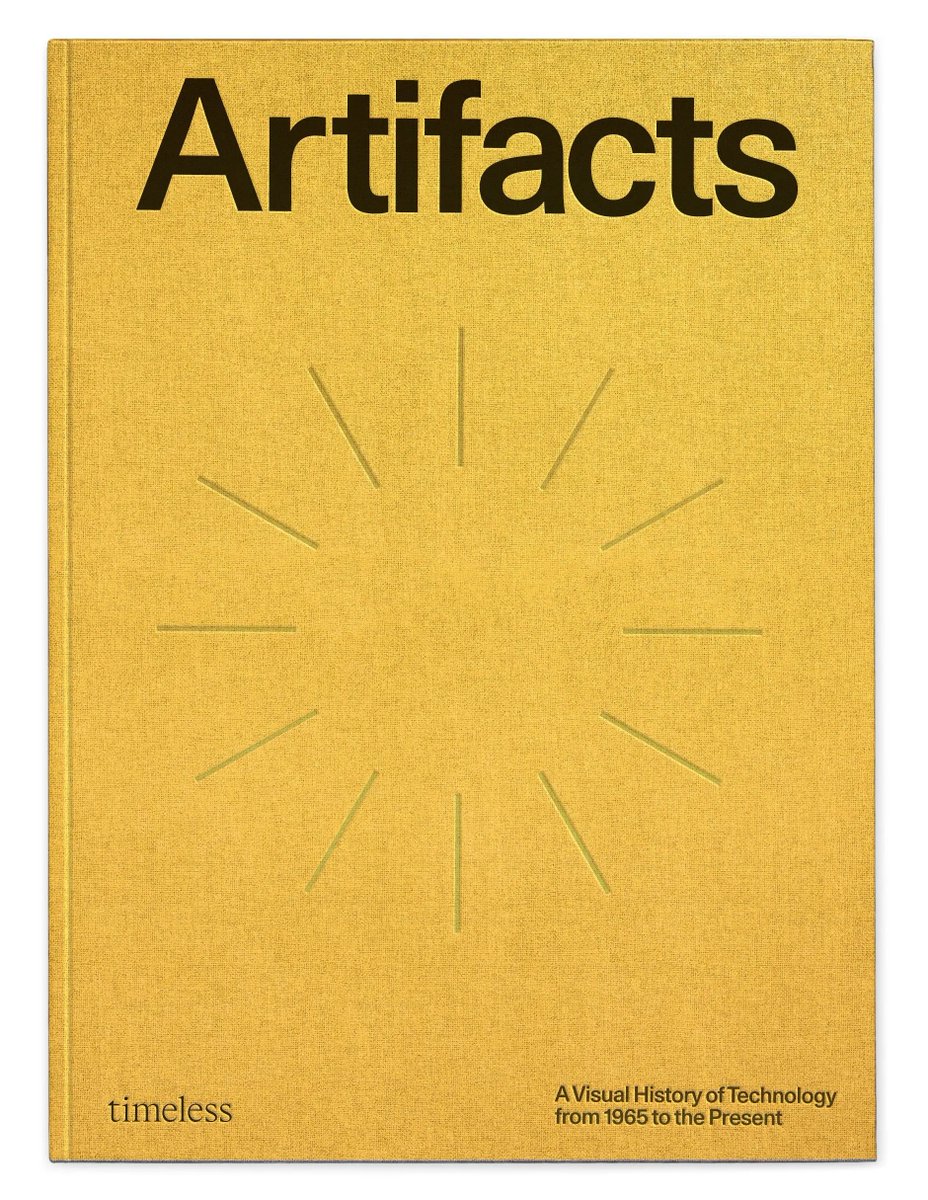
We are releasing a book today.
Artifacts: A visual history of technology from 1965 to the Present.
59 years. 296 breakthrough moments. 403 images.
A clean chronology of the innovations that built the modern world.
From microprocessors to mobile to AI.
Technology is the greatest story of human optimism.
It is the belief that fragile ideas can become world changing platforms.
Artifacts is that story, in print.
A curated gallery of modern computing that fits on your desk.
Proud to share it.
Link in comments.
For anyone serious about AI, company building, serial acquisition strategies, and European software, this is a must-listen!!
So fun to do this Jan and to see how quickly CHAPTERS Group has evolved into a leading company in Europe with big ambitions to be the most desired permanent home for mission critical businesses.
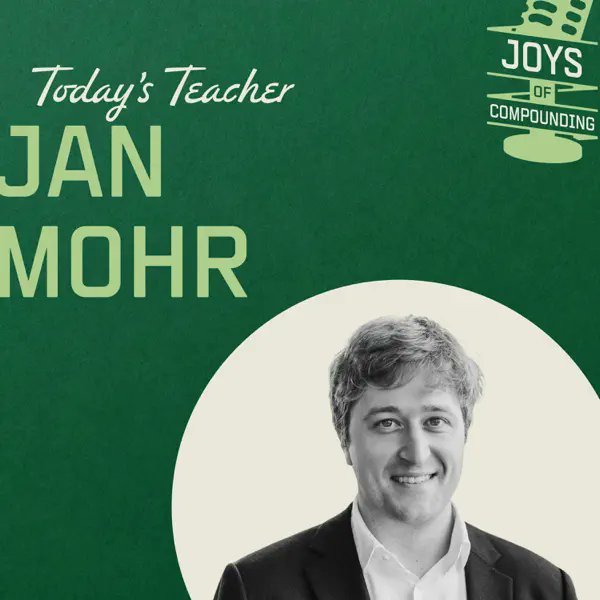
Our teacher today is Jan Mohr, CEO of CHAPTERS Group, a publicly traded, serial acquisition holding company on its way to becoming one of Europe’s technology champions. 🏆 🇪🇺
CHAPTERS originated from a small software startup near Frankfurt in 1998. After selling the core business to a strategic buyer in 2018, the company pivoted to create a preferred home for mission-critical businesses across Europe. Over the past five years, CHAPTERS has founded four distinct acquisition platforms, acquiring around 60 operating companies. This impressive M&A machine has resulted in CHAPTERS’ stock appreciating nearly 10X during this period. 📈 🚀
At the crux of our discussion is the rise of artificial intelligence, which is reshaping the business landscape. Companies worldwide are now considering AI's threats, opportunities, and implications. The software industry, in particular, is experiencing vibrant discourse around AI's transformative potential, driving efficiencies, expanding total addressable markets, and delivering tangible customer value.
We also explored several important topics:
- Leading in times of accelerated change by empowering everyone in the organization to become "teachers, preachers and implementers" of AI.
- CHAPTERS is backed by a concentrated group of long-term, strategic investors, including Mitch Rales, Daniel Ek, and Will Thorndike. Their support provides a critical permanent capital base alongside ongoing strategic value. Jan shares insights on how his team and board have fostered a winning culture through their Manuscript Method, while maintaining a decentralized, entrepreneurial spirit.
With that, we hope you enjoy this session with our good friend, Jan Mohr!
Links in comments.
@PaulBuser @buhrman_rick @portraitanalyst@joincolossus
So pumped for this!!! @FoundersPodcast fans and beyond should watch this trailer, follow this new pod by the human tornado, @davidsenra, and get ready for the most exciting podcast launch in a long time!
Still have no idea how David pulls this all off completely on his own!
Nine years ago, I launched Founders (@FoundersPodcast).
Today, I'm launching a new podcast called David Senra.
The first episode goes live this Sunday. Subscribe wherever you watch or listen to podcasts.
Founders will still come out every week.
@scicomm // @hubermanlab
Nine years ago, I launched Founders (@FoundersPodcast).
Today, I'm launching a new podcast called David Senra.
The first episode goes live this Sunday. Subscribe wherever you watch or listen to podcasts.
Founders will still come out every week.
@scicomm // @hubermanlab