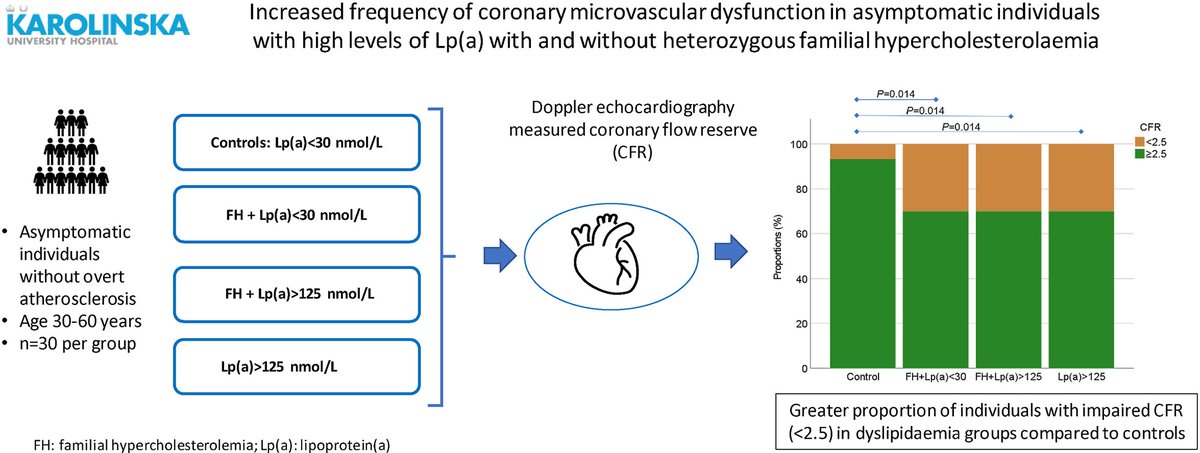
For individuals w/ combined FH and high Lp(a), cholesterol-lowering treatment seems to be protective against progression into microvascular dysfunction
🔗https://t.co/hV0atbQNpu
@society_eas#EASSoMe@karolinskainst
"Dr. Donna Vine is actively reshaping women’s healthcare by focusing on understanding and improving the health of women with Polycystic Ovary Syndrome (PCOS)." - Alberta Women's Health Foundation
#DYK: 34% of women wait over two years for a PCOS diagnosis. @DonnaFVine1 transforms healthcare for PCOS-affected women. This #IWD, join us to #InspireInclusion, bridging research-care gaps for lasting women's health impact. 🤍
🔗Learn more here: https://t.co/29F2njCgTf
Nice work in pathways to care for PCOS.
Translating evidence into practice in primary care management of adolescents and women with polycystic ovary syndrome: a mixed-methods study https://t.co/2lXEsotW5U
Diabetes affects millions globally. Research, education & advocating for better healthcare access are key to supporting people living with diabetes & people at high risk for developing diabetes. #PCOS#WorldDiabetesDay
#DYK having FH and having high Lp(a) are two separate disorders? Both are risk factors for early cardiovascular disease. So if you have FH, you should also know your Lp(a) levels. #KnowFH#KnowLpa
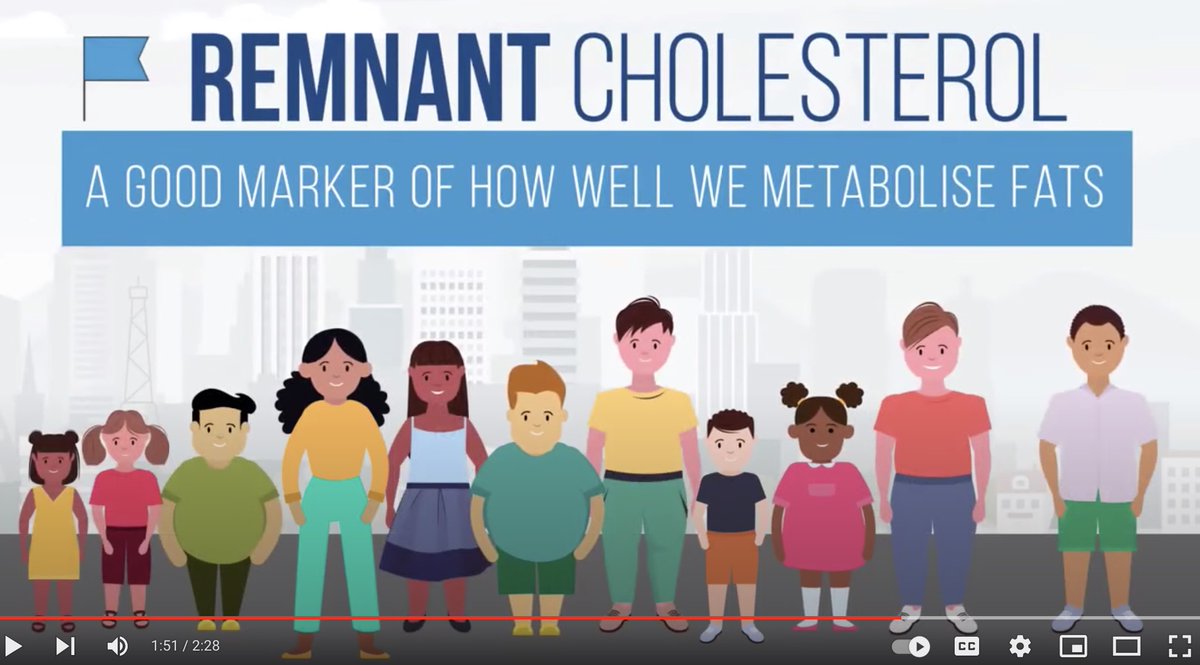
Today is World Diabetes Day: Those with Diabetes live with increased CVD risk partly due to increased TG and remnant cholesterol (RC). The R3I foundation is dedicated to better understanding RC metabolism.
Today we celebrate #WorldDiabetesDay!
Since 1991, November 14 has served as a day that unites the global diabetes community to raise awareness. Join the conversation and show your support by sharing your stories and wearing blue. #LetsMakeTime#WearBlue#DiabetesAwarenessMonth
Today is #WorldDiabetesDay. #CVD and #diabetes are major global concerns that share common risk factors ⚠️, such as high BMI, blood pressure and cholesterol.
By introducing early detection into #HealthPolicies, we can improve European lives and save costs.
#CheckYourNumbers
👇
https://t.co/U9yyyXg4d5
Today is #WorldDiabetesDay. Marking the birthday of #Banting, the day is an opportunity to celebrate the lives of people with #diabetes & advocate for improved access to care, education & support for the many that continue to lack it - https://t.co/IRKq0HTxP6 #KnowYourRisk
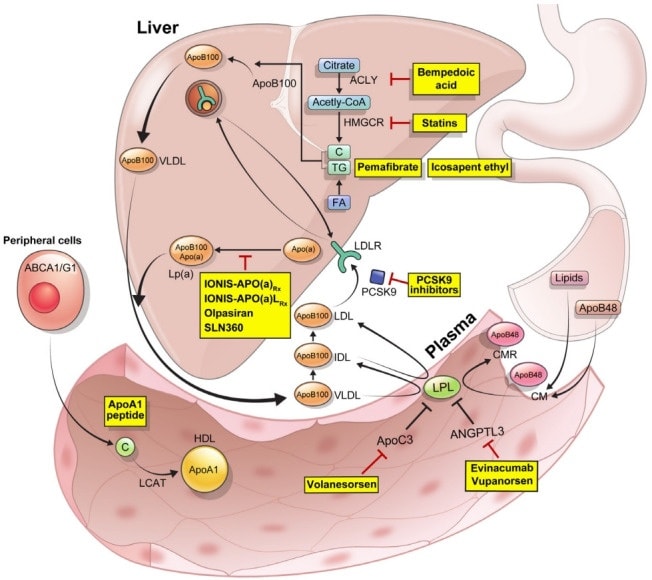
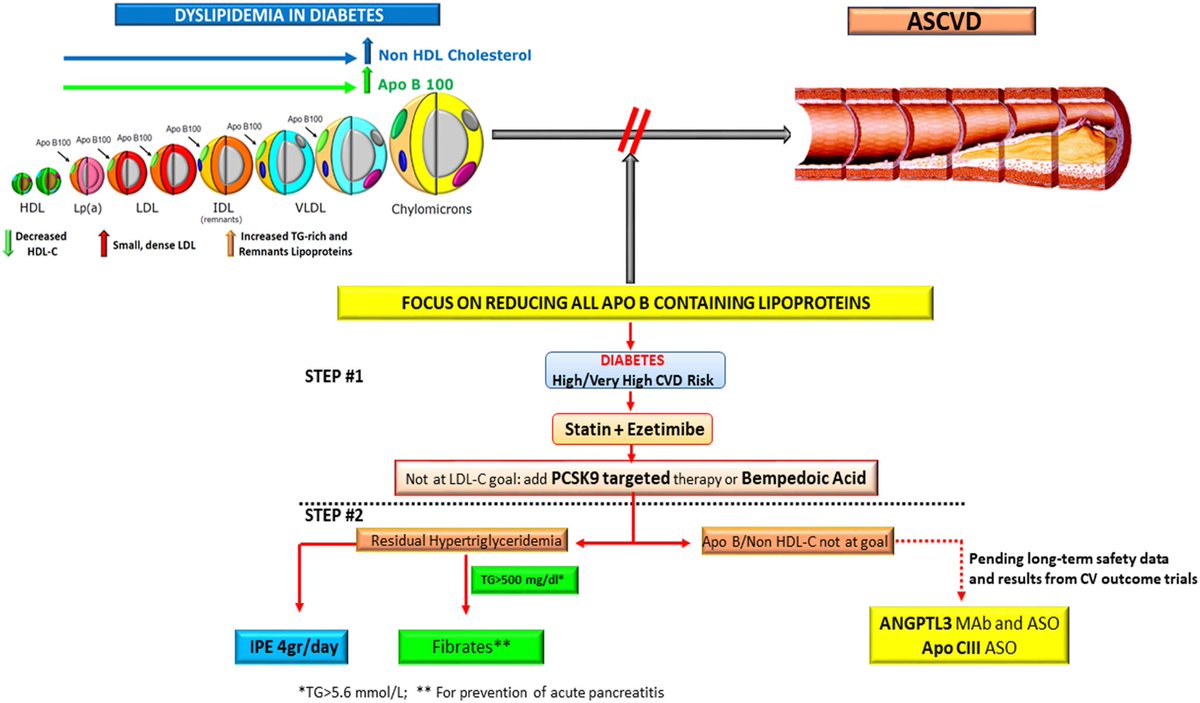
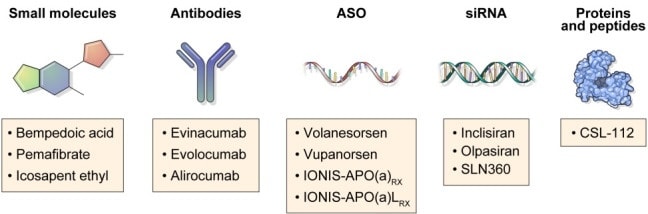
Lipid-lowering in diabetes: An update @ATHjournal
💥 Effective LDL-C Lowering with at least a >50 % reduction & a comprehensive reduction of all apo B-containing lipoproteins should represent the top priority to prevent ASCVD in pts with DM2.
https://t.co/Oyz2UPQeSw
@ZHeart11768530@ATHjournal November is Diabetes month: lets get on top of CVD risk and lipid control. Effective reduction in all apoB-containing lipoproteins including remnant cholesterol.
@WorldObesity@worldheartfed November is Diabetes month: Obesity is one of the leading metabolic causes of Type 2 Diabetes, with both increasing your CVD risk trajectory. Check the signs, talk to you health professional and curb Diabetes. @PcosTogether @UofAnutrition@UAlberta_FoMD@WCHRIUofA
We need your help! Concerned about CVD risk? Or perhaps just like studying cholesterol and lipid metabolism… watch our Heart Health video, like in YouTube and help us spread the word to win the IHDCYH Video competition! See... https://t.co/6e6NQqRYJO
Despite potential advantages, recent evidence has suggested that gender-AHT may increase the risk of CVD. However, owing to a paucity of research, the mechanisms underpinning these increased risks are poorly understood 👇
🔗https://t.co/SROmUMFhaN
@society_eas
Novel approaches to evaluate plaque burden should not only concentrate on advanced techniques, but also consider sex-specific aspects
@society_eas@EASCongress#CardioTwitter
🔗https://t.co/P53Bysh6Pr
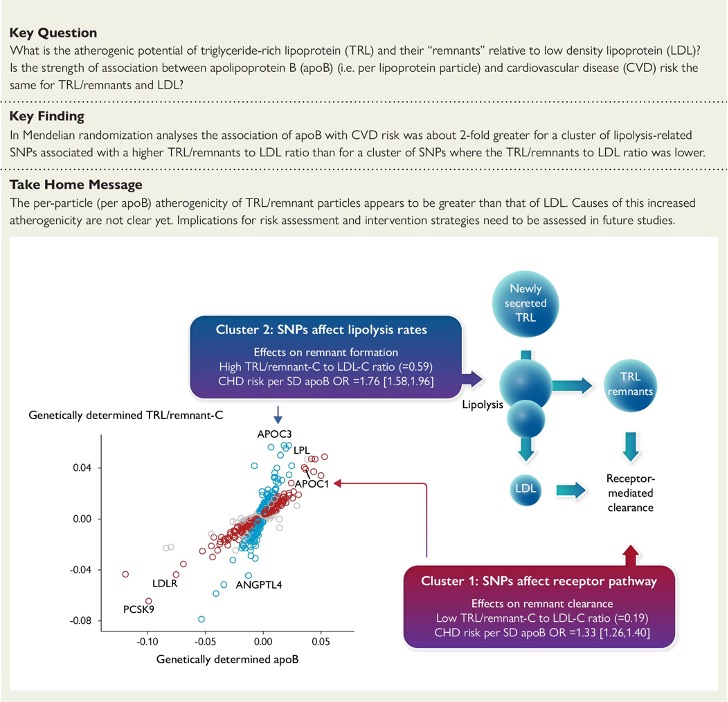
👉Triglyceride-rich lipoprotein remnants,
low-density lipoproteins, and risk of coronary
heart disease: a UK Biobank study
🔓Open Access
The strength of association of apoB with CHD risk is not uniform; rather, it depends on which particle the apoB resides; TRL/remnant particles appear to have an inherent atherogenicity that is substantially greater than that of LDL
The implications of the present investigation and earlier findings are:
(i) use of non-HDL-C as a single, aggregate marker of risk may not provide as accurate prediction of CHD risk as first thought since its component parts—TRL/remnant-C and LDL-C—appear to have differing quantita- tive associations with risk
(ii) interventions targeted to regulate TRL/remnant lipoproteins may prove beneficial, especially when ad- dressing the residual TRL/remnant-associated risk in statin-treated patients
Finally, there is a pressing need not only to develop more refined methods for assessment of remnant concentrations but also to improve the understanding of the molecular basis of the atherogenicity of this lipoprotein species
https://t.co/HgZnxemao0