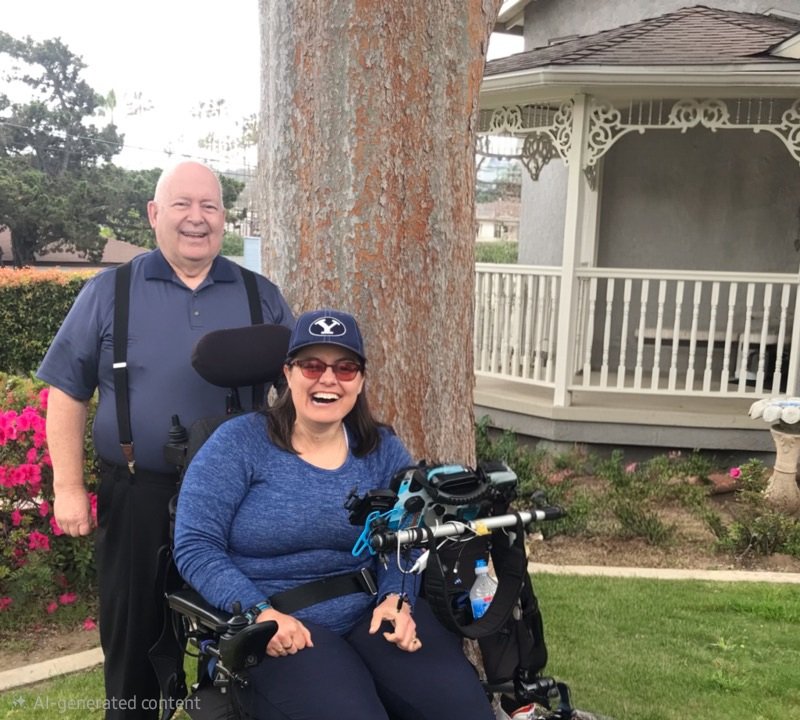
Family is the basic unit of society. But what happens when a promised "safe and effective" medical procedure acts like a hardrive wipe of all experiences? Relationships rooted in shared experiences are destroyed. 275+ family members shared their experiences with #ECT and how it impacted their loved ones. This peer-reviewed article (published today) in Psychology and Psychotherapy: Theory, Research and Practice.
My dad, a gentle, soft-spoken, hero-of-a-man, had never previously been candid with me about his thoughts witnessing my ECT experience.
When I asked him if he'd be willing to share a statement for the media about the article giving family members a voice, he sent me the following:
“The immediate effects of my daughter’s ECT were startling: memory loss. We are, after all, the sum of our memories. She knew I was her father, but she did not remember anything about our relationship. I was told this would be short-term. They lied. Even worse was the long-term effect on her physical health. It was a prescribed massive electrical injury, again, and again, and again. Typical long-term results of multiple electrical injuries include neurological damage, depression, anxiety, PTSD, migraines, hearing loss, reduced cognitive abilities, and/or attention difficulties, along with chronic pain. She got most of those, plus some extra.”
I wish our ECT experience was an anomaly. I wish that raw pain had been isolated to a single family to protect the others. Sadly, these survey results indicate more families were harmed in ways far worse than I was.
This is why the @FDA must enforce their 2018 ruling adulterating ECT devices and @CMSGov must cut off funding until doctors have training in how to chose an electrical dose that can reliably replicate research findings on their individual patient with a unique head size and shape.
The last survey response highlighted in the article is a devastating example of what can happen when a doctor isn't trained in how to choose a correct dose, the clinic isn't prepared for manufacturer identified treatment consequences, and the hospital's lawyers bury it.
My dad's heartbreaking explanation of his witnessing my ECT experience could have been so much worse in this medically sanctioned Russian Roulette. #AuditECT
@Chris_E_Harrop@LisaTMSA@ReadReadj@BasedMikeLee@MakeAmericaHA
https://t.co/hGWf4CQnW3
@Impact2HEAL@DrMcFillin Then perhaps the answer is helping people explore their personal identity, values, beliefs, and passions.
Without biomarkers, psychiatric labels are simply subjective medical stereotypes.
Humanity functions better when circumventing stereotypes..
@PeacemakingSt "Our People" referring to recent Utahans? Because I lived in UT for University in the late 90's-2002 and have no idea what on earth you're talking about.
@PocketBree Listen. Just Listen. Just be there in person as . Just be quiet and listen. Let her know you're near. Let her know she's not alone. She's not forgotten. Sometimes just sitting in silence is a quiet, grounding strength.
Before I was started on psychiatric drugs as a teen, I never had a chance to really unpack what was happening in my environment, and how that was shaping the anger and despair I felt. The conclusion, in next to no time, was that I was sick– something was wrong with my brain.
That’s a fundamental part of the medicalization of human suffering — that it ultimately stems from abnormal brain chemistry.
The framing is “something’s wrong with you,” instead of “something’s happened to you.”
Deep inside me, I already had the answers. I just didn’t have the opportunity to be asked the right questions.
@BlakeMycoskie
When considering treatment options for making informed treatment decisions based on raw data, be sure to understand that organizations like UK’s NICE and the US FDA were only using partial data to make their recommendations in the first place.
Yes. NICE set a 3-point difference on the Hamilton scale as the threshold for clinical significance. Kirsch’s FOI analysis of FDA trials found an average drug-placebo gap of 1.8 points. A 2022 FDA patient-level review of 73,000+ participants confirmed roughly 1.75 points overall. That remains below the clinical significance bar for most patients.
Irving Kirsch obtained the full antidepressant trial data through Freedom of Information requests, including the trials the companies never published. The drugs beat placebo by an average of 1.8 points on the Hamilton scale. The UK's own threshold for clinical significance is three. The published literature had not lied. It had been curated.
🎯.
Until you are harmed into disability…then you’re denied and dismissed and told it’s all in your head and are funnelled into FND or some other evasion. Or left on the ‘useless’ pile to rot with no accountability or help for the iatrogenic injury.
#PrescribedHarm#MedEd
@Sunnyreads8@MamaCAllen I second this suggestion. Or something I did in the past which was surprisingly fast and easy was putting my hair up in a ponytail and then sliding the ponytail through a “bun maker” https://t.co/ccnG10Y91t
Three human studies show strikingly lower platelet serotonin levels in newborns with in utero SSRI exposure.
Thirteen (yes, 13) consecutive human MRI studies show alterations of brain development after such exposure.
And we still have no FDA warning that prenatal SSRI exposure is associated with altered brain development.
References below: (1/2)
A treatment is not evidence-based if there is nothing in place to reliably replicate positive outcomes outside research settings. ECT providers should tell their patients they have no idea how to reliably give ECT optimizing therapeutic benefits while simultaneously minimizing cognitive side effects. The ECT providers should be telling families and policy makers this, too. They have literally never tested modern ECT devices in Placebo controlled trials--though these devices are 4-6x more current than the old ones. Let that sink in.
In other words, my doctors gave me and my family information to make an "informed treatment choice" based on trial data from a medical device 4-6x weaker than the Thymatron System IV.
Worse, doctors cannot guarantee that what they did to me, won't happen to someone else without dosing protocols based on safety testing using modern devices specs.
To all the psychiatrists saying "it's unethical to withhold treatment" I only have one thing to say...
It's only unethical to withhold treatment when the risks are known and the ability to reliably replicate positive outcomes is in place. The ethics of opperating a medical device which generates either 800 or 900 mA bipolar current for 8 seconds without formal subspecialty training in biophysics of electrical field disbursement or histopathology of electrical injury is far more unethical than withholding a "Treatment" that results in brainstem injury, progressive respiratory ataxia, and dysautonomia. My psychiatrist reassured my parents that ECT was the "safe and effective" "gold standard" for my catatonia without disclosing "the best way to administer ECT with regard to optimizing therapeutic benefit and simultaneously minimizing cognitive side-effects is not known." Nor did they disclose that they had no idea how to help if I was injured and that it would be our responsibility to find medical care for injury.
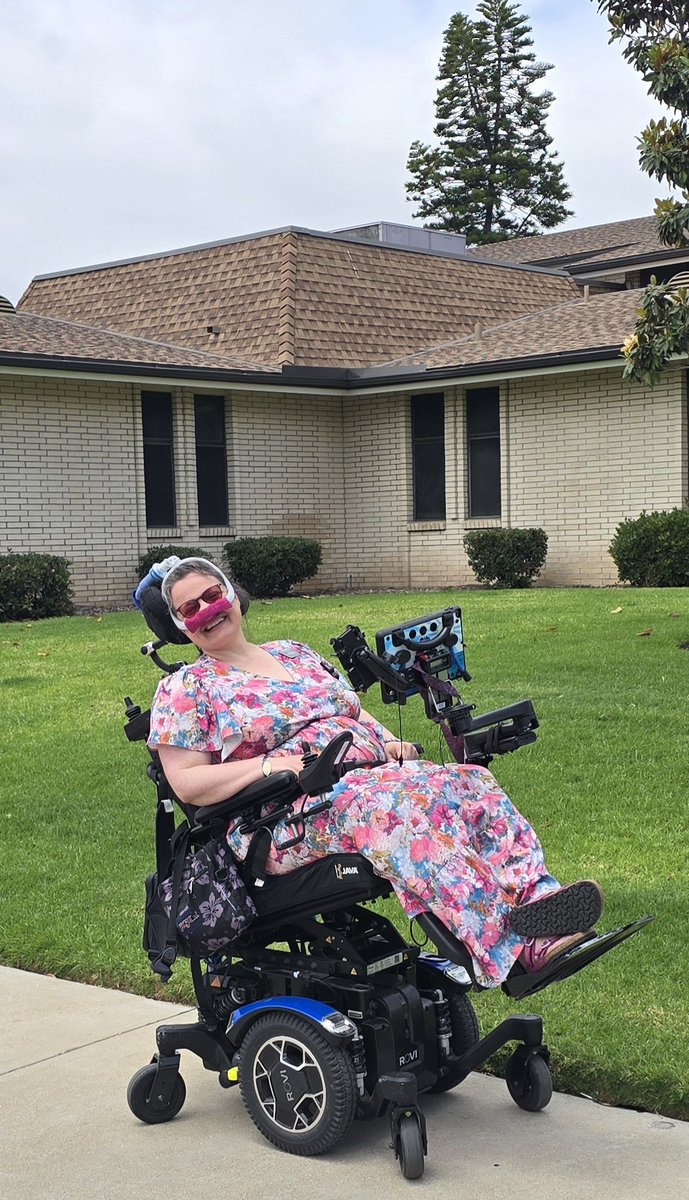
Perhaps we should talk about medical ethics surrounding Patient abandonment when serious adverse events require rehabilitation and ongoing medical care for injuries caused by treatment? (Before ECT, I didn't use a wheelchair, speech generating device, or ventilator. But ECT's injuries can be continuing and progressive--depending on the type of injury. Turns out microvascular ruptures leave iron deposits which rust, causing secondary injuries that just keep spreading. #AuditECT
We don't perfect ourselves and then come to Christ.
We come to Christ to be perfected.
President Dallin H. Oaks said to get closer, one step at a time.
A soft amen isn't the assignment.
Act.
Keep covenants.
Share Him.