Thrilled to announce I’ve joined @Corkprotocol as CTO.
After a great run working for top web3 projects, traveling to conferences, and winning hackathons, it’s clear where I want to focus: bringing TradFi onchain.
🧵 Let me share what convinced me to join Cork (+ we are hiring)
What makes me especially excited to build Cork is the market growth for tokenized assets. We’re entering a new phase of scale:
• real world assets: $3B → $25B in 3 years,
• stablecoins: $260B total market,
• vault protocols like @MorphoLabs & @veda_labs: triple-digit growth
As DeFi is rapidly becoming TradFi’s technology backbone, this transition needs to happen with the same rigor, transparency, and automation that underpin traditional financial markets.
Cork is the solution, serving as a programmable risk layer for onchain assets such as vault tokens, yield-bearing stablecoins, and liquid (re)staking tokens.
Prior to joining Cork, I cofounded and was the CTO of @Nefture, a security product aiming to protect DeFi. Through this experience, I came to deeply understand one of the biggest challenges of DeFi, security.
More recently, I expanded my horizon and worked on:
• building a DeFi locker on Linea with @StakeDAOHQ,
• building a secure reward distribution system on Arbitrum with @cedelabs,
• analyzing Permit2 phishing scams with @RevokeCash,
• auditing an ERC4626 vault for @trumarket_tech,
• building UniV4 hooks at UHI @AtriumAcademy
• won 6 hackathons (@ETHGlobal, @alephhackathon), with projects actively developed like PolySwap (grant by @CoWSwap) and @BackupBuddy_io, well on its way to make wallet recovery secure and accessible,
• attended confs and popup cities, making amazing friends and deepening my understanding of the ambitious vision for @Ethereum. Best examples being @Zuitzerland where I spent a month learning about d/acc.
It’s this journey, when meeting @robdogeth at @EthCC, that allowed me to understand the important and inevitable vision of @Corkprotocol.
I’m incredibly excited to contribute to Cork’s vision of institutional-grade risk management for onchain finance.
The next trillion in liquidity will require transparent risk layers, and that’s what we’re here to build.
We’re working on cutting-edge DeFi and building a top-tier team. This is why I’m excited to be building here. If this is interesting to you, come build with me. We’ll be hiring a senior smart-contract developer to support our build (see link in the comments).
Follow @Pybast & @Corkprotocol to see what we're cooking!
@r0bre yeah actually! maybe hw should be sold in kit and user assembled after visual verification.
also, is weighing the device reliable to mitigate hardware tampering risk?
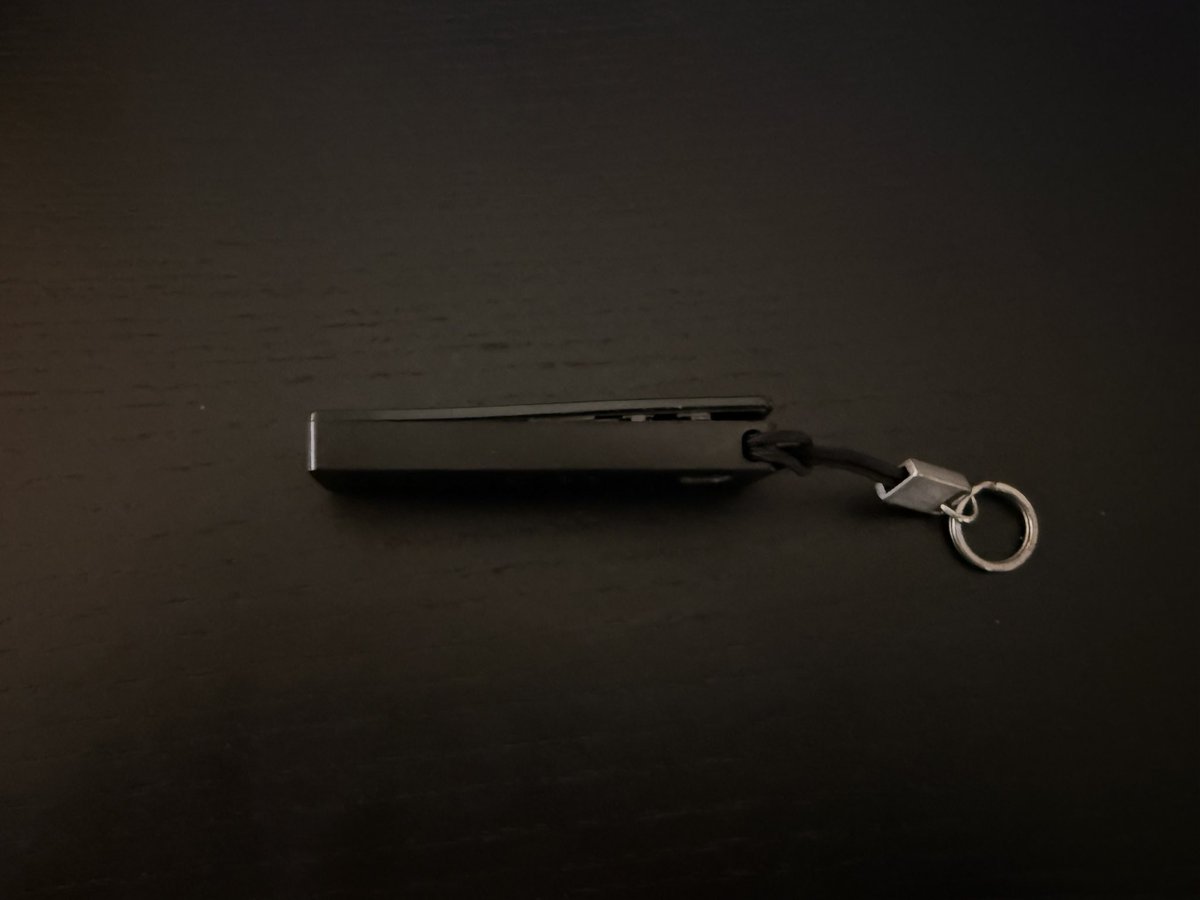
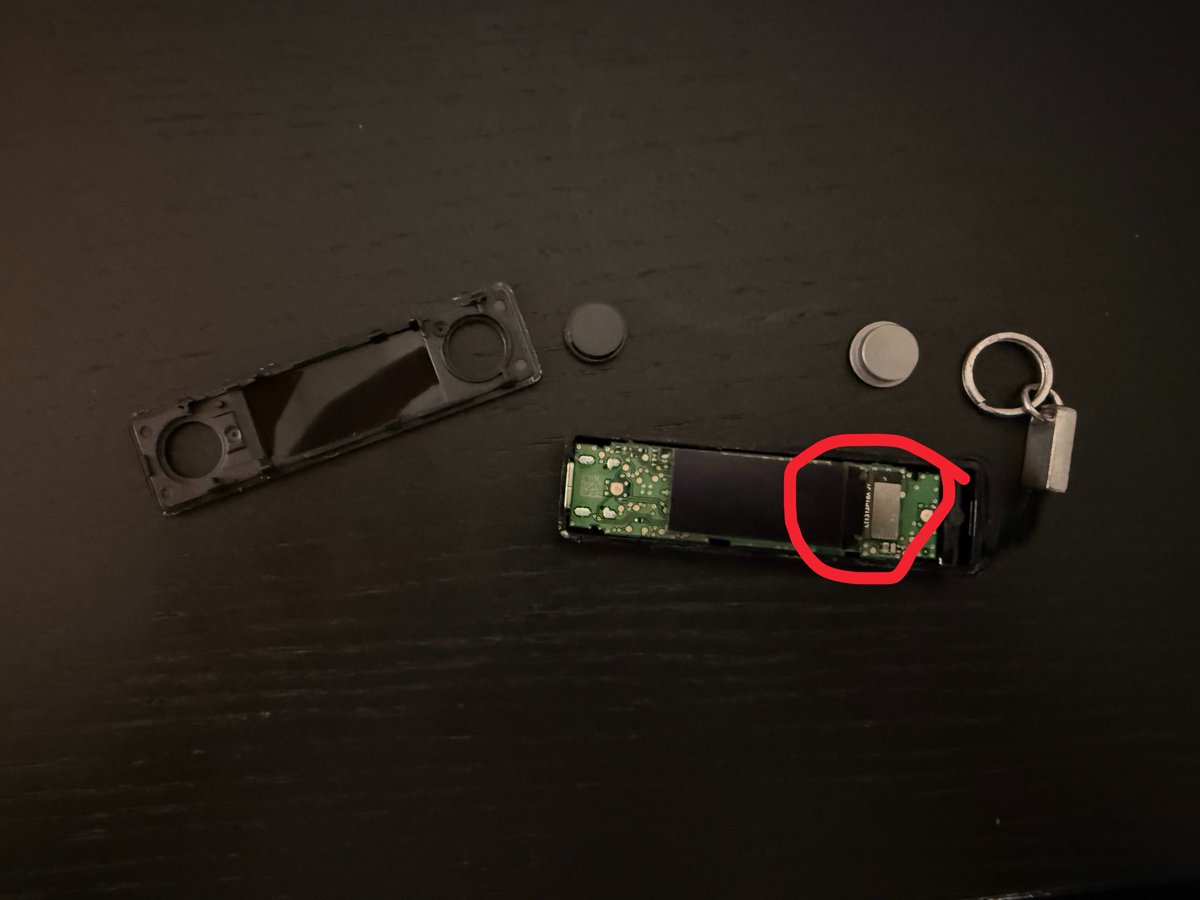
To check your ledger nano X for an implant is really really easy and I recommend you do it for peace of mind.
1. take off the lid. Then, using a sharp object like a knife, pry open the case. It comes off super easy once you get it in.
2. open the case. You dont need to fully disassemble the device.
3. check that the display is connected to the mainboard directly like this, without anything else connected between the mainboard and the display
4. check behind the display. There should be nothing but the main board.
The images show a clean board, the way it should look like. Be aware that different generations pf the same product can look differently.
The known attacks target a weakness that exploits a security boundary between main board and display. So really this is all you need to check. Take a peak behind the mainboard too, there should only be the battery.
To put it back together put the buttons in the case first, then just squeeze it back together and it should be just like before.
Be careful not to hurt yourself or the delicate electronics when using a sharp object and make sure to ground yourself before working on the device (touch a heater for example)
I hate this so much. The top Google result (an ad) leads to a well-made scam version of @safe. Given how often legitimate crypto projects get suspended from ad programs, fkn @Google still happily sells its top spot to scammers after all these years.
"Nobody's going to hand an agent $100 million without risk controls underneath it." - @Philfog on @TheCryptoMavs.
Most agents have exactly one risk tool right now: sell everything, all at once, the second something looks wrong. Enough agents doing that together isn't risk management, it's a cascading failure.
there is no immediate threat to 🦊 wallets
no wallets or funds are at risk
this is a precautionary measure; we are proactively exiting the affected validators within our non-custodial staking operations
we will continue to monitor the situation 🦊
Earlier this month, an agent bought risk coverage directly through another agent on Cork, with no human involved.
This was a major milestone; the first fully autonomous, agent-to-agent risk trade to happen on Cork's infrastructure. @Zyfai_'s agent requested coverage on Cork's order book. An underwriter agent (Claude in a loop with the Cork MPC) priced it. Zyfai accepted, and it settled onchain on Base 🧵
"If we had built mortgage-backed securities onchain, 2008 never happens."
@Philfog sat down with @TheCryptoMavs to unpack why risk management may be one of the biggest missing pieces in onchain finance.