@_jasonwei Nice results! How do we make sure these are not re-discoveries? I found teach clinicians use AI-tool becomes the main blocker given their time constraints etc.
One of the biggest historical bottlenecks for training specialized models has been curating ground-truth. This is typically a very labor intensive process done with human supervision.
Now frontier models/agents are getting better and better at bootstrapping ground-truth from scratch, especially for verifiable tasks. They can do this either in a single-shot setting for simple tasks or simulate longer rollouts with rewards for longer tasks.
This paves the way for anyone to build mostly automated research loops without needing deep ML expertise or deep access to human labor for data curation. That part can be offloaded to the frontier model/agent; the human's main goal is to define the right evals. This is especially useful for anyone who wants to optimize for a given task at the price-performance frontier. Posttraining open-weight models/harness should be made available to everyone, not just labs/specific startups.
Flow for the average user, who is only responsible for the first step:
1. define goal/evals for a given task
2. run frontier agents to gather ground-truth signals for the task. they can bootstrap annotations directly, and reach out to human review where needed
3. train specialized models (and harness) against this task
We @Zai_org are thrilled to open-source GLM-4.1V-9B-Thinking, a VLM that can think with long CoTs. SoTA in <10B VLMs, comparable to Qwen-2.5-VL-72B in 18 tasks. One RL to rule them all!
Details
- Tech report: https://t.co/sxsKy2xP2P
- Code: https://t.co/O8WXX7vK0F
Personal update: Thrilled to share that I will join the Department of Computer Science and Engineering @TAMU as a tenure-track Assistant Professor in January 2025. Sincere thanks to my greatest advisor, colleagues, friends, and everyone who has supported me during the journey!
Predicting protein function based on amino acid sequences has broad impact, but can be challenging. Check out a new #ML approach that has resulted in ~6.8M new protein function annotations, and try it yourself using an online interactive tool. Read more ↓ https://t.co/GeCr4Ju8XY
Here's a quick 🧵 on Shift-Robust GNNs to go along with the blog post. We'll start with the problem:
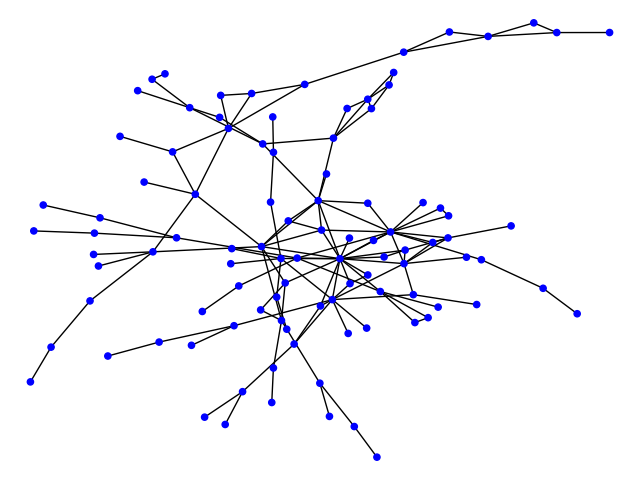
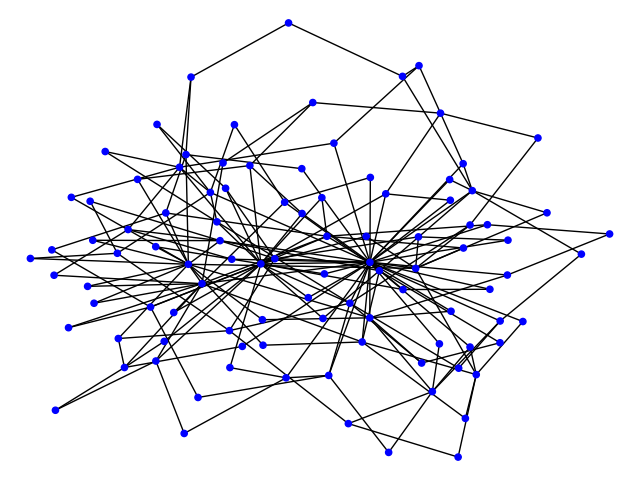
Your training labels aren't randomly generated (maybe they are biased to a particular part of the graph, as in the figure below). How will this affect your #GNN model? 1/x
Graph Neural Networks (GNNs) are powerful tools for leveraging graph-structured data. Introducing Shift-Robust GNN, an approach that accounts for potential bias in training data and meaningfully reduces the negative effects of such bias ↓ https://t.co/NknO6kqWQE
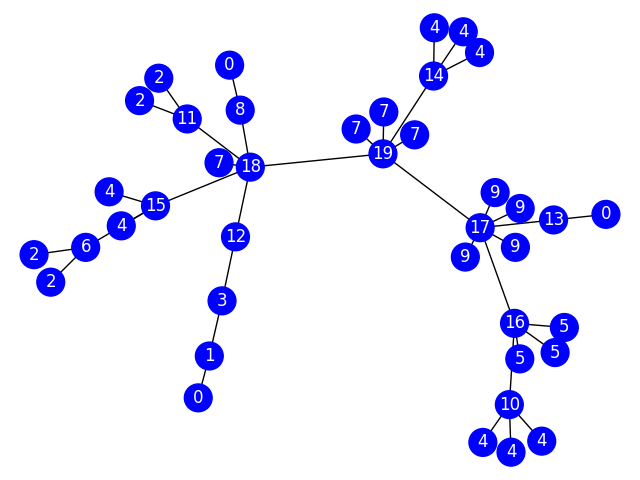
Presenting two work about domain adaptation in #NeurIPS2021 poster session. To understand the domain adaptation in graph domain, the definition of feature distribution is crucial. In "transfer learning of graph neural networks with ego-graph information maximization" (1/3)
We observe training and testing data in the same graph could contain distribution shifts when training data is non-IID annotated. We designed ShiftRobust GNN, which adopts both importance sampling and domain invariant regularizations to account for such shifts. (3/3)
Easier to find tho.
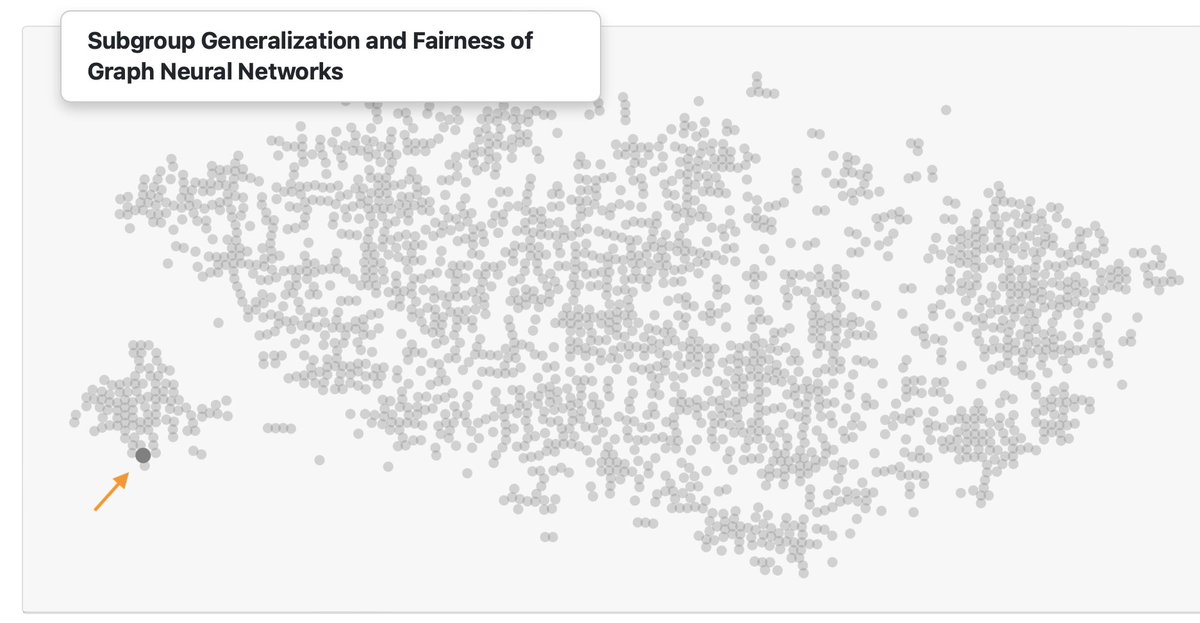
BTW, our paper is in the lower "marginalized" corner in this "marginalized" community. Hope that means we did something slightly more unique. 🤣
Delighted to share that our paper "Unsupervised Differentiable Multi-aspect Node Representation Learning" got accepted at #KDD2020 (Research Track). Joint work with Carl Yang, @QiZhu15, Donghyun Kim, Hwanjo Yu, Jiawei Han