Nobody reads long articles anymore, so here's the short version: Everyone keeps saying ZK KYC is coming. instead of handing over my passport to get a card at the supermarket, we just plug in ZK and done.
I think that's wrong.
Most of the time you don't need to KYC people at all. you don't even need to know who they are and putting new tech into a broken process usually does more damage than anyone expects. I don't want ZK to just show up inside KYC and suddenly we're running the same old practice, only fancier.
The system behind it has to change too:
1. Local biometrics: tapping a passport doesn't prove it's you. you need your face too. logical, right?
2. Kill proof of residence: the hidden final boss and the most archaic thing we ever came up with. millions of utility bills you can fake from anywhere, people move all the time, and no state or anyone gives you a credential tied to your address. it's always some weird old piece of paper. it can't be fixed with ZK. it just needs to go.
3. Registries. not just to store proofs, but for the regulatory part. how do we keep criminals out? today it's scan everyone to find one criminal. it should be I prove I'm not a criminal and you learn nothing else.
These are the real building blocks. not cosmetics you keep putting on top.
The next democracy won't wait for permission to hold a referendum. It'll run from people's phones, private and impossible to censor. That's what gets built with #freedomtool
🇫🇷 La prochaine démocratie n'attendra pas la permission d'organiser un référendum. Elle se fera depuis les téléphones, privée et impossible à censurer. C'est ce qui se construit avec #freedomtool
🎙️ 500 000 citoyens pour déclencher un référendum national ?
C’est la grande question posée dans l'Appli @RefCitoyen
👉 Rdv sur l'App, mettez à jour ou téléchargez depuis Google Play ou Apple Store
@Tocsin_Media
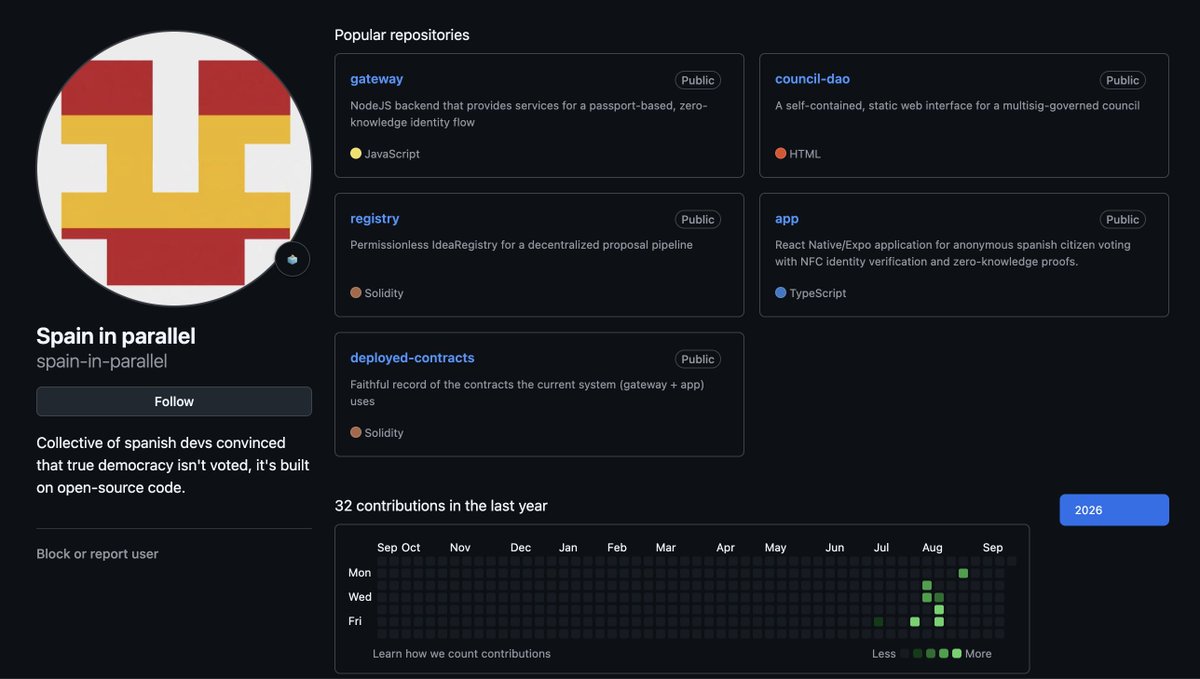
#Freedomtool is the most horizontal open-source thing we’ve ever been part of. Spanish 🇪🇸 builders taking the French 🇫🇷 community’s app and adding:
📥 an open registry for submitting ideas (polls) and a council interface for approving them for a vote.
🪪 Spanish ID integration.
The code is open for other communities to reuse and adapt. Someone builds what they need locally, and the next group doesn’t have to start from scratch or come back to us. Thanks to the contributors who are taking #Freedomtool in directions we wouldn’t have thought of ourselves.
We rebuilt https://t.co/aF3j2Z7RZF around one idea: how the new identity stack should actually work.
Three building blocks. ZK proofs from passports. Private biometric checks. A registry that ties everything together.
Together they make a credibly neutral identity system that no company controls or gates, including us. Years of research, in the simplest form we could find.
« Les problèmes arrivent en cascade et plus vite que les solutions. Donc il faut structurellement changer ça. C’est ce que permet l’application de référendum », assure Robinson Jardin dans Christine Kelly & Vous sur #Europe1@christine_kelly#ChristineKellyEtVous
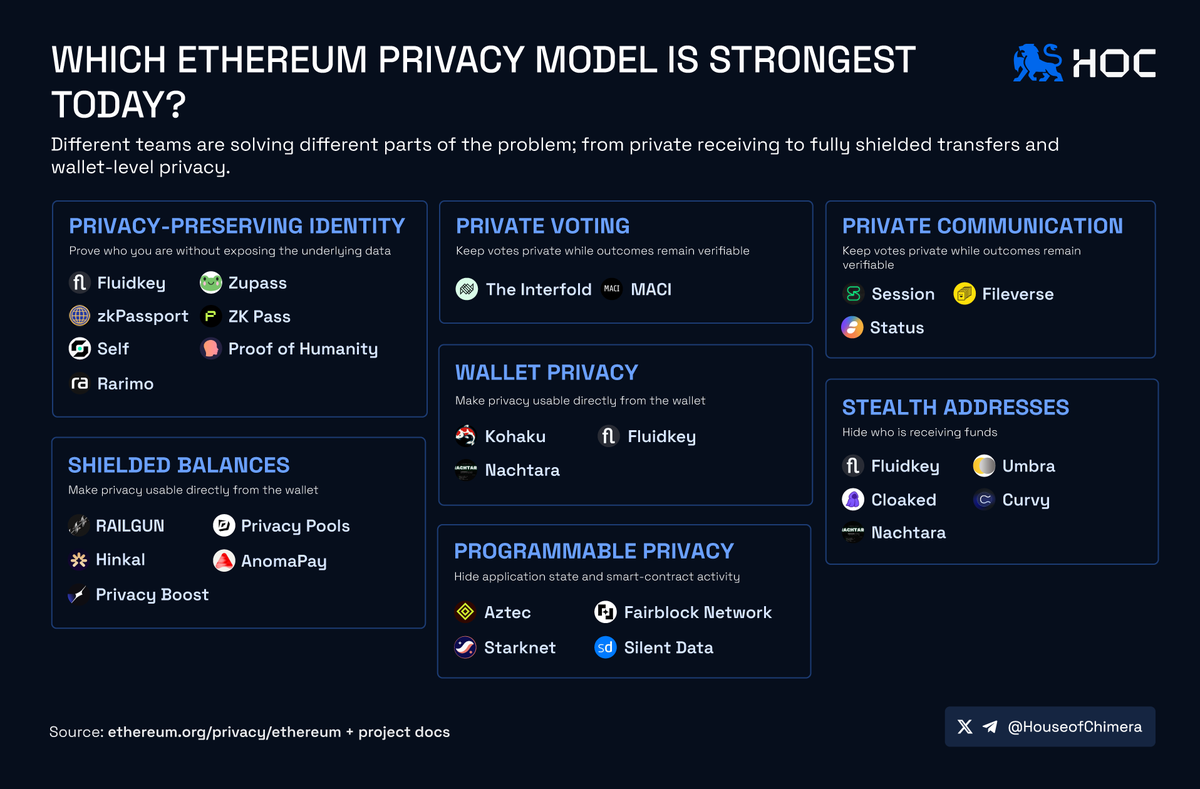
Every big breach ends the same. Revolut. Coinbase. The next one. Personal data leaks, everyone shouts ZK KYC. But Privacy on the tip of the iceberg does not rebuild the machine underneath.
Tried to sketch that shift from years of building it 👇 https://t.co/dXIXAvds7F
Dès le 15 septembre, on pourra voter avec sa carte d’identité sur Référendum Citoyen.
Plus besoin de passeport pour participer.
📲 Mettez à jour l’application dès le 15 septembre.
La démocratie directe devient accessible à tous.
On va tous voter. À l’attaque !!
This is #2835 breach for the last few years, and we keep reminding the world that it should be zk, without storing, sharing personal data. But we forget the next day. It’s not the tech problem anymore but a global compliance reg coordination problem.
Reminder: @Rarimo_protocol is the only solution that does both document and biometric verification without sharing your face anywhere for matching. Just scanning a passport means validating a document, not a person. In 5 years this will be a norm. Thank you for this matter.
Read @jerallaire's Agentic Economy treatise and while it's mostly about the money; the software governance is something I think a lot.
The way I see it: software finance is the money. AI is the labor. Governance is the bridge between humans and the machines. Two of those are being built right now, but the third is not unlocked. Not even close.
We'll need something hyperdynamic. A way for communities and citizens to signal to AI systems continuously, not once a term.
#Freedomtool has a lot to say here. But it's a whole ocean.
Le vote n'est que la dernière étape. La 1re c'est la question. Une mauvaise question divise quand une bonne éclaire le débat. C'est pourquoi @RefCitoyen ouvrira la préparation des futures consultations à toute la société civile. Construisons-les ensemble.
Our Tool of the Week is Freedom Tool by @LashaAntadze from @rarimo_protocol.
It uses zero-knowledge cryptography to verify voter eligibility while enabling anonymous, transparent and tamper-resistant elections and polls.
https://t.co/NZuQZ4r7me
Privacy is the loudest narrative of this cycle and most people still cannot explain it.
Today @dannytook and @LashaAntadze from @Rarimo_protocol fix that.
Rarimo built FreedomTool, an app that turns your passport into an anonymous ballot. It has already run in real elections.
3pm UTC. Set your reminder:
https://t.co/fKlHmgmh3N
Freedomtool will never have a social account, because Protocols don't post. Only a small website that opens with Satoshi's words. Code anyone can take, fork, run. And it should stay on the edge. Not a vendor selling voting software, but a standing promise that democracy can be continuous instead of periodic.
Nobody owns it. People carry it. That is the only distribution that survives.
🎙️ @AlexandreJardin sur @franceinter pr présenter @RefCitoyen
Dès le 15 sept, l'appli s'ouvre à toute la société civile.
Associations, collectifs, syndicats, élus, chercheurs et citoyens pourront proposer les sujets qui seront soumis au vote des Français.
📲 Téléchargez l'appli
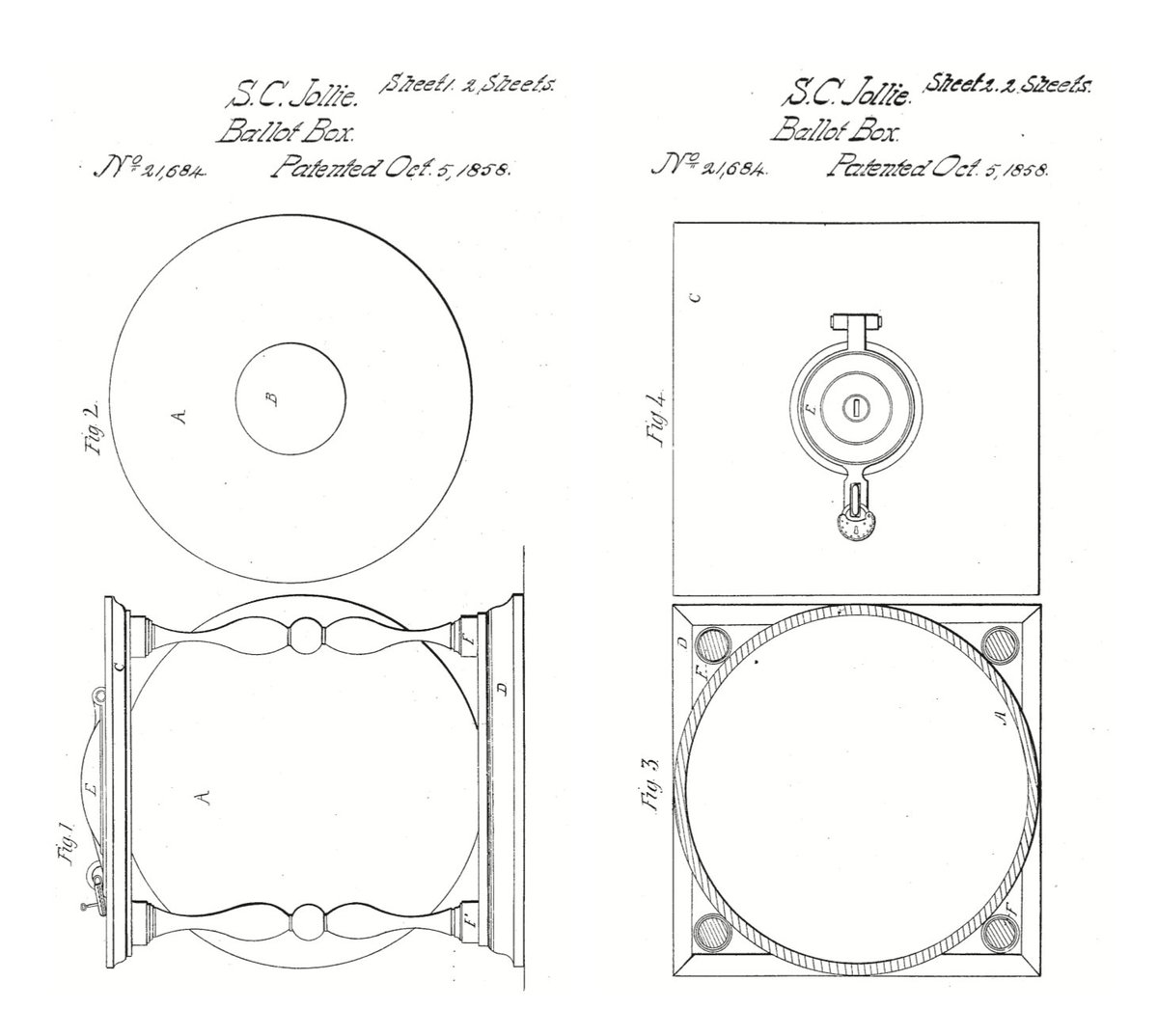
I love going back in history for references. Here's one I keep returning to for the next wave of democratic reform.
This is a glass ballot box, patented in 1858. It solved the technical problem. Transparent walls, locked lid, no false bottom. You could watch every ballot go in and stay in. Ballot stuffing, the dominant fraud of the era, was dead on arrival.
But the world around the box wasn't ready for it. The polling place still ran on whiskey and party machines. One glass box couldn't fix an entire electoral culture overnight. It was one correct component inside a system that hadn't caught up yet.
And then, iteration by iteration, the system did catch up. Secret ballots. Voter registration. Standardized procedure. Each reform locked in another piece, and decades later the equilibrium matched what the box had promised from day one.
That's the pattern with every election innovation. First the technical problem gets solved. Then the world spends years arriving at it. The solution doesn't change during that time. The world does.
That's the reference I hold onto for #freedomtool. The cryptography for direct democracy is already clean. Anonymous but verifiable votes, math instead of trust. The technical phase is done. We're in the arrival phase now.
Clean designs don't fail. They wait. Our job now is to make sure that the world arrives soon.
🇫🇷 Une nouvelle étape arrive.
Aujourd'hui, les votes sont ouverts aux détenteurs d'un passeport.
Dès septembre, les cartes nationales d'identité permettront elles aussi de participer.
Chacun doit faire entendre sa voix.
Téléchargez l'Appli 👇 https://t.co/bFW3JUBZRB
Cette innovation de rupture de @Rarimo_protocol est une pièce maîtresse au cœur de @RefCitoyen : elle fait basculer la démocratie directe dans une ère de Securité inégalée puisque nos informations personnelles RESTENT dans notre smartphone. Il n’y a rien à pirater - contrairement aux grands fichiers de l’Etat - puisqu’il n’y aucun fichier personnel : rien !
Les 120 000 Français qui ont déjà téléchargé https://t.co/RiWQyk8fz7 sont les premiers au monde à bénéficier sur une telle échelle de cette avancée démocratique de rupture : merci de tout cœur @LashaAntadze !
Merci d’aider @RobJardin à piloter les évolutions !
Partout dans le monde des consciences démocratiques comme vous cherchent à mettre une democratie fiable, sécurisée, vérifiable par tous, dans la poche des citoyens : vous y parvenez !
Quand la France aura vraiment basculé dans ce type de democratie directe, le monde suivra. Partout les sociétés humaines ont besoin de revivifier la democratie.