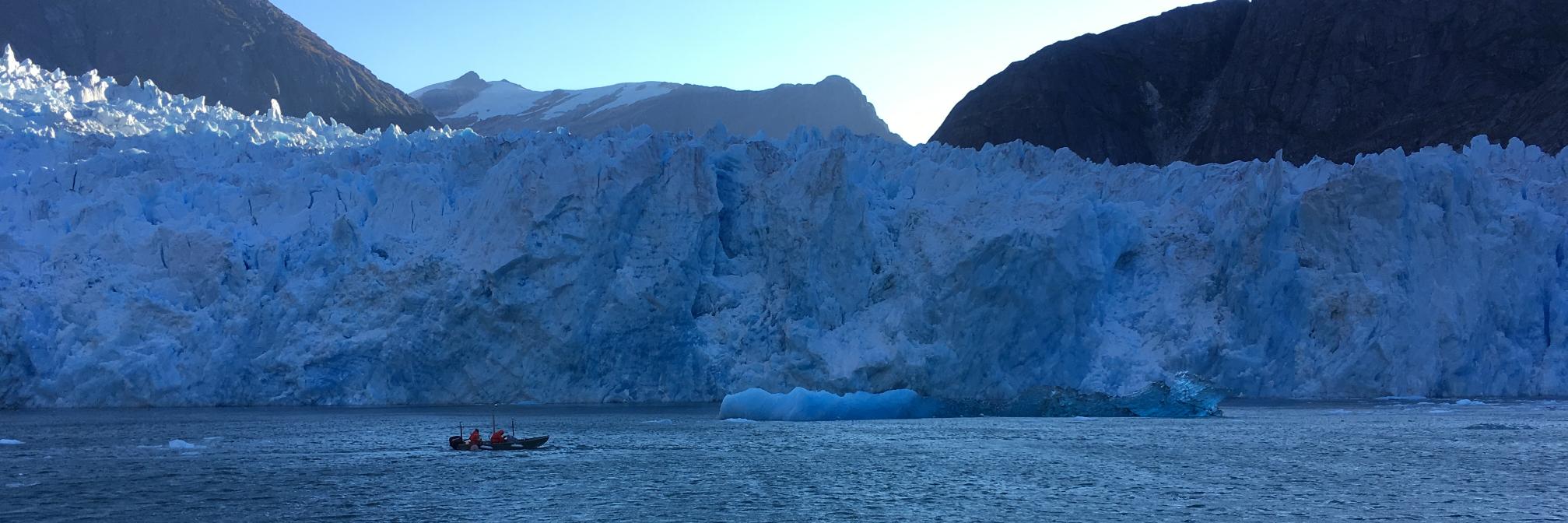
Submarine melt rate (SMR) induced by plumes (my favourite thing) is influenced by both the atmosphere and the ocean. We set out to try to quantify the relative importance of these two factors (1/5) https://t.co/ANzUrfWvFP @fstraneo @EdinGlaciology@Scripps_Polar@NatureGeosci
Am now sufficiently recovered from @WCRP_CLIVAR Sea Level Conference to put down some thoughts on how glaciologists can work to achieve better convergence with coastal practitioner needs 1/ 🧵
Along with being a fascinating story of #Greenland ice and polar bears, this new @ScienceMagazine study is also all about the ⭐️power of collaborative interdisciplinary research⭐️.
I hope to inspire you! 🧵
https://t.co/bKEq8mD66s
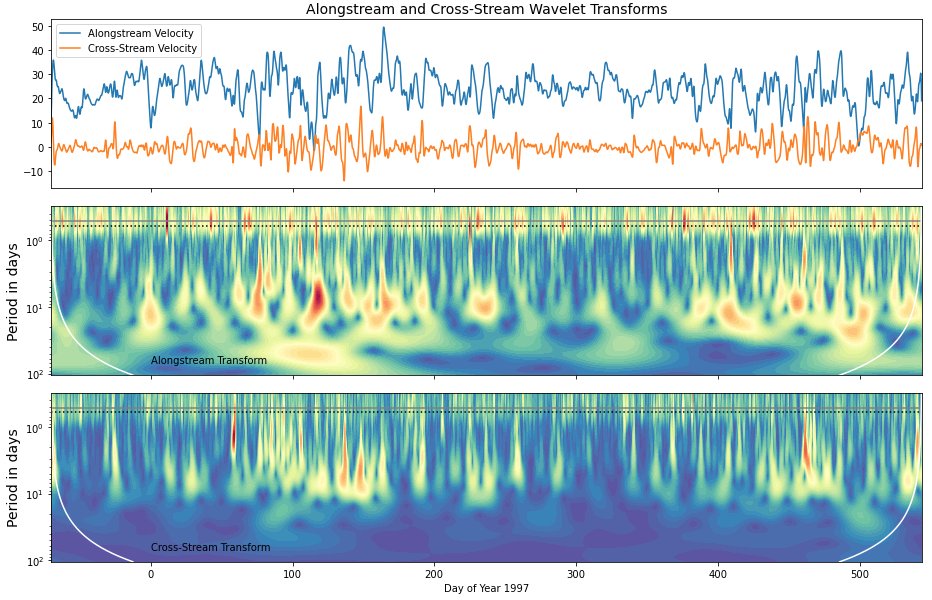
My time series course notes, in development since 2016, are now available on Github as a complete distribution, with a DOI from Zenodo.
Now in both Matlab and Python!
Online version: https://t.co/48F7jmu0ob
Github: https://t.co/fzClP6H3SU
Zenodo: https://t.co/SLAA1SIT7M
Enjoy!
Also from our project at LeConte Glacier, check out the talk by @_nabib (U. Oregon) in C34A this afternoon. Exciting work using repeat multibeam sonar scans to explore the interplay between terminus morphology, calving, and melting.
https://t.co/kl3CyIqbJU
Check out two #AGU2021 presentations today from the Polar Coastal Dynamics group at Rutgers, both focused on near-glacier ocean observations of plume and melt dynamics and both in poster session C35A:
Bridget Ovall (PhD at Rutgers) uses near-glacier kayak surveying to trace the evolution of plumes from their upwelling to outflowing stages.
https://t.co/ZQU45T00Zh
🚨The RIOS undergraduate research experience program is now accepting applications!🚨
Come work with us next summer and get hands-on experience working in ocean sciences!
For more information and a link to the application, click here: https://t.co/2X5AwqpAFX
Great job for engineers - developing and maintaining novel instruments for glaciology, oceanography, coastal engineering. Field work opportunities. #polar#jobs#EE#robotics#engineering https://t.co/kvhd4IGMy9
Two important studies out in @nature yesterday projecting future sea level rise from Antarctica and other sources which are likely to drive discussion among ice sheet modelers, so a 🧵 with some thoughts and aggregated resources (1/n)
Published today in @nature: DMCS members @samantha_bova and Yair Rosenthal tackle the Holocene Temperature Conundrum. Their answer: if you correct SST records for seasonal biases, mean SSTs appear to be warmer now than for the last 12,000 years!
https://t.co/jipaWM3VqA
Undergraduates interested in #marinescience! Consider applying to @RutgersDMCS's summer internship program, RIOS.
This 10-week, paid research internship will give you hands on research experience, networking opportunities, practice writing proposals & presentation skills.
Greenland's glaciers in the gentle topography of the northwest can transmit thinning from its edge all the way to the center of the ice sheet! New study with @gbinny, @TimBartholomaus, @mathieu_ice, @BricepyNoel. https://t.co/NHxFFjxTIP [@NASA_ICE, @UTGeophysics, @USRAedu]
Here are course materials for a class I taught in Spring called "Effective Computing," good for starting grad students who are not computer experts. Linux-python-git and organizational tips: https://t.co/Enqre3tn48
This took a while, but our study on subglacial salt wedges is now published in JFM! https://t.co/nMMhJvPzVk. Our objective was to determine the extent to which seawater may intrude a subglacial channel, i.e. submerged outlets that discharge glacial meltwater into the ocean. (1/5)
1/15 This is a thread about Greenland, how much is melting, and when & where all the melted ice and snow (and rain) enters Greenland fjords. Also melted snow and rain from land entering the fjords.
The Department of Marine and Coastal Sciences at Rutgers, the State University of New Jersey, is seeking a motivated tenure-track, academic year, faculty to join a collaborative statewide community as Director of the Rutgers University Marine Field Station.https://t.co/WcrP7W1Fnl