🦠 bacteria, viruses and a host! on tip toes behind their powerful armoury and how we can re-program them for targeted therapy and as biologicals ;) @HalbergLab
🧵 We ran the largest head-to-head benchmark of protein binder design methods in the wet lab.
Project page: https://t.co/eSG5qcCPQB
1 million designs. 127 targets. RFdiffusion, BindCraft, BoltzGen, and Proteina-Complexa — all tested side by side.👇
New Huang lab publication!! The first demonstration of nanopore discrimination of all proteinogenic amino acid enantiomers, suggesting nanopore sequencing of D- or DL-peptide? https://t.co/xXsl02rIKk
Excited to share #AlphaGenome, a start of our AlphaGenome named journey to decipher the regulatory genome! The model matches or exceeds top-performing external models on 24 out of 26 variant evaluations, across a wide range of biological modalities.1/6
What if we could universally recombine, insert, delete, or invert any two pieces of DNA?
In back-to-back @Nature papers, we report the discovery of bridge RNAs and 3 atomic structures of the first natural RNA-guided recombinase - a new mechanism for programmable genome design
Boltz-2 was released recently. It is an Open Source protein-ligand co-folding model, which means it can predict the structure of a protein along with the ligand.
It has various applications from drug discovery to protein design.
I thought why not make a OSS web app for it.
Excited to see our work published in @ScienceAdvances!
We present RBPseg, a method for structural prediction of #phage receptor-binding proteins.
We applied it to diverse tail fibers and validated the predicted structures using #cryoEM.
Read here: https://t.co/4tnb65svpY
You want to start tomography? Solve structures inside cells? Reach Nyquist😳?
We have a website for you! https://t.co/ulvbbhEY6d
You'll find a tutorial on how to reconstruct tomograms, pick particles and do subtomo averaging, using different software!
Hope it will be useful !
I'm happy to see our collaboration with @phagebioUCPH@LNdsted out on npj viruses! I had a fun time modelling T-even #phages adhesin proteins. Verifying that we can use #AF2 bias to select true binders was even cooler. Congrats to Veronika Lutz and all https://t.co/P6aeAUVZKf
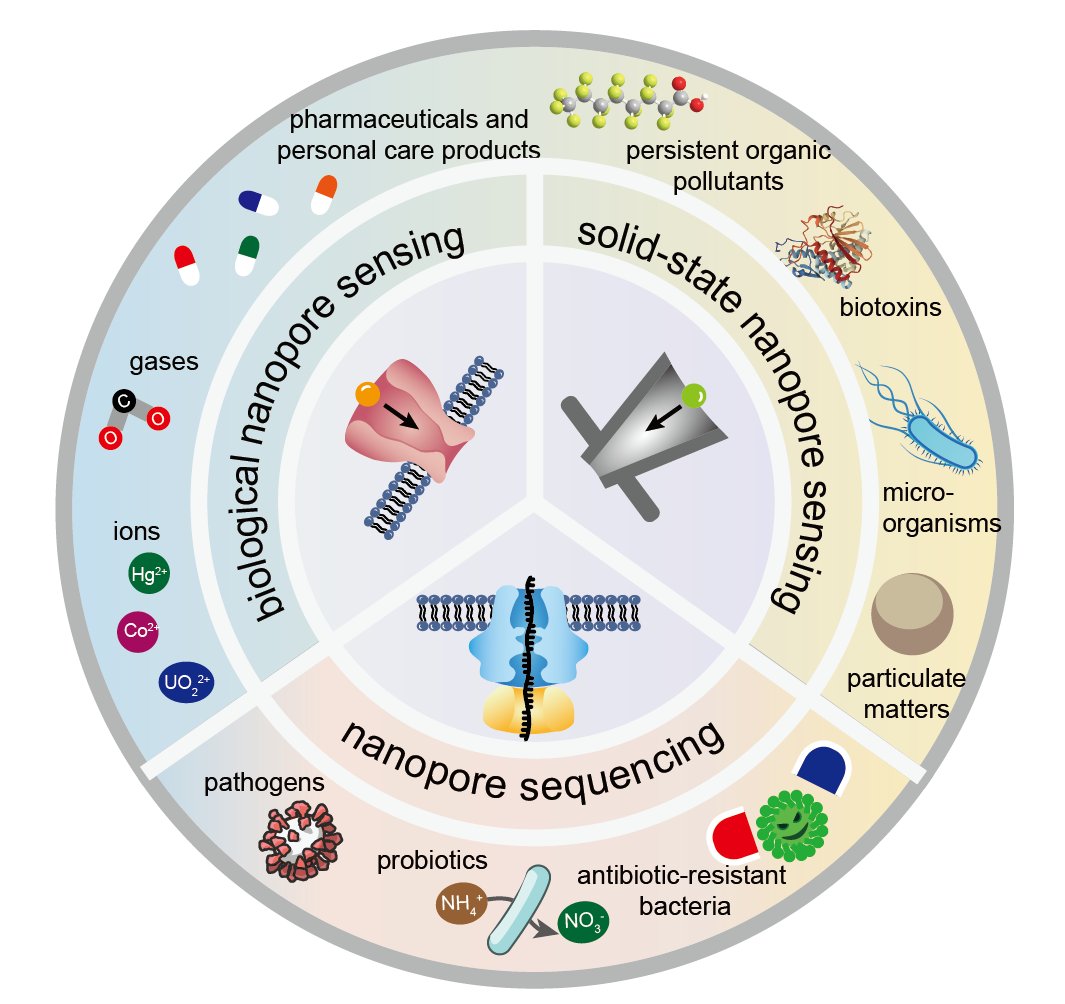
New Huang lab publication. A comprehensive review of nanopore environmental analysis. And, it is open access, which should be convinient for most readers. https://t.co/wtQYeUN2zD
New paper alert 🚨 We've solved the complete structure of a C. difficile-infecting phage using cryo-EM, in both extended and contracted conformations - published today in Life Science Alliance
A recent news/views article about our nanopore rare earth element sensing work published at Nature Nanotechnology. Thanks Andrew Laszlo for your comments, really supportive and inspiring 😊😊. There are plenty of room for nanopore beyond sequencing. https://t.co/iL8Dldcd1d
Please spread the word! We have an opening in the Atkinson lab for a post-doc with a focus on molecular mechanisms of microbial immune systems. Can be a fully computational or experimental or hybrid project.
Read more & apply here:
https://t.co/LhJTT4nPtr
#phage#Bioinformatics
💛LoVis4u - a visualisation tool for comparative genomics and sequencing coverage profiles is now published!
See our paper in NAR GB:
https://t.co/F5B2z2aFDA
Crystal structures are *not* God-given truth. They approximate, w/ flaws & errors, X-ray diffraction data. AlphaFold etc. have been trained on structures, not data. SFCalculator now differentiably connects structures to diffraction data. What does this enable? 🧵 1/4