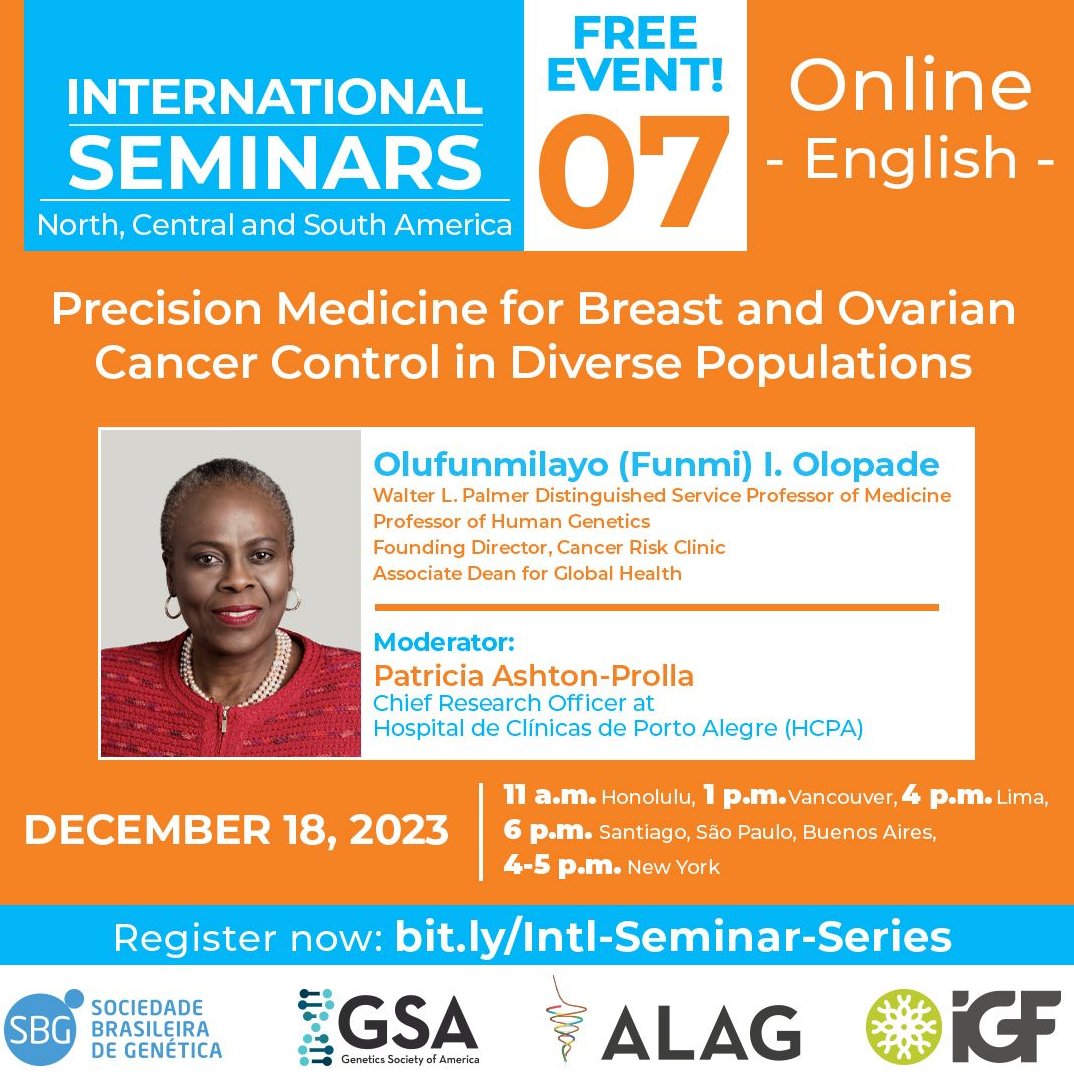
Evento promovido e organizado pela IGF (International Genetics Federation), com apoio das sociedades de genéticas do Brasil (SBG), da América (GSA) e Associação Latino Americana de Genética (ALAG).
Folks, 21st ISINIP (Düsseldorf, Germany) conference website is live now, arranged by conference chair @Petra_Bauer_PB and organising team. Mark your dates from 8-12 July 2024 and Look out for the updates 🙌. #isinip2024#ironmeet
https://t.co/GwUCRwZkoY
Hey all plant people here in the global south, read this thread. This is a unique opportunity to participate in one of the most, if not the most, important plant meetings. I appreciate the effort the organizers are putting in helping, financially, low income participants, bravo!
Crop Biology Professorship - the deadline has been extended to 28 September 2023, we are seeking for diverse candidates and subjects, please apply via the online portal, please RT
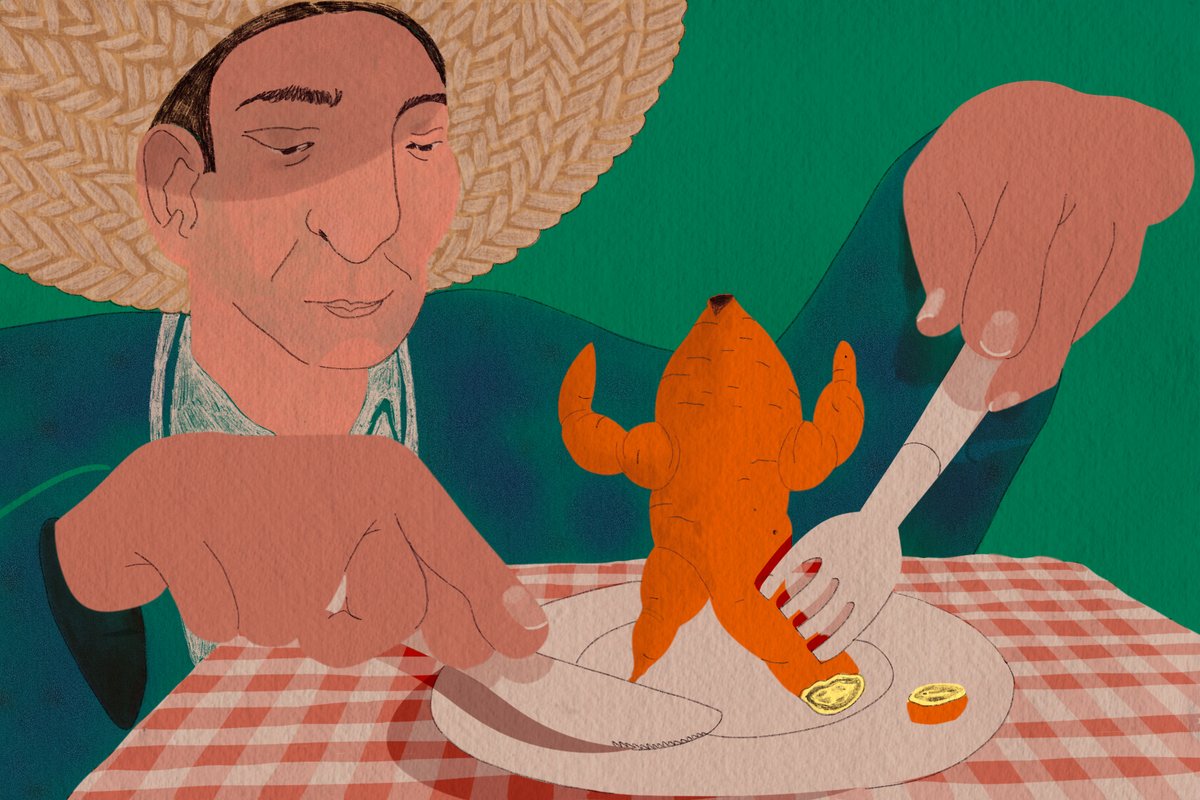
Feliz de ver mais um texto meu no Ciência Fundamental da Folha de São Paulo. Agora sobre biofortificacao de alimentos, tema de pesquisa do meu grupo. Por favor divulguem e compartilhem 😊
A fome nem sempre é aparente. Um dos problemas mais sérios da humanidade pode ocorrer por falta de determinados nutrientes na dieta: é a chamada fome oculta. Confira o texto de Felipe Ricachenevsky no blog Ciência Fundamental, do Serrapilheira na @folha.
https://t.co/rxxL4P1qMB
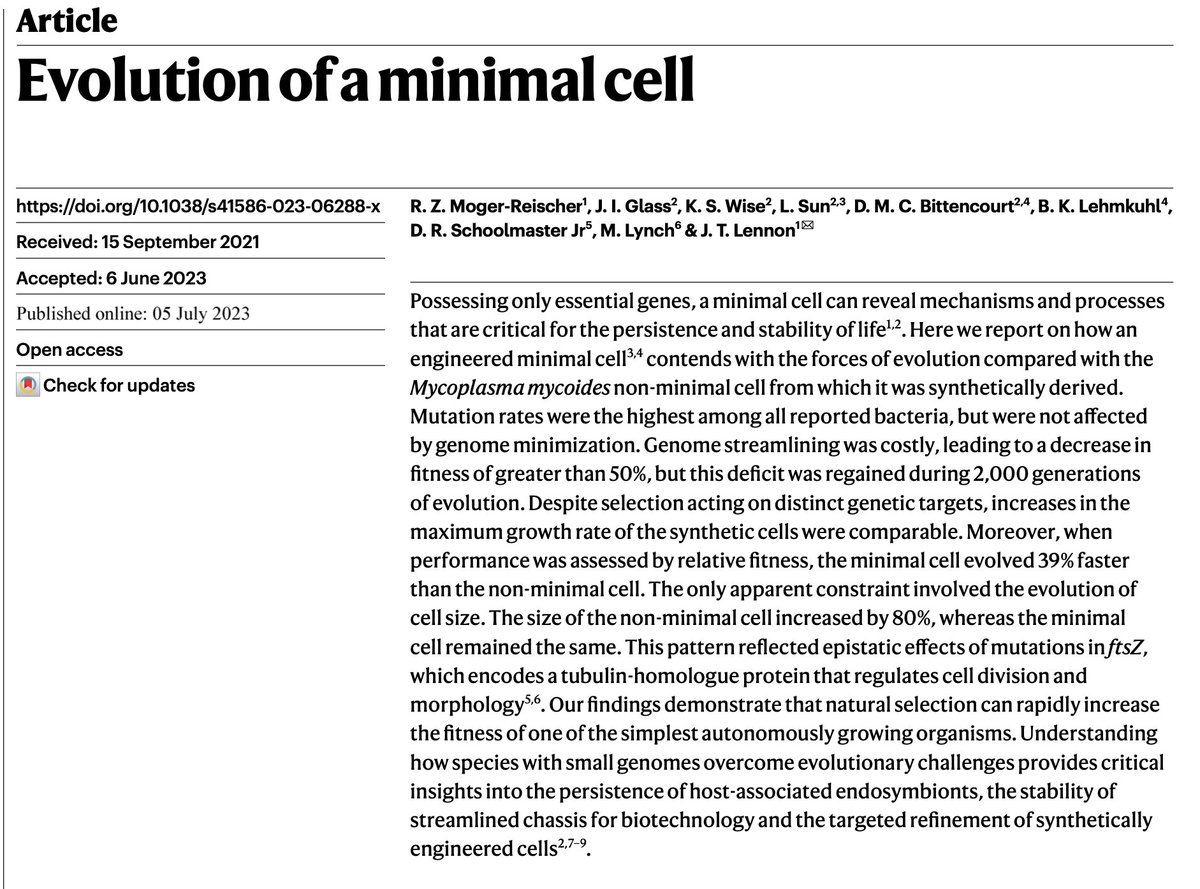
A mind-blowing paper has come out today in @Nature
In 2016, JC Venter Institute scientists trimmed a bacterial genome to its barest minimum required for life to synthesize what they called a "minimal genome" (https://t.co/Rk8oZJ0bUj).
Today, a group of scientists from Indiana University reports how that minimal genome evolved over 2000 generations in comparison to the non-minimal genome.
The authors found that even when you reduce a bacterial genome to its absolute minimum where every nucleotide matters, the genome undergoes mutational events generation after generation as much as the non-minimal genome. One simply cannot stop the evolution.
Just over 300 days of evolution (equivalent to 40,000 years in humans) the minimal cell has gained everything it lacked in fitness on day one in comparison to the non-minimal cell.
When comparing the evolved traits between the minimal and non-minimal cells, the scientists found something striking. The evolutionary process increased the cell size of non-minimal cells but not that of the minimal cell. But that is not the striking part.
The scientists were able to identify the key mutation that resulted in cell size evolution. And it turned out that the mutation that helped the non-minimal cells to grow bigger is the same that helped the minimal cells to stay smaller. Growing bigger had a survival advantage for non-minimal cells and not growing bigger had a survival advantage for minimal cells. So, the mutation had a context-dependent effect. This just demonstrates that the evolutionary effects on traits have no absolute direction. All that matter is what is beneficial for the organism's survival.
The conclusion of the paper is metaphorically a quote from the Jurassic Park movie:
“Listen, if there’s one thing the history of evolution has taught us is that life will not be contained. Life breaks free. It expands to new territories, and it crashes through barriers painfully, maybe even dangerously, but . . . life finds a way". (https://t.co/UlxRlb86CT)
https://t.co/zA9OAqSoAu
A @fapergs é parceira do Instituto Serrapilheira @iserrapilheira e co-financiadora nessa iniciativa de apoio a projetos altamente inovadores de jovens cientistas brasileiros
https://t.co/62qaQlpY94
Happy that our paper with Guotian Li is now published. This study highlights the power of genome-editing technologies in uncovering specific genetic variants associated with a desirable agronomic trait: disease resistance https://t.co/fW4TtmWzzC @JBEI@igisci@ucdavis@Nature
Happy to share our recently accepted article "Where the wild things are: Genetic associations of environmental adaptation in the Oryza rufipogon species complex" @LifeAtPurdue@uhmanoa@irri@USDA_ARS https://t.co/YGKIRkUooB
@dbonatto_ufrgs @folha@PpgbcmU@iserrapilheira Sem dúvida! Várias pessoas fizeram essa colocação. Somos empáticos quando nos identificamos, exatamente em ordem de proximidade.