The Schuh lab wishes you & your families a #MerryChristmas and a wonderful start to a happy & successful #NewYear2026 🎄✨
This year’s department Christmas card features a microscope image by our PostDoc @Kosti_Sofroni showing a fetal ovary containing prophase oocytes.
Oocytes are arrested in prophase to give them enough time to grow and accumulate sufficient maternal components.🥚
Our @NatureComms study led by @shiya_cheng reveals two mechanisms repressing cyclin B1 translation to maintain this arrest.
https://t.co/uotxQ3Njk1 (1/6)
Each month an #egg is ovulated from the #ovary, starting the journey of reproduction. But how does ovulation occur?🥚
Our latest work in @NatureCellBio led by @LastChrisThomas and @Tabea_Marx, describes the control of #ovulation using live imaging.
https://t.co/EYjwLfdAdy (1/7)
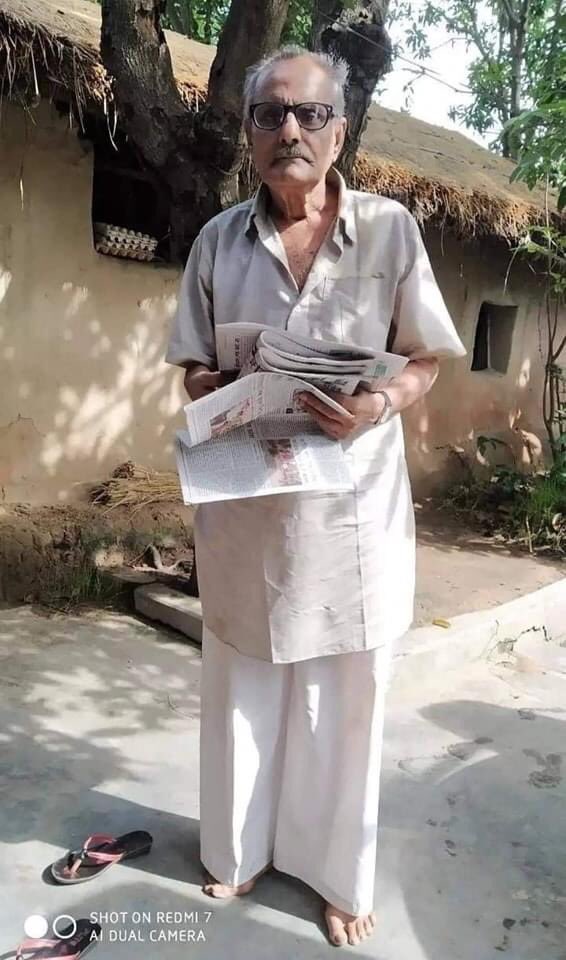
“The day I got my postgraduate degree, I didn’t waste a minute– I rushed back to my village, Ausgrum in Bengal to become a teacher. Yes, I had higher salary offers from schools in bigger towns, but for me, the 169 Rs. I was offered at my school village meant everything; I was hungry to teach the students from my village who needed a good teacher the most.
And I taught at my school for 39 years and only retired because I’d hit my ‘retirement age’– 60, what a ridiculous concept!
So there I was at 60, retired and expected to spend my years drinking sugary tea and whiling away my time on the charpoy! But I was restless, I didn’t want to retire and kept asking myself, ‘What shall I do now?’ A few days later, I got the answer.
One morning, around 6:30 AM, I saw 3 young girls enter my house. I was shocked when they told me they’d cycled for over 23 kms to see the Master who’d retired! They were young tribal girls who were desperate to learn; with folded hands they asked, ‘Masterji, will you teach us?’ I immediately agreed and said, ‘I can teach you, but you will have to pay my school fees for the whole year–are you ready to pay?’
They said, ‘Yes, Masterji, we will manage the money somehow.’
So I said, ‘Yes, my fees are Rupee 1 for the whole year!’
They were so happy, they hugged me and said, ‘We will pay you 1 Rupee and 4 chocolates also!’
I was elated! So, after they left, I put on my dhoti and went straight back to my school and requested them to give me a classroom to teach…they refused. But I wasn’t going to stop– I had years of teaching left in me, so I went back home, cleaned my verandah and decided to start teaching there.
That was in 2004–my Pathshala started with those 3 girls and today we have over 3000 students per year, most of whom are young tribal girls. My day still starts at 6 AM with a walk around the village and then I open my doors to students coming from all over– some of the girls walk for 20 plus kilometres; I have so much to learn from them!
Over the years, my students have gone on to become professors, heads of departments and IT professionals– they always call me and give me the good news and as always, I ask them to please give me some chocolates! And last year, when I won the Padmashree, my phone didn’t stop ringing; the whole village celebrated with me–it was a happy day, but I still didn’t allow my students to bunk class!
And my doors are open to all– come visit me and my Pathshala anytime; our village is beautiful and all my students are bright–I am sure you can learn something from them!
So that’s my story– I am a simple teacher from Bengal who enjoys his tea and evening naps on his charpoy. The highlight of my life is being called Master Moshai–I want to teach until my last breath; it’s what I was put on this planet to do!”
Sujit Chattopadhyay
President Kovind presents Padma Shri to Shri Sujit Chatterjee for Literature and Education. A retired school teacher from Purba Bardhaman, West Bengal, he is recognised over the state for his free coaching center named “Sadai Fakirer Pathsala”. (Courtesy: Characters of Calcutta)
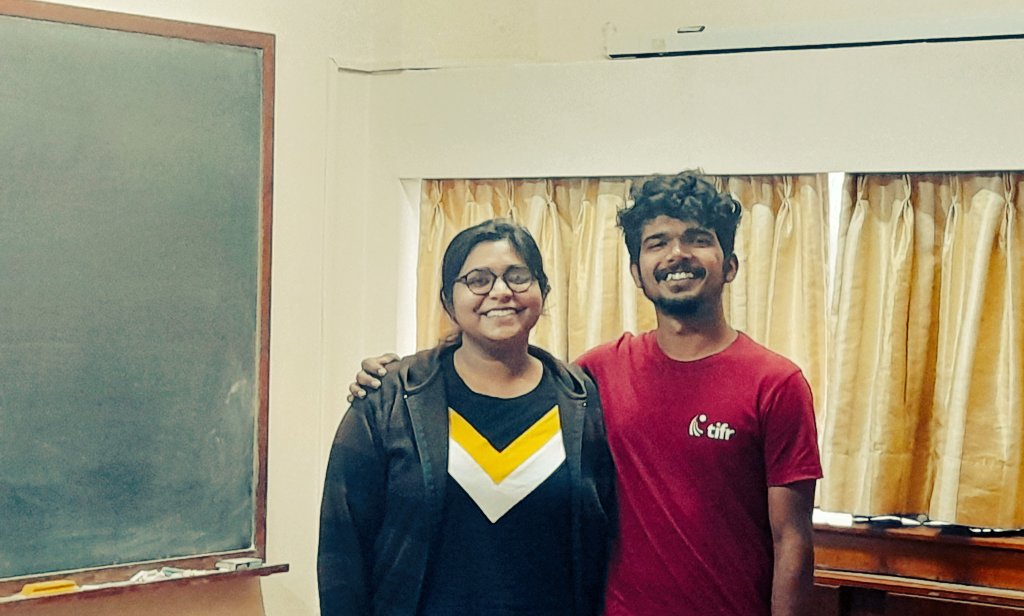
Anushka @Anushka_deb25 & Ritabhas @RitabhasD two MSc students who joined the lab in the midst of the pandemic, successfully finished their MSc by research degree. Both headed to different PhD programs in IMPRS (Intl Max Planck Research School) in Germany. Congratulations 👏🏽👏🏽
Day 23 of great biology papers.
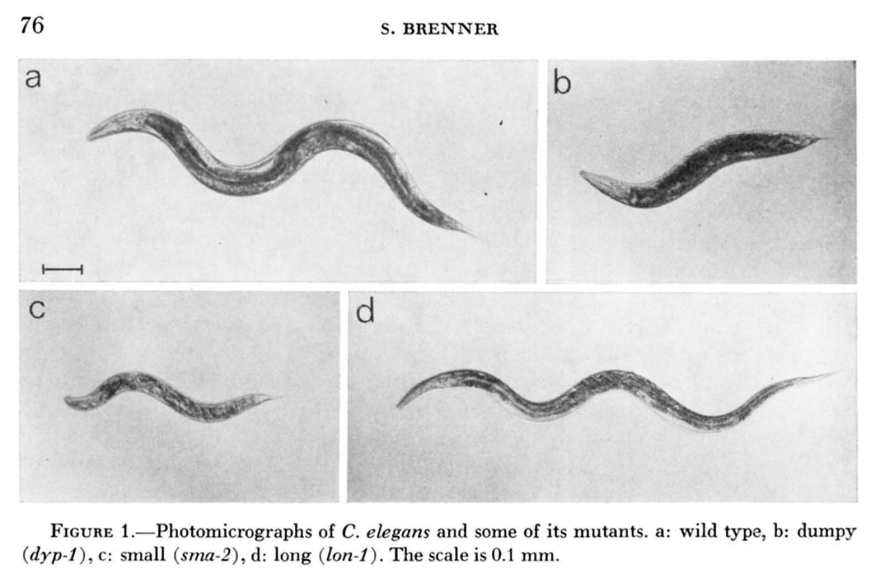
"The genetics of Caenorhabditis elegans," by Sydney Brenner (1974).
7 years, 300 worm mutants, 100 genes. This paper kicked off Brenner's long-term aim: To map how every gene affects the "development and functioning" of a multicellular organism.
**
During a four-year span, from 1961-1965, Sydney Brenner was involved in some of molecular biology's most seminal discoveries.
He helped isolate messenger RNA for the first time (1961), establish the "triplet" genetic code with Francis Crick (1961), and identify stop codons for polypeptide "chain termination" (1965).
And then, he pivoted.
In 1963, he wrote a letter to a friend, stating that he wanted to "tame a small metazoan organism to study development directly." In other words, to link chemical changes in genes to visible changes in behavior.(https://t.co/IGmWGAxbir)
The nematode, C. elegans, seemed perfect for the job.
Brenner obtained some worms in 1963. They are easy to grow on standard agar plates, produce many offspring (quickly), and have far fewer neurons than the fruit flies that T.H. Morgan had studied at Caltech in the early 20th century. C. elegans DNA can also be easily mutated using ethyl methanesulfonate, or EMS. (https://t.co/6K9jTULV48)
In 1963, Brenner applied for funding from the Medical Research Council at Cambridge. He said he wanted to "identify every cell in the worm and trace lineages," and also to "investigate the constancy of development and study its control by looking for mutants." (https://t.co/IGmWGAxbir)
Work began in 1967. For the next seven years, Brenner did painstaking experiments on his worms. In 1974, his single author paper in the journal Genetics explained how to work with nematodes, yes, but also "reported on hundreds of mutants—long worms, rolling worms, dumpy-looking worms, uncoordinated worms, blistered worms, and worms whose heads were notched or bent" that he had made with EMS.
Brenner identified 96 genetic loci on all six chromosomes in the worms.
Although Brenner did not achieve his first goal — "to identify every cell in the worm and trace lineages" — another group of biologists, also in Cambridge, did so in 1983. (https://t.co/nesUsdEItp)
Paper: https://t.co/nIgWRH8M0i
(h/t @CarlosSanz22 for the suggestion.)
As a professor, pursue the careers of your PhD students and postdocs instead of pursuing your own.
I know it may sound strange and even provocative. But in fact it is how it’s supposed to be.
Unfortunately, a personal gain is the biggest motivation for many professors. More publications, more awards, more invited talks…
Why? In addition to personal recognition, it can result in more funding and higher salaries (especially in the U.S.).
Many PIs say that their personal growth also helps their students get a better visibility. Plus, more funding brings in more students, which is (kind of) “great” for those students.
Others will say that their “tenure requirements are too demanding” and if they stop focusing on personal gain, they will be denied tenure.
In either case, I want you to think about the following:
1. When we focus on personal achievements, we lose track of the wellbeing and personal preferences of team members. Although it often feels like we still track it, in fact we become far less efficient at it. Students' progress and personal development are impeded. Their career opportunities become less diverse or even missed.
2. Concentrating too much funding in one big lab is NOT a good idea because it leads to PhD students receiving far less mentorship and research advising (than in smaller labs).
3. Tenure requirements often look intimidating to young professors. However, in reality, very few professors are denied tenure. Why? First, because any university invest big resources into TT professors and don’t want get rid of them without a big reason. Second, because departments often exaggerate the tenure challenges to ensure their young hires are “hard-working faculties”.
Many PIs think I am too idealistic and propose unrealistic ideas. And a lot of people will never agree with this post. Even myself, I can easily come up with bitter criticism over it.
However, idealism is among the biggest driving forces. It can drive you through challenging times and help improve.
In either case, I want you to think about the following:
1. When we focus on personal achievements, we lose track of the wellbeing and personal preferences of team members. Although it often feels like we still track it, in fact we become far less efficient at it. Students' progress and personal development are impeded. Their career opportunities become less diverse or even missed.
2. Concentrating too much funding in one big lab is NOT a good idea because it leads to PhD students receiving far less mentorship and research advising (than in smaller labs).
3. Tenure requirements often look intimidating to young professors. However, in reality, very few professors are denied tenure. Why? First, because any university invest big resources into TT professors and don’t want get rid of them without a big reason. Second, because departments often exaggerate the tenure challenges to ensure their young hires are “hard-working faculties”.
My message is:
If we all pursue the careers of your students/postdocs in the first place, this shift in priorities will make academia a much better world to live in.
I see an increasing number of faculties trying to genuinely care for their team members, in all countries and academic environments. It is all possible. Just do it. Make science better.
Oh, and don’t forget:
Growth of your team members = Growth of yourself.
#AcademicTwitter #research #phdlife
Dear Professors,
You aren't doing any good for your younger colleagues by making a PhD journey longer. 6-7 years spent in PhD are red flag on your mentoring style. World is changing, living is costly, late 20s are best years of life, please corporate 🙏
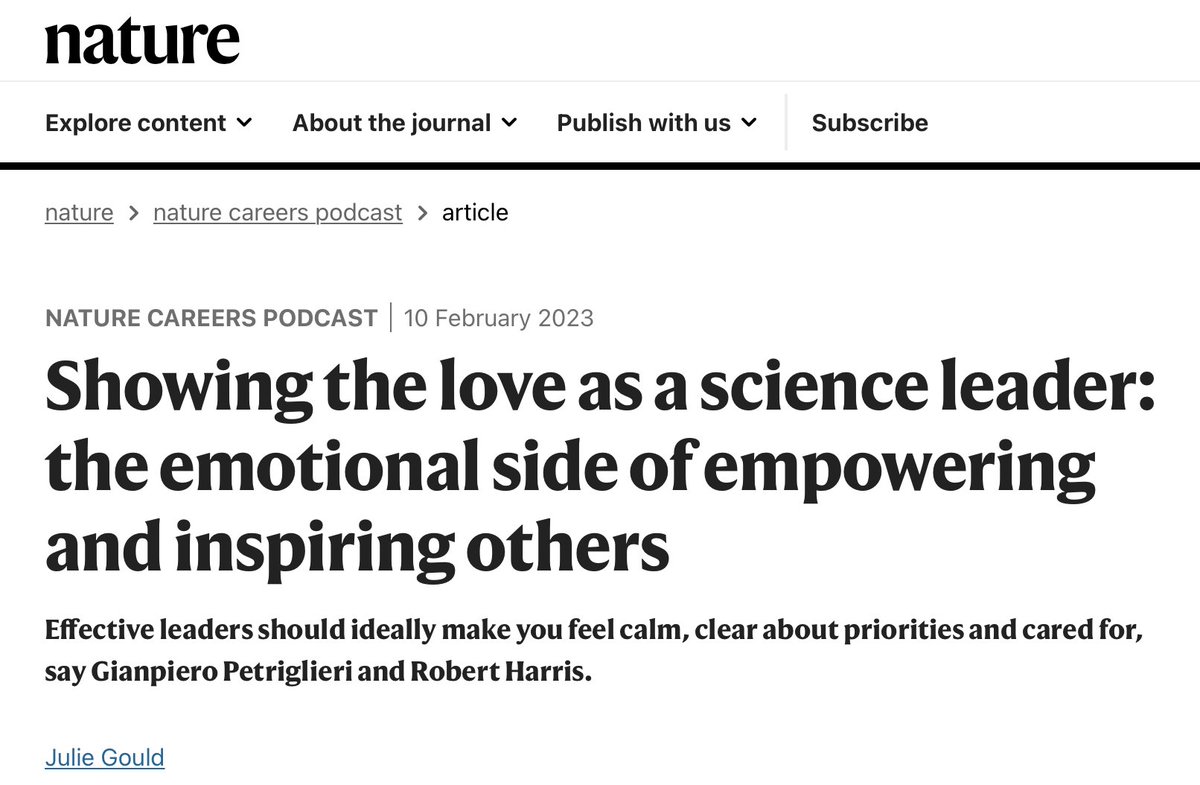
There is a big difference between feedback that is meant to tear down and feedback that is meant to build up, and that difference lies not in what we say but in how we say it.
No questions, Women deserved more prizes than the committee over the years have recommended! Its a shame that we still consider Nobel Prize to be the most important! Unless they change the way the committee is set up nothings going to change! @abhikghosh
https://t.co/0uSXmMZQpy
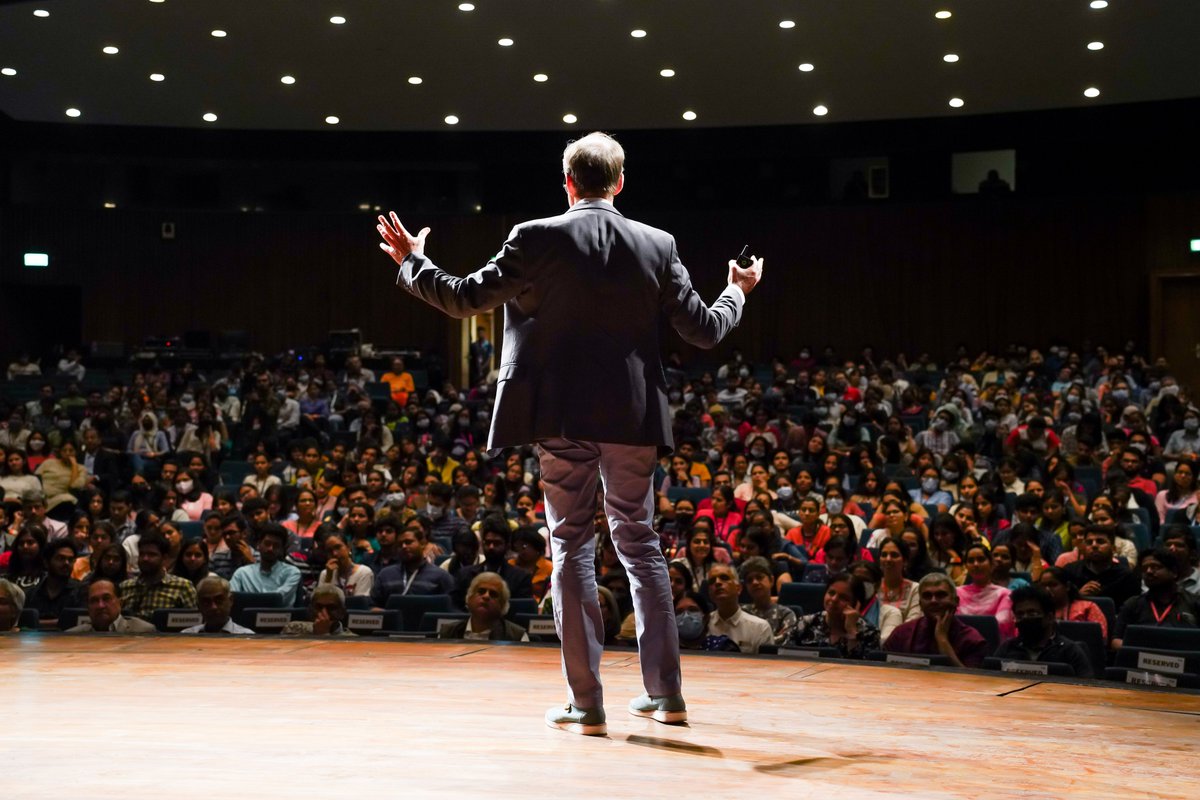
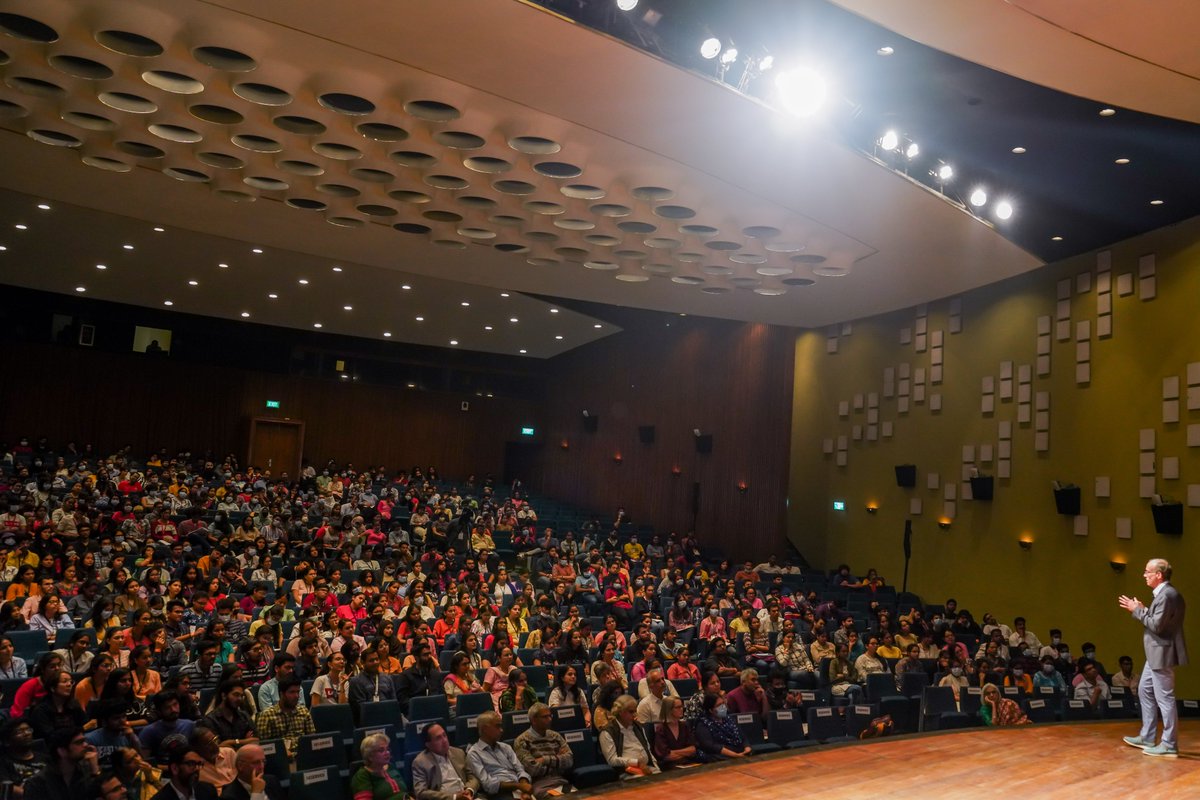
Dr Ron Vale lecture in Mumbai. Topic - 'Marvelous Molecular Motors'
Next stop, Kolkata. See you there!
As always, admission is free and open to all:
https://t.co/3qL6vU1iAT
"Nature is often fleeting and reveals herself in small glimpses. I have a certain enthusiasm and passion in finding these moments and sharing them with the world."
- #InfosysPrize2022 laureate in Life Sciences, Vidita Vaidya, @TIFRScience@ViditaVaidya