Most people want to learn Python for Data Analysis...
But they never start because they don’t know the right resources.
So I’m giving away “Python for Data Analysis” by Wes McKinney (worth $69) for FREE to a first 4500 people today. 🐍📊
If you want it, do this:
1️⃣ Follow me (so I can DM you the book)
2️⃣ Like + Retweet this post
3️⃣ Comment “PYTHON”
That’s it.
⚠️ Important:
If you don’t follow, I can’t DM you the book.
I’ll randomly pick people and send it directly in DM.
Good luck. 🚀
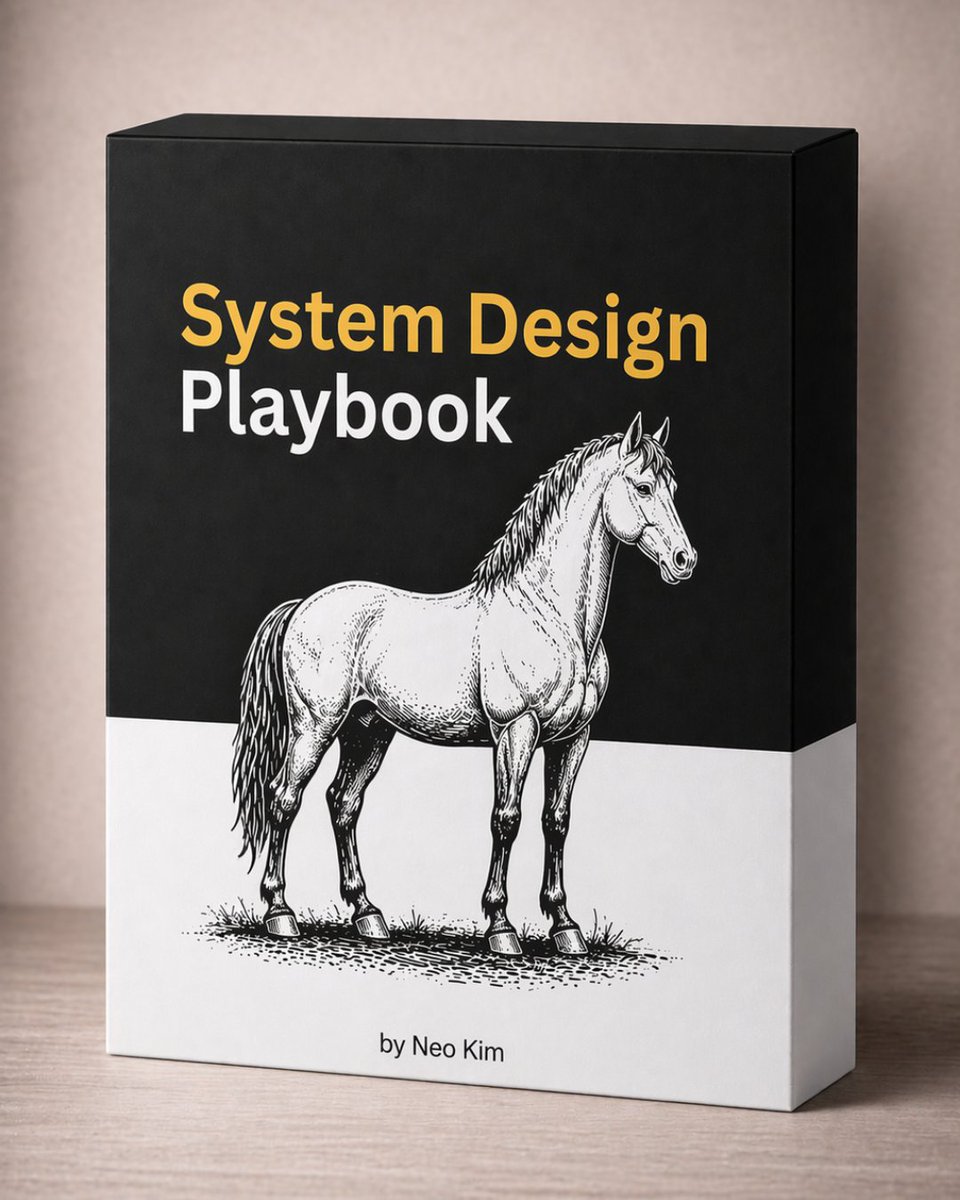
SYSTEM DESIGN PLAYBOOK
Giveaway Alert!!!
• System design fundamentals.
• Condensed notes to read before system design interview.
• Must know concepts from real-world software engineering case studies.
To get it for free:
1 Retweet & Follow @systemdesignone
2 Reply "Playbook"
Then I'll DM you the details.
🔥Giveaway $300 in $CNS 🔥
To Enter:
💎Like,Follow and Retweet this Post
💎Tag 3 Friends
💎Mention @CentricRise and #CentricWarriors in your post
💎Be an $CNS holder
⚠️Might be asked to send proof ⚠️
Winner will be chosen on the 24th 🚀
#CNS#Altcoins#Bitcoin
Day in and day out, I speak to people about opportunities we have live @ Ondo
Generally, people are already bullish on what we're building or become so after doing further research
It's exciting because we are only just getting started, early next year we level up big time
$GRT has great potential to be part of the AI infrastructure of the future in the decentralized sector.
@Grayscale and @graphprotocol know that already.
$GRT > $3
What is @graphprotocol GRC-20 standard?
$GRT
The GRC-20 standard for web3 has the potential to transform the internet by establishing a universal framework for organizing, sharing, and connecting knowledge in a decentralized ecosystem. Here’s how it could change the web and create the foundation for a new internet:
1. From Information to Knowledge
•Current Problem: Traditional data systems are rigid, often tied to specific schemas, and lack interoperability, making it difficult to integrate or adapt them for new applications.
•GRC-20 Solution: By introducing a flexible standard that builds on knowledge graphs, GRC-20 enables the creation of a network of interconnected, dynamic relationships. This allows developers to link and label information, transforming raw data into actionable knowledge.
•Impact: Applications can evolve seamlessly, leveraging shared datasets to enhance usability and reduce redundancy. This enables a more adaptable and scalable internet.
2. Knowledge Graphs as the Foundation
•Core Idea: Knowledge graphs represent entities and their relationships, mimicking the real-world connections between information.
•Advantages: Unlike traditional databases, knowledge graphs handle the evolving nature of data and its relationships without breaking interoperability.
•GRC-20’s Role: It introduces a decentralized approach to knowledge graphs, ensuring the information remains composable, verifiable, and independent of centralized control.
•Impact: This flexibility supports a more interconnected digital ecosystem where applications and domains can communicate seamlessly.
3. Decentralization and Interoperability
•Challenge: Existing standards like RDF are tied to centralized identifiers (URIs), which conflict with web3’s goal of removing dependence on specific servers or corporations.
•GRC-20’s Innovation: By creating a web3-native standard that leverages advancements in graph databases, GRC-20 ensures:
•Decentralized control over knowledge.
•Interoperability between different applications and ecosystems.
•Easy integration for developers to build on a shared foundation.
•Impact: Decentralized governance of knowledge spaces fosters trust and ensures that no single entity can monopolize critical datasets.
4. Democratization of Data through Spaces
•How It Works: GRC-20 organizes knowledge into “Spaces,” which can be public, personal, or private:
•Public Spaces: Governed on blockchains to establish shared truths.
•Personal/Private Spaces: Allow individuals or organizations to control and publish their knowledge independently.
•Global Graph: Spaces are interconnected, creating a unified global knowledge graph.
•Impact: This modular structure promotes inclusivity, as anyone can contribute to or utilize the interconnected web of knowledge.
5. New Era of Web Applications
•Potential Applications:
•Decentralized search engines powered by public knowledge graphs.
•Collaborative platforms that leverage interconnected datasets.
•Open governance systems based on transparent, verifiable knowledge.
•Beyond Traditional Models: Developers can build applications that are not only composable but also adaptable to new contexts without rewriting the underlying data structures.
6. Long-Term Vision
•GRC-20 as the Knowledge Standard: Just as ERC-20 enabled the DeFi revolution, GRC-20 could become the backbone of a decentralized knowledge economy.
•Future Impact: By standardizing how knowledge is represented and shared, GRC-20 lays the groundwork for a web that is more open, trustworthy, and capable of keeping up with the exponential growth of information.
When Bitcoin hits $100,000 I will give 1 BTC to one person who follows me.
The rules are simple:
- like this tweet, follow me and RT
- comment “100k incoming”
Let’s go! $BTC #bitcoin