Shortage of gas didn't stop it. India is cooking. Literally.
Delhi hit 50°C. Rajasthan touched 52°C. Odisha went to 53°C. Banda went beyond. Labourers collapsed on roads. Farmers fainted. Old people died in homes with no fans. Children sat in tin-roofed classrooms with wet cloth on their heads.
Drink more water. Add ORS if you can afford. That was it. Oh, and one cooling center in Delhi with staff to wipe off your sweat with towels. That was the full might of the government machinery, its think tank and its policy makers.
Meanwhile, the Prime Minister was on his 70-something foreign trip. Playing candy crush. And gifting leaders. Ministers were figuring out how to not offend Trump and his gang. And which vegetarian dishes to include in the menus for visiting dignatories.
Parliament debated about who stood where during some ceremony - not on what happens when India's goundwater runs dry, which at current rates, happens before 2035 in several states. As per some Soros-funded report.
We are used to all this. The heat is not new. It has been building for 30 years. Scientists have screamed. International reports have named Indian cities among the most climate-vulnerable on earth. Lucknow, Patna, Bhubaneswar, Ahmedabad, Delhi, Pune - becoming increasingly unbearable to survive. While mass media kept promoting Melody.
You will not find a single coherent, funded, time-bound national heat action plan. You'll find press releases. Committees. Pilot projects. Newspaper ads. Hoardings. Posters. But zero action.
Forests are being cleared for highways, data centers, smart cities that exist mostly in muted videos. God only knows. The people making these decisions have SUVs, bungalows and ACs at 18°C. The people paying for these decisions carry water in used plastic bottles and sleep on pavements. Concrete pavements. With no shade.
In all the uncertainty around us, there are few things 100% certain. June comes and rivers will overflow again. The same cities that were on fire in May will go underwater in July. Mumbai. Chennai. Bangalore. Gurgaon. The footage is identical every year - cars submerged, families on rooftops, choppers rescuing some villagers, bloated carcasses, snakes in living rooms. Same ministers, same aerial surveys, same promises, same funds - like repeat prime time news. Zero action.
Then winter arrives and the air turns into something you can hold in your hands. AQI crosses 400-500. Same prime time debates - Punjab stubble versus Delhi firecrackers versus vehicular pollution. After 15 years we still haven't figured out even the problem. The solution seems a few centuries away. If we are lucky, then by 2047. Meanwhile, we can watch Arnab shouting from our TV screens. Sheer display of lung power when AQI crosses 500.
What's missing is not knowledge. India has world-class climate scientists. IITs publish excellent research. Down to Earth has data over the years. What's missing is political intention and competence. They do not exist. No, sir.
The citizen, exhausted and gaslit, has done what humans do when institutions fail them completely. Adapted. Resigned. Called it destiny. Blamed it on gods. The earlier ones. And that resignation is perhaps the most dangerous thing - it tells the political class there is no cost to inaction. They can and will continue taking everyone for granted. And keep fudging data to make it look unbelievably good.
In a country riding on heated religious fervour, the man-facilitated failures will be assigned to 'acts of God'. While fellow citizens will continue to master the art of sleeping with eyes wide open.
In the heart of India's capital, a handful of men are keeping alive the ancient Mughal tradition of pigeon-rearing, training birds to navigate long distances and passing the skill on to the next generation https://t.co/RzdPWvFCnw
My documentary of capturing the Aurora in Ladakh while cycling to the highest pass in the world at 19,000ft is out!!! Here’s a small part from it, do watch the entire film - link in bio.
A farmer from Vijayapura, Karnataka, protested after being offered Rs. 200 per quintal (approximately 100 kg) for his onions at an auction in Basavana Bagewadi. He had expected prices between Rs. 800 and Rs. 1,000 per quintal. In response, he emptied a sack of onions onto the road and rolled over them in protest.
"Droughts, downpours & fires from Asia to the Americas are stoking worries about crop harvests, pushing up prices for food staples"
"We have recently seen a confluence of worse weather conditions that have pushed prices higher”
https://t.co/xGcVStCxuN
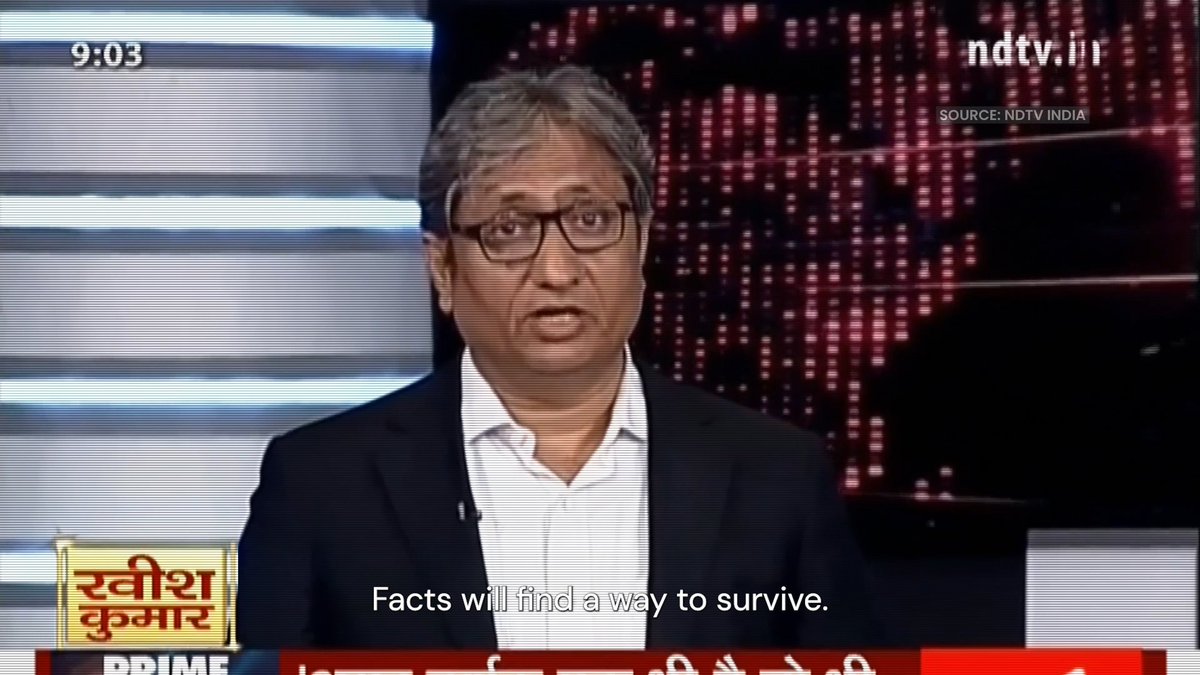
देश के सबसे अंतिम कोने से एक आवाज़ दिल्ली आई है, और यह आवाज़ अपने साथ सवाल लेकर आई है—पर्यावरण का, लोकतंत्र का, सत्य का!
तीन दिन पहले लद्दाख भवन, दिल्ली में 1,000 किलोमीटर पैदल मार्च के बाद सरकार से सिर्फ संवाद की माँग को लेकर अनशन कर रहे सोनम वांगचुक जी से मुलाक़ात और बातचीत हुई, जो यहाँ पेश है।
लद्दाख से आये इन साथियों की माँगों को आपको ज़रूर सुनना चाहिए। यह सिर्फ़ लद्दाख का संघर्ष नहीं, यह भारत का संघर्ष है। @Wangchuk66
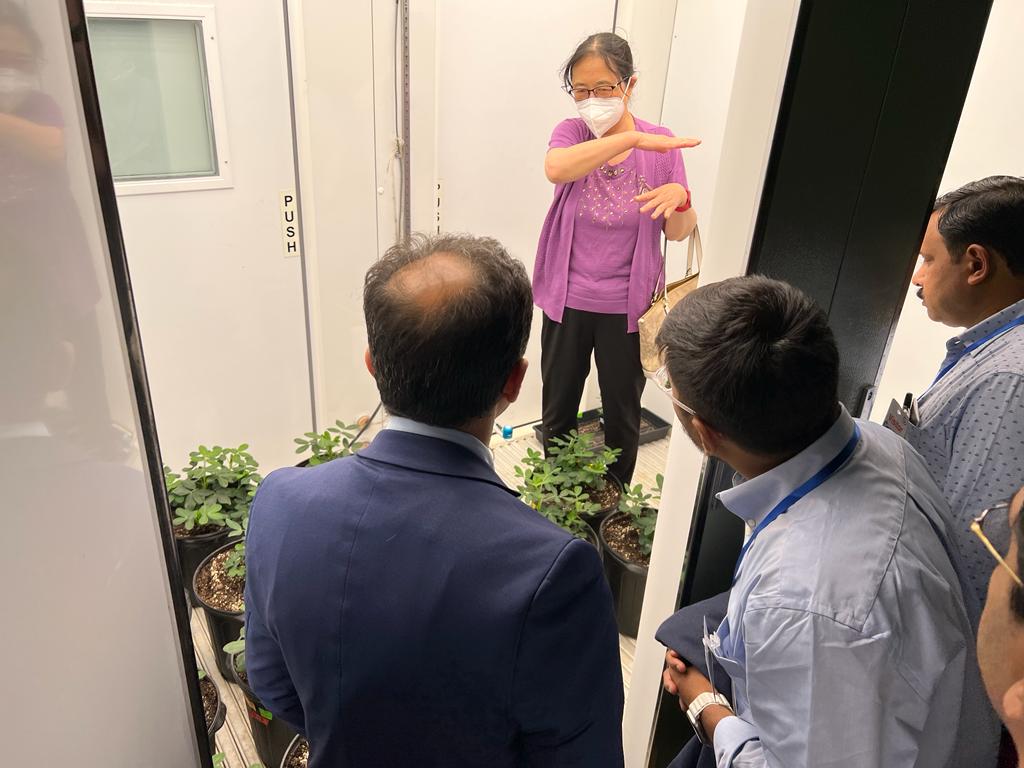
@StateIVLP@AC_Global Our Food Innovation & Sustainability #IVLP visitors had a busy week in DC!
Some highlights:
🌾Roundtable with @USDA
🥼 Special tour of Beltsville @USDA_ARS labs
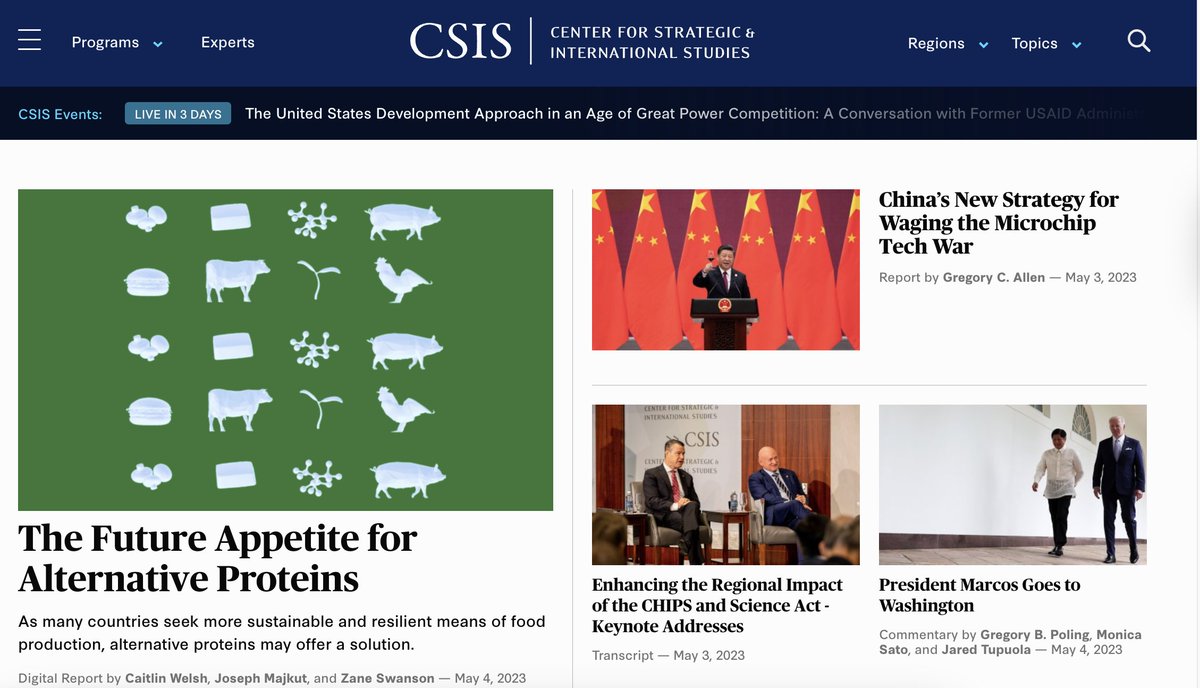
📔 Meeting with @CSISFood on the future of alternative proteins
🇺🇸 Briefing on U.S. federalism with @AkramElias4
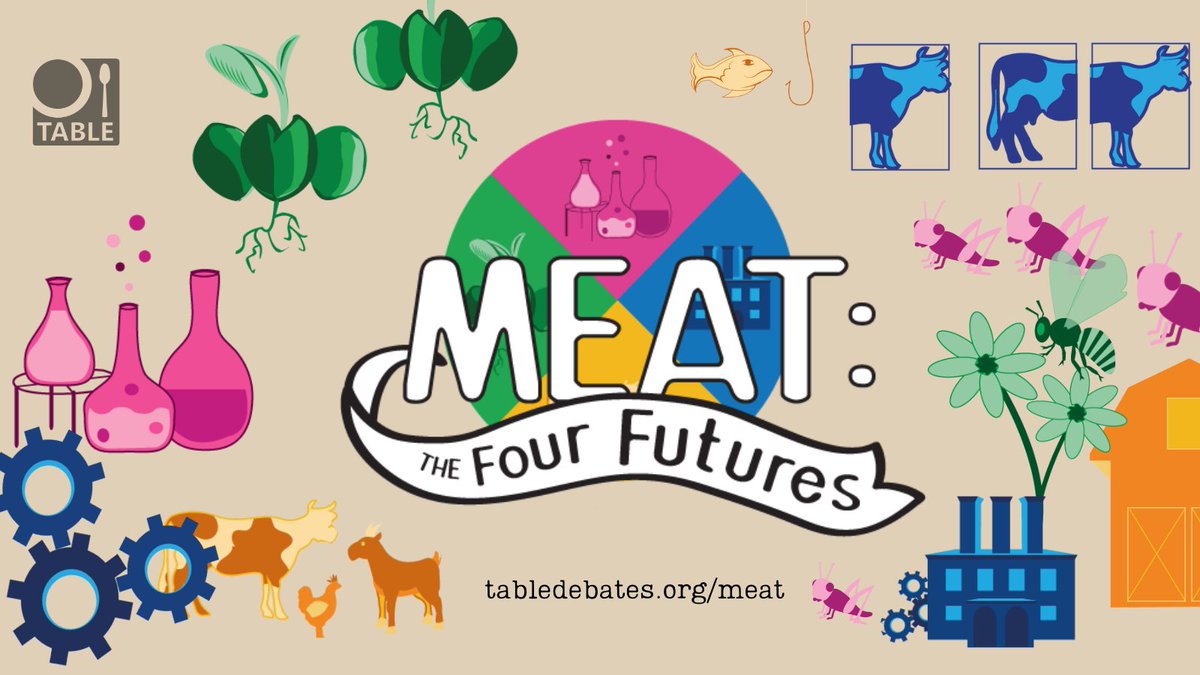
🎧 WEEKEND ESSENTIALS | For today’s #FridayFunnel, we’re shining the spotlight on Meat: The Four Futures - an insightful podcast by @m_kessler_ of @TableDebates that evaluates one of the most fundamental questions of our lifetime - the future and fate of meat and livestock.
⏺️ NOW LIVE | The India Smart Protein Innovation Challenge is back!
✒️ We are accepting applications until May 24, 2023. If you have a ‘Big Idea’ to solve the most fundamental challenge facing our food system — apply now: https://t.co/87KFD6k5ka
What we eat, and don't eat, isn't just a matter for science - it's an emotional and ethical one.
Our new exciting series "Meat: The Four Futures" launches today!
Listen to the first episode here:
https://t.co/kebU4d8aDm #m4fpod
🔥“The potential rewards of prioritizing investment in alt-protein R&D are clear. By creating a nutritious food system that mitigates global threats and enhances U.S. strategic competitiveness, alt-proteins can help shape a safer and more sustainable future.” @CSIS @CSISFood 1/3
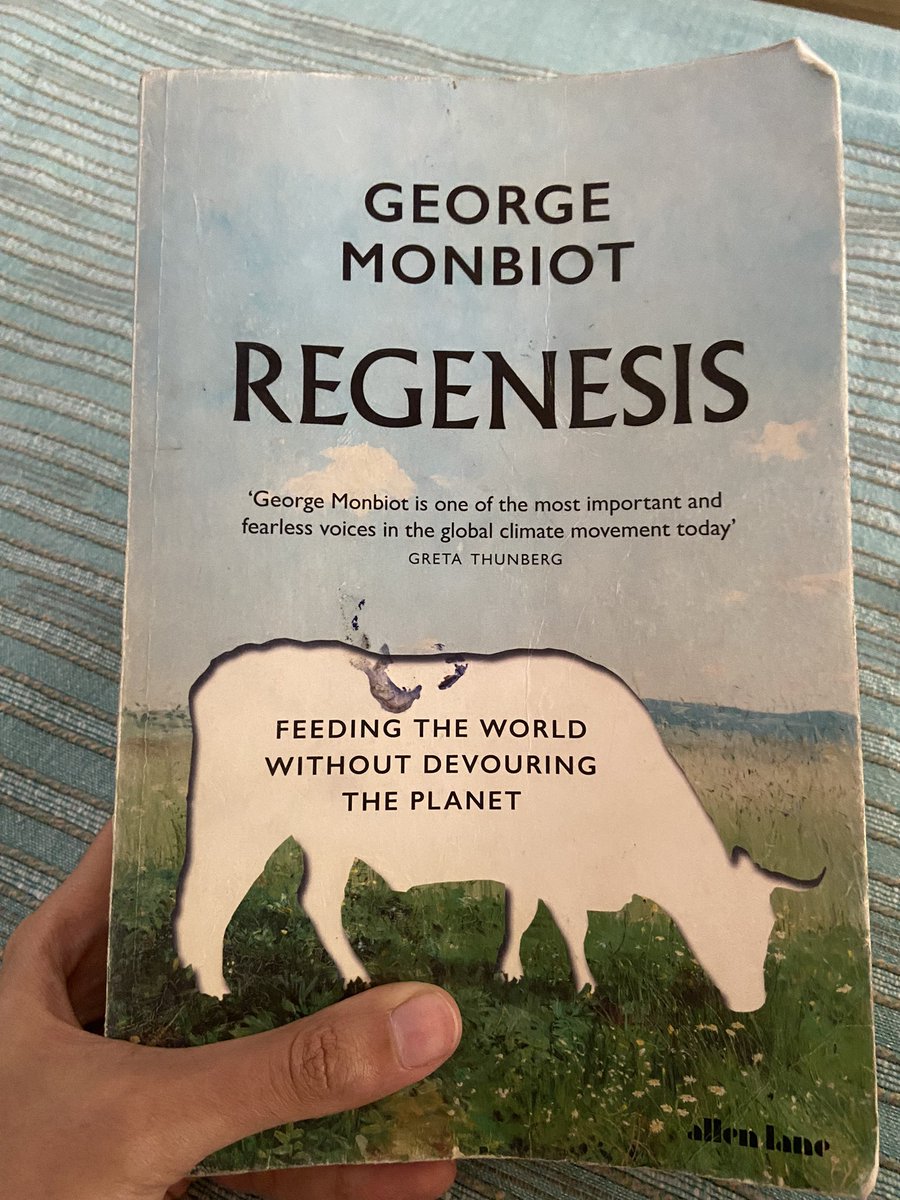
The only way to prevent total environmental breakdown is to radically change the way we produce our food. To succeed, we need to become food-numerate and @GeorgeMonbiot’s Regenesis is essential reading!!
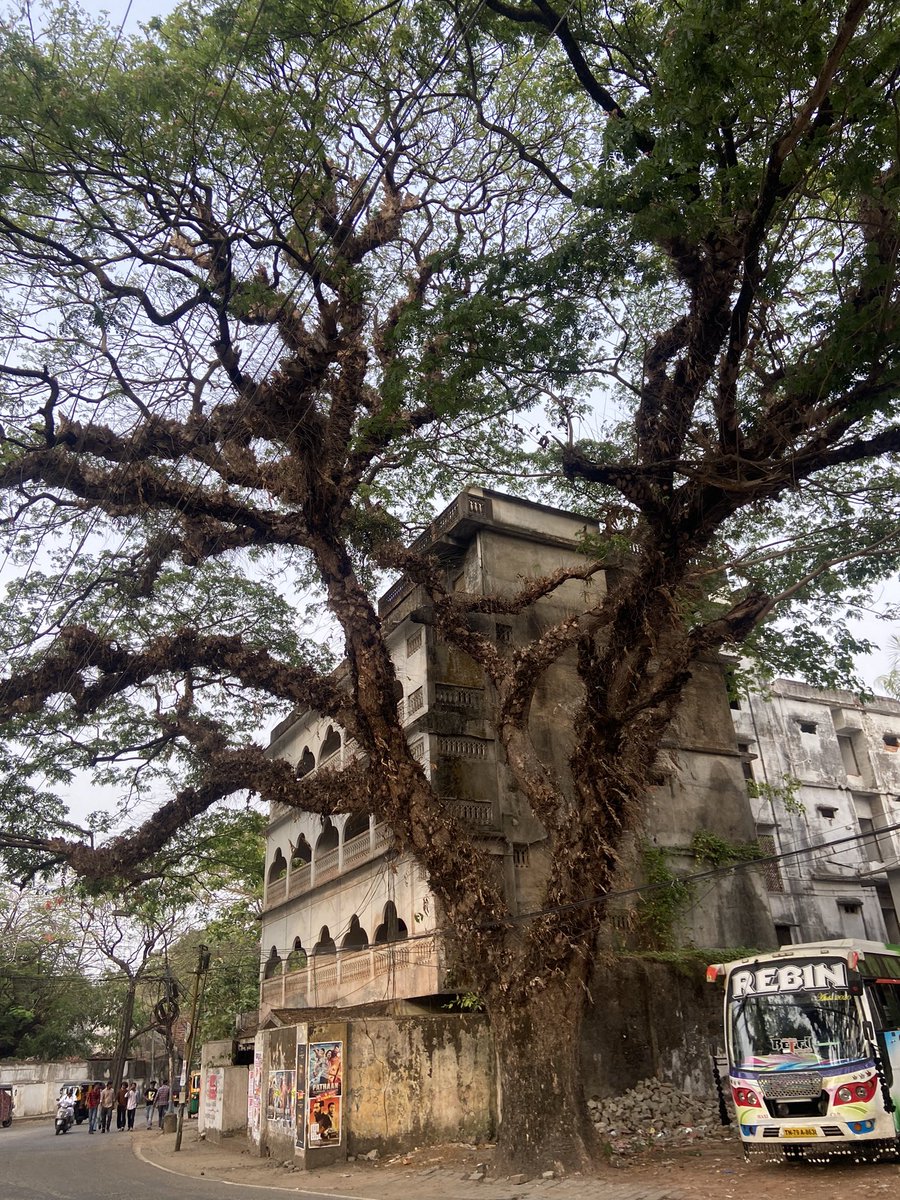
1/19 Did you know Bengaluru has a diverse collection of trees that bloom all year? When the city was planned aeons ago, the trees were chosen in such a way that when one tree ceased blooming, another tree took its place. Bengaluru's seasons are a floral symphony.
What did people eat before European colonisation?
Here is one specific vegetarian example from Tamil Nadu. This meal is typically made once a year as part of a religious celebration to remember ancestors