Comms @themetalsco | Fighting fallacies 🖋️| Diving deep into climate complexities 🌊🌍| Working at the blunt end of the energy transition, sans the shovel.
@NathanRPhD@FutureJurvetson@themetalsco@gtbgtb Not really, TMC has proven it can process nodules using existing RKEF technologies during industrial-scale trials, and completed lab-scale pilots refining NiCuCo alloy into battery-grade sulfates. The feedstock may be novel, but flowsheet is conventional.
https://t.co/sA0ebIVbDe
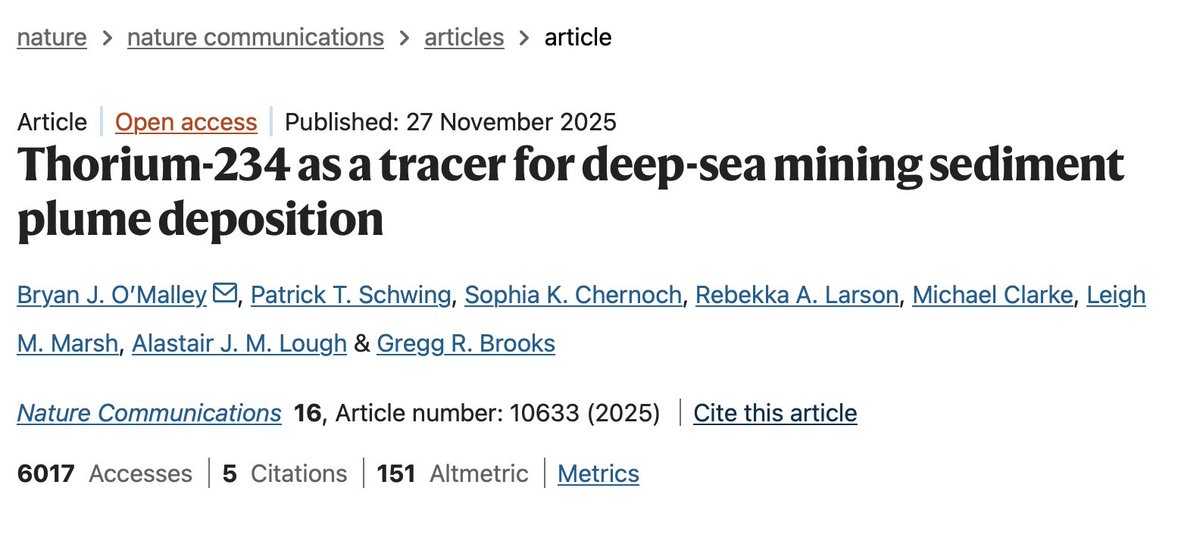
@SnarfMcSnarf@FutureJurvetson@themetalsco@gtbgtb Science is clear on sediment plumes. Btwn 1980-2000, NOAA and other int'l agencies proved they settled fast, & private mining trials in 2021/22 found the same. New study finds plumes are undetectable at ~2km, while others find no major biological impact.
https://t.co/C97uaSppCK
@greenprofgreen@themetalsco Get past the summary, and you'll see the authors found that for nodules—the main resource of interest—none of the assessed species dive to abyssal plains and that there is zero vertical overlap with the midwater plume at 2,000m - exactly where contractors intend on putting it.
A pleasure to bring our Enviro Team's detailed and meticulous research to life. The science is clear: the noise about sediment plumes has proven to be ill-informed and overblown. Some will continue to ignore years of rigorous work, but that doesn’t change the facts. $TMC
The results are in. As part of a new video series, we’re sharing findings from our Environmental and Social Impact Assessment—one of the most complex deep-sea scientific studies ever undertaken. Among the insights: definitive proof that seafloor sediment plumes stay low and settle fast, contradicting much speculation on the topic. $TMC
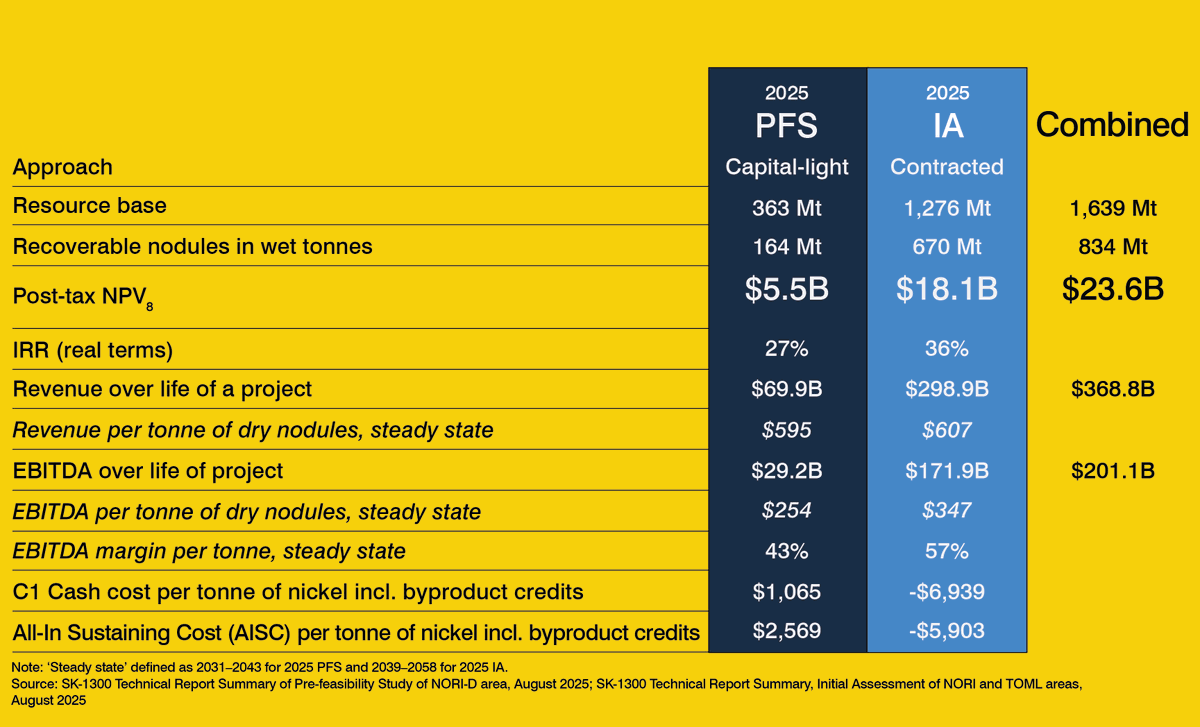
@jaydero165273@themetalsco@wang_seaver Hmmm, technical economic assessments signed off by multiple qualified persons would seem to suggest otherwise.
https://t.co/fdap4lyCh1
@MerriganGeoff @SRS_jeremy @ShawnRyan762@themetalsco Nah. Dark oxygen bubble has long since burst. @ScienceMagazine was the first to cry foul, and since last year academics have warned of serious methodological & ethical flaws in the underlying paper, and a lack of proper evidence.
https://t.co/jNblgJScZi
https://t.co/Sp78aKyRxb
@imuni4fun@MarloVanMarck@themetalsco@DrLarryBKeating@CommerceGov@EricLiptonNYT When you factor in that contractors must leave ~30% of their areas untouched, collector vehicles aren't 100% efficient & there will be regions too steep to traverse, a large portion of every contract area will be protected, providing paths for life to recolonize impacted regions
@ColeMacLeod8@MarloVanMarck@themetalsco@DrLarryBKeating@CommerceGov@EricLiptonNYT Like a vacuum, except with water jets, not air. As far as the plume goes [or doesn't as in-field test mining data shows it stays low and settles fast], a recent study found the plume had "no detectable or slightly positive biological impacts."
https://t.co/7YY1KaroaX
@simonmaechling Similar thing playing out in the debate over deep-sea minerals where NGOs are using their 'anti-nuclear playbook' to spread misinformation and hysteria around the environmental impacts, impacts which the data shows are far, far lower than those of current land-based mining.
@james_hita@mindinvests@themetalsco@TheOregonGroup Nobody is saying that DSM is entirely going to replace terrestrial mines, as we will need those on land and in the deep-sea. However, simple economics dictates that cheaper supply will render many costlier land projects uneconomical and therefore likely to close down.
@thelithiumminer@arrasminerals@PallasResources@Edark94@AnsExploration Deep-sea is not just the new frontier, but is also front of mind for the largest nations & economies, including U.S. where supporters across new administration and Congress see it as a unique opportunity to diversify away from China. Happy to chat Daniel.
https://t.co/wkFqyVOonV
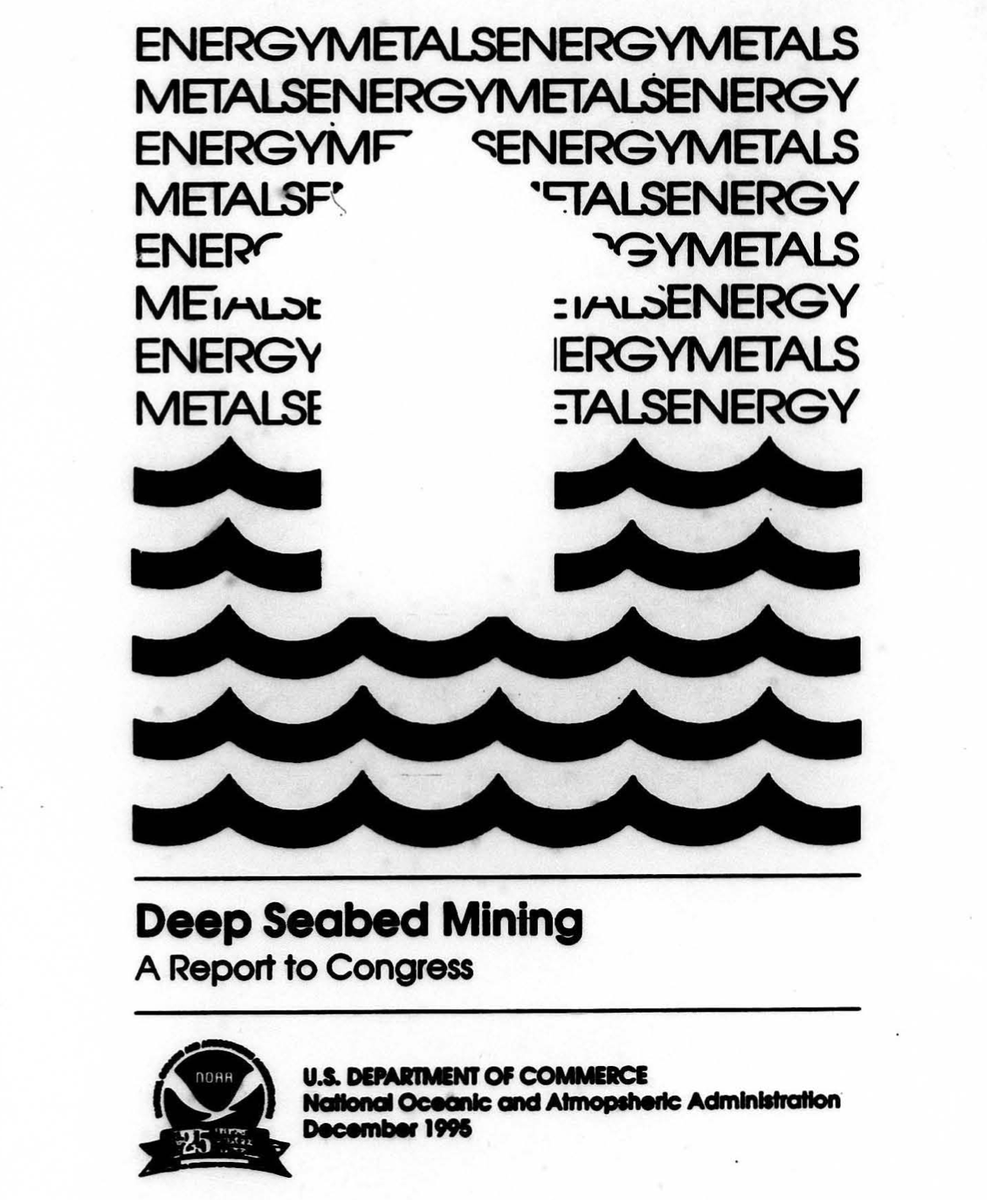
@markcboon@DanMcConnellAOA@MineEngineering From p.19 of the 1995 report:
“NOAA’s 1975-80 DOMES project has basically eliminated, pending verification during monitoring of further at-sea mining system tests, virtually all other environmental concerns which were raised around deep-sea mining.”
https://t.co/xd3laA3bQc
@markcboon@DanMcConnellAOA@MineEngineering Great piece! So often goes under the radar that NOAA reported relatively benign impacts of nodule collection to Congress way back in the 90s, based on its own studies in the 70/80s. GSR/ $TMC's collector system tests simply provided yet more confirmation to NOAA data.
@TheOregonGroup@Glencore@FPX_Nickel@AstonMinerals@LundinGroup@TalonMetals I'm curious, for all your bleating about nickel being a U.S. national security issue, why did you ignore the planet's largest source of nickel sitting off U.S. west coast, or did you miss that there is a new team in town that is very keen on nodules?
https://t.co/wkFqyVOWdt
@Lawakua_@gtbgtb@realDonaldTrump Indeed, a proper 'shot in the arm' moment. V helpful that the nickel, cobalt, copper and manganese contained in $TMC's rocks have myriad other applications for other key sectors underpinning the U.S. economy, including defense, energy and infrastructure.
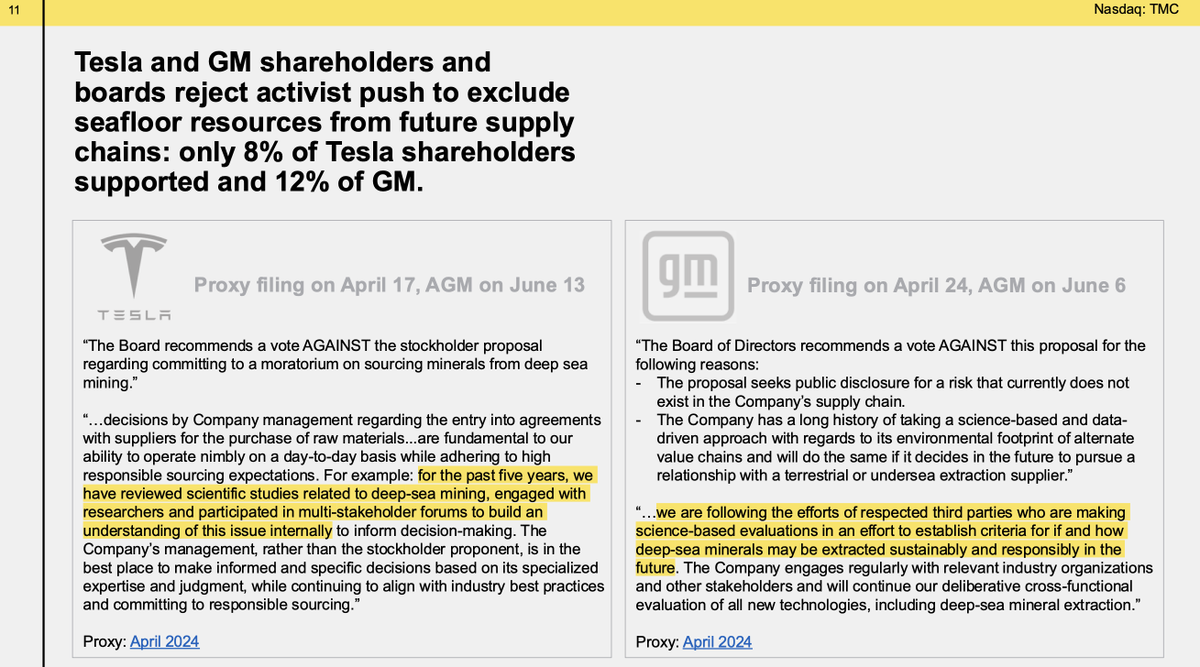
@KGC_fanboi @30Packets@elonmusk@FutureJurvetson@WJMcGinley@POTUS@howardlutnick Both Tesla and GM shareholders overwhelmingly shot down proposals by activists to commit to not using deep-sea metals in company supply chains. The companies have seen the enviro data and aren't buying into the hysteria and misinformation campaigns. $TMC
@JavierBlas@opinion Hi Javier, would be glad to provide an update on $TMC's world-first deep-sea mining project application if you'd be interested, and how lifecycle impacts compare to current terrestrial supply. Yet another major economy moving in that direction so v timely.
https://t.co/fyknRcdgSq