Can brain structure change with the seasons? 🧠
Common shrews stay active through harsh winters without hibernating. To save energy, their brains shrink from summer to winter and regrow in spring, a seasonal cycle known as Dehnel's phenomenon. This study used MRI to look inside shrinking shrew brains:
🔸 Brain volume decreased by around 9% in winter
🔸 The shrinkage was driven by water moving out of brain cells, not by brain cells dying
🔸 The numbers of neurons and glial cells stayed stable across seasons
Together, this suggests that the brain can reversibly remodel its structure to meet seasonal energy demands.
@CurrentBiology https://t.co/GUIdt9i5WP
What happens to the brain when energy runs low? 🏃♀️🧠
Myelin is the fatty layer around nerve fibers that helps signals travel quickly. This study used MRI to measure a marker of myelin in runners before and after a marathon, and again two months later.
🔸 After the race, the myelin marker decreased in brain regions involved in motor coordination and sensory and emotional integration
🔸 Two months later, it had recovered
The authors suggest the brain may use myelin lipids as a backup energy source when fuel runs low during extreme exercise. This study suggests that some brain changes can be fast and reversible.
@NatMetabolism https://t.co/NhbFDyDVGI
Can brain structure change within a single month? 🧠
Most brain studies scan participants once or twice. This study instead scanned four women almost daily across their full menstrual cycle, with blood samples to measure hormone levels at each visit.
🔸 Brain volume fluctuated across the cycle, in many regions at the same time, and these changes tracked hormone levels
🔸 The main pattern was linked to progesterone in typical cycles, and to estradiol with endometriosis or oral contraceptive use
Although small and correlational, this study suggests that brain structure may change even within a single month.
@NatureNeuro https://t.co/7Vw8pH0JWp
How do major hormonal life transitions change the female brain? 🧠
Gray matter, the brain tissue that contains most neuron cell bodies, gradually decreases in volume from childhood onwards. This study asked whether that decrease changes during puberty, pregnancy, and menopause. Using repeated MRI scans, the researchers compared girls and women going through these transitions with people of the same age who were not.
🔸 Puberty and pregnancy: gray matter decreased faster than usual, likely reflecting remodeling of brain circuits
🔸 Menopause: no faster decrease.
So not every hormonal transition affects the brain in the same way.
@NatureComms https://t.co/pSNQv3iTTs
Could a lifetime of standing upright, working against gravity to supply blood to the brain, contribute to how we age? 🧠 https://t.co/py3UVA5iIM
In our perspective, now published in Ageing Research Reviews, we explore this idea. When we stand or sit, the heart must pump blood uphill to the brain. The body compensates well when we are young, but this ability declines with age. We propose that small, repeated dips in blood flow over many years may affect control centers deep in the brain that regulate circulation, metabolism, body temperature, hormones and sleep. Over time, this could contribute to aging. Interestingly, exercise and sleep, both linked to healthy aging, support blood flow to the brain: during the day, regular exercise helps increase it, and at night, lying down to sleep relieves the body from working against gravity. We also outline ways to test this hypothesis, from longitudinal population studies and cerebrovascular imaging to wearable technologies and animal studies.
A big thank you to my mentor @SatchinPanda and to @deepigoyal & Nitish Kumar for the inspiring ideas and discussions that turned an intriguing question into a testable hypothesis. Thank you also to all colleagues and reviewers for their valuable feedback. I am very excited to see this hypothesis being tested in future studies!
#Aging #Neuroscience #Longevity
Does gradual, age-related reduction in blood flow to deep brain regions contribute to brain aging—and to aging more broadly?
More than a year ago, during a brainstorming session, @deepigoyal raised a provocative hypothesis that staying upright for prolonged time might transiently reduce cerebral blood flow, and that such small, repeated decrements could gradually ration blood flow (consequently oxygen and nutrients) to deeper brain regions over a lifetime.
The suggestion was intuitive. Sleeping supine increases cerebral perfusion; exercise elevates cardiac output and blood supply to the brain; and the fasting window of time-restricted eating may redirect blood flow away from the gut toward the brain. Many longevity-promoting interventions appear, at least plausibly, to support better cerebral blood flow. But do they, in fact?
That question prompted my colleague @Rosmalenlaura and I to dive deep into the literature on how the brain receives and regulates its blood supply, how those control mechanisms change with age, which factors modulate cerebral blood flow, and where the major knowledge gaps remain.
We quickly encountered the sobering reality of the topic’s complexity. Understanding nutrient and oxygen delivery to the brain—and how it is measured—requires expertise that spans medicine, biophysics, engineering, and computational modeling. Longevity researchers and physicians alone cannot fully address the fluid dynamics, endothelial physiology, blood–brain barrier integrity, or the technologies used to quantify perfusion in deep structures.
We continued the discussion with @deepigoyal and Nitish Kumar. Both trained in the IITs, brought their perspective on fluid dynamics, technologies to monitor brain perfusion and function from the vantage point of physics, engineering, computer science, and mathematics.
Together we drafted an initial short review of roughly 3,000 words. That draft then underwent multiple rounds of detailed revisions by addressing critique and comments from physician colleagues, neurosurgeons, biophysicists, and bioengineers. It subsequently went through three rounds of anonymous peer review. The final published piece expanded to ~17,500 words including ~240 references. From first draft to publication took over 12 months.
The process was demanding precisely because the subject is genuinely complex and spans multiple disciplines. Our goal was to synthesize the current evidence as carefully as possible and to surface clear, testable questions for the field:
* Do longevity-promoting interventions also increase blood flow to deep brain regions?
* Do interventions that improve cerebral blood flow contribute to better health in old age and extended healthy lifespan?
* Do drugs or interventions that preserve endothelial function and blood–brain barrier integrity improve long-term health in part by sustaining brain perfusion?
These questions cannot be resolved by any single laboratory or experiment. We are pleased to see commitment to support research in this area https://t.co/hAPVahSUNu, and we hope the review helps stimulate rigorous, interdisciplinary investigation.
https://t.co/PWuEaDEDCJ
Excited to see @GeraldineMaier paper out in Cell!!
Same exercise, different response depending on the tissue, sex, and time of day.
@WuTsaiAlliance@CellCellPress
https://t.co/uNRux3Ujga
Proud of our molecular atlas of chronic voluntary exercise: 22 tissues + plasma, male & female mice, sampled during the day (ZT4, rest phase) and at night (ZT16, active phase).
Mice ran ~500km over 8 weeks.
Muscles had the most responses, but each of the 8 muscles also had its signature response to exercise.
@GeraldineMaier@JoeEcker https://t.co/fdC3k7ba6f
Exercise isn’t one response. RNA-seq shows it varies by tissue, sex and time of day; metabolomics reveals organ-specific rewiring. Single-nucleus sequencing in muscle shows which cell types drive adaptation, plus epigenetic changes bulk assays miss. https://t.co/1J7Ln1CoTG
Higher fasting brain glucose, not blood glucose, was associated with lower gray matter volume in healthy adults across the lifespan.
Interestingly, blood glucose increased by midlife, whereas brain glucose remained stable until older age.
https://t.co/qjA3n8dbYq
#BrainHealth #Aging #Metabolism
This review synthesizes evidence from animal models and humans on the organization and regulation of the glymphatic system, examines its vulnerability to aging and neurodegenerative pathology, and discusses the potential roles of exercise in enhancing its function.
Exercise timing matters.
In this randomized crossover trial, fasted evening exercise led to greater post-exercise energy intake (~400 kcal) and higher 24-h food intake (~550 kcal) compared with fasted morning exercise. Pre-exercise feeding changed fat oxidation, but did not reduce compensatory eating.
https://t.co/BJgPt6oKcq
#ExerciseScience #Metabolism #Nutrition #Chronobiology
An impressive example of circadian timing in the wild. Multi-sensor tracking of 411 birds across 56 landbird species revealed that 82% of migratory flights occur at night, with departures clustering around dusk and landings around dawn. #CircadianRhythms#BirdMigration #Chronobiology #Ecology https://t.co/98q7ti8Hyo
What diet best promotes longevity?
In mice, a low-protein, mostly plant-based diet modeled after traditional Mediterranean and Okinawan eating patterns—supplemented with methionine—reduced frailty, lowered body fat, improved cardiometabolic health, and boosted beneficial hormones including GLP-1 and FGF21.
Supporting human data from >200,000 adults showed that the highest animal protein intake was associated with nearly double the prevalence of type 2 diabetes.
https://t.co/Q619AWjOLH
#Longevity #HealthyAging #Nutrition #MediterraneanDiet #OkinawaDiet #FGF21 #GLP1 #MetabolicHealth
Daily habits can strengthen circadian health:
- Get bright morning light
- Eat earlier and consistently
- Move during the day
- Keep a regular sleep schedule
Small changes can have a big impact on sleep, energy, mood, and long-term health.
#WorldCircadianDay#CircadianHealth #SleepHealth #Chronobiology
Today is #WorldCircadianDay!
Our circadian clocks influence our health. From sleep and metabolism to mood, cognition, and performance. By understanding and respecting our biological rhythms, we can improve health and well-being every day.
#CircadianRhythms#Chronobiology #SleepHealth
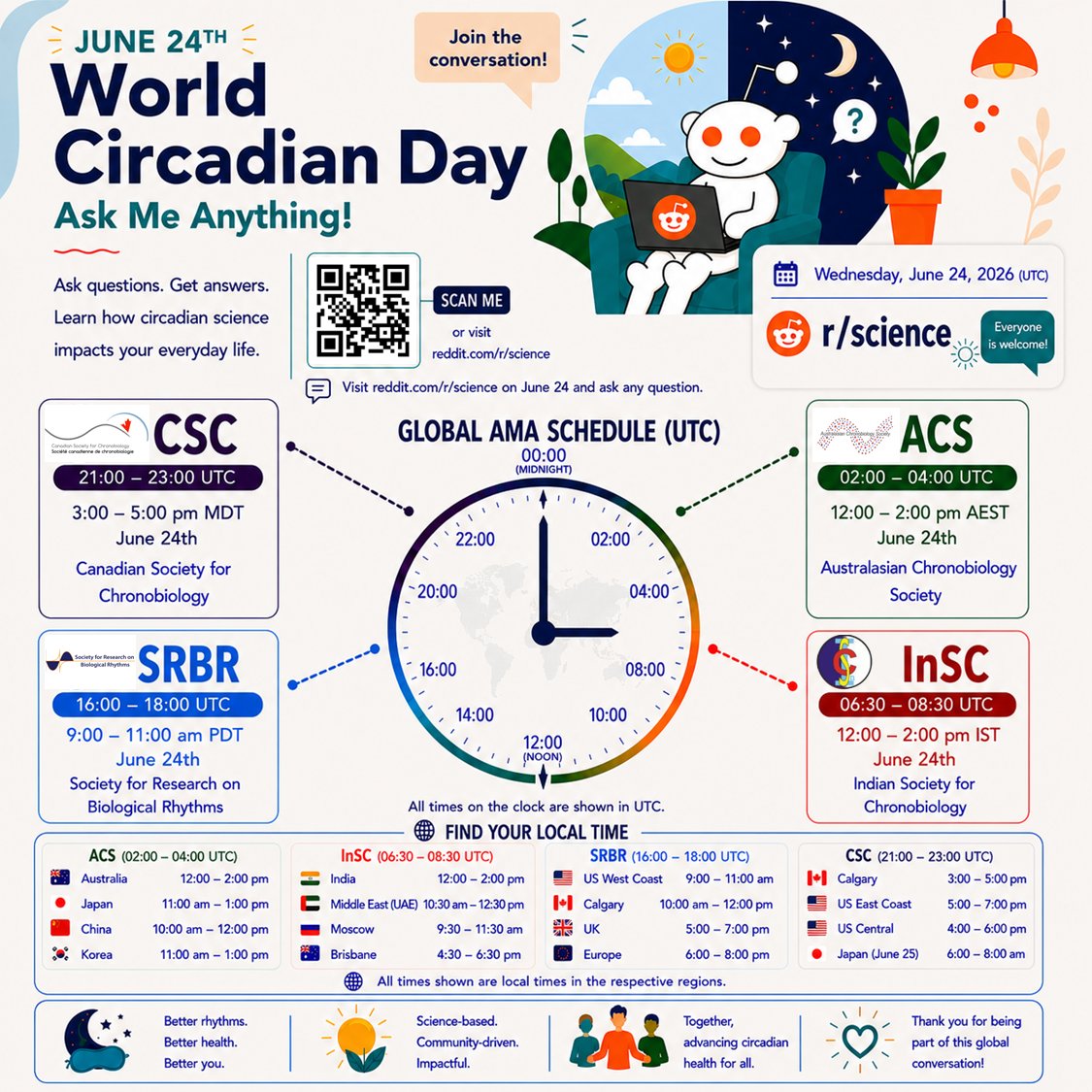
Join us tomorrow June 24th, for the first World Circadian Day! Circadian societies around the world, will be hosting a Reddit AMA to answer all your circadian questions. Join the SOCIETY FOR RESEARCH ON BIOLOGICAL RHYTHMS INC panel at 9am PDT! https://t.co/xsynl5T6UN
Excited to share our new case report, led by Kyla Laing, that showed that TRE can improve nighttime glucose in adults who had been on GLP-1 for years! @PamTaubMD@MWilkinsonMD@SatchinPanda https://t.co/RyyNKt1qd3
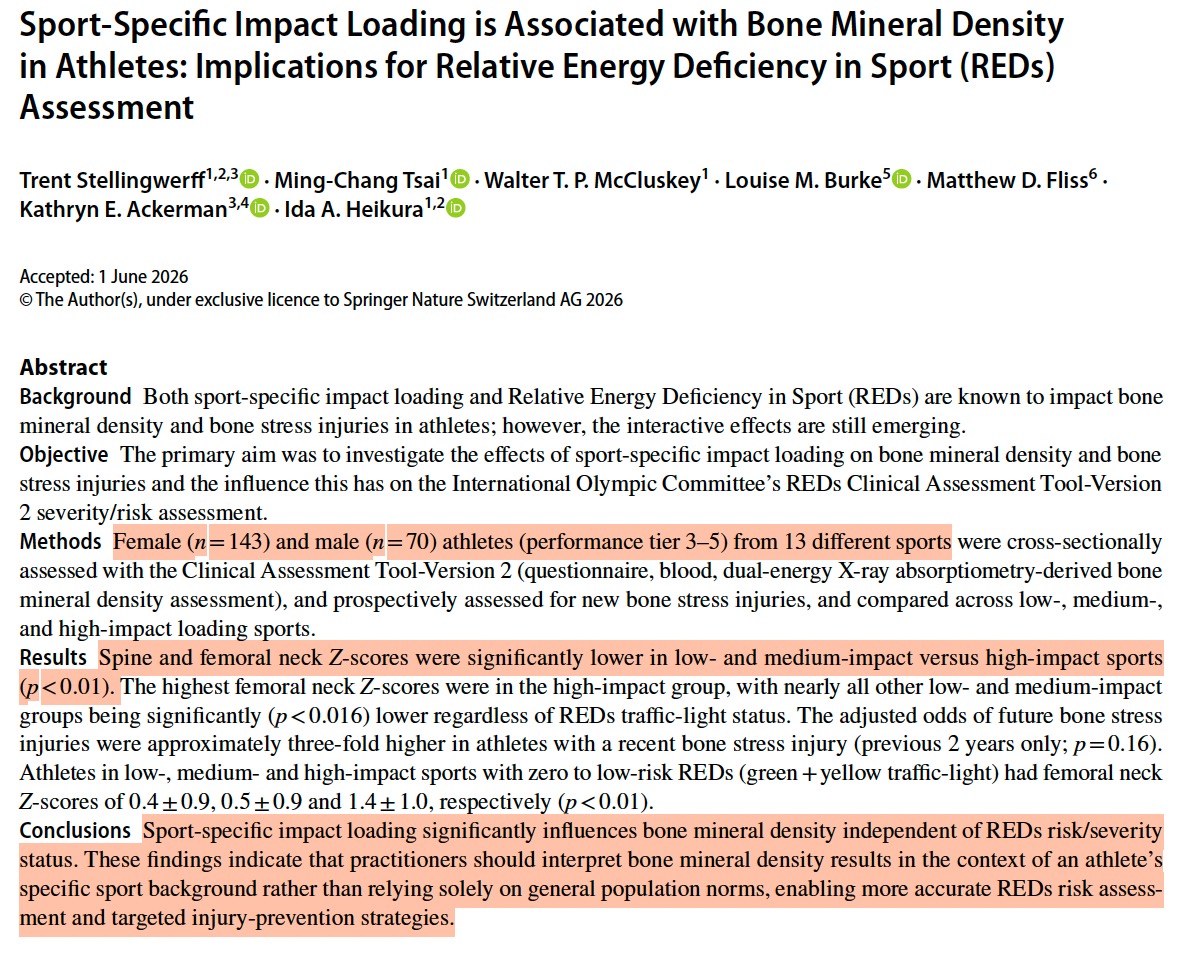
This study shows that athletes in high-impact sports have significantly greater bone mineral density (BMD) than those in low-impact sports. Although BMD was generally lower in athletes with higher REDs risk classifications, it was not linked to Relative Energy Deficiency in Sport (REDs) severity itself. These findings suggest that bone health markers used in REDs screening should always be interpreted in the context of an athlete's sport.
https://t.co/AN8WuItv2Q
#REDs #SportsMedicine #BoneHealth #AthleteHealth
Menopause is more than a reproductive transition—it’s a critical cardiovascular turning point. Research shows that during the menopause transition, adverse changes in body composition, cholesterol, lipids, and vascular health accelerate, increasing women’s risk of heart disease. Midlife is a key window for prevention, monitoring, and early intervention to protect long-term heart health. #Menopause #HeartHealth #CardiovascularDisease #WomensHealth
https://t.co/2PoWsa7fWf
Join us in celebrating the first World Circadian Day on June 24th with a Reddit AMA with experts from around the world. I'm excited to be on the panel for SRBR alongside SRBR president Joanna Chiu, @ErikHerzog, Horacio de la Iglesia, Michael Tackenberg, and @JuliePclocks!!
Using actigraphy data from >35,000 hours of infant sleep, researchers found that sleep cycles lengthened from ~60 min at 3 months to ~70 min at 12 months, moving toward the adult cycle length of ~90 min. Longer cycles were also observed in breastfed 12-month-olds and their breastfeeding mothers.
https://t.co/bQRuYvrXs7
#SleepResearch #InfantSleep #Breastfeeding #Actigraphy