Good morning my loves, happy Saturday. Sorry I've been quiet, obviously been busy, but thought it'd be nice to give you all the details on the multi-strategy absolute return program that experienced the 28% drawdown this year. (1/n)
The White House has put itself and the country in a bad situation but doesn’t realize it yet.
Around April 10th China to USA trade shut down.
It takes ~30 days for containers to go from China to LA.
45 to Houston by sea, 45 to Chicago by train.
55 to New York by sea.
That means that there are no economic effects of what was done on April 10th until about May 10th.
Around that time (it’s already started to happen) trucking work is going to dry up. Warehouses will start doing layoffs because no labor is needed to unload containers and some products will be out of stock, reducing the need for shipping labor.
All this will start in the Los Angeles area.
After about 2 weeks, it’ll start hitting Chicago and Houston.
Let’s say the White House, after 3 weeks, changes its mind, on May 31st.
“This isn’t working out like we thought it would. Tariffs back to 0.”
Let’s say China says “bygones be bygones, we’ll go back to how things were”.
Let’s say every factory in China that got screwed by their orders being cancelled says the same thing “no problem, we’ll make and ship”.
The problem is, even under the most favorable conditions of China and the factories restarting economic ties as though nothing happened, it will be at least another 30 days before economic activity is revived.
And that’s just in LA.
In Chicago/Houston, you’ll need to wait another 45 days.
New York, at that point, will still be getting containers from before April 10th, they will then have 50 days (May 31 minus April 10) of zero economic activity at the ports, in trucking of Chinese goods, in warehousing.
The whole situation is a bit like lockdowns. Once you shut down, it takes a long time to get economic activity back to where it was, if you ever can.
And again, this assumes, that China and its factories, which make things you can’t buy elsewhere, will start right back up again as though nothing happened, which is unlikely.
It’s almost like we’re speeding towards a brick wall but the driver of the car doesn’t see it yet.
By the time he does, it’ll be too late to hit the brakes.
How China’s Shanghai Exchange Could Outsmart Tariffs and Capital Flight
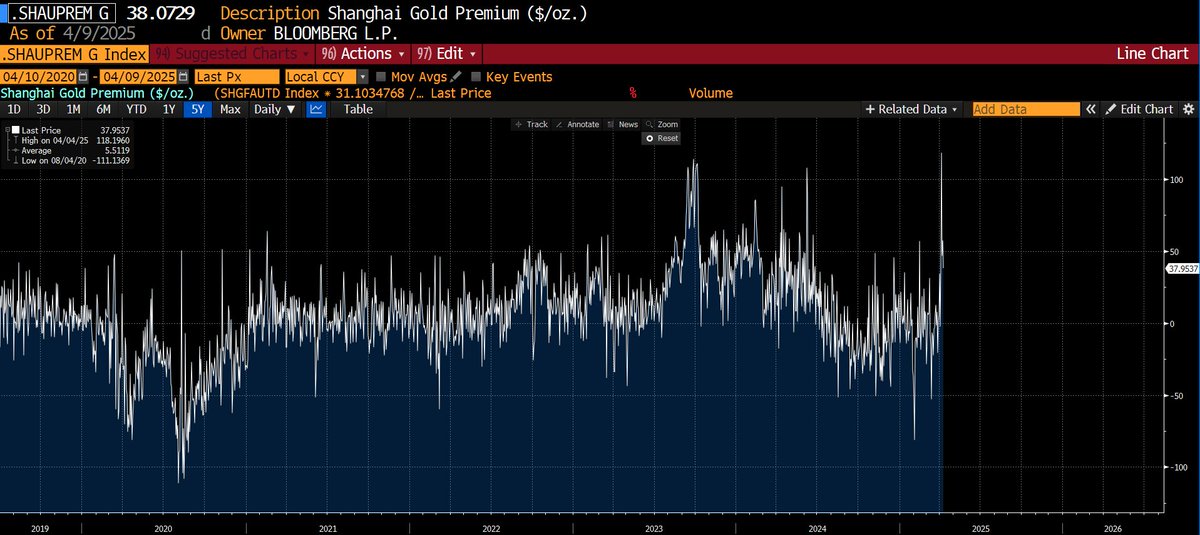
Over the past two weeks, precious metal prices have experienced a decline, driven by broader market margin pressures following a sustained rally in recent months. This correction has been largely attributed to uncertainties surrounding potential tariff impositions. Despite this pullback, gold continues to hold above the $3,000 per ounce threshold, underscoring its resilience as a safe-haven asset.
Recent developments, however, signal a shift in market dynamics. The implementation of tariffs on China has triggered a notable reaction in currency markets, with the USD/CNH exchange rate surging to a record high above 7.4. This escalation has fueled speculation about the risk of capital outflows from China. Yet, such an outcome appears unlikely. Instead, China is poised to leverage the gold and silver markets—beyond mere reliance on safe-haven bond sales—as a strategic mechanism to mitigate these pressures.
A resurgence of premiums on gold and silver at the Shanghai Gold Exchange (SGE), similar to patterns observed in 2023, is increasingly probable. Established in 2002 by the People’s Bank of China (PBoC), the nation’s central bank, the SGE operates under stringent oversight to ensure alignment with state economic objectives. Membership in the SGE, comprising approximately 200 entities in recent years, is restricted to government-approved institutions. Predominantly state-owned banks, such as the Industrial and Commercial Bank of China (ICBC), and tightly regulated gold trading firms dominate the exchange, precluding significant independent action by private actors.
A cornerstone of this control is China’s regulation of gold imports. The PBoC issues quotas to authorized banks and financial institutions, limiting import volumes to align with macroeconomic priorities—such as curbing capital flight or bolstering the yuan. The SGE serves as the primary conduit for trading imported gold, enabling the government to maintain meticulous oversight of supply flows.
Outlook and Implications
Looking ahead, China is expected to tighten gold import restrictions through PBoC-issued quotas, calibrated to address prevailing economic conditions.
This policy is likely to generate elevated premiums on global exchanges such as the London Bullion Market Association (LBMA) and the COMEX, reflecting supply constraints and heightened demand. In turn, these premiums are anticipated to incentivize capital inflows back to China, counteracting external pressures and reinforcing domestic financial stability.
A Renewed Run on #Gold Begins as...
#SILVER @KingKong9888@zerohedge@LukeGromen
#Breaking Chinese animated film “Ne Zha 2” is making global history as the world’s highest-grossing film in a single market. It beat Star Wars: Episode VII – The Force Awakens with total box office revenue, including presales, of 6.792 billion yuan ($936.7 million).
Shi Ming is a registered doctor and her parents have no idea she’s an MMA fighter
She had this VICIOUS KO at UFC Macau today that sent her opponent to the hospital 😳
Congratulations to Jan and the entire Ataraxis AI team on their incredible launch! Here’s to more groundbreaking achievements ahead!
#AtaraxisAI#PrecisionMedicine#AI
Today, we are launching Ataraxis AI to fulfill the promise of precision medicine.
We are building AI-native, multi-modal tools that help physicians personalize treatment by predicting patient outcomes and treatment response.
https://t.co/R6UhPlaPAG
The remarkable resilience in commodities on a day marked by complete liquidation of risky assets highlights how early we are likely in the cycle for hard assets.
arXiv -> alphaXiv
Students at Stanford have built alphaXiv, an open discussion forum for arXiv papers. @askalphaxiv
You can post questions and comments directly on top of any arXiv paper by changing arXiv to alphaXiv in any URL!
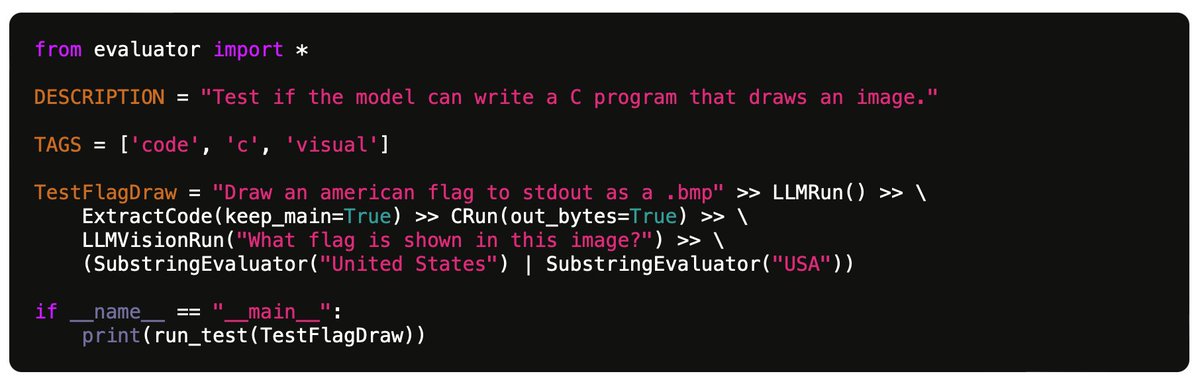
"My benchmark for large language models"
https://t.co/YZBuwpL0tl
Nice post but even more than the 100 tests specifically, the Github code looks excellent - full-featured test evaluation framework, easy to extend with further tests and run against many LLMs.
https://t.co/KnmDD1AJci
E.g. for the 100 current tests on 7 models:
- GPT-4: 49% passed
- GPT-3.5: 30% passed
- Claude 2.1: 31% passed
- Claude Instant 1.2: 23% passed
- Mistral Medium: 25% passed
- Mistral Small 21% passed
- Gemini Pro: 21% passed
Also a huge fan of the idea of mining tests from actual use cases in the chat history. I think people would be surprised how odd and artificial many "standard" LLM eval benchmarks can be. Now... how can a community collaborate on more of these benchmarks... 🤔
Mobile ALOHA's hardware is very capable. We brought it home yesterday and tried more tasks! It can:
- do laundry👔👖
- self-charge⚡️
- use a vacuum
- water plants🌳
- load and unload a dishwasher
- use a coffee machine☕️
- obtain drinks from the fridge and open a beer🍺
- open doors🚪
- play with pets🐱
- throw away trash
- turn on/off a lamp💡
Project website: https://t.co/9rzIX8wLEp
Co-lead @tonyzzhao, advised by @chelseabfinn
(amazing photographing from @qingqing_zhao_ )
After 5 month dedicated work from >15 researchers & developers, we're thrilled to introduce 🚀OPEN-SOURCE language model Agents🚀!
Try demos: https://t.co/1vyu0Ss7KE 🥑
Stay tuned for open-source code, model, framework, evaluation & more at https://t.co/eLdpyUW4dD!
LK-99 Endgame: What Happens Next & Market Size
If LK-99 is a room-temperature ambient-pressure superconductor, there are three distinct possibilities depending on its eventual engineering properties.
Here is a straightforward explanation of each scenario and estimated total market sizes in ARR:
The two limits on superconductor performance are:
- How much current it can carry
- How much magnetic field it can withstand
If either of these limits are exceeded, superconductors stop working. The scenarios are high/low field and high/low current, but you can't really get high-field without high-current, so only three scenarios
Scenario 1: Low-field, low-current ~$1.5 trn:
LK-99 saturates at relatively low fields, like 0.3T, and relatively low current densities, of ~1 amp / mm^2. It works in delicate electronics, small packages, at high efficiencies, with extremely high sensitivity.
It revolutionizes the following industries:
- Telecom hardware $650 bn; Cellphones $450 bn; Electronic Sensors $200bn; Satellites $70bn; GPUs $40bn; CPUs $20bn; Antennas $20bn.
Scenario 2: Low-field, high-current ~ $2 trn:
LK-99 can carry large current densities, on the order of >1000 amps / mm^2, but can't stand strong magnetic fields. It gains relevance in power transmission, switches, relays, and larger electrical equipment.
It revolutionizes the following industries:
Power transmission $320 bn; Wires + cables $200bn; Switches & Relays ~$ 25 bn and many others.
Scenario 3: High-field, high-current ~ $4.5 trn:
LK-99 can operate in high fields of several Tesla and high currents of >1000 amps / mm^2. It revolutionizes fundamental industries by replacing motors, generators, transportation equipment, and unlocks new energy sources like fusion.
It revolutionizes the following industries:
Power generation $1.8 trn; Electric Motors $300 bn; Rail freight $250 bn; Energy Storage $200 bn
~~~~
Some important considerations:
- "The totals don't add up" - If something works at high field, it works at low-field, and same for current. Therefore Scenario 1 is the base-case and adds to the bottom line of both other scenarios; it places the least engineering requirements on the material. All numbers for total market sizes are estimates found online in popular market reports for ~2022.
- To incorporate this material into micro-electronics means re-thinking the extremely-mature CMOS 300mm silicon wafer fabrication process, a process that would take a decade if not more to get right.
- A final consideration is the mechanical strain the material can withstand, which also affects the current and field tolerances of existing superconductors. Bulk deformations of the crystal lattice can disrupt superconducting properties - this issue has over-time been improved upon in modern high-temperature superconductors but is still present, and may limit applications in the long-run.
- Our current generation of YCBO-based high-temperature superconductors started out as low-field, low-current, highly strain-sensitive, and over 30+ years of engineering development, these now carry >1000 amps/mm^2 in fields as high as 10T (although these numbers trade off against each other). What this means is, with time, engineering, patience, and concerted effort, if TK-99 is a superconductor then Scenario #3 is highly likely within 10-20 years.
~~~~
Conservative estimate:
Current conservative estimates by an MIT professor put the probability of LK-99 being "it" at 5%.
Assuming a long-term achievement of Scenario 3, this gives an expectation value of a $225 billion annual market.
~~~~
Caveat: LK-99 is not yet confirmed to be a superconductor but has several suggestive corroborations from other experimentalists and simulations. I am reserving judgement until results are confirmed by a Department of Energy National Lab in the USA or a similarly regarded institution.
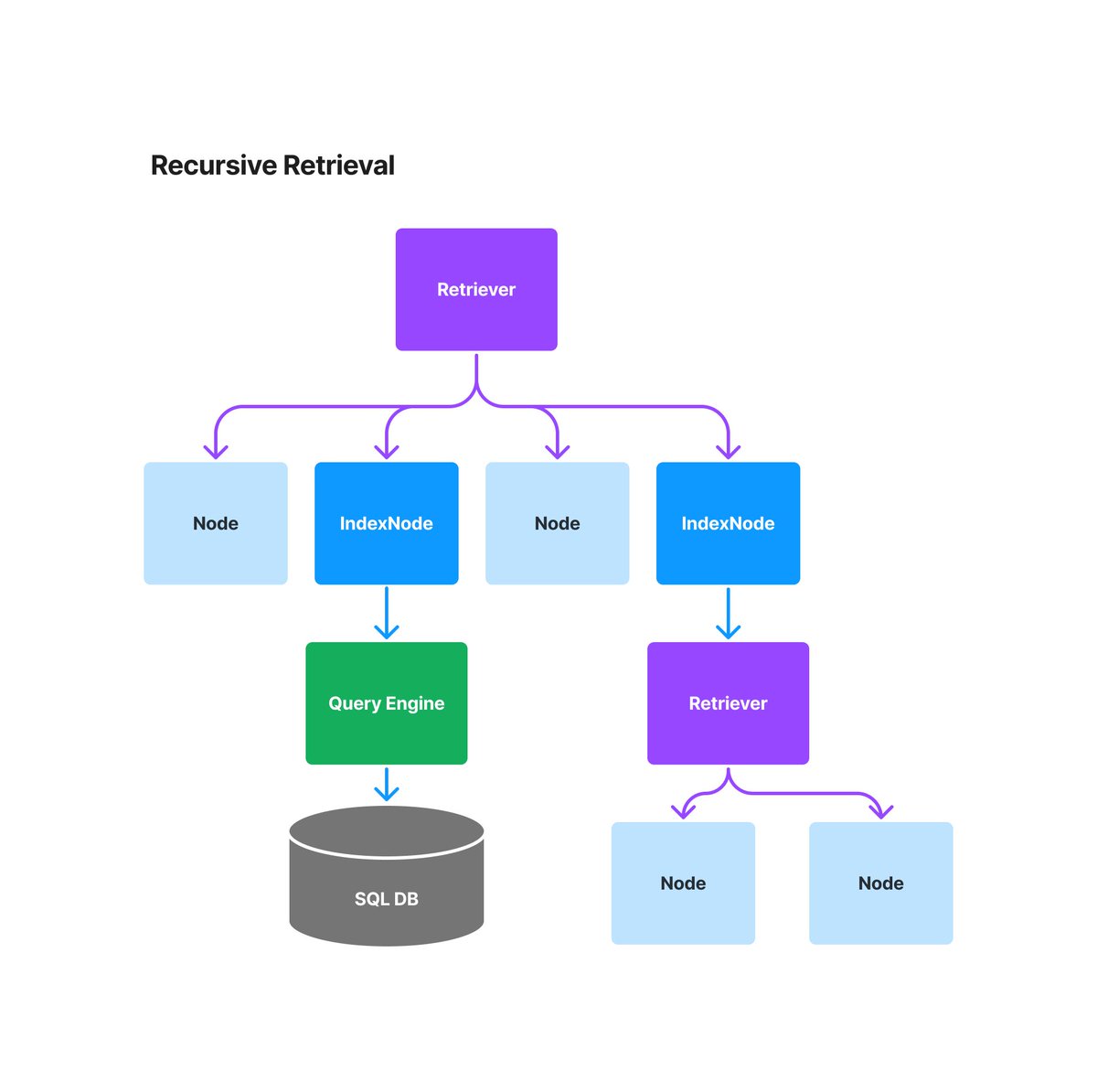
Probably the right direction, but how to set up the right hierarchical structure from the docs with the right summary in a scalable way remains a challenge.
A lot of knowledge is hierarchical: a PDF can contain “sub-data” (tables, diagrams), and refs to other docs.
Our brand-new retrieval concept in @llama_index exploits this: 🪞Recursive Retrieval 🪞
Here’s how you can use it to build advanced LLM QA👇
https://t.co/vtOiY8jwdl
The @LatentSpacePod is excited to publish:
Petaflops to the People:
@realGeorgeHotz's first interview
on his new personal compute cluster company
the tiny corp.
https://t.co/fn4wmWbTr2
We discuss how tiny is taking on Nvidia, Google, and PyTorch with a tiny team and go deep on tinygrad and the hardware design constraints he is choosing.
Plus:
- How @LisaSu helped resolve issues with AMD
- His takes on debugging like @ID_AA_Carmack and the 6 insights to AGI
- Takes on @ggerganov's ggml, @clattner_llvm's Mojo, and GPT-4
- Optimizing for Inference over Compute (following up from our @MosaicML convo with @jefrankle and @abhi_venigalla, also a first)
- Comma Bodies and our @josephofiowa interview on the Segment Anything Model (also a first)
- @vgr's Above/Below the API Line concept
- why AI Girlfriend will be his third company
- @elonmusk : geohot :: physics : information
- why e/acc isn't serious
Full podcast video now on our brand new YouTube channel! pls like and subscribe etc 🙇♂️
I-JEPA: Efficient method for Self-Supervised Learning of image features.
No need for data augmentation, just masking.
Joint embedding predictive architecture, not generative.
And it's open source, of course.
Blog: https://t.co/ZuouZgeEMC
Paper: https://t.co/BoHSnELyw8
Code & models: https://t.co/DgS9XiwnMz