Those who stand to gain the most from this book may not be those who are already wealthy, but ambitious men and women with young families that will find it to be a very useful guide to establishing a virtuous dynasty.
My review of Johann Kurtz's new book:
https://t.co/wE0SuwkFI6
@salty_prod145@aaron_renn Judging by numerous stories I’ve personally heard from boomers about how they started their careers and/or met their wives, the answer is yes.
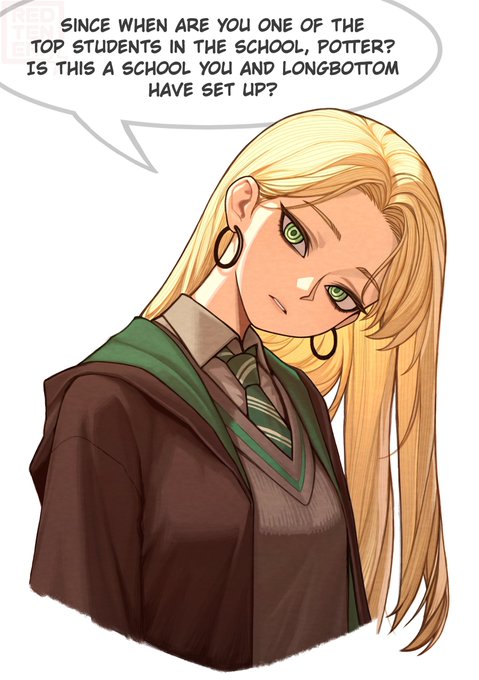
A non-comprehensive list of Malfoid fics on X, in relatively correct order. (feel free to put any others in the comments):
Early Years:
https://t.co/0Pmmk6uCjN
https://t.co/Cl6tB4N3wM
Struggling with feelings:
https://t.co/lTVChzXESC
https://t.co/ApJcBTVlqF
https://t.co/PKhZqauhlm
Triwizard Tournament:
https://t.co/GGoIBUqnQS
Hogsmead Village:
https://t.co/OTcFhEXQdM
Dare to ask Malfoy:
https://t.co/MXOTGch6Np
https://t.co/cNOaROh5Im
Yule Ball:
https://t.co/JZvCVZDoyh
https://t.co/yozQcTAqr9
Umbridge Interrogation:
https://t.co/3HRdbiYJ9g
Felix Felicis:
https://t.co/Bc78AdP1nV
Sectumsempra:
https://t.co/Vw5ityk4ru (absolute gem)
https://t.co/B8VeE0Hzc9
https://t.co/rGWCPLD1n0
https://t.co/tBJITrqngW
On the Run:
https://t.co/rs7ohhHTRt
https://t.co/JEdwrPqVet
Room of Requirement:
https://t.co/2Y8bKt8A4N
Death of Dumbledore:
https://t.co/b7Ubk2FVHK (absolute gem)
https://t.co/utwR7XQ2LE
https://t.co/ia94drYq67
Final Stand:
https://t.co/0FAsoTLWyw
https://t.co/7desl8N6Qs
https://t.co/373Z1kz9rD
https://t.co/rOScYBcZNB
https://t.co/gkj0reyifl
https://t.co/Pti87Oc3DK
https://t.co/xLaqXXE3yB
https://t.co/CDvbhBjErc
Marriage and Family:
https://t.co/ue14031Ryt
https://t.co/0nZgIr5zeD
https://t.co/CgmYxUY9pG
Multi-Scene Works:
https://t.co/NEIORi23SB
https://t.co/x7LEHAA6Oz
https://t.co/ra1DEyQqt6
Honorable Mention Illustrated Scene:
https://t.co/quM2W6pl2q
Authors:
@HariSel57511397@Critical_Scribe@VladVoice@spookyh8r@Devon_Eriksen_@moonlightbro@Florida_Boi1@S_16135@SunshineSchmdt2@ZeldaZealot
@nightowl_trades
@NWBroJaneway@zer0chroma@theexileddraco@Aloofcannon@TheChroNikler@FunnyNameForMe1
#Malfoid
#HarryPotterAU
#Malfoy
@FrancosGhost He is, arguably, a bigot. But we are all sinners. Whether he is a coward or not depends on how Voldemort got his loyalty; if it was deception (Voldemort = father of lies), he may be merely a fool rather than a coward.
Lucius Malfoy is a character that certainly ought to be fleshed out and humanized, and there is a fair bit to work with. He has certainly chosen evil a lot of the time, but he's not a completely unsympathetic character.
Im not sure where the idea that Lucius is NOT doting father on Malfoy comes from? He buys him into the quidditch team, dotes on him, and spoils him rotten. As does his wife.
Movies adapted from books are never better than the book. If the movie is the original creation, it’s about 50/50 whether the subsequent book is better or worse.
This is cool, but it’d be funnier if she just laughs, says the mirror is broken, and leaves. Harry’s left wondering if it malfunctioned since she didn't see anything. Then one day she ends up back there alone and sees herself and Harry together in the glass again
@ProfessorT_ Old childrens stories are so much better than more recent ones, and it isn’t because they are old: it’s because we started tolerating massive amounts of slop in the 1960s and after.
@CajunMike1985 Not amnesty, a reduced prison sentence and the privilege of having family (particularly Dracaena) visit regularly. Her regular visits and unrelenting love for her father finally caused him to truly repent.
@ImBriBaby@TheKarlKolchak Biology is not sufficient, but it is necessary. If biology doesn’t agree with your desire to have children, none of the other factors really matter.
Oh hell fine! My hat's going in the ring.
It starts long before school. It starts with Lucius becoming a girldad...
From the Private Diary of Lucius Malfoy
Malfoy Manor, Wiltshire — the 5th of June, 1988
Dracina is eight years old today; and since I cannot sleep, and since it has been my habit for some years to set down in this book whatever I should be unwilling to say aloud and equally unwilling to forget, I shall attempt some account of her. A man who writes of his child at midnight runs a considerable risk of writing nonsense; but I judge that risk the smaller of two, the other being that I should write nothing, and find in ten years’ time that I could no longer recall what she was at eight.
I could not be prouder of her. I have written that sentence three times this evening, and twice struck it out in favour of some more measured form of words (such as a father might employ who did not wish to be thought foolish even by himself); but each of the measured forms, read back, was untrue, and the plain sentence is all that is left standing.
At dinner today, when Dobby brought in the cake, he set it down a little crooked, so that one of the sugared peacocks which Narcissa had ordered for the top slid down the side and came to rest upon its back in the icing, with its feet in the air. He began at once upon that performance with which every member of this household is acquainted, and had got so far as to seize a candlestick for the purpose, when Dracina said to him, before her mother or I could speak, “Stop that. It’s a peacock, Dobby. Nobody has died. Thank you for the cake.” Then she turned to me, with an air of the most perfect composure, and asked whether that had been correct. I told her that it had; and I believe I told her the truth, though I arrived at the belief slowly, for I could not recollect having said anything of the kind to an elf in the whole course of my life. Her governess is a Rosier, and thinks elves a species of furniture; her mother is kind to them in a general way, and would no more thank one for a cake than she would thank the table for holding it up.
She must have had it from somewhere, and I am driven to suppose she had it from me: from some remark of mine, made upon an occasion I have entirely forgotten, about the courtesy a great House owes to those who serve it, which I intended as an ornament and she received as a rule. It is a disconcerting thing, to find that one’s maxims have been believed. It is more disconcerting to find that one’s manner has been believed along with them. A fortnight since, the Parkinsons dined here, and Dracina said something to their girl about her nose so cold, so exactly made, and so entirely unanswerable, that the child was taken home in tears. I reproved her, and she bore it well. I did not tell her that I heard my own voice in every syllable; still less that I understood perfectly the pleasure she had taken in the composition. She has had both from me, the courtesy and the cruelty, and I cannot flatter myself that I chose which she should take.
Nor, I think, did I choose for myself what I took from my own father. He was a man of strong opinions and few reasons; or, to speak more fairly of him, he possessed his reasons so completely that it never occurred to him they might require to be stated. From him I learned which tone is proper to a Minister and which to a shopkeeper, how an enemy is to be received at one’s own table, and how a Weasley is to be looked at across a room; and I learned these things as a boy learns the shape of his own hands, so early and so thoroughly that I could not afterwards have told you I had learned them at all. By the time I came of age I wore my station as I wore my name, and with as little reflection.
It is commonly said that a daughter softens her father. I grant that I am fonder, which requires no explanation, and gentler, which is less to my credit than it sounds, since a child of five cannot be governed by the methods which suffice for the Wizengamot. But the change of real consequence is that I have grown more serious about my station, and of this the proverb says nothing at all. A child does not permit a man to wear his station without reflection. She asks why of every form he has never examined, and she asks it with the dreadful patience of a person who has nowhere else to be.
At Easter she rode out with me to the western edge of the estate, and upon our return she asked, with no appearance of malice and a very great appearance of interest, why the Malfoys, who were the oldest family in Wiltshire, should have tenants whose roofs let in the rain. I answered that the matter was the steward’s concern. She considered this for the length of the avenue, and then asked whose steward he was. I rode out again the next morning, alone, and found that she was right, and more right than she knew; for the western cottages had been neglected through three winters, and the repairs charged to the estate regardless. When I told her afterwards the old rule of our House, which my father gave to me and his father to him, that a Malfoy answers for whatever is done in his name, she said, “Then you have to answer for the roof.” I have answered for it. It cost me forty Galleons and a steward, and I count the price a low one. I found, in short, that I could not answer her as my father had answered me; and a father who will not lie to his daughter must either confess that he does not know, or go and find out.
I went down into the old muniment room one afternoon in the winter of 1985, intending to spend an hour there, and I spent the better part of the season. There were wills and letters, and the accounts of old patronage: apprentices paid for, widows pensioned, wands bought for children whose fathers could not afford them. Above all there were the household books of my great-great-grandmother Héloïse, who kept this estate through two bad harvests and a goblin rising. One of them lies open before me now, in a hand so small that I read it with a magnifying charm. At the head of every year’s accounts she has written the same line, non nobis solum nati sumus. She wrote that a great house is a granary, filled in the good years in order that it may be emptied in the bad; and in another place, more shortly, and I think more wisely, that before one gives oneself away one had better have something worth the giving. I copied these out for Dracina, and she has them pinned above her bed.
It was in this book that I read her account of the goblin rising, in which she stood at the gates of this house in her nightgown with her wand in her hand and kept them shut three days together, and fed every tenant on the estate out of her own stores while she did it. When I had read it I tried to call to mind a single man of the Dark Lord’s company who would have done the same, and I could not. I believed then, and I believe still, that the cause of the old families was a just cause: that our world is better governed by those who have governed it for centuries than by the newcomers who pour into it every September knowing nothing of its history and caring less; and that our blood, which has carried our gifts down a thousand years, is thinned by every marriage made outside it. I believe also that the cause was served by vulgar men and disgraced by vulgar means, and that I did not keep myself as clear of either as I ought. I have made such arrangements with the Ministry as have kept my family safe. I seldom propose to examine those arrangements, which is itself, I suppose, a fact worth recording. What I meant by the thought about Héloïse I have never been able quite to make out.
Narcissa will not read this, and would be displeased by most of it. I may say with entire truth that I love her more now than on the day we married; and I set this down first because what follows might otherwise sound ungracious — namely that we have disagreed over Dracina more often, and more warmly, than over anything else in our lives together. She has lost both her sisters, each in her own manner; and I believe the loss has made her hold the more tightly to what remains.
She thinks I make the child too grave. She would have her dance, and sit for her portrait, and be admired, and she says, with justice, that a girl taught nothing but duty will grow up without those graces which make duty tolerable to others. I say that a girl taught nothing but grace will grow up the property of whoever flatters her first. We have compromised, as people do who love one another and the same child: Dracina has a dancing master on Tuesdays, and on Thursdays she sits with me for an hour over the estate books. She likes the Thursdays better. Narcissa says that this is my fault, and it is, and I am proud of it.
Dracina will be handsome, rich, and of rank; three things which together have ruined more women than poverty ever did, since each of them invites flattery, and the three together invite it from every quarter at once. I would have her difficult to deceive and difficult to frighten; perfectly civil to an enemy while yielding him nothing; able to command herself before she is permitted to command anyone else. When she meets with a fact which will not fit, I would have her set it upon the mantelpiece and look at it until she understands why it is there, since the facts which will not fit are the only ones that can teach her anything she does not already know. I mean, in a word, to give her so much substance that no one will ever be able to make her merely ornamental.
She will be equal to it. She will receive this House from me when I am done with it, and hand it on larger than she received it; and there will not be a family in Britain that does not know her name, nor one that does not wish it had made a better match for its sons.
She is asleep now, with Héloïse’s maxims above her head and the sugared peacock, rescued from the icing, upon the table beside her bed. Narcissa tells me that I am a fool about her. Narcissa is entirely correct, and I am going to bed.
— L. M.
@EduardHabsburg I’m curious if you are familiar with Harry Potter series, and more specifically if you are aware of the Malfoid phenomenon. If not, here are a couple links to get you started.
Now that I've dabbled in this trend a bit, and played around with what's possible, I'm going to put on my *other* Serious Professional Author Hat, and explain why you like her so much.
Draecena, or Draconia, or Drakenia, Malfoy — the "Mal-foid" — is NOT a gender-swapped version of Draco Malfoy. That's why her eyes are green and not grey.
She's a completely different character.
She fits into the socket that Draco fills in the story, but for an author, characters are defined by their wants. Because their wants determine their choices, and their actions, and these determine the ultimate outcome of the story.
Draecina is a different person from Draco, because she wants different things.
Draco, as written, is a simple creature, created for a simple utilitarian role in the story. He wants power and attention. He wants to advance his family's political agenda. He wants to defeat Potter. Rowling may have put a little spin on the ball in the later books, but he never strays too far from this.
Draecina is completely different. She not only wants more things, she wants conflicting things, and she is torn between them.
She is split between duty, love, and pride.
She wants to advance her family's cause and political agenda, to help them, to earn their love and make them proud. And for this, like Draco, she must defeat Harry Potter and everything he represents.
But she is also a teenage girl. And she wants to kiss the most popular boy in the school. The hero, the sports star, the celebrity.
No, she takes that back, she doesn't just want to kiss him. She wants him to kiss her. And more fundamentally, she wants him to yearn for her, as she yearns for him. Look at me, Harry Potter, her soul cries. See me. Do you think I'm beautiful? Please think I'm beautiful. Please want me.
But she cannot say a word of this. Because she also has pride. She cannot, she will not face the humiliation of anyone else knowing how she worships her mortal enemy. No one must ever see the stolen scarf she presses to her face, in the darkness of her bedroom.
But if she is to say nothing, how will he ever know? How will he ever look at her?
This is the rack she is stretched upon, torturing herself inside her head late at night, tossing and turning when she should sleep.
Conflicting wants make the best, deepest, most living characters, and drive the best stories.
Through the alternate set of books (that exist now only as a shared idea in scattered heads) these drive her actions towards Potter himself... not simply opposition and aggression, but a dance of approach and avoidance, of fights and arguments and timid, plausibly deniable bids for something more.
Until, as in the originals, the two are driven to crisis point, a violent confrontation, each desperate not to hurt the other, but also driven to violence by the fear that this other holds no goal but lethal hate.
And Harry, seeking only to defend himself, strikes her down with a magic that does not merely disable but *cuts* with lethal force, tearing into her body, almost killing her, and leaving her with a terrible scar across the smooth, soft, perfect white skin that his eyes used to devour the merest glimpse of.
This is the worst point, the pit, the long dark night of the soul that every author must eventually walk a character into.
Draecina curses herself for a fool. None of it meant anything. He never cared for her. He hates her with every fiber of his being, and why would he feel otherwise? But try as she might, she cannot actually blame him. He overheard her plotting his death. They fought. Is it any wonder that he struck at her with whatever weapon he had to hand? She cannot stop loving him, even though she knows now that it is utterly hopeless.
In her hospital bed, left unable by her injuries even to toss and turn, she stares at the ceiling and weeps in despair.
Harry feels... sick. He fought for the right cause, he knows that. But this doesn't feel like goodness, and it doesn't feel like winning. It feels wrong, like he has destroyed something beautiful. He has left her with terrible scars, and terrible memories, that she will carry for the rest of her life.
More than anything he wants to go to her, to kneel beside her hospital bed and beg her forgiveness. But that is foolish. She hates him. He is the last person she would ever want to see, and she would never, ever forgive him. It's hopeless.
This is the greatest task of the author, to create this terrible moment, and then, somehow, perform some magic to walk these characters to the ending the story demands, where the day, the hero, and the world are all saved by the very thing that started the story to begin with... the love of a woman who would give her life to save his.
Except this time, that love is not an inheritance, for Harry is no longer a child. He is a man now, facing a dark and terrible enemy, and that love is not simply given, nor can it even be earned.
It must be inspired.
And the two lovers must defeat their enemy together... not through a cheap magic trick, nor through a vague and sappy appeal to ill-explained abstraction like "the power of love", but for the very real and concrete reason that heroes have friends and allies, families and lovers, while tyrants have only reluctant and fearful slaves.
And from that first inflection point, the pit of despair, it is difficult to see the second, the moment of triumph.
In all the best stories, the ones that really matter, there is a moment so dark that sometimes we don't want to go on, because how could the ending ever be happy?
But we must go on, because that is the third moment the story demands, the moment we must reach. And it is not Harry, but Draecina, who must give it to us, that happy ending.
Look at me, Harry Potter, she must say. Look at my scars. I will not hide them from you, not anymore, though they make you flinch with guilt and turn away. Look at me. I forgive you, my love, not merely because I love you, but I because I understand in my very soul the impossible trap you were caught in, the conflicting forces that tore you apart inside.
But you must look at me, all of me, and see me as I am, flawed and scarred and imperfect, for I must know if I am still beautiful in your eyes, if you can accept my love and forgiveness as I have accepted yours.
We must bury the anger and bitterness that passed between, and pass on only good to the next generation. Because I have just learned that the next generation is coming very soon now, and I hope we are ready.
It takes a wise character to say this, so she must grow throughout the story from a scared and lonely little girl to a woman who can face the future, even though she is afraid.
This is why you love this character. Because she makes a beloved story into something that is even more about the things that matter, the universal experience of what it feels like to be a human.
And it's why I'm not ashamed, nor embarrassed, to "fix" a billion-dollar success story. Because humans are a pack animal. We hunt together, and build on each other's work. Everything we have achieved as a species, from great stories to great civilizations to rockets to the stars, was built on foundations laid down by others, and will be the foundation for others to build on.
Frodo carries the ring across Middle-Earth, through Mordor, and halfway up the mountain.
And then it's your turn to carry him the rest of the way.
It occurs to me that in the view of a significant portion of the lunatic left, recasting Slytherin as a patrician honor culture will make them even more evil and sinister.
Sed contra, I think Slytherin works best as patrician honor culture: ambition recast as magnanimity — the pursuit of excellence because you ought to do great things and prove worthy of one’s name. Honor binds the living to their ancestors and descendants, and gives lineage its moral content.
Hence the old Houses, inherited traditions; it's a sort of old-world and aristocratic “democracy of the dead”. noble families are custodians of institutions and accumulated memory, each generation charged to preserve what it received, add something worthy to it, and hand it on with its honor enlarged.
Oh hell fine! My hat's going in the ring.
It starts long before school. It starts with Lucius becoming a girldad...
From the Private Diary of Lucius Malfoy
Malfoy Manor, Wiltshire — the 5th of June, 1988
Dracina is eight years old today; and since I cannot sleep, and since it has been my habit for some years to set down in this book whatever I should be unwilling to say aloud and equally unwilling to forget, I shall attempt some account of her. A man who writes of his child at midnight runs a considerable risk of writing nonsense; but I judge that risk the smaller of two, the other being that I should write nothing, and find in ten years’ time that I could no longer recall what she was at eight.
I could not be prouder of her. I have written that sentence three times this evening, and twice struck it out in favour of some more measured form of words (such as a father might employ who did not wish to be thought foolish even by himself); but each of the measured forms, read back, was untrue, and the plain sentence is all that is left standing.
At dinner today, when Dobby brought in the cake, he set it down a little crooked, so that one of the sugared peacocks which Narcissa had ordered for the top slid down the side and came to rest upon its back in the icing, with its feet in the air. He began at once upon that performance with which every member of this household is acquainted, and had got so far as to seize a candlestick for the purpose, when Dracina said to him, before her mother or I could speak, “Stop that. It’s a peacock, Dobby. Nobody has died. Thank you for the cake.” Then she turned to me, with an air of the most perfect composure, and asked whether that had been correct. I told her that it had; and I believe I told her the truth, though I arrived at the belief slowly, for I could not recollect having said anything of the kind to an elf in the whole course of my life. Her governess is a Rosier, and thinks elves a species of furniture; her mother is kind to them in a general way, and would no more thank one for a cake than she would thank the table for holding it up.
She must have had it from somewhere, and I am driven to suppose she had it from me: from some remark of mine, made upon an occasion I have entirely forgotten, about the courtesy a great House owes to those who serve it, which I intended as an ornament and she received as a rule. It is a disconcerting thing, to find that one’s maxims have been believed. It is more disconcerting to find that one’s manner has been believed along with them. A fortnight since, the Parkinsons dined here, and Dracina said something to their girl about her nose so cold, so exactly made, and so entirely unanswerable, that the child was taken home in tears. I reproved her, and she bore it well. I did not tell her that I heard my own voice in every syllable; still less that I understood perfectly the pleasure she had taken in the composition. She has had both from me, the courtesy and the cruelty, and I cannot flatter myself that I chose which she should take.
Nor, I think, did I choose for myself what I took from my own father. He was a man of strong opinions and few reasons; or, to speak more fairly of him, he possessed his reasons so completely that it never occurred to him they might require to be stated. From him I learned which tone is proper to a Minister and which to a shopkeeper, how an enemy is to be received at one’s own table, and how a Weasley is to be looked at across a room; and I learned these things as a boy learns the shape of his own hands, so early and so thoroughly that I could not afterwards have told you I had learned them at all. By the time I came of age I wore my station as I wore my name, and with as little reflection.
It is commonly said that a daughter softens her father. I grant that I am fonder, which requires no explanation, and gentler, which is less to my credit than it sounds, since a child of five cannot be governed by the methods which suffice for the Wizengamot. But the change of real consequence is that I have grown more serious about my station, and of this the proverb says nothing at all. A child does not permit a man to wear his station without reflection. She asks why of every form he has never examined, and she asks it with the dreadful patience of a person who has nowhere else to be.
At Easter she rode out with me to the western edge of the estate, and upon our return she asked, with no appearance of malice and a very great appearance of interest, why the Malfoys, who were the oldest family in Wiltshire, should have tenants whose roofs let in the rain. I answered that the matter was the steward’s concern. She considered this for the length of the avenue, and then asked whose steward he was. I rode out again the next morning, alone, and found that she was right, and more right than she knew; for the western cottages had been neglected through three winters, and the repairs charged to the estate regardless. When I told her afterwards the old rule of our House, which my father gave to me and his father to him, that a Malfoy answers for whatever is done in his name, she said, “Then you have to answer for the roof.” I have answered for it. It cost me forty Galleons and a steward, and I count the price a low one. I found, in short, that I could not answer her as my father had answered me; and a father who will not lie to his daughter must either confess that he does not know, or go and find out.
I went down into the old muniment room one afternoon in the winter of 1985, intending to spend an hour there, and I spent the better part of the season. There were wills and letters, and the accounts of old patronage: apprentices paid for, widows pensioned, wands bought for children whose fathers could not afford them. Above all there were the household books of my great-great-grandmother Héloïse, who kept this estate through two bad harvests and a goblin rising. One of them lies open before me now, in a hand so small that I read it with a magnifying charm. At the head of every year’s accounts she has written the same line, non nobis solum nati sumus. She wrote that a great house is a granary, filled in the good years in order that it may be emptied in the bad; and in another place, more shortly, and I think more wisely, that before one gives oneself away one had better have something worth the giving. I copied these out for Dracina, and she has them pinned above her bed.
It was in this book that I read her account of the goblin rising, in which she stood at the gates of this house in her nightgown with her wand in her hand and kept them shut three days together, and fed every tenant on the estate out of her own stores while she did it. When I had read it I tried to call to mind a single man of the Dark Lord’s company who would have done the same, and I could not. I believed then, and I believe still, that the cause of the old families was a just cause: that our world is better governed by those who have governed it for centuries than by the newcomers who pour into it every September knowing nothing of its history and caring less; and that our blood, which has carried our gifts down a thousand years, is thinned by every marriage made outside it. I believe also that the cause was served by vulgar men and disgraced by vulgar means, and that I did not keep myself as clear of either as I ought. I have made such arrangements with the Ministry as have kept my family safe. I seldom propose to examine those arrangements, which is itself, I suppose, a fact worth recording. What I meant by the thought about Héloïse I have never been able quite to make out.
Narcissa will not read this, and would be displeased by most of it. I may say with entire truth that I love her more now than on the day we married; and I set this down first because what follows might otherwise sound ungracious — namely that we have disagreed over Dracina more often, and more warmly, than over anything else in our lives together. She has lost both her sisters, each in her own manner; and I believe the loss has made her hold the more tightly to what remains.
She thinks I make the child too grave. She would have her dance, and sit for her portrait, and be admired, and she says, with justice, that a girl taught nothing but duty will grow up without those graces which make duty tolerable to others. I say that a girl taught nothing but grace will grow up the property of whoever flatters her first. We have compromised, as people do who love one another and the same child: Dracina has a dancing master on Tuesdays, and on Thursdays she sits with me for an hour over the estate books. She likes the Thursdays better. Narcissa says that this is my fault, and it is, and I am proud of it.
Dracina will be handsome, rich, and of rank; three things which together have ruined more women than poverty ever did, since each of them invites flattery, and the three together invite it from every quarter at once. I would have her difficult to deceive and difficult to frighten; perfectly civil to an enemy while yielding him nothing; able to command herself before she is permitted to command anyone else. When she meets with a fact which will not fit, I would have her set it upon the mantelpiece and look at it until she understands why it is there, since the facts which will not fit are the only ones that can teach her anything she does not already know. I mean, in a word, to give her so much substance that no one will ever be able to make her merely ornamental.
She will be equal to it. She will receive this House from me when I am done with it, and hand it on larger than she received it; and there will not be a family in Britain that does not know her name, nor one that does not wish it had made a better match for its sons.
She is asleep now, with Héloïse’s maxims above her head and the sugared peacock, rescued from the icing, upon the table beside her bed. Narcissa tells me that I am a fool about her. Narcissa is entirely correct, and I am going to bed.
— L. M.