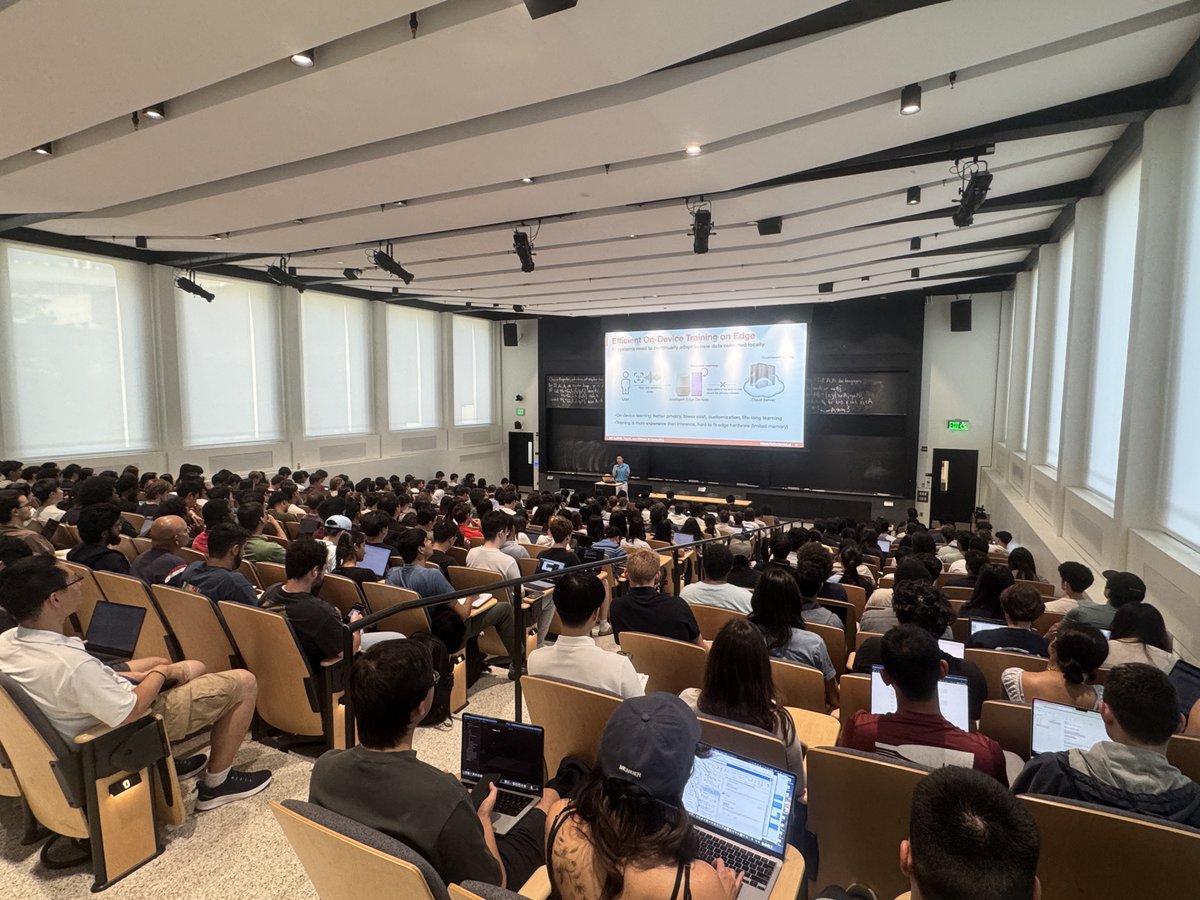
Mark your calendars if you want to learn with us—we are live-streaming the lectures all semester:
📆 Days: Tuesdays & Thursdays
⏰ Time: 4:00 - 5:30 PM EDT
Thrilled to join the teaching assistant team for MIT 6.5940: TinyML and Efficient AI Computing this fall! 🛠️⚡Want to tune in? We are streaming our lecture live on YouTube right NOW. Join us here: https://t.co/N9iZxjJPf5
Excited to co-instruct MIT 6.5940: TinyML and Efficient AI Computing with @songhan_mit this fall!
Looking forward to teaching, learning, and building with an incredible class.
Course site: https://t.co/LMHjNyl0iv
Excited to co-instruct MIT 6.5940: TinyML and Efficient AI Computing with @songhan_mit this fall!
Looking forward to teaching, learning, and building with an incredible class.
Course site: https://t.co/LMHjNyl0iv
@eric_alcaide Very good question! My personal opinion is that "aligned RMSD" loss of AF3 is actually another chordal distance estimator (similar proof) and will suffer from similar problems. But it is hard to add geodesic terms without explicit frames, and I am still thinking about this.
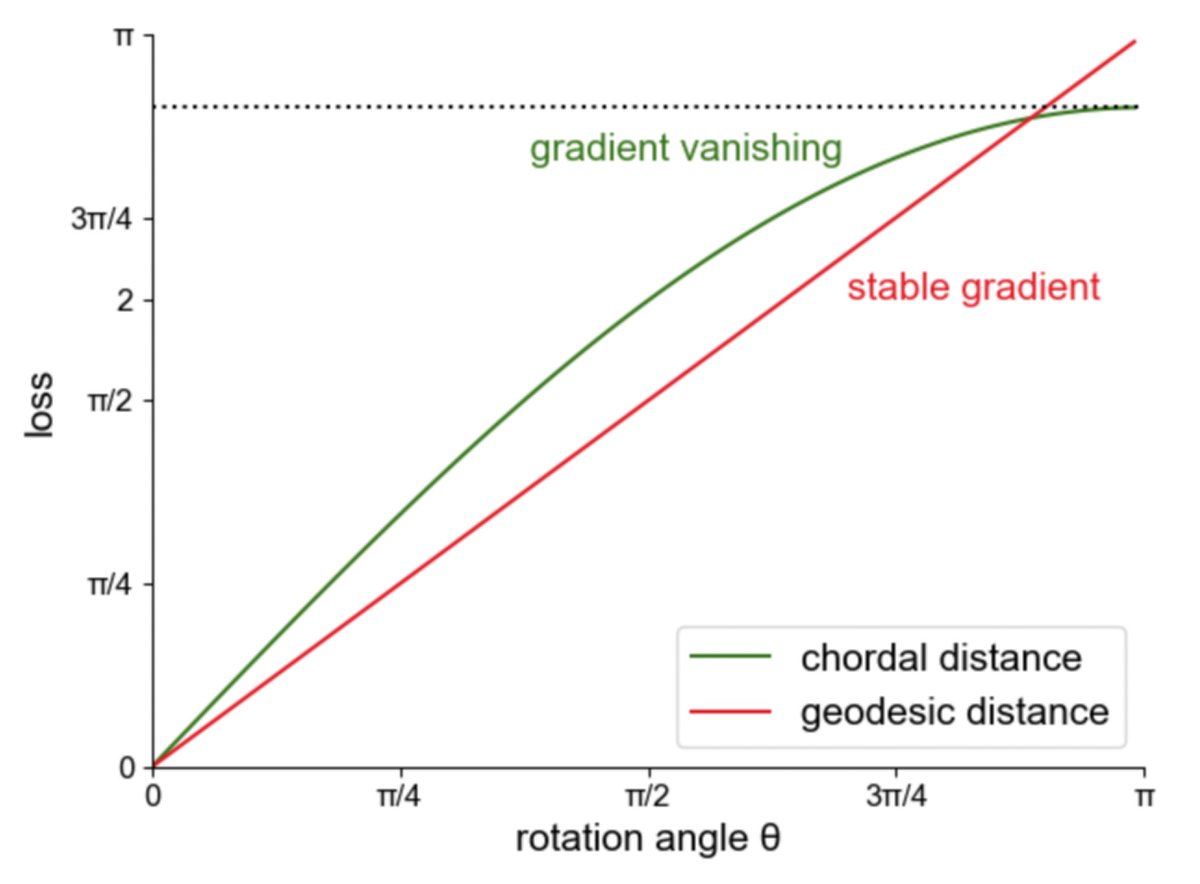
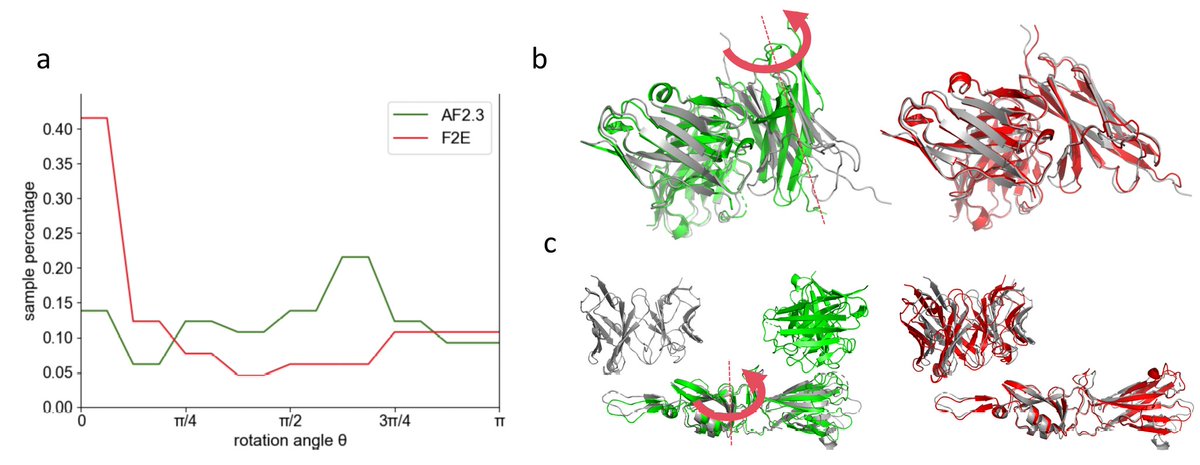
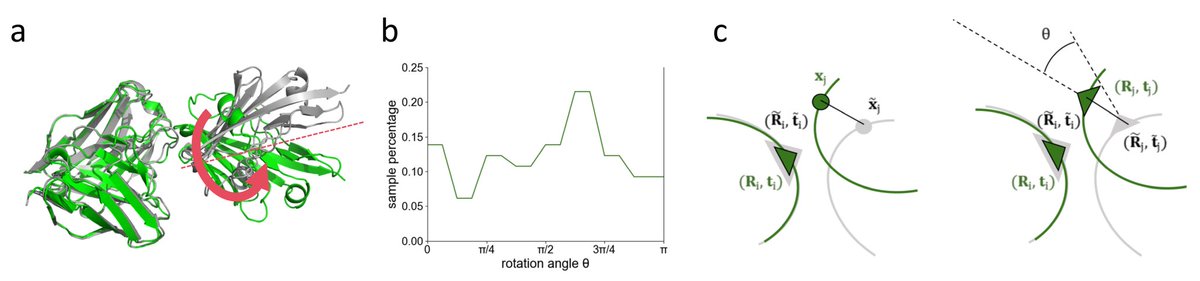
The widely-used FAPE loss of AlphaFold2 actually suffers from a gradient vanishing problem! By fixing it with geodesic terms with ⭐Frame Aligned Frame Error⭐,we can fix it and improve performance on immune complexes by a large margin!
Presenting at ICML TODAY!😊
(1/4)
By replacing it with FAFE, which we prove to approximate the geodesic distance instead, we can fix this problem! (3/4)
Paper:
arxiv https://t.co/pcTg9jFdHU
openreview https://t.co/0lH9db7nf7
Code:
https://t.co/d5AGWt744k
What if your molecules designed by generative models are hard to synthesize?
Project it into a synthesizable chemical space!
That's what our work "Projecting Molecules into Synthesizable Chemical Spaces" does (to appear in ICML 2024).
Paper: https://t.co/TvaG3O7SUG
(1/4)