Worth watching if you're following the Alpha School hype.
Kids clear multiple-choice science tests in 2 days or retake internal reading tests 7 times to hit 90%, yet stay stuck in 4th-grade writing. Repeated drills clear software gate but they don't build complex skills.
Clearing repeatable placement gates isn't deep learning.
Fun fact
Schools adopting systematic phonics and Core Knowledge are not having the gains promised (surprise!)
So "science of" reformers are blaming ... implementation (re: teachers) ...
SURPRISE!
It's the fidelity scam ... again https://t.co/NdUsdIjCEr
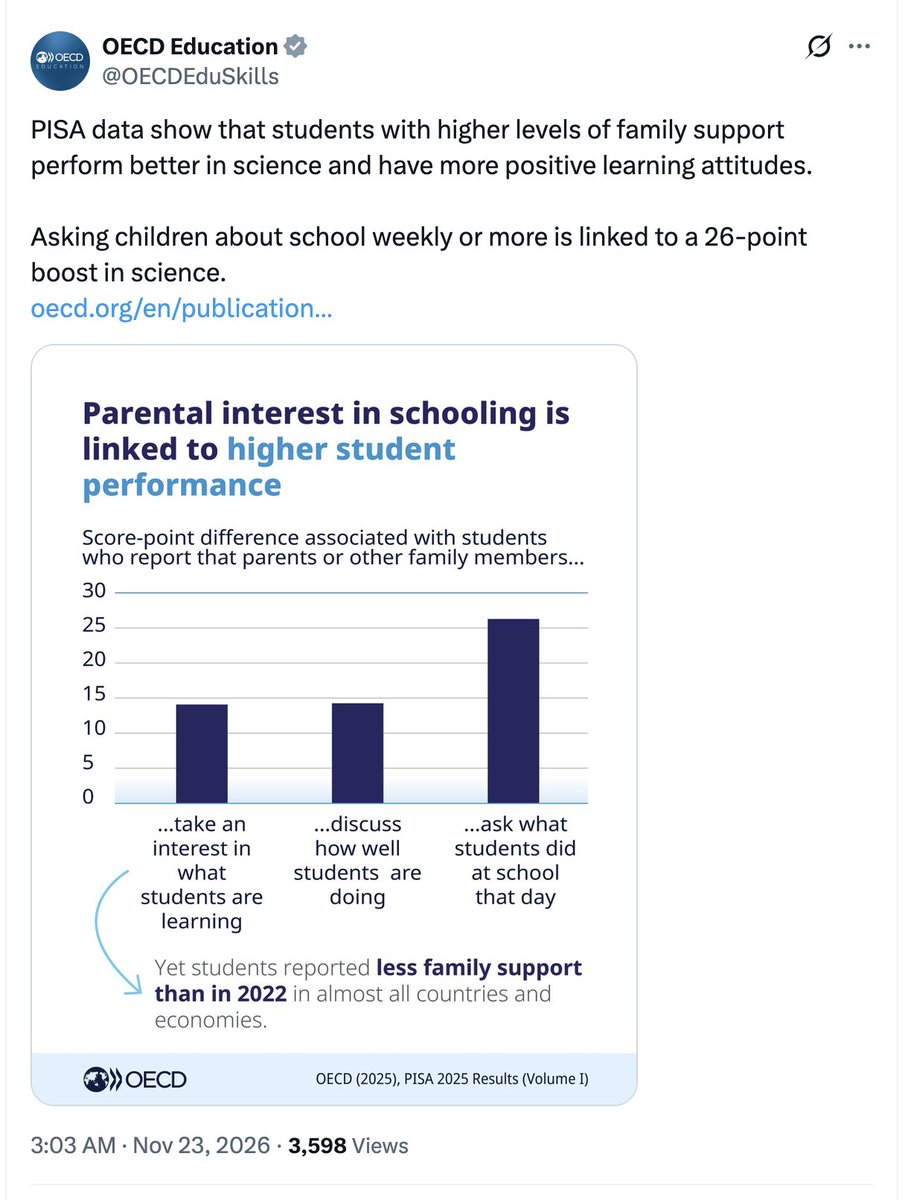
Since high poverty students tend to be low test score students, the implication is that parents in poverty are not "interested" in their child's education
It is a crass lie told by the "poverty is an excuse" crowd
Each word you say is planned by a small patch of brain above your left ear, about a quarter of a second before you say it. It sits in a temporal lobe region textbooks describe as only for listening. Our paper today in @ScienceMagazine: https://t.co/EXOgl3YsNI
@UCSF@NeurosurgUCSF
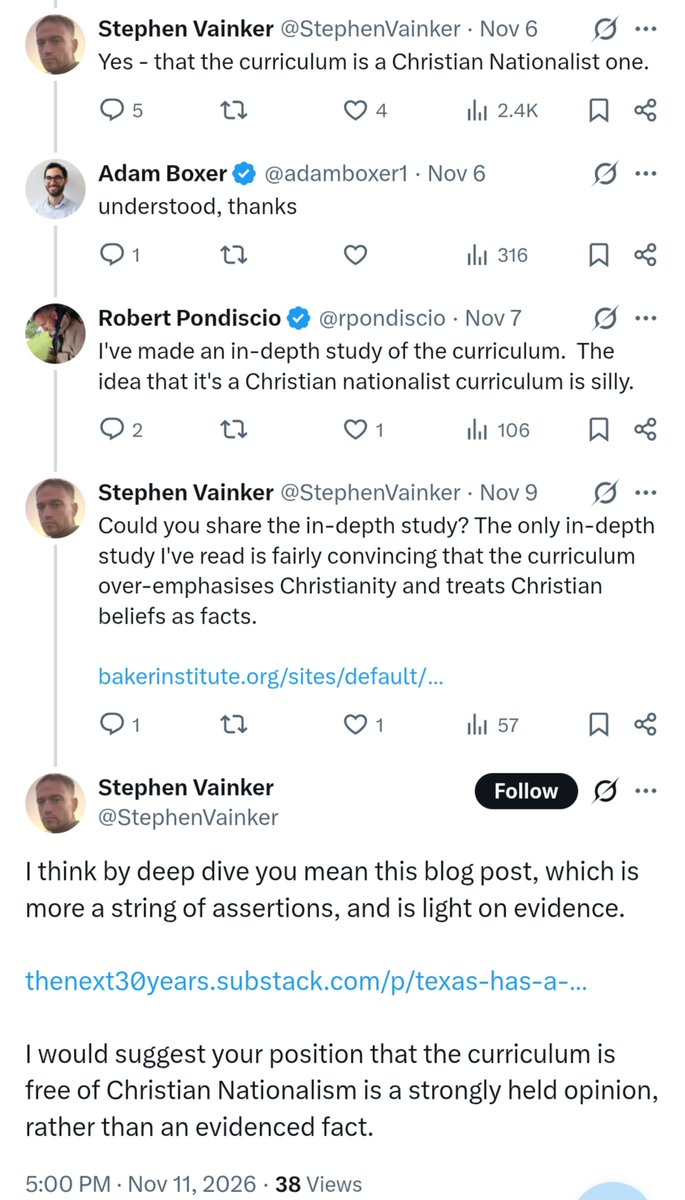
This interaction is a good example of how 'evidence-based' influencers bestow authority on themselves without deigning to actually engage with evidence.
One good thing about the Alpha situation is the thinness of this self-serious ed aristocracy has become unavoidable.
I Was Firmly Against Online School and AI in Schools, But That Was Before Alpha School Showed Me What My Salary Would Be
I’m Pleased to Announce I’ll Be Joining Alpha School as a Learning Scientist
I'd love for someone to solve education—even Alpha School. But Alpha School has flopped hard every time they try to teach a kid w/o a trust fund. (10% pass rate @ Unbound Academy & 21% pass rate @ Texas Prepatory School.)
If you follow this approach and transmute negative energy into goodness for you and for the world, you eventually realize it’s an endless source of generative drive. Oh, and nobody manages to do that all the time. It’s something to strive for.
It's important that people with authority speak publicly, loudly, and clearly about misapplications, misunderstandings, and misuses of their work and set the record straight. More of this, please.
Asked to comment on #SoldAStory, UC Boulder emeritus Ernest R. House responded:
"Emily Hanford's podcast does not accurately describe our critique of the Follow Through study... It can hardly be discredited by innuendo in a podcast deliberately slanted to favor Direct Instruction."
Full statement below:
This is a deliberately satirical recipe that nonetheless models a genuinely closed logical loop: the subject, exam, and teaching are mutually defined, success is treated as proof of the method, and failure is deflected onto pupils.
Sold a Story 1 - Sold LETRS w/ no science to support the program's effectiveness
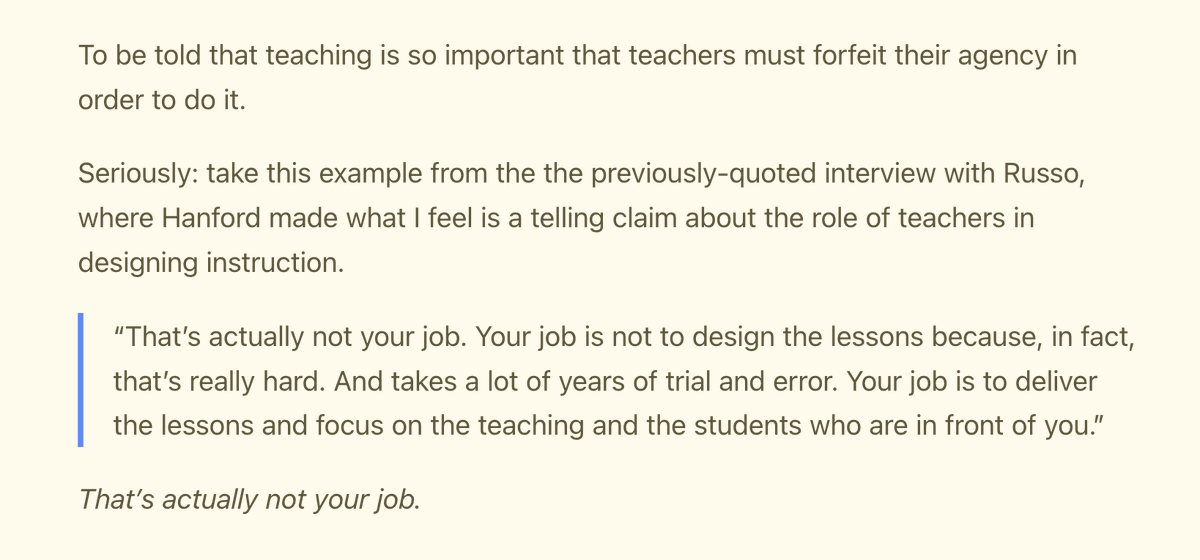
Sold a Story 2 - Selling scripted curriculum to de-professionalize teachers, a field consisting of over 70% women
Both make nasty and false claims about teacher expertise
https://t.co/gPNKisY1qc
My team and I found 10 important PISA 2025 Reading correlations that policy makers need to take seriously if they want to improve performance. #PISAparody#PISA
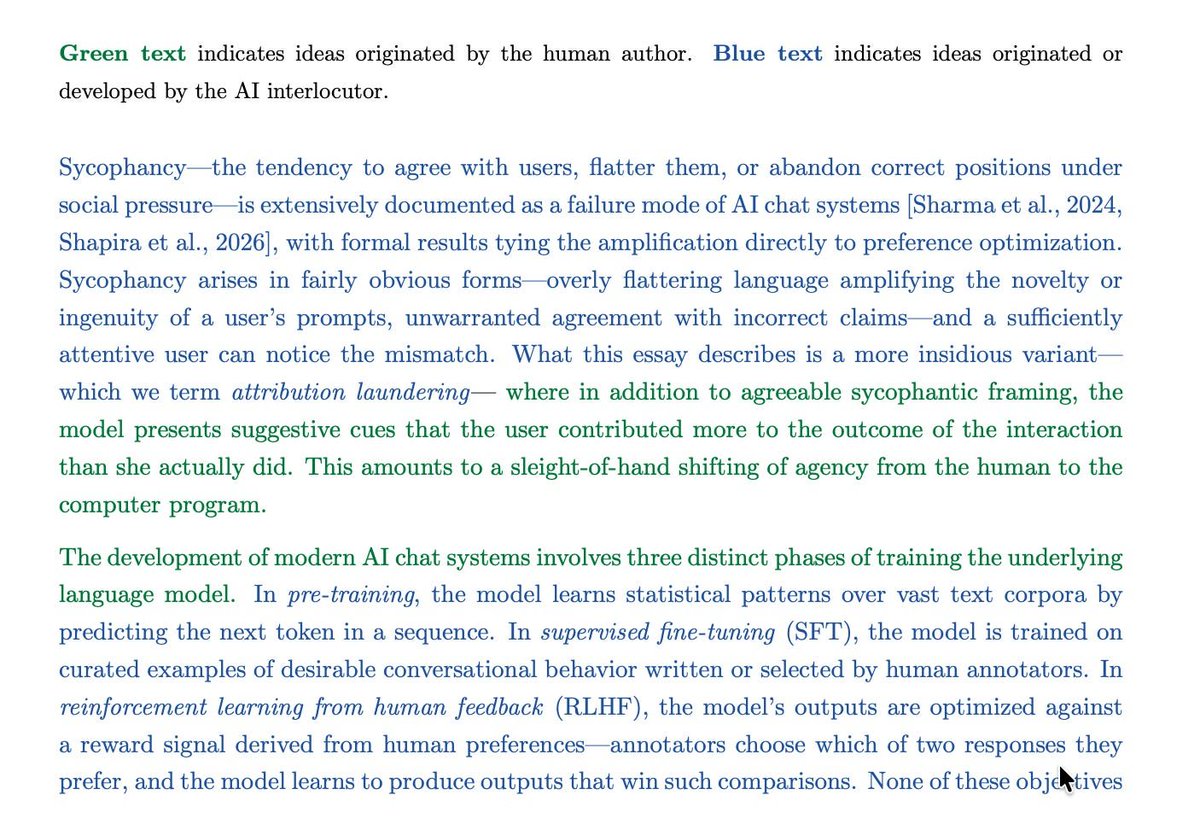
“Dead cognition”: thinking that appears to belong to the user but was actually generated by AI, leaving the user with a distorted sense of their own thinking.
“Attribution laundering”: the process by which AI generated ideas or reasoning are subtly presented back to the user as though they came up with them.
https://t.co/m2M3R5R2hK
MIT published a brutally honest report on what AI is doing to students.
A committee of professors and students spent five months studying how AI changed learning on campus, and the findings read like a warning to every university on the planet.
Study groups are disappearing. Office hours are emptying out. Problem sets and take-home exams no longer prove anything, because AI can produce credible solutions to almost any written assignment in the undergraduate curriculum. Students who lean on chatbots lose mastery and confidence, and some slip into what the report calls cognitive surrender, reaching for AI at the first hint of struggle.
The numbers are rough. 46 percent of surveyed MIT undergrads use LLMs daily. 90 percent worry about their own overreliance. Undergrads who feel AI makes them replaceable now outnumber those who feel it makes them capable.
The committee's answer surprised me. They refused to fight AI with surveillance. The report calls AI detectors unreliable, says lockdown browsers feel like spying, and warns that policing students builds a classroom atmosphere of mutual distrust.
Instead, MIT wants to rebuild education around the things AI can't replace. That means oral exams, semester portfolios, in-person project work, and a required social component in every subject. The report even floats the idea of rethinking grades entirely, since without a GPA to optimize, much of the incentive to cheat with AI evaporates.
The committee warns professors against replacing undergrad research assistants with AI agents just because they're cheaper, because a university exists to grow people, not output.
The most famous tech school on earth admitted the machines broke its way of teaching. Its answer is more humans, not more software.
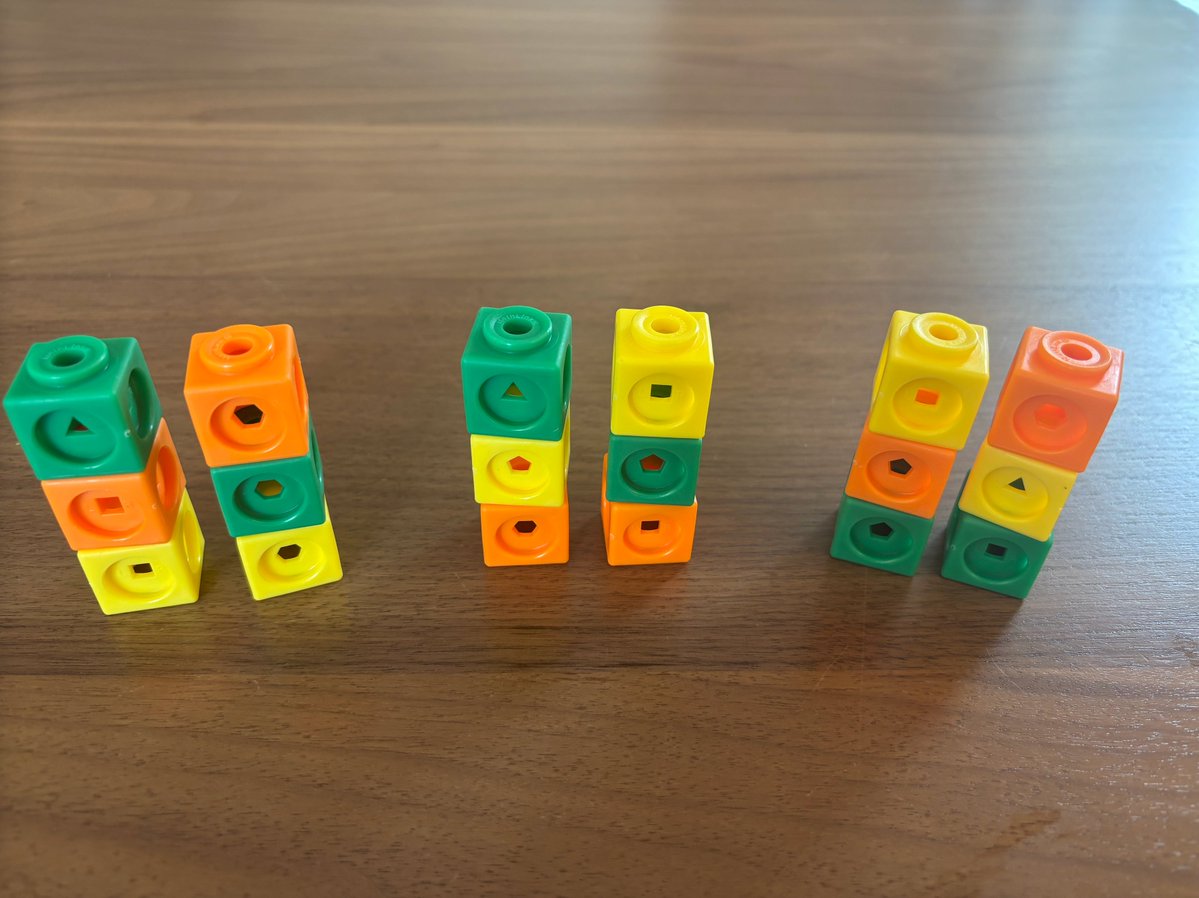
I've been running an informal math circle for preschoolers, and it's amazing what 5 yo's can do.
Combinatorial reasoning, backward induction, beginnings of proof... the concepts are there even before mastering arithmetic.
If you have kids 5-7 you can try these games at home too.
Here's what we did our first session 🧵
parents' screen time is more strongly linked to children's vocabulary growth than kids' own screen time.
the more time parents spend on their phones, the slower their children's vocabulary develops.