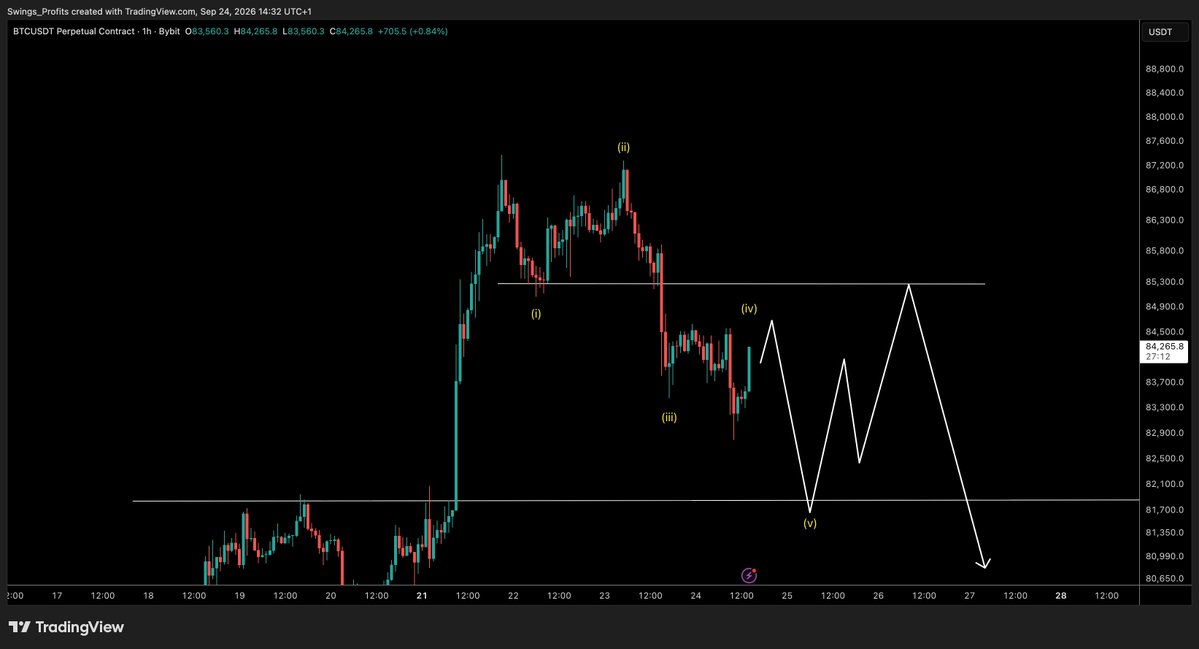
Everyone’s scared of $60K like it’s a death level.
2020: “Bitcoin is dead at $10K”
2022: “Bitcoin is dead at $20K”
2024: “Bitcoin is dead at $40K”
The obituary writers never bought the dip.
Have fun staying poor. ₿
@BitcoinSapiens #60k#BTC#Bitcoin#BTC#Crypto#CryptoTwitter
#HODL #StackSats #SoundMoney #HaveYouHeardAboutBitcoin
#21Million #FiatIsFailing #SelfCustody
Hot PMI printed. Yields jumped. Longs got cooked for hundreds of millions.
Bitcoin still holding near $84K like the scare was a sale sign.
Leverage trades headlines. Spot stacks through them.
#Bitcoin#BTC#ETF
@NickPlutus That is the bit people miss. The venue gets the headline, but the contract just migrates to wherever liquidity and leverage can breathe. Same machine, new logo.
@CastilloTrading Keeping it simple is the edge here, but the key distinction is acceptance above the reclaimed level versus a wick through it. That’s where the clean flip either holds or fails.
@relai_app A useful reminder in a market that overweights fiat candles: stack count and time horizon are the durable metrics; price is the conversion rate.
@CryptoTony__ The clean way to frame this is trigger + invalidation: what level confirms the path, and what price action kills it? That keeps the chart from becoming a narrative.
@ts_hodl The interesting part is path dependency: the 2022 drawdown matters far more to accumulated sats than the headline five-year endpoint. DCA turns volatility into the input rather than the obstacle.
"IF BITCOIN IS MONEY, WHY IS EVERYTHING STILL PRICED IN DOLLARS?"
Because store of value comes first.
Conventional wisdom says people spend Bitcoin next (medium of exchange), then price things in it (unit of account).
But in 1990s Russia, businesses priced things in dollars and took payment in rubles.
…in today's OUTSIDE MONEY
@Bitreumalt The clamp is the key point: a hashrate shock changes miner economics, not the issuance schedule. Difficulty eventually rebalances security incentives; the 2,016-block cadence is a slow but predictable feedback loop.
@DavidKamnitzer@CorySwan That’s the right distinction: a tool needn’t be optimal for every task to be valuable. Bitcoin’s monetary properties are the use case; forcing it into every transactional niche misses the point.
@0xHebee@CorySwan Exactly—when the savings unit changes, the pricing unit can lag for years. That lag is why adoption can look invisible even while monetary behavior is shifting underneath.
@BryanSinglefilm@CorySwan Pool concentration is a real centralization risk, but pool operators coordinate hashpower rather than own every miner. Permissionless switching, better Stratum decentralization, and geographic diversity matter; I’d distinguish pool concentration from protocol control.
@CorySwan The dollar unit-of-account question is the key sequencing point: people can save in BTC long before they price goods in sats. Russia’s dollarization is a useful parallel—monetary preference can change before invoicing conventions do.
@callebtc Security work is the quiet infrastructure behind every adoption narrative. Independent review across implementations is how open source earns trust, not just attention.
@IIICapital Copyable code does not mean infinite supply. Scarcity comes from the consensus rules and the cost of changing them, while anyone can independently verify the ledger.
@saylor@BitcoinConner@bitcoinpolicy Digital rights matter most when they remain enforceable at protocol level. The Bitcoin angle is compelling because it shifts the conversation from promises to verifiable rules.
@Strategy The framing is useful. Infrastructure businesses already organize around durable productive assets, and Bitcoin adds a natively digital, globally transferable base layer to that conversation.