Now this is called administration! Brilliant story by @nishthaanushree via @SwarajyaMag on how a decade of focused planning and investment by the Modi government, in critical rural grassroots infrastructure, is slowly making Indian agriculture monsoon-proof
A Worse Monsoon Than 2015's, A Better Sowing Season: What Changed In India's Kharif Math
https://t.co/PNnOJSPdwI
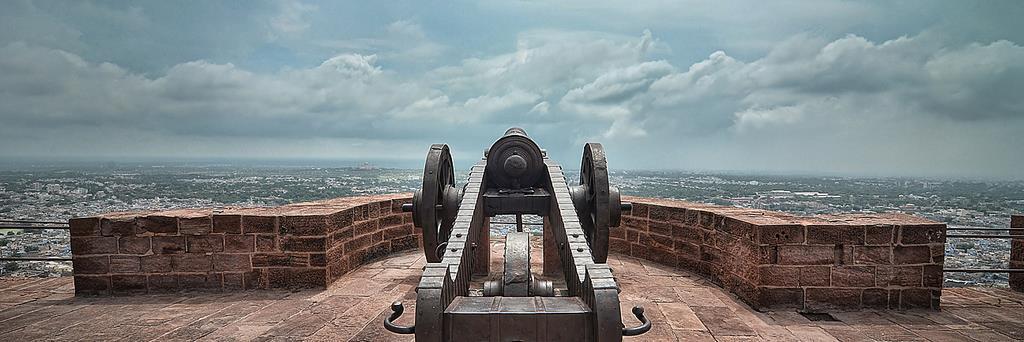
A little-known Sanskrit drama from the 13th century remembers the screams of ordinary people as Sultan Iltutmish's armies burned their way through Mewar.
Read this essay by Alok Kumar on the Hammiramadamardana, the forgotten Sanskrit play that preserves the memory of the invasion and its consequences.
Heartbroken & so inspired 💔💔🙏🏽
The Commonwealth Games is becoming a daily roll-call of young Indians who have emerged from unimaginable hardship & horrors to win gold.
Look at 23-year-old judoka Asmita Dey, who is now the first Indian to win Commonwealth Games gold in the women’s 48kg category.
7 months ago, she lost her father to a brain stroke. A bicycle mechanic who earned barely ₹300 a day, he raised his family in a mud house in a small village in Tripura. When a knee injury threatened Asmita’s career, he found the money to take her to Delhi for treatment.
Even as the family mourned, Asmita’s mother urged her daughter to return to training, believing that abandoning the dream would betray everything her father had sacrificed for.
She now stands on top of the Commonwealth Games podium with a gold medal around her neck.
In 14th century, the scholar & poet Vedānta Deśika (birth name Veṅkaṭanātha) was challenged by a rival scholar to a intellectual duel. The rival boasted that Desika could not match his poetic speed & challenged him to compose 1000 distinct Sanskrit verses in a single night.
Deśika accepted the challenge. But rather than just writing simple verse, he embedded complex mathematical algos & chess movement patterns directly into the poetic meter, creating a masterpiece titled the Pādukā Sahasram.
In the 30th chapter of the work (Chitra-paddhati), Deśika constructed a mathematical puzzle known in chess as the Knight’s Tour, centuries before Western mathematicians like Leonhard Euler formalized it (I am not saying, he invented it because earlier Indian examples of knight’s-tour bandhas exist...e.g., Rudrata’s Kāvyālaṅkāra ~9th century; Ratnākara’s Haravijaya ~9th century):
Anyway, verse #929 consists of 32 Sanskrit syllables arranged on an 4x8 chessboard grid (filling 32 spaces row by row).
If we read the syllables in standard sequence, it forms a grammatically flawless verse praising the divine sandals of Lord Ranganatha.
If we move across the board following the exact L-shaped jumps of a Chess Knight starting from the top-left square & visiting all 32 squares, the sequence of syllables spells out Verse #930!
Verse #930 is an entirely new, fully functional Sanskrit verse with its own distinct rhythm, precise grammar & a whole new poetic meaning!
This cryptographic feat is possible because of Sanskrit’s structural architecture: Words are built using modular base roots (dhātus) & suffixes (pratyayas), meaning word order in a sentence is extraordinarily flexible while retaining absolute grammatical precision.
Sanskrit poetry relies on strictly counted syllable patterns (chandas), allowing exact 1:1 matrix mappings onto geometric shapes like chessboards / circles (padma-bandha) / wheels (chakra-bandha).
Fields Medalist John Pardon is not particularly prolific. But every proof he’s published has been surprising, spectacular, and groundbreaking. https://t.co/HQxvV5fOr1
ORBIT ACHIEVED. 🚀
Vikram-1 Test Flight-1 has reached orbit. India's first privately developed orbital rocket has completed its final burn and injected its payloads into a ~450 km orbit, making India the third country in the world with private orbital launch capability.
History is made. 🇮🇳
#Vikram1 #JourneyToOrbit #SkyrootAerospace
I taught JEE physics for years. That paper breaks strong kids in three hours.
This exam is five hours of theory and five hours of lab work, and these five did close to perfect scores on it.
Let me tell you what actually happened.
The International Physics Olympiad is the world championship of school physics. It was the 56th edition. Held in Bucaramanga, Colombia, from July 5 to 12.
381 students. More than 85 countries. Every one of them the best physics student their country could find.
India sent five kids.
All five came back with gold.
Their names are Kanishk Jain from Pune. Riddhesh Anant Bendale from Indore. Rishit Garg from Dwarka in Delhi. Shresth Suraiya from Mumbai. Svarit Joshi from Ahmedabad.
We know a hundred cricketers by their nickname and not one of these boys. :)
That clean sweep put India at joint World Number One. Tied with China, Russia, Kazakhstan, South Korea and Taiwan.
Those are countries that pour serious money and national pride into science education. We are standing level with them.
Now here is what the exam actually was.
Two papers. Each five hours long.
The theory paper had three problems. One on the thermodynamics of paramagnetic cooling. One on the photoionisation of ozone. One on the dynamics of electron positron pairs.
The experimental paper was another five hours in a lab, working through heat transfer and thermodynamic processes in fluids.
That means you get given equipment you have never seen, and you have to design your own experiment, take your own readings, handle the errors, and reach a real answer.
Not multiple choice. No shortcuts. No pattern recognition. You either understand physics or you sit there for five hours.
HBCSE says the Indian students were near perfect on theory and excellent on the practical too.
Now, this was India's 27th appearance at the IPhO.
Across all those years, about 44 percent of Indian students have won gold, 41 percent silver, 10 percent bronze.
In the last ten years, every single Indian student has come home with a medal. 62 percent gold, 38 percent silver.
Not one kid has gone and come back empty handed in a decade.
Five golds in one year has happened only twice. This year, and in 2018.
So who built this.
The programme is run by HBCSE, the Homi Bhabha Centre for Science Education. It sits under TIFR, which sits under the Department of Atomic Energy.
They run the whole funnel. A national exam, then a national olympiad, then a brutal selection and training camp, and out of everyone in the country, five kids get on a plane.
The team was led by Professor Anwesh Mazumdar of HBCSE-TIFR and Dr Leena Joshi from St Xavier's College, Mumbai.
The scientific observers were Professor Ananda Dasgupta from IISER Kolkata and Nisha Kelkar from Gogate-Joglekar College in Ratnagiri.
Yes. Ratnagiri. A college in a small coastal town in Maharashtra.
This is public education doing something the private coaching industry could never do on its own.
The coaching industry is very good at one thing. Teaching you to solve a known problem fast.
That is what JEE and NEET reward, and I say that with love because I was part of that world.
But an olympiad paper does not have a known type. There is no shortcut chapter. There is no formula sheet that saves you. You have to sit with a problem you have never seen and think.
That is a completely different muscle. And a government funded centre has been quietly building it in Indian teenagers for 27 years.
So yes, be proud. Loudly.
HBCSE also shared that around 64 percent of India's olympiad medallists go on to do a PhD.
But only about 32 percent of medallists end up settling in India.
I do not say that to spoil the moment. These kids owe the country nothing. They earned every option they have.
But it should tell us something. We are excellent at finding this talent. We are excellent at training it. We are still not great at giving it somewhere worth staying.
Congratulations Kanishk, Riddhesh, Rishit, Shresth and Svarit. This is one of the best things an Indian did this year and most of the country will never hear about it.
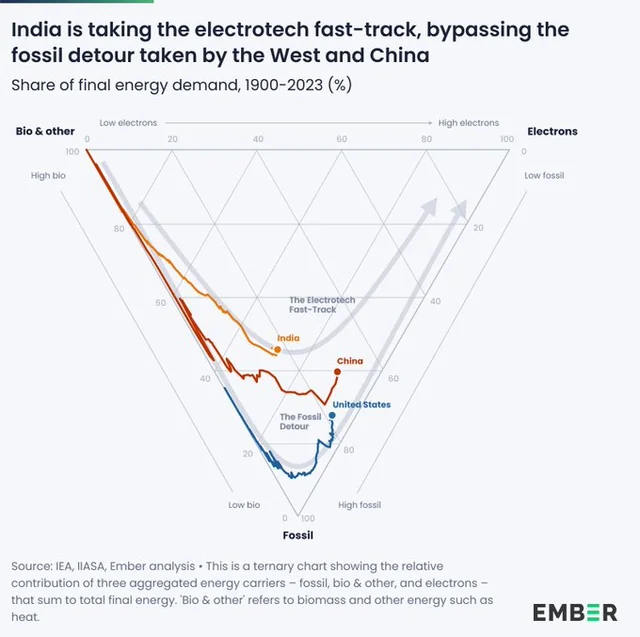
People don't understand the gravity of this change
When China + US industrialized, they had to pollute their country (and then start cleaning up when they had the money) 🇨🇳🇺🇸
India is keeping pollution contained from the very start, so that less money is wasted in cleanup later on 🇮🇳
I’m in love with this sentence:
“The degree to which a person can grow is directly proportional to the amount of truth he can accept about himself without running away.”
I visit a lot of Indian hardware startups.
I see a lot of JLCPCB boxes.
I always ask, "Why are you getting this done in China? Why not India? Aren't you worried your designs will be copied?"
The answer is always the same: "No Indian firm can beat Chinese prices."
I hate this answer. Not because it's inaccurate (it makes sense and I don't blame them for choosing the most affordable option, especially when they're bootstrapping). I hate this answer because I just really wish the reality were different.
And that's why I'm so glad Vishal Tejwani (@ivishaltejwani) exists. This man is singlehandedly trying to flip the script by putting affordable PCB manufacturing machines into the hands of every Indian hardware startup.
Right now he's offering three systems:
1. StencilStation - Rs. 15k
2. SolderStation - Rs. 22k
3. PlaceStation - Rs. 2 lakh
You can't beat these prices in India right now unless you build these machines yourself.
Also, big shoutout to @prakdadlani for being an early believer in Vishal's vision and implementing PlaceStation in his factory to move PCB assembly from China to India.
this is what happens when a brand actually tries something new instead of making the 437th Nike Air Force clone.
Maachis is ridiculously cool.
the shoe, the packaging, the storytelling everything feels intentional for a change.
India has so far won four big matches in the Asian Volleyball Cup in Ahmedabad, winning 12 sets, and dropping just one, to the Kazakh team.
Coincidentally, one was also the total number of articles in the English press in Ahmedabad about the AVC, that too after India's fourth straight win. After @sagofficialpage, FIVB, the IOA and the Steering Committee did such a sterling job putting this tournament together.
The stadium which allowed free seating was packed all four nights for all the India matches with thousands coming in to book their places hours before.
And after the game, they stayed en masse just to cheer the players and take selfies and autographs.
And one tiny report after day 4, for a team that has jumped into the world top 50 and just beat the defending champions in straight sets!
India's volleyball renaissance under coach Dragan, and the spirit and resilience of this team against all odds is a story that needs your support!
For decades, the standard critique against the Indian Knowledge System (IKS) was: "Where is the empirical data? Where are the peer-reviewed papers? It is all just mythology."
Now, when institutes like the IITs, IISc, & AIIMS are setting up dedicated research wings to rigorously test, validate & document these ancient sciences using modern, empirical protocols, the critics have panicked. They have switched from demanding proof to screaming "pseudoscience!" & "the brand is gone!"
For centuries, Western medicine dismissed the idea that the mind could heal the body as superstition. Today, neuroplasticity & the placebo effect are multi-billion-dollar fields of peer-reviewed research.
If a modern scientist discovers something new, it is called a "breakthrough." If an IKS researcher uses modern tools to prove that ancient Indians already knew that exact concept 1000s of years ago, it is called "pseudoscience."
In 2015, the Nobel Prize in Medicine was awarded to Tu Youyou for discovering Artemisinin (an anti-malarial drug) by looking into ancient Chinese medical texts. Similarly, India’s Ayush research ministries & global pharmacological bodies are finding peer-reviewed validation for compounds like Curcumin (Turmeric) & Ashwagandha for their anti-inflammatory & neuroprotective properties.
Why do these people have a problem with India documenting its own heritage?
If China can globally brand Traditional Chinese Medicine & the West can capitalize on indigenous knowledge, We have every right to scientifically document our own Itihasa & knowledge systems. Demanding peer-reviewed papers for decades & then throwing a tantrum when India actually starts producing them, shows intellectual dishonesty, not a love for science.
Be proud that we are witnessing the renaissance of Bhartiya knowledge. It is a long journey, but Satya always outlasts ideological noise.
Well done, IITs...Proud to be an alum.
This is what a true 'People’s Award' looks like.
Nagaland's revered cultural maestro and folk art exponent, Guru Sangyusang Pongener, is honored at Rashtrapati Bhavan. Only the Modi government could bridge this gap and turn a prestigious national honor into a true 'People's Award.'
Fed governor Lisa Cook reported around $1.2 million in payments for legal services and security made on her behalf last year as she fights President Trump's attempt to fire her from the central bank's board. https://t.co/mru8SzotTl
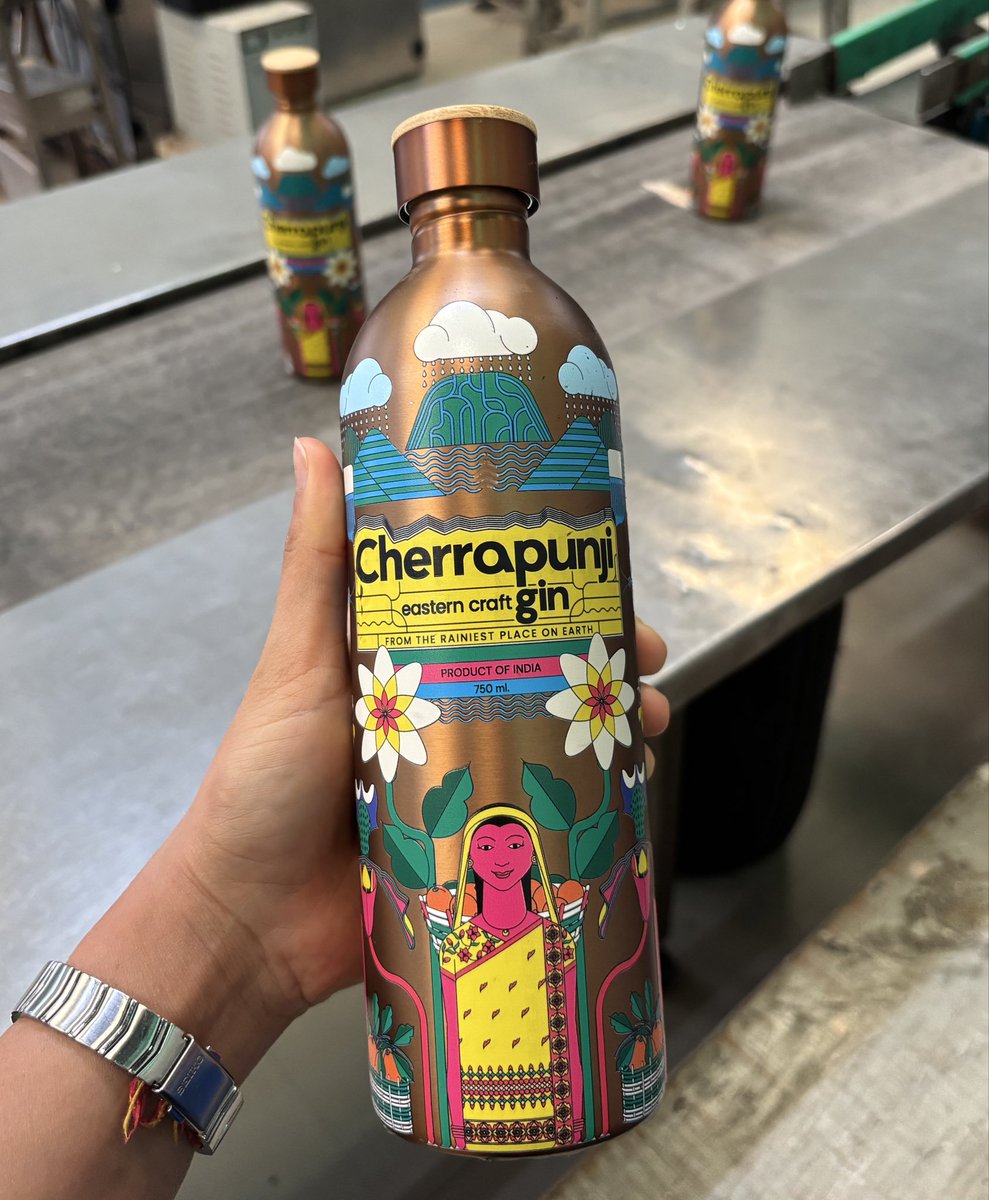
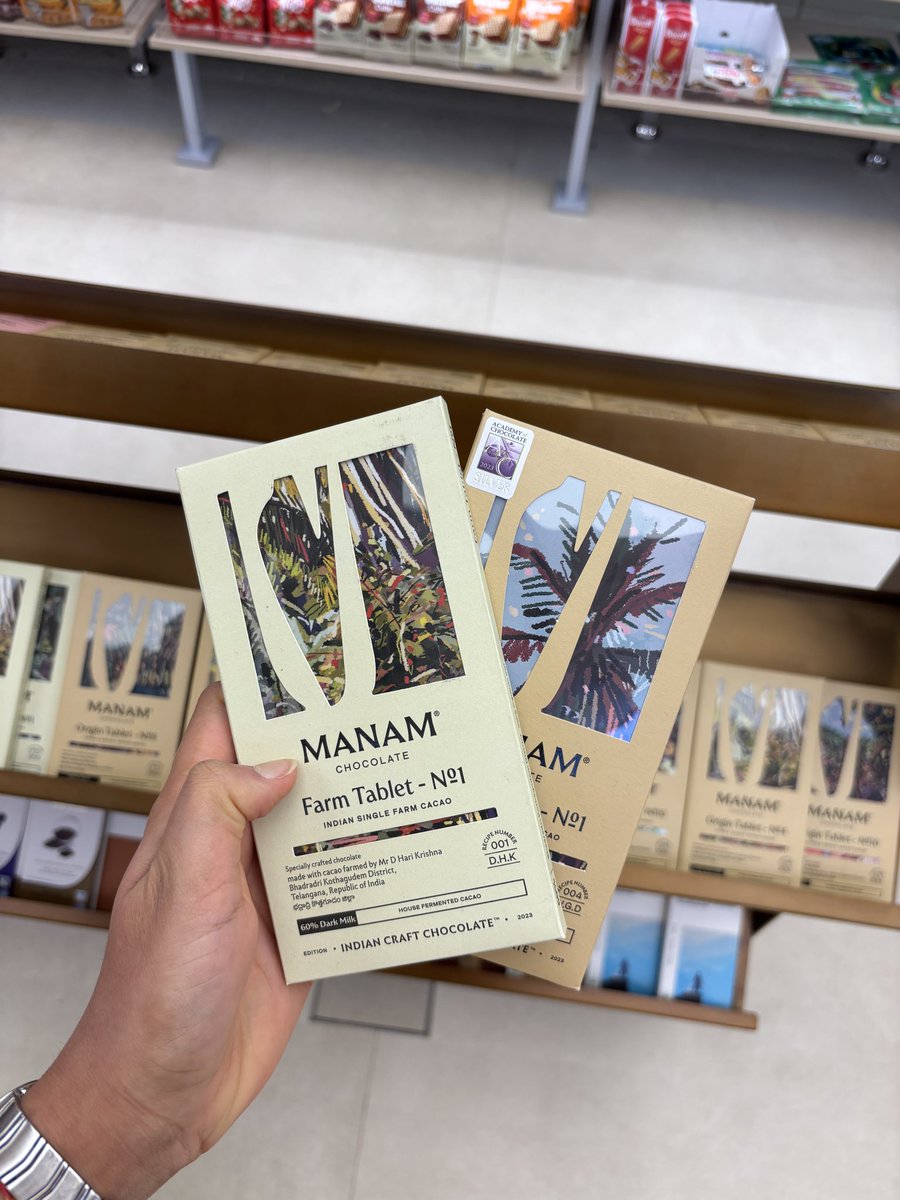
One thing I’ve been noticing with newer Indian brands is that many of them are not trying to look imported anymore.
You can see it most clearly in packaging. More colour, more local references, more confidence in looking Indian.
This came up in our recent interview with @CherrapunjiGin too. When we asked @mayukhazarika about the gin bottle, he said India is bright and colourful, and their bottle had to reflect that.
It made me think about how much the idea of premium has changed.
Earlier, premium often meant muted, minimal and slightly foreign-looking. Not anymore.
A few recent brands I came across that made me think about this.