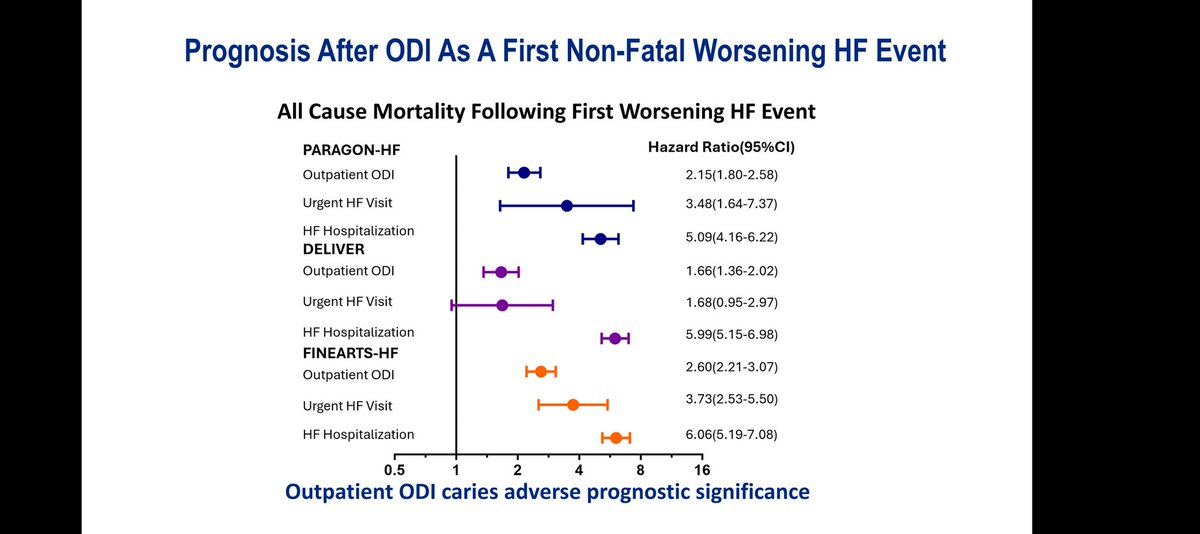
Outpatient worsening HF as an endpoint in clinical trials? Thrilled to present our cross trial analysis in
HFp/mrEF @CVCTForum#LBCT session showing oral diuretic intensification
🎯 Occurs frequently
🎯 Is prognostically relevant
🎯 ⬇️ by all therapeutic classes
🎯 Has implications for trial efficiency
Terrific @MGHCVFellows Grand Rounds from @Gong2Jingyi on improving care delivery for CKM syndrome. Very proud of all Jingyi's accomplished during her research years @SmithBIDMC - and she's just getting started.
Delighted she's joining @SmithBIDMC@BIDMChealth as faculty!
What an honor to give Cardiology Grand Rounds @nyulangone on why policy may be one of the most powerful cardiovascular interventions we have - and why we should hold it to the same evidence as the drugs we prescribe
Thanks to @SVRaoMD@glennfishman@adambermanmd for having me!
🔬 CARDIO-TTRansform — the largest ATTR-CM trial to date — enrolled 1,432 patients across 130 sites in 20 countries, evaluating eplontersen in wild-type & hereditary ATTR-CM.
We assumed inflammation in heart failure was subtype-dependent. Findings from POSEIDON challenge that, and the therapeutic implications could be significant, but the work to prove it is still ahead
Grateful to @TCTMD for the coverage. Full paper in @EurJHeartFail. Both links👇🔗
New analysis of the ASCEND-ND trial:
Iron deficiency defined by low TSAT, but not low ferritin levels, is associated with increased risk of heart failure and cardiovascular death in CKD, independent of hemoglobin.
New in #EJHF: https://t.co/H93GdkCEsT
Finerenone, polypharmacy, and clinical outcomes in heart failure: pre-specified analysis from the FINEARTS-HF trial
In FINEARTS-HF, >90% of patients with HFmrEF/HFpEF met the criteria for polypharmacy or hyper-polypharmacy, and these patients faced excess risks of cardiovascular events. Finerenone safely reduced cardiovascular death and total HF events across a broad range of baseline medication use.
@ESC_Journals@mvaduganathan@SJGreene_md@gcfmd@DrMarthaGulati@hvanspall@HSkouri@MartaCoboMarcos@GianluSava
https://t.co/2lh4Os6PAK
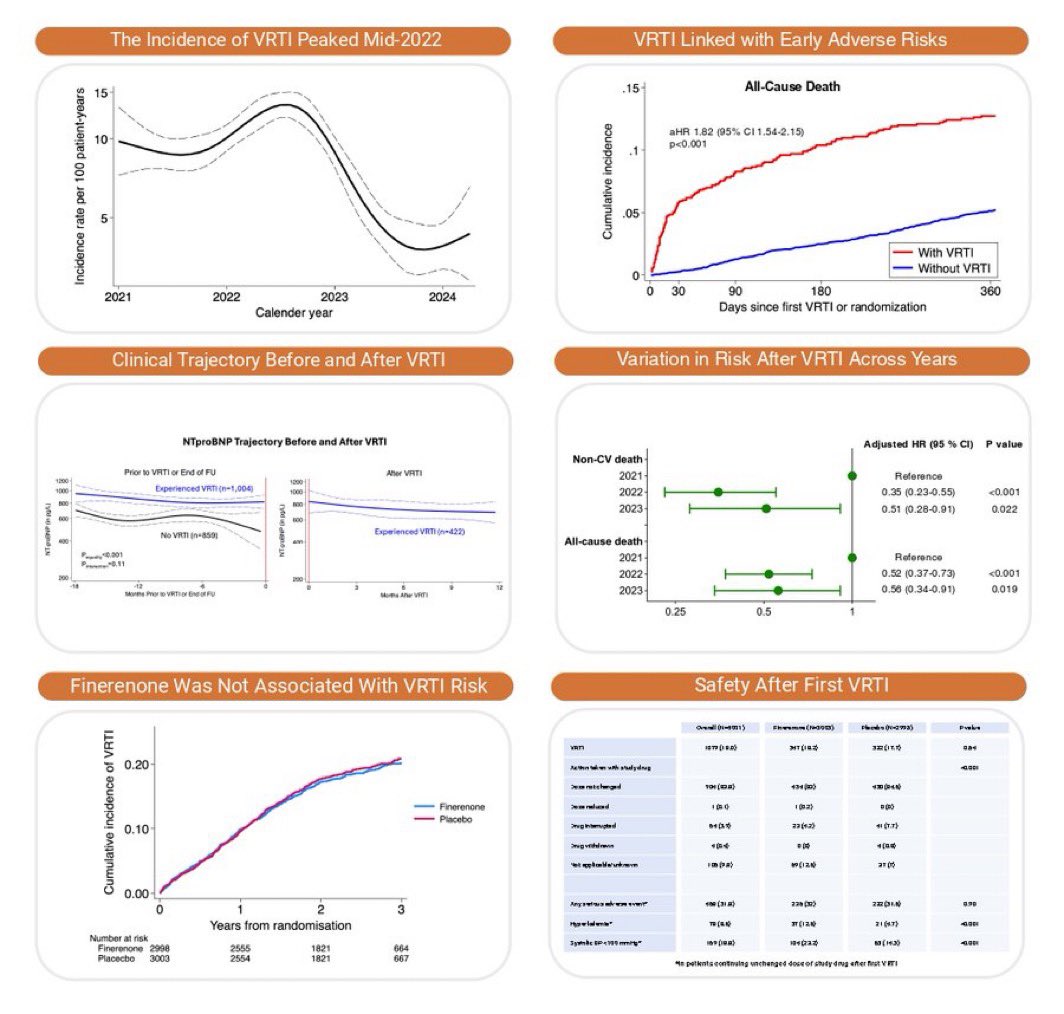
New data on VRTI in heart failure — 6 key findings:
📈 Incidence peaked mid-2022 (~15/100 patient-years) and has since fallen sharply.
☠️ VRTI doubles mortality risk: aHR 1.82 (95% CI 1.54–2.15), p<0.001 — curves diverge within 30 days.
📉 NT-proBNP rises significantly before VRTI vs no-VRTI patients — an early warning signal.
📅 Outcomes improving year-on-year: all-cause death aHR 0.52 in 2022 vs 2021 reference (p<0.001).
💊 Finerenone does NOT increase VRTI risk — identical curves to placebo over 3 years.
⚠️ Post-VRTI: monitor closely for hyperkalemia & low BP (<100 mmHg) in finerenone-treated patients.
🔑 VRTI carries real mortality risk — but we’re getting better at managing it. Finerenone is safe.
#HeartFailure #Finerenone #VRTI #Cardiology #CardioTwitter
Now online: The largest global validation of AHA PREVENT & ESC SCORE2 cardiovascular risk tools. Across ~6.5M people, both performed comparably across geographies & albuminuria further improved risk prediction
Open access in @NatureMedicine:
https://t.co/HiSjXc01rI
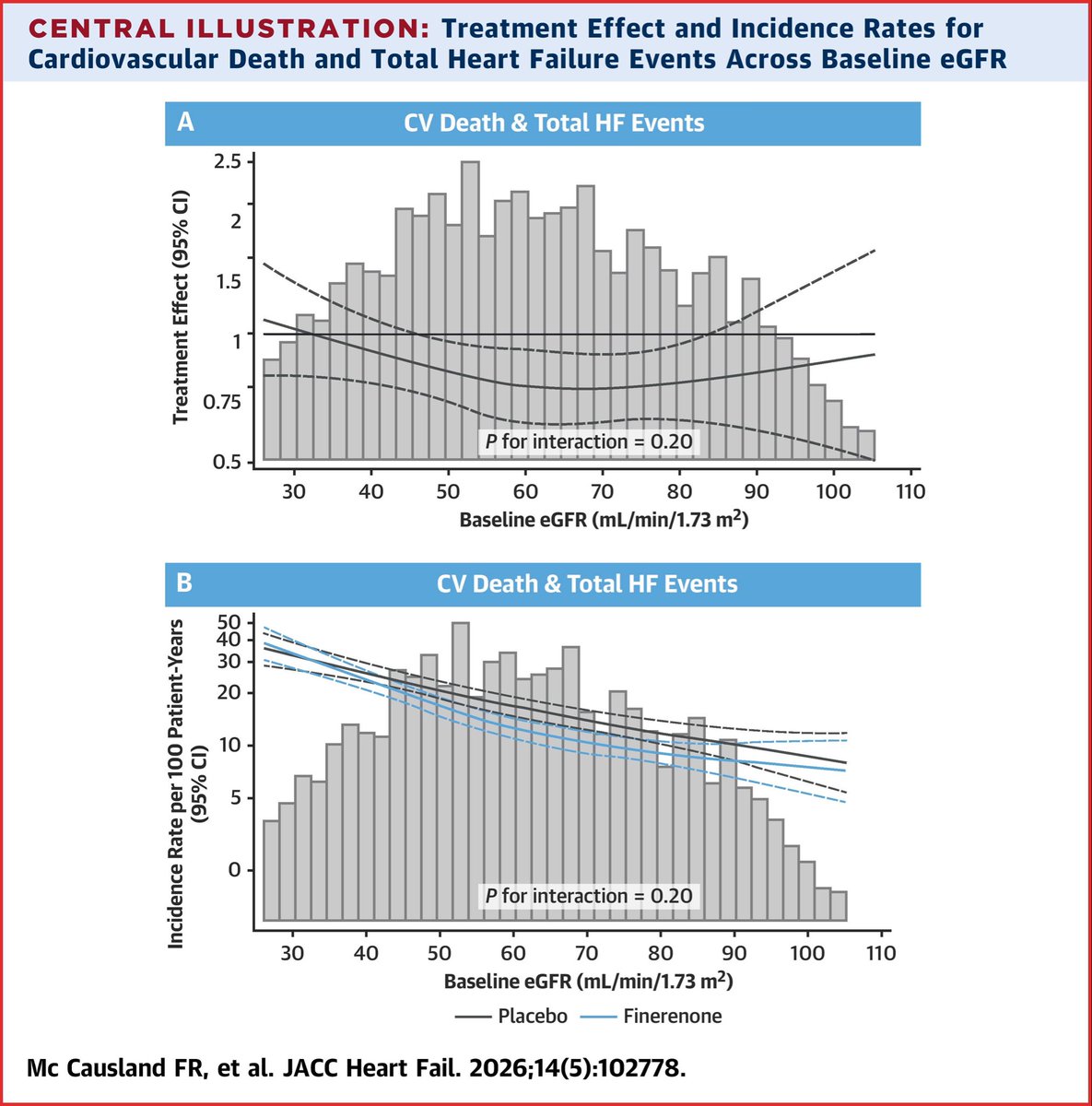
Finerenone and Cardiovascular Outcomes According to Baseline Kidney Function in Patients With Heart Failure: The FINEARTS-HF Trial
In the FINEARTS-HF trial (where the target dose of finerenone was determined by baseline kidney function), the effect of finerenone to reduce the composite of cardiovascular death and total HF events did not significantly differ across a range of baseline eGFR and UACR.
@mvaduganathan@gcfmd@GianluSava@JACCJournals@AndrewJSauer@SJGreene_md@ACCinTouch
https://t.co/Iiy16QnVUz
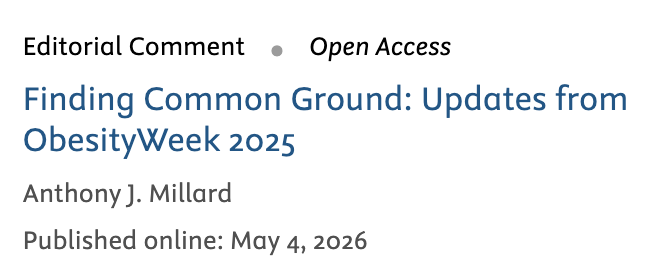
Excited to 🚀 new @JCFINT manuscript type
🫱🏽🫲🏾 Finding Common Ground 🫱🏽🫲🏾
through which we aim to bring updates from disciplines intersectional to #Cardiology & #HeartFunction to our broad readership!
1st piece from Dr. Tony Millard & 2025 @ObesityWeek
https://t.co/rWHnDYy75p
Honoured to receive the 2026 @WomenAs1 Mentorship Award with my mentee Dr. Sarah Abou Alaiwi, sponsored by @Alnylam. 🙏
Women with ATTR-CM are systematically underdiagnosed and our work will explore how AI echo can help close these gaps!
So excited for what's ahead💙!
Interchangeability of the KCCQ-12 and KCCQ-23 Across >18,000 Participants Enrolled in 4 Large-Scale Trials of Heart Failure
In patients with HFmrEF/HFpEF, the KCCQ-12 closely parallels the KCCQ-23, demonstrating comparable prognostic performance and treatment responsiveness. These findings support the KCCQ-12 as a lower-burden alternative for use in HF clinical trials
@JACCJournals@ACCinTouch@mvaduganathan@SJGreene_md@gcfmd@DrMarthaGulati@hvanspall@ankeetbhatt@safchat@hfcollaboratory
https://t.co/3c0AqnrGry
Congratulations to Dr. Teresa Tsang on her appointment as Executive Lead and Scientific Director of the VCHRI AI Hub.
Dr. Tsang is Director of the DCI Centre for AI, Data Science and Imaging, professor of cardiology in the Faculty of Medicine at the University of British Columbia (UBC), and Director of Echocardiography at Vancouver General Hospital and UBC Hospital, and the AI Echo Core Lab. She currently serves on the Board of Directors for the Canadian Society of Echocardiography and is a member of the British Columbia Law Institute Artificial Intelligence and Civil Liability Committee.
A pioneering clinician-scientist, she harnesses AI and large-scale health data to improve cardiovascular care and strengthen health system delivery. In her new role, Dr. Tsang will lead the advancement of responsible, impactful AI across research and clinical practice; enhancing collaboration, data infrastructure, and innovation in health. Her continued leadership at DCI and VCHRI will help shape the future of AI-driven healthcare in British Columbia and beyond.
Follow DCI Centre for AI, Data Science and Imaging to learn more about our collaborative initiatives and research in health and AI innovation: https://t.co/8EdZSKWMgk
Join Dr. Tsang at hashtag#CSE 2026 Echo Weekend, Vancouver, BC, April 30 - May 2, 2026. Learn more here: https://t.co/Cb5D9qKNKn
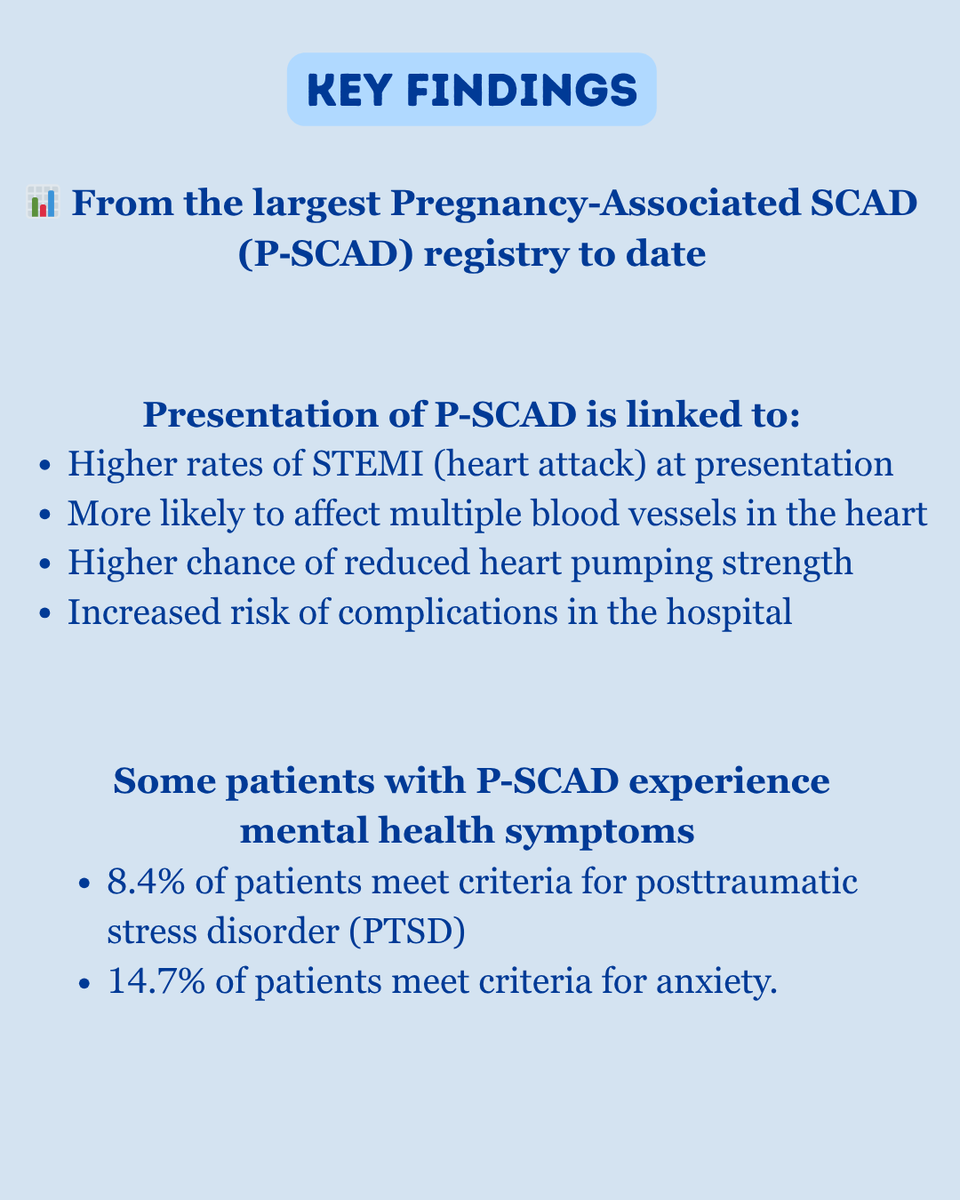
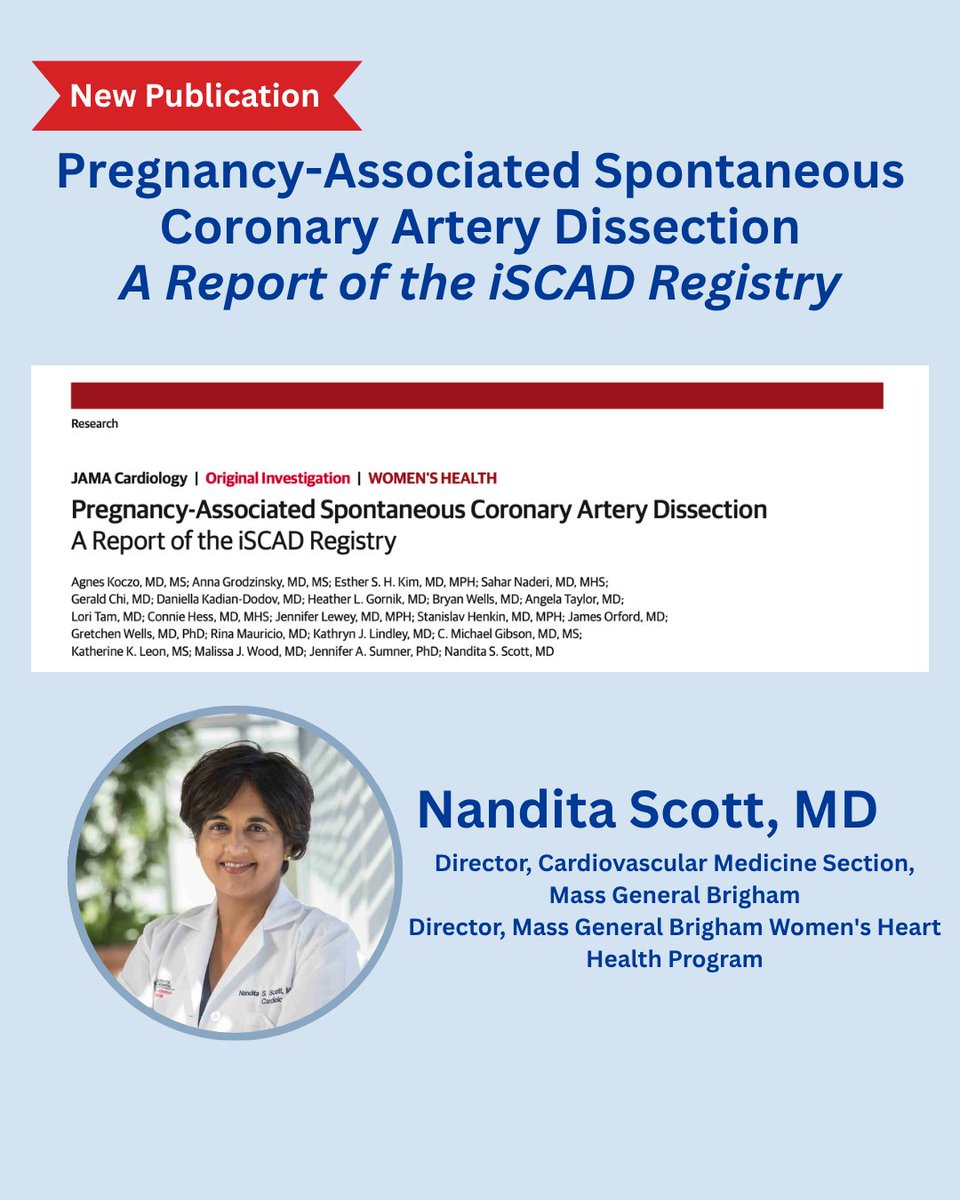
Just published in JAMA Cardiology: new data from the iSCAD Registry on pregnancy‑associated SCAD! Led by @NanditaScottMD, this study offers insights into the outcomes of women with pregnancy‑associated spontaneous coronary artery dissection.
🔗https://t.co/Yi0tGqOg8f
The use of SGLT2i in peripartum cardiomyopathy is associated with a ⬇️ in risk of all-cause ☠️, ischemic stroke, HF exacerbation, and all-cause rehospitalization
Sodium-Glucose Cotransporter 2 Inhibitor Use and Outcomes in Peripartu... https://t.co/gr3Peu34W6
@JACCJournals