Say hello to the AI operating system that learns your accounting firm's routine work, then autonomously runs it.
Reconciliations, journal entries, transaction coding, the whole close. Your team only touches what needs a human.
This is Stack. Build it once, run it forever.
It’s all talk. Just withhold foreign aid to Israel for a month and they’ll stop bombing their neighbors - instant peace, the Strait of Hormuz can be opened, and gas drops $2 a gallon. Israel has been, and continues to be, the biggest welfare recipient from American tax payers.
Debt has one fatal flaw: the lender always gets paid. The lender’s job is to sell as much of it as possible, package it, and sell it off with no care for the underlying asset. That’s how you get boom and bust cycles, every time. Charlie Munger said it best: “Show me the incentive and I’ll show you the outcome.”
The 22-minute monologue that begins this show offers clear, compelling proof that Israel committed genocide in Gaza.
It's then followed by a harrowing interview with Dr. Maynard and the atrocities he saw in Gaza.
Anyone denying the value of this is either a fraud who doesn't believe what they say about the Israeli/US genocide, or is very dumb, or both.
Eid Mubarak!
Today as we honor Prophet Ibrahim, Eid al-Adha reminds us that sacrifice is not a burden. It is an opportunity to see ourselves as part of something larger. To extend a hand to those who need it most.
I am honored to be New York City's first Muslim Mayor and I am determined to lead through solidarity. Together, we are working to ensure every New Yorker can afford the groceries, housing, and child care they need.
Our solidarity is our strength. Eid Saeed, New York.
Kevin Hart says success is just standing back in line after everyone else gave up
"Scooter Braun told me, if they were giving a million dollars to anyone who could hit a fastball from the best pitcher in baseball, millions would line up. People would strike out and go, 'Damn, it's over'"
"Not many people would miss and stand back in line again. He was like, 'I'm going to keep getting in line.' The line will get smaller because of how many people drop out"
" Every single day of my childhood, my parents asked the same question at dinner. Not “What did you learn?” but “Who did you serve?” "
Excellent piece by Alex Sasse, @BenSasse 's eldest daughter, one what she learned from her father
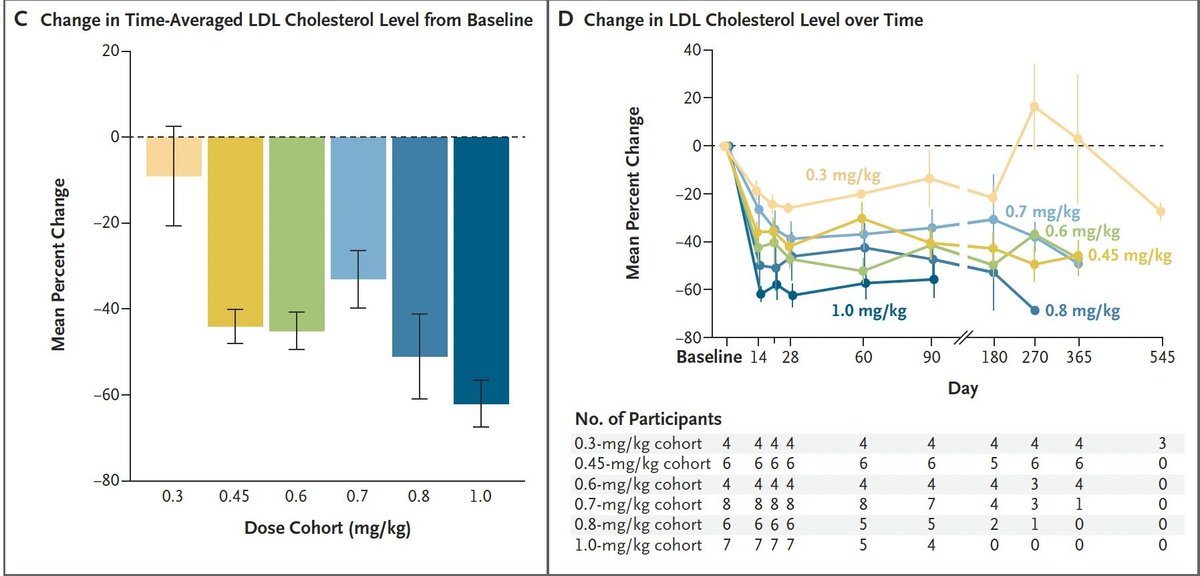
Eli Lilly has done it.
They've gone and made what seems to be a powerful, permanent gene therapy for LDL cholesterol.
That means they'll be able to effectively prevent most heart disease with a single infusion!
@SafdarAlam If you’re not taking debt than it’s pretty hard to get “rich” with Islamic fintech. It’s all natural all cash AUM. 1% AUM on $50M is $500k not including operations..
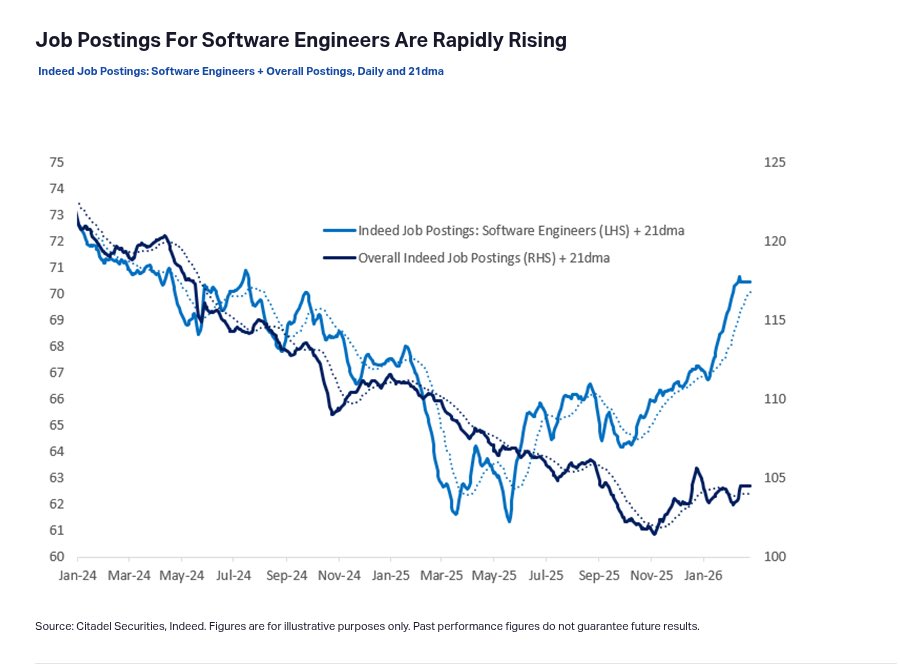
Q: How are job postings for software engineers rising rapidly despite AI agents automating coding?
A: Because there’s far more code to manage than ever before. We’re already seeing a 14x YoY increase in GitHub commits, and it’s accelerating.
AI has dramatically lowered the cost of writing code, so it’s now being used across far more businesses, applications, and use cases.
We’re at the beginning of a massive productivity boom driven by the proliferation of bespoke software throughout the entire economy.
Coding has been AI’s breakout use case this year. The fact that it’s increased demand for software engineers — rather than decreased it — should call into question the entire “AI will cause mass job loss” narrative.
“Here’s to the crazy ones, the misfits, the rebels, the troublemakers, the round pegs in the square holes… the ones who see things differently — they’re not fond of rules… You can quote them, disagree with them, glorify or vilify them, but the only thing you can’t do is ignore them because they change things… they push the human race forward, and while some may see them as the crazy ones, we see genius, because the ones who are crazy enough to think that they can change the world, are the ones who do.”
–Steve Jobs
Everyone is focusing on the soaring memory cost in the Vera Rubin rack. But the real shocker in this Morgan Stanley slide is actually power, because the industry is now talking about moving from roughly 120kW per rack today toward potentially 600kW per rack by the Vera Rubin Ultra generation in 2027, which is an almost unimaginable escalation in power density within an incredibly short period of time.
To put this into perspective, many traditional enterprise datacenters historically operated at only a few kilowatts per rack, while even modern hyperscale campuses today often consume only tens of megawatts in total facility power draw. But once you begin deploying hundreds or thousands of 600kW AI racks simultaneously, the math becomes almost absurd because a large-scale Vera Rubin Ultra cluster could eventually consume gigawatts of electricity, effectively rivaling the energy demand of a mid-sized city.
And this is where the market still massively underestimates the second-order implications of the AI boom, because the bottleneck is no longer simply semiconductors, GPUs, or memory supply. The bottleneck increasingly becomes electricity itself.
The US power grid can barely keep up with current AI infrastructure demand already, while transmission congestion, transformer shortages, substation constraints, cooling limitations, permitting bottlenecks, and aging grid infrastructure are becoming increasingly visible across major datacenter hubs. Importantly, grid infrastructure cannot scale at semiconductor speed. You can accelerate chip production with enough capital expenditure and engineering talent, but building transmission lines, substations, generation capacity, cooling systems, and interconnection approvals often requires many years due to environmental reviews, local opposition, labor shortages, and physical construction constraints.
This is precisely why we continue believing the AI buildout is not a two-to-three-year investment cycle, but instead a decade-long industrial transformation that increasingly resembles the buildout of railroads, electricity networks, and telecom infrastructure during previous industrial revolutions.
And this is also why energy infrastructure is quietly becoming one of the most important and underappreciated AI trades globally.
The winners are no longer just GPU companies. The winners increasingly include utilities like Constellation Energy and Vistra, nuclear-related plays like Oklo and NuScale Power, gas infrastructure companies like Kinder Morgan and Williams Companies, grid and electrical equipment suppliers like GE Vernova, Eaton, Schneider Electric, and Vertiv, as well as transformer, cooling, and datacenter infrastructure providers that now sit directly inside the physical backbone required to support next-generation compute.
Hyperscalers themselves are starting to understand this reality. Companies like Microsoft, Amazon, Alphabet, and Meta are no longer simply software companies buying servers. They are increasingly becoming quasi-energy infrastructure companies because securing long-duration power availability is becoming strategically inseparable from securing compute capacity itself.
That is why nuclear power is quietly returning to the center of the conversation. Hyperscalers may eventually fund or directly partner on nuclear generation projects out of pure necessity because renewable intermittency alone cannot reliably support ultra-high-density AI clusters operating continuously at scale.
In many ways, AI is beginning to collide with physical reality. You cannot run trillion-dollar next-generation compute infrastructure on transmission systems and grid architectures that were largely built decades ago for a completely different industrial era.
The semiconductor story may have started the AI race, but energy infrastructure may ultimately determine who wins it.