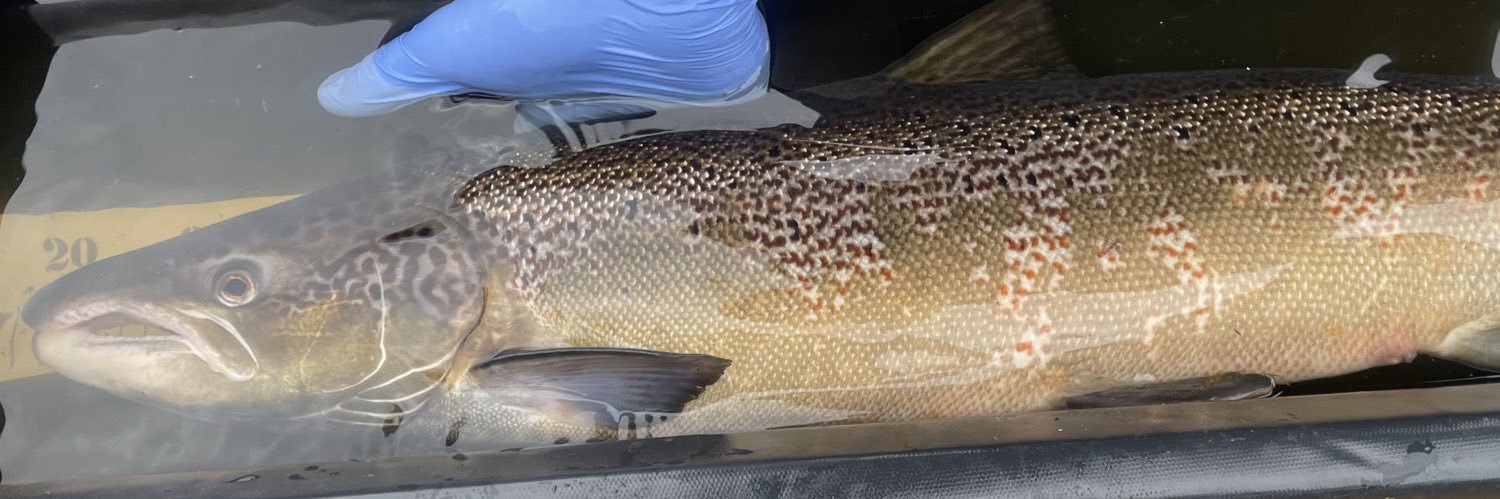
Inferring activity patterns of aquatic animals from single-receiver acoustic telemetry setups. Methods in Ecology and Evolution, 00, 1–14. https://t.co/wFEqFoslCj
Some of our group’s work from @SLUwildresearch on how pharmaceuticals can affect animal movement and behaviour presented at #SETAC2025 in Vienna today! Come down for a chat to find out more about this research in the poster session this afternoon!
@DrBrodin@MichaelGBertram
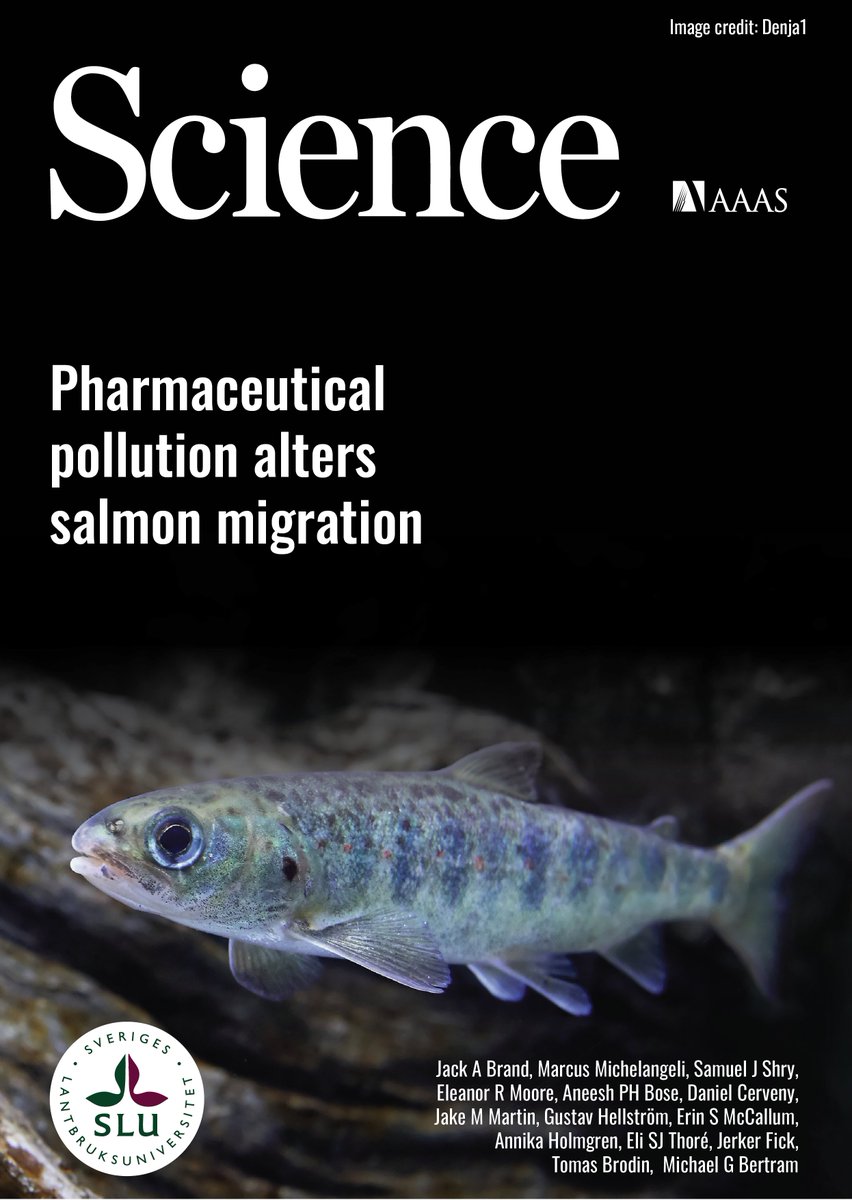
Over the moon to finally share our new study in @ScienceMagazine led by the amazing @JackAndrewBrand!
Pharmaceutical pollution at environmentally realistic levels alters behaviour and migration in Atlantic salmon, directly affecting survival
👉 https://t.co/PUUNGRkt4I
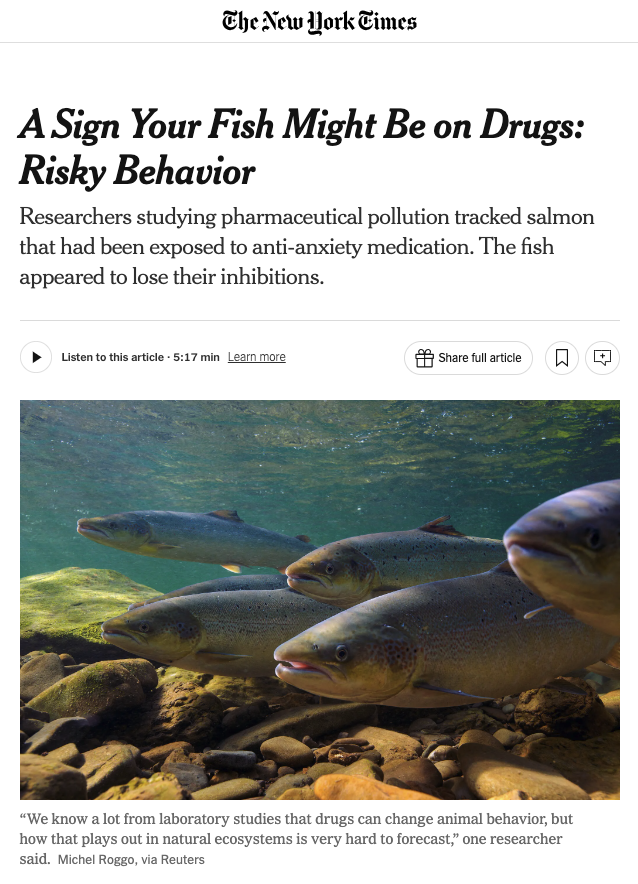
Great to see this piece in @nytimes covering our new article in @ScienceMagazine on the impacts of pharmaceutical pollution on salmon migration
👉https://t.co/Bz92GR2J9k
👉https://t.co/PUUNGRjVfa
@JackAndrewBrand @SLUwildresearch
Good to see this paper finally out: https://t.co/AtsZhzmmEC
Great baseline data on depth use of migrating salmon smolts in fjords! Key takeaway: smolts predominately migrate in the top 3 meters of the water column throughout the fjord.
Temporal and spatial use of a freshwater lake by upstream and downstream migrating adult Atlantic salmon Salmo salar. Journal of Fish Biology, 1–22. https://t.co/ELvVp79vGz
New from @sceneUofG - navigation in downstream migrating salmon smolts switches from rheotaxis in rivers to a random search tactic in lakes except where residual flow cues in some lakes prevent this, at times resulting in suboptimal navigation outcomes.
https://t.co/NWdlcNWnv2
High migration success of Atlantic salmon smolts in standing waters could be due to relative current speeds providing good quality directional cues to migrants. More from @JessicaRFordyce @C_Adams1758 @AngusJLothian @sceneUofG@UofGSBOHVM@Galloway_FT
https://t.co/USZnTn2KN9
Great to see this paper led by Ruaidhri Forrester come out - The effect of downstream translocation on Atlantic salmon smolt outmigration success. J. Fish Biology, 1–13. https://t.co/5HrLnxhdly
@sceneUofG@UofGSBOHVM@C_Adams1758 @JessicaRFordyce @hanhonkanen @JPeterKoene1
New PhD position in our group @EawagResearch, focusing on migration ecology of Arctic charr in pristine Greenland rivers, lakes and fjords 🇬🇱 across a climate gradient.
Please spread to potential candidates. Deadline for applications November 3rd.
https://t.co/MruJ8qTsUB
New paper 🚨
Smolts show significant temporal and spatial (river) variations in migration success👇
Determinants of riverine migration success by Atlantic salmon (Salmo salar) smolts from rivers across the UK and Ireland. Journal of Fish Biology, 1–16. https://t.co/VafpYhg31h
Experienced tech manager? Led a team? Researched using bio-logging tags? Interested in joining us as our new Group Lead or Telemetry Research Support Lead? If so, you still have until this Friday, 12th July, to apply. See: https://t.co/Lne81iOBdu
#engineeringjobs#marinecareers
When Illinois Waterway locks closed in 2020, a busy riverine shipping corridor ground to a halt. The river responded.
The vessel traffic pause led to improved water quality and a redistribution of fishes.
Read about it in our OA @STOTEN_journal article from @INHSillinois@USGS
Permanent post available in the renewables team. We are looking for a diadromous fish scientist. Great opportunity to develop in this exciting role with a focus on acoustic telemetry in the marine environment https://t.co/VV1ElVoeQD
Looking for a new role? We are hiring a fish telemetry technician to come and work in the diadromous fish team. You will be managing the extensive suite of scout is receivers and will be spending plenty of time at sea on our research vessels! https://t.co/HnHJtQxwEI
One of the largest spawning migrations of Zander in lake Vänern (Sweden’s largest lake) happens in the river Byälven. Where do they go? How long are they in the river? Trying to answer these questions and more for management with acoustic telemetry. @Lst_Varmland@OlleCalles