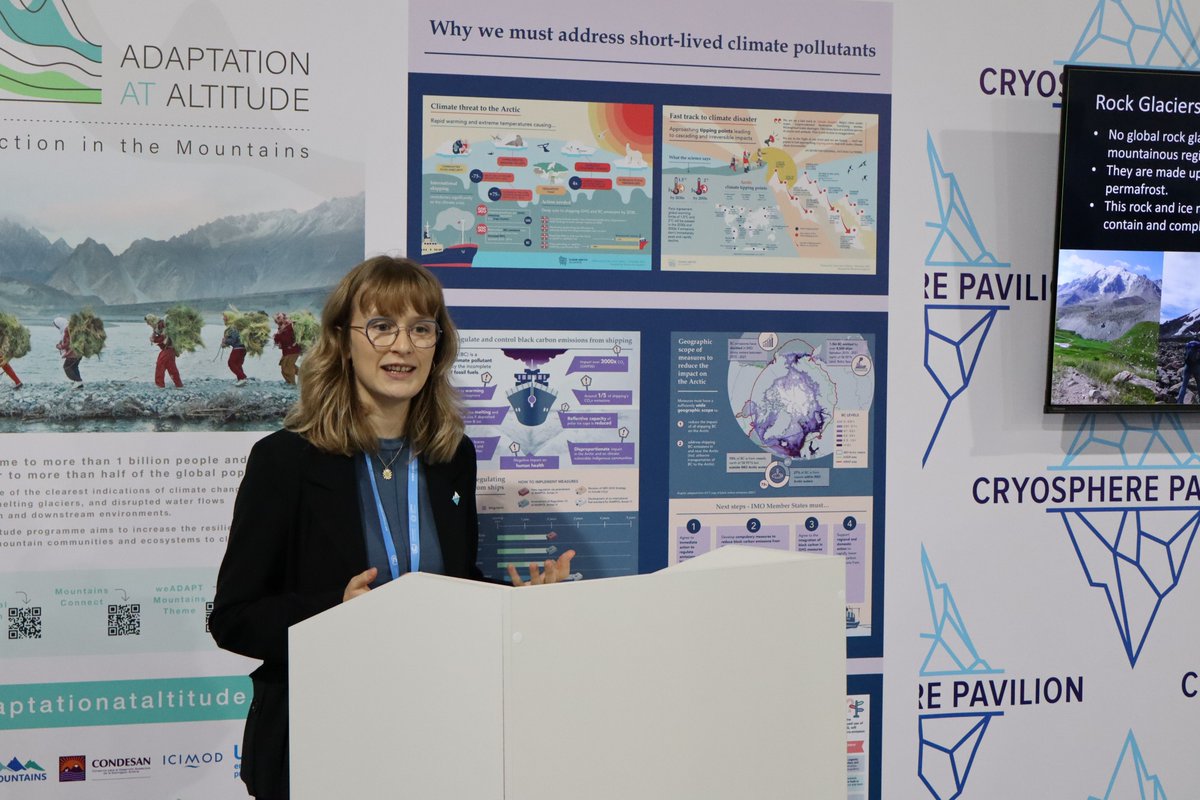
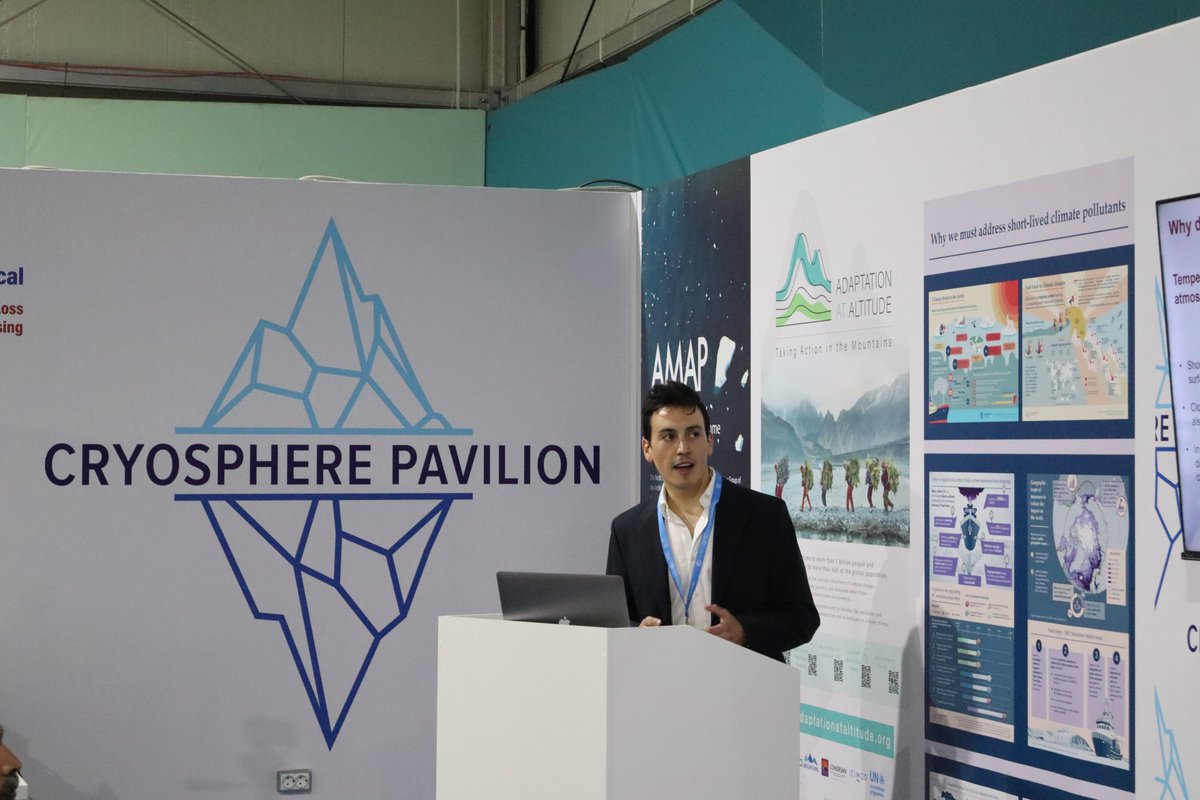
Jan 21st marks the official start of the @UN International Year of Glaciers' Preservation 🏔️❤️🩹 #Glacier2025 chaired by @UNESCO and @WMO. I am delighted to be speaking at the side event hosted by the @iaeaorg on the use of isotopes in glaciology.
As we officially launch the Intl. Year of Glaciers' Preservation, join us as we discuss how nuclear tech can help protect glaciers, helping assess downstream water availability & understand the sustainability of water resources
https://t.co/1Ijt2TckpT
As we officially launch the Intl. Year of Glaciers' Preservation, join us as we discuss how nuclear tech can help protect glaciers, helping assess downstream water availability & understand the sustainability of water resources
https://t.co/1Ijt2TckpT
HAPPENING NOW AT COP29!
Press conference:
🗓️ 18-18:30 (Baku), Nov. 20
📍 Room Karabakh @COP29_AZ
Ministers from Iceland 🇮🇸 and Monaco 🇲🇨 will share an #AMI Statement urging more urgent action at COP29 and going forward towards 2025 NDCs.
Live: https://t.co/XYF18jQ0Gg
⬇️ PUBLISHED TODAY ⬇️
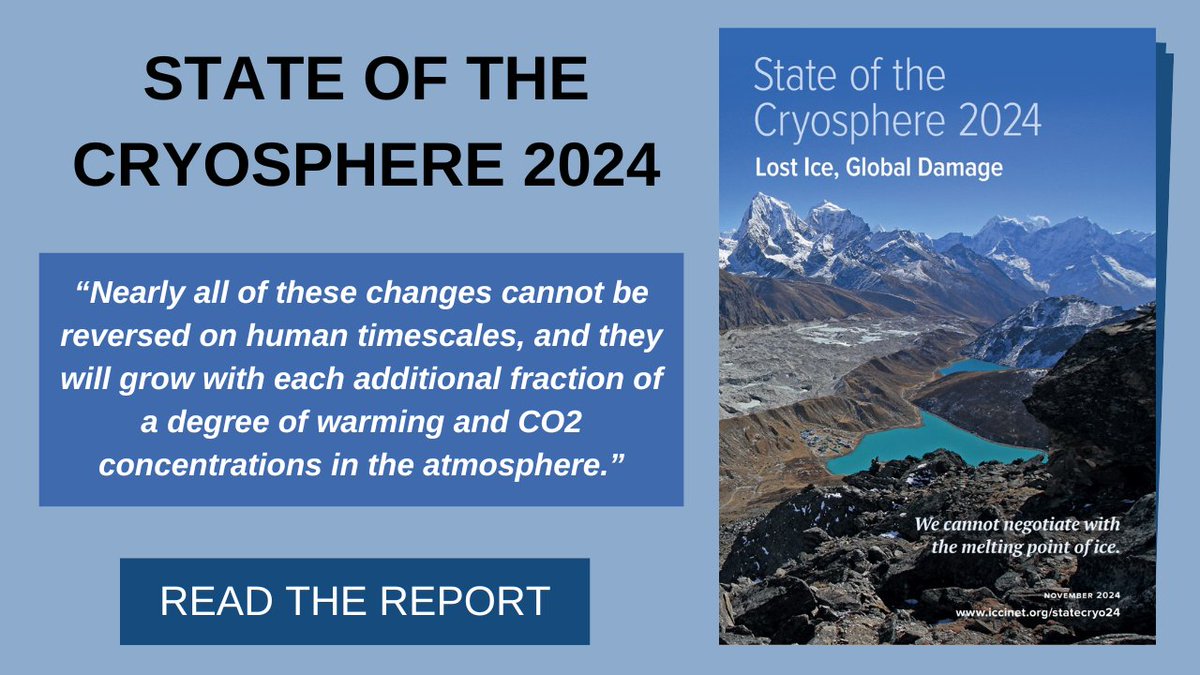
The State of the Cryosphere 2024 report: over 50 leading cryosphere scientists warn of vastly higher impacts and costs to the global economy given accelerating losses in the world’s snow and ice regions.
Read here:
https://t.co/16m2sZXEOI
The Cryosphere Pavilion will host more than 60 side events over the next two weeks.
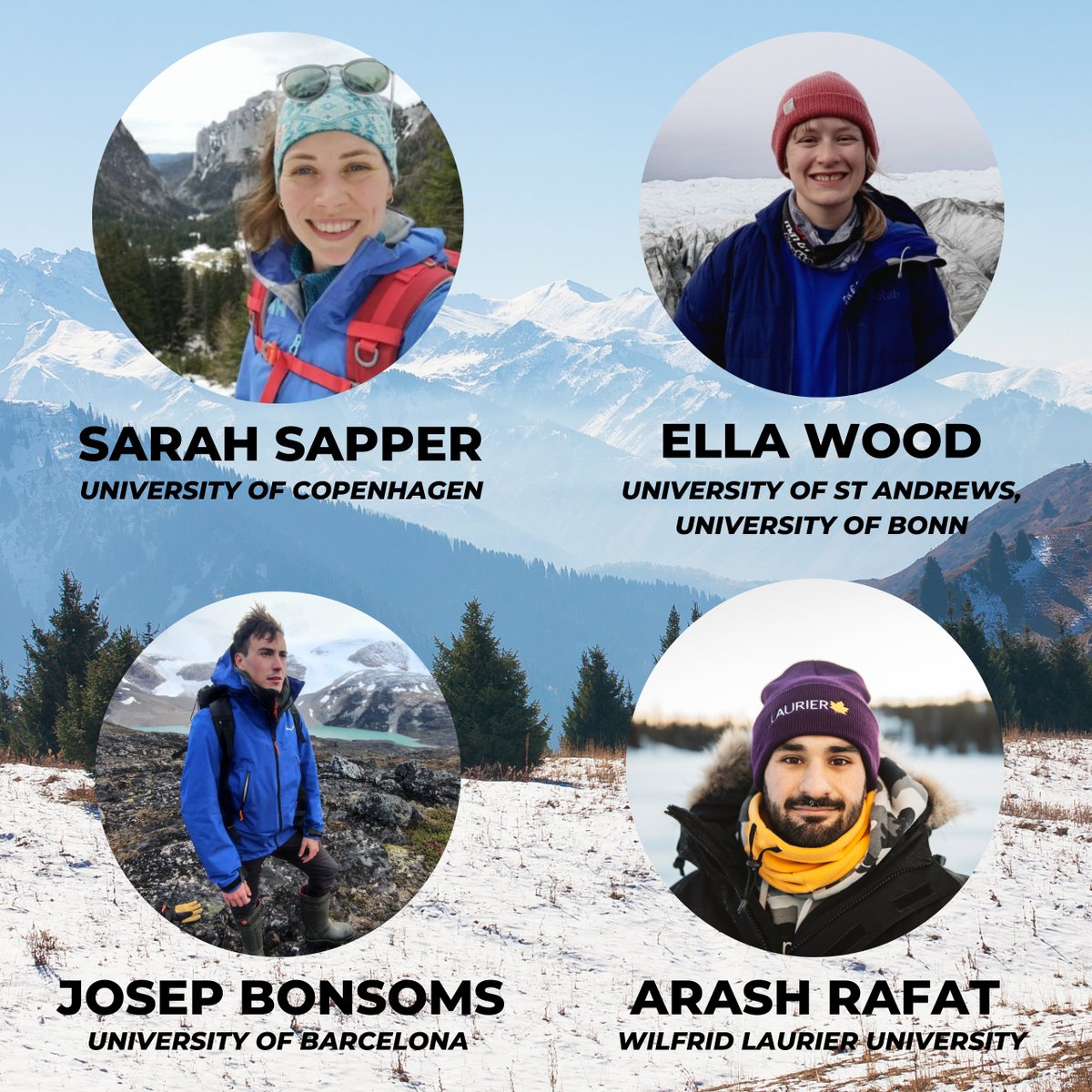
On Nov. 11, our team of Early Career Scientists (all PhD and postdoctoral level) will introduce themselves and share their research.
Join in person or watch virtually! ❄️
https://t.co/phVFivaqRc
"We are seeing changes across all aspects of the cryosphere, including glaciers, permafrost, and snow."
From high mountain glaciers to meltwater flowing in the darkness beneath polar ice sheets, four young researchers explained why ambitious climate action is needed today #COP29
Have you checked out our Most Read Article in the past year yet? It's @SarahSapper et al’s study of subglacial meltwaters of 3 outlet glaciers from the St. Elias Mountains in Yukon, Canada that discovered all 3 as subglacial CH4-emitting sites: https://t.co/wVz4H8pvbH
Have you checked out our Most Read Article in the past year yet? It's @SarahSapper et al’s study of subglacial meltwaters of 3 outlet glaciers from the St. Elias Mountains in Yukon, Canada that discovered all 3 as subglacial CH4-emitting sites: https://t.co/wVz4H8pvbH
A jökulhlaup captured by automatic camera at Isunnguata Sermia, West Greenland - 2 October, 2023. Probably caused the the drainage of a proglacial lake on the north side of the outlet glacier. This is well after surface melt has ceased.
It's that time of the year again! #EGU24. Who else is in Vienna? You can find me on Wed from 10.45-12.30 at Poster spot X1.58 or the rest of the week first in line for a coffee. Come say hello! 😊🙋🏻♀️
This is a short summary in easy language of my recently published paper about methane emissions from the meltwater of 3 mountain glaciers in Yukon, Canada.
Join us at the 29th International Polar Conference in Rauris, Austria, from September 16-20, 2024!
Organizers: German Society of Polar Research & Austrian Polar Research Institute
A must for polar and high mountain enthusiasts.
details:👉https://t.co/SmWnk4w14J
Global melting is prying the lid off methane stocks with unknown extent. @SarahSapper has discovered high concentrations of the powerful greenhouse gas in meltwater from three Canadian mountain glaciers, where it was not thought to exist: https://t.co/39eXo6GYML #climate#methane
#MeltingGlaciers are the new cows🐄! Meltwaters of Dusty, Kluane & Donjek glaciers, 3 alpine glaciers in Yukon's St. Elias Mountains, are a source of #methane with concentrations up to 250 times⬆️than in the atmosphere!😱 Just out➡️
https://t.co/1MJMkDQkas
And how are the size of the glacier, the bedrock geology, and the surging history linked to the CH4 concentrations in the meltwater? These are further questions we are discussing in the paper.
Spoiler: the size doesn’t matter 😉
Next, we wanted to know where the CH4 comes from. For this, we sampled dissolved CH4 for analyses of its stable carbon (13C) and hydrogen (2H) isotopes by our colleagues (@FrankKep from @Geow_UniHD). Their measurements revealed that the CH4 has both a biotic and abiotic source 👏