@EONIndia@shisir@MofaNepal@Surendrathapaji Need help locating my friend's parents. They were also with Chalo Jai.
Their names are :
Swapan Mondal
Mou Mondal
Please DM me if anybody has any information
@rish_jain14@ishandutta0098 Hi Rishabh, I am looking for my friend's parents : Swapan Mondal and Mou Mondal. They were also with the same group. Can you send me the link of that document that says they crossed the Nepal border at 8:15.
@EONIndia@shisir@MofaNepal@Surendrathapaji Need help locating my friend's parents. They were also with Chalo Jai.
Their names are :
Swapan Mondal
Mou Mondal
Please DM me if anybody has any information
Huge news for ICTS & Indian science!
Congrats to Prof. Deepak Dhar on receiving the 2026 ICTP Dirac Medal, alongside B. Derrida, M. Mézard & H. Sompolinsky, for pioneering contributions to statistical mechanics & its extensions to AI, neuroscience & non-equilibrium systems!
Some initial thoughts, and a complicated mix of feelings.
1. Wow. I mean, Erdos problems are cool (I genuinely mean that), I didn't know about the Jacobian conjecture before it got disproved. But this newest batch from OpenAI hits home in a way the previous announcements did not.
New circuit lower bounds? A simple, easy-to-describe non-sofic group? Hardness of approximation for CVP without needing a unique games-like conjecture? I didn't just hear about these problems from my friends or from seminars. I feel their importance in my bones; I deeply care about the answers to these questions.
@letonyo@LamiLudovico@QuAntonioMele the one thing I'm bumped down is that there is a direct relation now with doing good research and having access to (many tokens of) sota AI models. Feels pretty unfair. Hopefully open source models and cheap compute will make it fairer soon.
“I wrote this because I can’t speak about it.
I wrote this because I want you to know that I will make sure that you live on.”
@RBLeipzig and @equipenatciv winger Yan Diomande on the life of his sister, Roxane. https://t.co/6wQmpdWTSi
New blog post out! ✨
I give here a visual introduction to algebraic topology in the context of quantum error correction. You will learn about manifolds, cellulations, chain complexes, and their relation to CSS codes like the surface code. Enjoy! :)
https://t.co/6snpQMRm2w
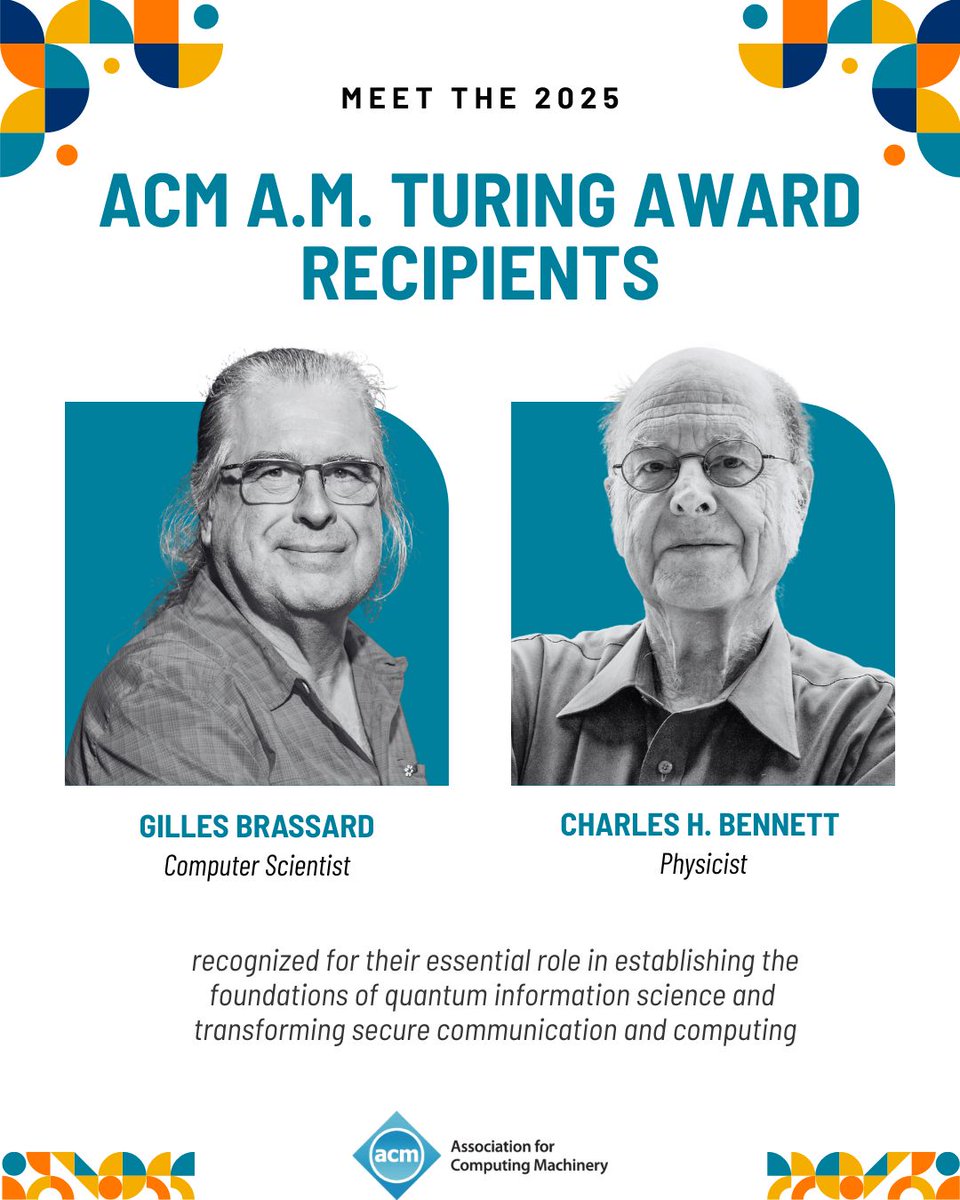
Congratulations to Charles H. Bennett (@IBMResearch) and Gilles Brassard ( @UMontreal) on receiving the 2025 ACM A.M. Turing Award!
🔗: https://t.co/UQ5C1K1kVT
I am reminded once again that research matters.
My wife’s friend was diagnosed with metastatic ovarian cancer, resistant to our favorite drug Cis/Carboplatin. Genetic testing revealed, among other things, KRAS G12A mutation. She was started on a KRAS inhibitor but unfortunately developed massive myopathy to the point she could barely walk. At that point, she needed bilateral nephrostomy tubes for renal blockage and was given weeks to live. But her mutation panel had also revealed modestly elevated tumor mutation burden (TMB) and CHEK2 mutation, which is involved in DNA damage response. Based on this (though the evidence was limited), she was started on immune checkpoint blockade (ICB) as a last-ditch effort. Since then, her tumors have melted away, and our friend is now strong enough to clear the snow during LAST NIGHT's blizzard in Northeast. Below is a photo she just sent us.
I share not just because this is a miracle, but a SCIENCE IN ACTION! #SpartansWill #ResearchSavesLives
@MSUMD, @MSU_Medicine, @HFH_MSU_HS
We lost someone extraordinary
Ethan Neumann, a PhD candidate in my lab, worked tirelessly to study #fibrolamellar carcinoma, the cancer that would ultimately claim his life
On the day before he died he officially became Dr. Neumann:
https://t.co/qKvfxi3v3h
Huntington’s disease is brutal.
A single DNA error → toxic protein → dead brain cells.
No cure. Always fatal. Always inherited.
But now? Science has flipped the script.
How the new gene therapy works:
1️⃣ Huntington’s mutation makes a toxic protein that kills neurons.
2️⃣ Doctors infuse gene therapy directly into the brain through a catheter.
3️⃣ Neurons absorb the genetic code - and turn into mini drug factories.
4️⃣ The therapy blocks the faulty messenger RNA → less toxic protein.
The result?
A 75% slowdown in disease progression.
Patients still walking when they should be in wheelchairs.
One man back at work after being medically retired.
This is not science fiction.
It’s genetic medicine, delivered in real time.
Advanced science…
To families living with Huntington’s, it feels like magic.
Whenever we post videos of our work in trash-filled rivers in Asia and Latin America, I sometimes see people make unkind or even racist comments about the people who live there. Things like calling them “pigs” or remarks about “brown people” that I won’t repeat here.
When I read comments like that, I often think of this photo. This is what the canals looked like in my own country, the Netherlands, back in the 1960s, when we weren’t as wealthy, lacked proper waste management, and had other priorities than the environment. I don’t think the situation is very different from what we see in many middle-income countries today.
That should actually be a source of optimism: just as the Netherlands became clean over time, today’s top-polluting countries can too.
The difference, however, is that today’s trash is mostly plastic, which is far more harmful than the household waste of the 1960s. That’s why we can’t just sit back and wait for development to take its course. We need to stop this flow of trash into the oceans now, and that’s what The Ocean Cleanup’s Interceptors are for.
So while it’s both rude and historically ignorant to say that pollution is caused by the nationality or ethnicity of people in today’s top-polluting countries, I *also* disagree with those who claim it’s somehow “racist” to acknowledge the fact that most plastic flowing into the ocean does originate from these places.
After I wrote an op-ed in the New York Times explaining that deploying Interceptors in coastal cities in middle-income countries is the fastest and cheapest way to get back to clean oceans, an activist organization put out a statement saying this was a “harmful and biased narrative.” They continued: “to say that the Global South is somehow to blame for the pollution that they are forced to endure is frankly immoral and unjust. To add insult to injury, this article was published on Africa Day, 25 May, completely ignoring the historical implications and unjust power dynamics between Global North countries and countries in Africa.”
What this organization, in my view, failed to recognize is the difference between stating facts and assigning blame. I don’t care who is at fault or where those people were born. I’m not in the business of blame. I’m in the business of solving a problem. And that means putting Interceptors where they can have the greatest impact.
Both of these positions reflect “us vs them” thinking—one portrays the “South” as the baddies, while the other portrays the “North” that way. I believe both would benefit from seeing the issue as “humanity vs plastic pollution” instead.
I'm sad to report that Rainer (Rai) Weiss passed away yesterday at age 92. Rai developed the design for LIGO, he and Kip got it funded, trained countless researchers, and received the 2017 Nobel Prize. Rai always had time for students and treated us as equals.
Before AWS existed, one company ran the servers for Twitter, LinkedIn, and Facebook's entire app ecosystem.
They owned Node.js, invented containers 8 years before Docker, and Peter Thiel even backed them.
Then something happened...
“I remember taking my final exam, getting stuck on an answer, and thinking: ‘Who cares, I’m about to die.’ I knew something was very wrong. Medical school is always tiring, but this was a different kind of tired. I was getting by on multiple cups of coffee, multiple energy drinks. Large lumps had begun to appear in my neck. After the exam I stumbled down the hall to the ER and the doctors told me that my organs were failing. It took eleven weeks to make a diagnosis: a rare disease called Castleman’s. But there was no cure. A priest read me my last rites. I said goodbye to my family and prepared to die. But a last-minute dose of chemotherapy saved my life. Over the next year I relapsed three times. Each one almost killed me. The last was the worst: I spent a month in the ICU, and it took seven different chemotherapies to bring me back. By then I’d reached the maximum dose of chemo a human can tolerate. The doctors told me I was out of options, and the next relapse would certainly kill me. I only had one hope. A tiny hope, but a hope. I had to cure the disease myself. It takes a billion dollars and ten years to create a new drug; I didn’t have the money or time. My only chance was to discover an existing drug that would work. I made spreadsheets of every similar disease and every drug used to treat it. I wrote over 2000 emails to every doctor who’d published a paper on Castleman’s. I started studying samples of my own blood, but I ran out of time. Another relapse put me back in the ICU; from my hospital bed I asked the doctor to cut out one of my lymph nodes. I took it to the lab and discovered a particular protein called mTOR that was sending my immune system into overdrive. And that’s when I knew. I knew from my research that a drug called Sirolimus inhibits mTOR. My doctor was hesitant to prescribe it; there was no research to support my theory. But he took a chance, and within days my symptoms began to disappear. I still take the pill every day, eleven years later. I was able to marry my wife and have two beautiful kids. And through my work I’ve been able to save thousands of lives, by repurposing fourteen different drugs to treat rare diseases.”
---------------
Epilogue:
In 2022, @DavidFajgenbaum co-founded Every Cure, a nonprofit organization on a mission to save and improve lives by repurposing existing medicines to treat devastating diseases. While many drugs could be repurposed to treat many more diseases than they were intended to treat, there are no incentives in our current system to unlock these additional uses. Every Cure utilizes an AI platform to identify the most promising new uses for existing medicines for further laboratory research and clinical trials and works to get these treatments to all of the patients who can benefit. They have already launched 8 drug repurposing programs, including injection of the numbing medicine lidocaine for breast cancer and the vitamin derivative leucovorin for a subgroup of children with autism spectrum disorder who have anti-folate receptor antibodies.
Gotta say, I’ve lost a lot of respect for @Harry_Brook_88 & @benstokes38 for the way they’ve carried on, begrudging tons for 2 blokes who batted their hearts out. Absolute pork chops. The spirit of cricket & sportsmanship is only relevant when it suits them, apparently. #ENGvIND
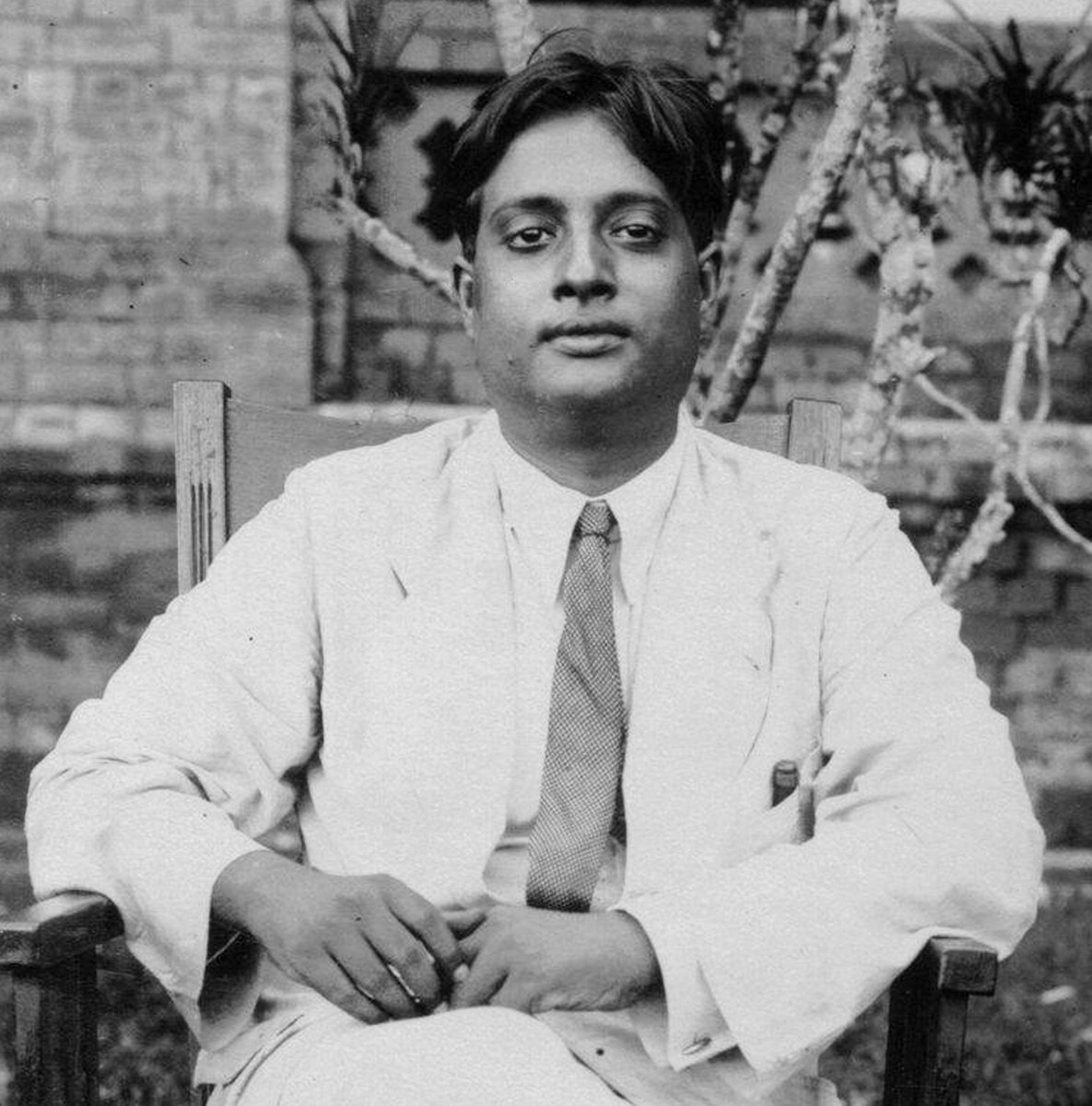
In the 1920s, the little-known physicist Satyendra Nath Bose devised a theory describing collectivist particles. Today, those particles bear his name: Bosons. https://t.co/p97nXPCiXT
IQC and Waterloo mourn the loss of Ray Laflamme, IQC’s founding executive director from 2002 to 2017. Beyond his significant contributions to science, he was a leader, teacher, mentor and friend. We offer our deepest condolences to Laflamme’s family. https://t.co/9mT2p6OiTM
First time doing a X-tweetorial on our manuscript, be kind ! Our latest work in Nature Metabolism uncovers a striking role for glycogen accumulation in lung adenocarcinoma (LUAD) using spatial metabolomics & MALDI imaging. A thread 🧵 (1/)