🚨 BREAKING: Italian radar scientist detected what appears to be a massive grid of eight cylindrical structures, each 20 meters in diameter, descending over a kilometer beneath the Giza pyramids using Synthetic Aperture Radar Doppler Tomography. The cylindrical columns have coils wrapping around them resulting in a megastructure that looks like an ancient energy grid 🚨
So I brought in Geoffrey Drumm, one of the most technically rigorous pyramid researchers alive, to stress test every claim in real time. What followed was a four hour technical interrogation that revealed both stunning validations and unresolved questions about what may be the most significant archaeological discovery of the century.
Biondi holds a PhD in radar science, 30 years in the field, and invented a proprietary method called the Biondi Protocol that reads surface micro-vibrations detected by Italian COSMO-SkyMed satellites to reconstruct what lies inside and beneath solid structures. His first peer-reviewed paper scanned the Great Pyramid in 2020. His second project scanned the Khafre Pyramid and the wider Giza Plateau, producing the 3D model that broke the internet: eight tubular columns with coils wrapping around them, sitting on a foundation of enormous cube-shaped structures, extending beneath all three pyramids and the Sphinx. Drumm is the author of The Land of Chem YouTube channel, lives in Egypt, and has developed a comprehensive hypothesis that the pyramids functioned as industrial-scale chemical reactors powered by lightning during the Saharan Humid Period. He knows the Giza Plateau like the back of his hand and has previously stress tested and poked holes in Biondi’s findings. This conversation is an unfiltered exchange between two heavyweights:
1. Biondi's Best Scan Is Jaw-Dropping
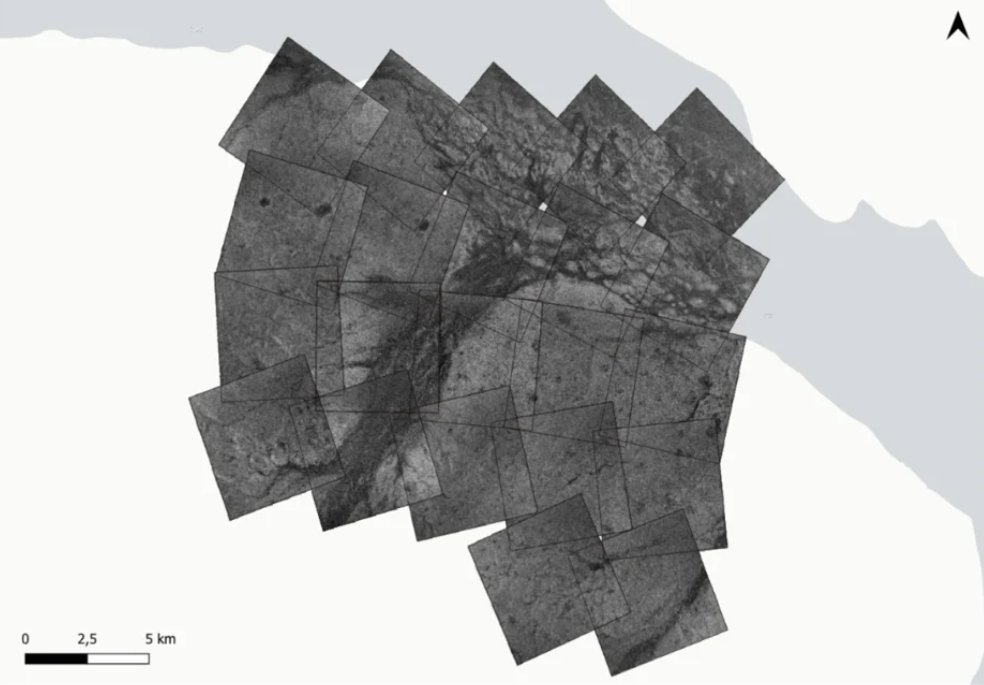
As validation, Biondi presented a proof-of-concept scan of Italy's Gran Sasso National Laboratory, buried 1.4 kilometers inside a mountain. The image is stunning. You can see the tunnel cutting through the mountain, the interior of the facility, and even the interferometer inside it using the same technique Biondi used to scan beneath the pyramids. Drumm called it the single most convincing piece of evidence that this technology works. The Gotthard Tunnel in Switzerland produced a similarly clear image at two kilometers depth through solid rock. These are not theoretical demonstrations. They are working scans of known structures at extreme depth, and they validate that the Biondi Protocol can see through kilometers of stone.
2. He Found a Hidden Corridor Before Anyone Else
In his 2020 paper, Biondi identified a feature on the northern face of the Great Pyramid labeled Tag 17. A dead-end corridor behind the chevron stones that nobody knew existed. Years later, the ScanPyramids muon team confirmed it and drilled in with a microscopic camera. Biondi's measurements of the corridor's length and the positions of its floor and ceiling matched what was found. This is a confirmed prediction from satellite radar, made years before physical verification.
3. He Detected a Sealed Shaft Beneath the Queen's Chamber
One of the most compelling findings from the 2020 paper is a shaft and chamber system descending from the bottom of the Queen's Chamber. This structure was actually reported in 19th century excavation documents. Explorers found a pit in the Queen's Chamber floor, excavated down, and discovered a tunnel system below it. The Egyptian authorities then permanently sealed it with modern blocks. Biondi's scans picked it up independently, with no prior knowledge of those historical records. Drumm, who had already proposed this exact extraction shaft in his own chemical reactor model, called this the most promising result in the entire dataset.
4. The Substructures Are Enormous
The tubular columns beneath the Khafre Pyramid measure approximately 20 meters in diameter each, spaced about 5 meters apart. That is 65 feet across per column. Eight of them. For context, the Queen's Chamber sometimes fails to register in certain scan slices because it is too small relative to the tomographic line. Biondi's argument is that megastructures at this scale are exactly what the technology is built to detect. Small chambers can be missed depending on the angle of the satellite pass. Repeating cylindrical structures 20 meters wide, appearing consistently across multiple scan geometries and multiple satellite sensors, are a different category of detection entirely.
5. Drumm's Challenge: The Processing Gap
Here is where the debate gets sharp. The Gran Sasso and Gotthard scans used an advanced processing technique that averages noise across adjacent tomographic slices, requiring months of computation on borrowed hardware. The pyramid scans used a faster but noisier method on Biondi's own limited computers. Drumm pointed out that the quality difference is massive. The proof-of-concept images are transparent like a crystal. The pyramid images require expert interpretation to read. Biondi's response: he needs an array of GPUs he cannot afford. With that hardware, he says he could produce Gran Sasso-quality scans of the Giza substructures in near real-time. Estimated cost: millions. This is the bottleneck standing between a controversial claim and a potentially world-changing confirmation.
6. Other issues: Known Chambers Sometimes Do Not Appear
Drumm walked through the 2020 dataset scan by scan. The Queen's Chamber shows a strong, consistent signature and serves as a reliable benchmark. But in several tomographic slices, the King's Chamber does not appear. The Grand Gallery does not appear. The subterranean chamber does not appear. Biondi attributes this to single-slice geometry. Each scan captures one vertical curtain through the structure in 15 seconds. If that curtain does not intersect a chamber precisely, it will not register. He says the real-time GPU system would allow him to sweep through hundreds of adjacent slices and reconstruct a full 3D volume. That system does not yet exist.
7. Biondi Challenged the Muon Team's Interpretation
The ScanPyramids muon team claims the Big Void inside the Great Pyramid runs north to south, parallel to and above the Grand Gallery. Biondi's scans show it running east to west, connected to structures wrapping around the King's Chamber. Looking at the muon data during the conversation, Biondi argued they may have confused the floor and roof of the Grand Gallery for two separate features. The Egyptian Ministry of Antiquities is using the muon team's interpretation to justify drilling into the Great Pyramid in 2026. If Biondi is right about the orientation, that excavation could validate SAR Doppler tomography over the established method in one stroke.
8. The Signal Fades at 600 Meters and Nobody Knows Why
The model shows structures extending over a kilometer deep. But in the raw data, the signal tapers around 600 meters. Drumm pressed Biondi on this. The initial explanation was the water table, but both agreed the actual water table sits only about 50 meters below the plateau. When pushed further, Biondi said he cannot yet explain the change but hinted at something he is not authorized to disclose. The structures do continue in the model below that line, detected across multiple satellite sensors showing the same cutoff pattern. What changes at 600 meters remains an open question.
9. Drumm's Model Says the Substructures Could Make Functional Sense
Drumm's hypothesis is that each pyramid produced a specific chemical in sequence, from methane extraction at the Step Pyramid to ammonia synthesis in the Red Pyramid to sulfuric acid production in the Great Pyramid. He places the operational period during the Saharan Humid Period, roughly 8500 to 5300 BC, when massive thunderstorms provided the electrical input. The Big Void sits exactly where a heat exchanger would need to be to manage exothermic reactions in the Grand Gallery. The sealed shaft beneath the Queen's Chamber aligns with his proposed product extraction system. He confirmed that he has already integrated Biondi's substructure findings into a working functional model. If the deep structures are real, they connect to known hydrothermal mineral deposits, iron ore veins, and rare earth elements embedded in the Giza bedrock. Drumm and Biondi both agree: whoever built these structures chose the Giza Plateau for a very specific reason tied to what lies beneath it.
10. Validation & What Comes Next
Biondi wants to establish a foundation in Malta with a dedicated data center and GPU array to reprocess the Giza data using his superior technique. Drumm wants to go to the Giza Plateau with Biondi's team to physically investigate anomalies he has already identified near the Osiris Shaft and along the Khafre causeway. Both say the SAR method and the muon method should be combined rather than treated as competitors. Both state that the conventional dating and tomb explanation for the pyramids is wrong. And both Drumm and Biondi agree that what lies beneath the Giza Plateau is more important than what sits on top of it. They also agree on the need for further validation and stress-testing.
Why This Matters
A satellite technique that can see through 1.4 kilometers of mountain and accurately image the Gran Sasso Laboratory. A confirmed prediction of a hidden corridor inside the Great Pyramid years before physical verification. A detection of a sealed shaft that matches 19th century excavation records. And now, scans showing a repeating grid of massive cylindrical structures beneath the entire Giza Plateau that no conventional archaeological framework can account for. The technology has demonstrated real capability. The substructure claims remain extraordinary. The 2026 Big Void excavation and GPU-powered rescans could settle this within months. If even a fraction of what Biondi is detecting turns out to be real, we are looking at the largest undiscovered structure on Earth, hidden in plain sight beneath the most studied archaeological site in human history.
Full conversation covers all of this and much more. One of the most important technical examinations of the pyramid mystery ever recorded. Live now👇
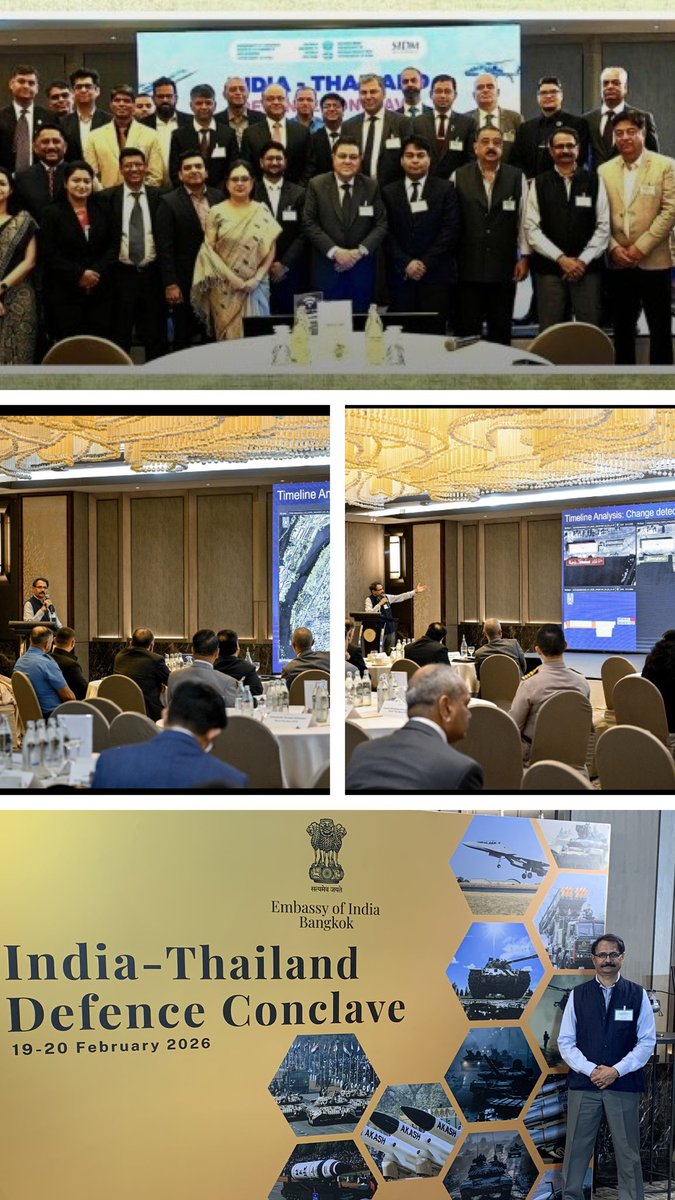
The Embassy of India, Bangkok, in association with the Department of Defence Production, Ministry of Defence, Government of India, and the Society of Indian Defence Manufacturers (SIDM), organised a focused Defence Industry Seminar and B2B Interaction in Bangkok, Thailand, on 19th February 2026.
From 1030–1130 hrs, H.E. Mr. Nagesh Singh, Ambassador of India to the Kingdom of Thailand, held an exclusive interaction with the Indian defence companies to discuss the Thailand defence and aerospace ecosystem, market opportunities, regulatory landscape, and avenues for deeper industrial collaboration.
The inaugural session was graced by H.E. Mr. Nagesh Singh along with senior representatives from the Defence Technology Institute (DTI), Thailand.
The interaction witnessed strong participation from both sides, with 25 leading Indian defence industries showcasing their capabilities across aerospace, land systems, naval systems, drones and counter-drone systems, protective armour, missile systems, ammunition, simulators, and emerging defence technologies.
The structured B2B meetings and industry presentations enabled meaningful discussions between Indian and Thai defence stakeholders, highlighting significant potential for partnerships, technology collaboration, joint development, and supply chain integration.
The engagement reflected the growing momentum in India–Thailand defence cooperation and reaffirmed the shared commitment to strengthening bilateral defence industrial ties.
SIDM expresses its sincere appreciation to the Embassy of India in Bangkok for facilitating this important initiative and for its continued support in advancing India–Thailand defence collaboration.
Together, we strengthen strategic defence ties between India and Thailand under the vision of #MakeInIndia for the world. 🇮🇳🇹🇭
#IndiaThailand #DefenceCooperation #MakeInIndia #DefenceIndustry #AtmanirbharBharat
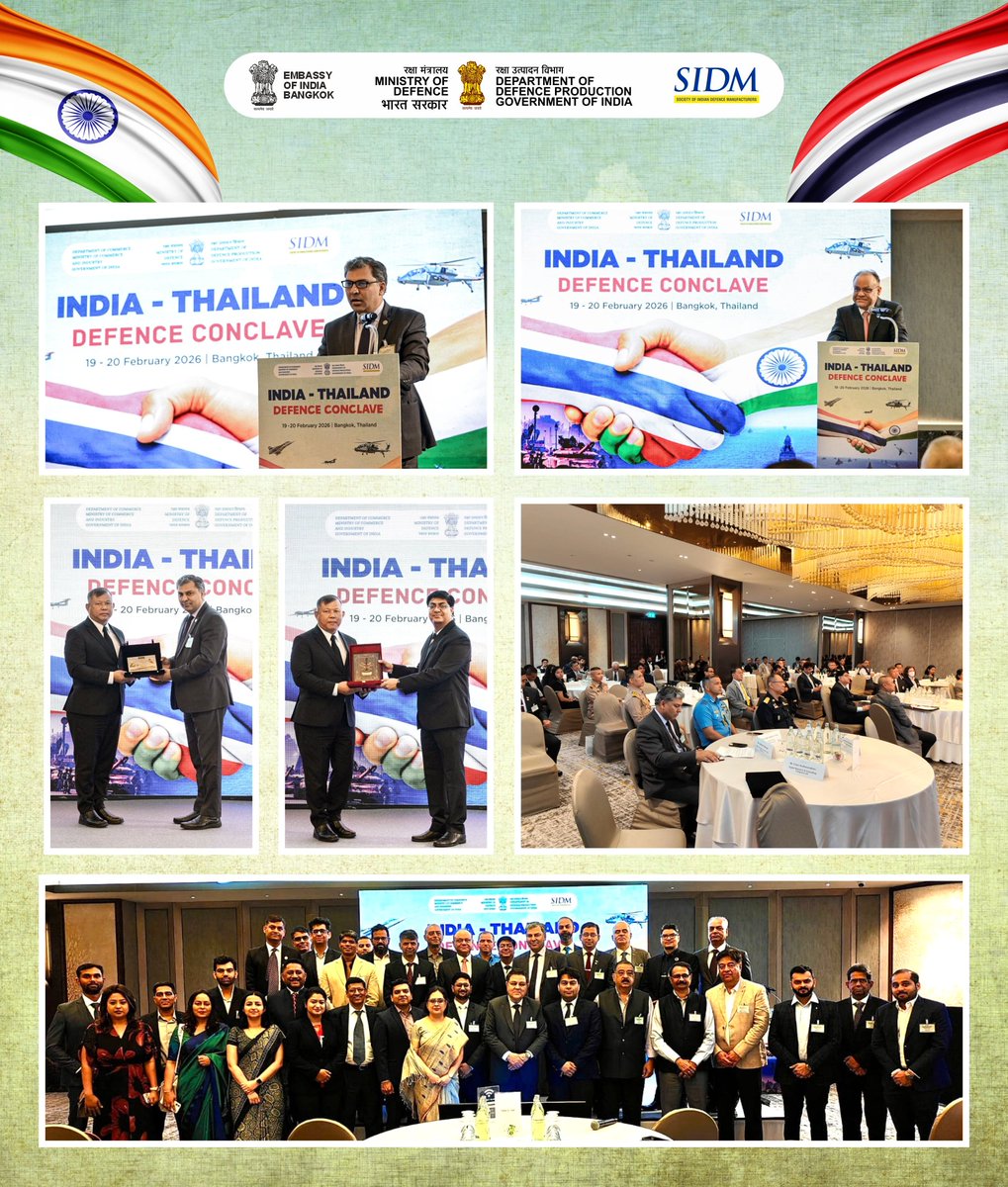
The Embassy of India, Bangkok, in association with the Department of Defence Production, Ministry of Defence, Government of India, and the Society of Indian Defence Manufacturers (SIDM), organised a focused Defence Industry Seminar and B2B Interaction in Bangkok, Thailand, on 19th February 2026.
From 1030–1130 hrs, H.E. Mr. Nagesh Singh, Ambassador of India to the Kingdom of Thailand, held an exclusive interaction with the Indian defence companies to discuss the Thailand defence and aerospace ecosystem, market opportunities, regulatory landscape, and avenues for deeper industrial collaboration.
The inaugural session was graced by H.E. Mr. Nagesh Singh along with senior representatives from the Defence Technology Institute (DTI), Thailand.
The interaction witnessed strong participation from both sides, with 25 leading Indian defence industries showcasing their capabilities across aerospace, land systems, naval systems, drones and counter-drone systems, protective armour, missile systems, ammunition, simulators, and emerging defence technologies.
The structured B2B meetings and industry presentations enabled meaningful discussions between Indian and Thai defence stakeholders, highlighting significant potential for partnerships, technology collaboration, joint development, and supply chain integration.
The engagement reflected the growing momentum in India–Thailand defence cooperation and reaffirmed the shared commitment to strengthening bilateral defence industrial ties.
SIDM expresses its sincere appreciation to the Embassy of India in Bangkok for facilitating this important initiative and for its continued support in advancing India–Thailand defence collaboration.
Together, we strengthen strategic defence ties between India and Thailand under the vision of #MakeInIndia for the world. 🇮🇳🇹🇭
#IndiaThailand #DefenceCooperation #MakeInIndia #DefenceIndustry #AtmanirbharBharat
Meanwhile on orbit.
Continuum-1 is delivering data to power autonomous non-Earth imaging systems while advancing the development of novel imaging modes.
This image was taken from a distance of 51 km and had an image resolution of 11 cm/px. Can you identify the target?
Following three decades building space-based intelligence, SatVu CTO, Scott Herman is leading our move to defence-grade thermal intelligence, revealing activity other sensors miss, day and night, when decisions matter.
🔗 @ADSgroupUK https://t.co/SyUC6XXzR0
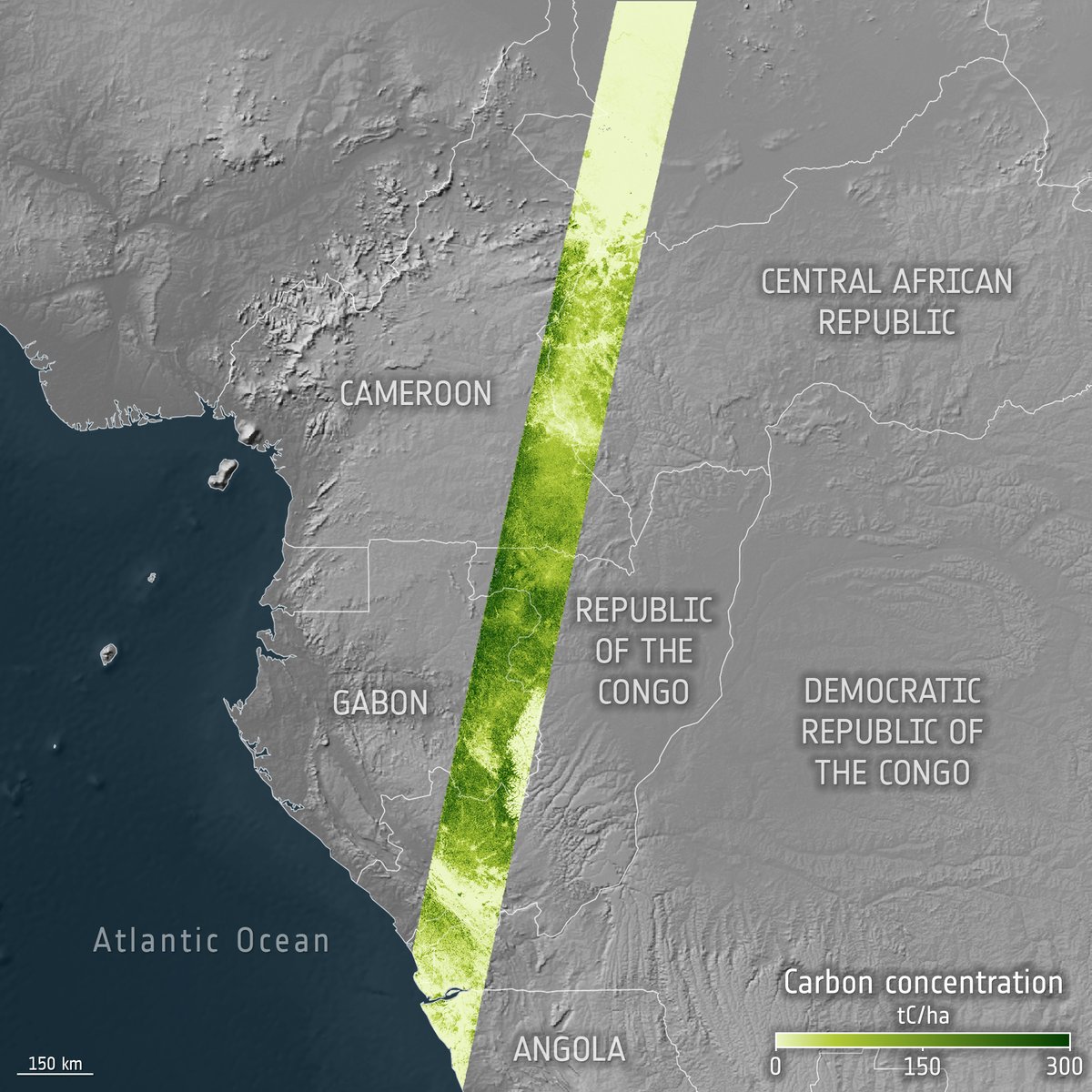
Biomass data are now available to the public✅
@esa's forest mission is the first satellite to carry a P-band synthetic aperture radar.
Why is it so cool?
It can penetrate dense forest canopies to measure woody biomass, including trunks and large branches, where the majority of forest carbon is held.
This will help scientists provide a robust proxy for carbon storage: https://t.co/yEdlF3TGeA
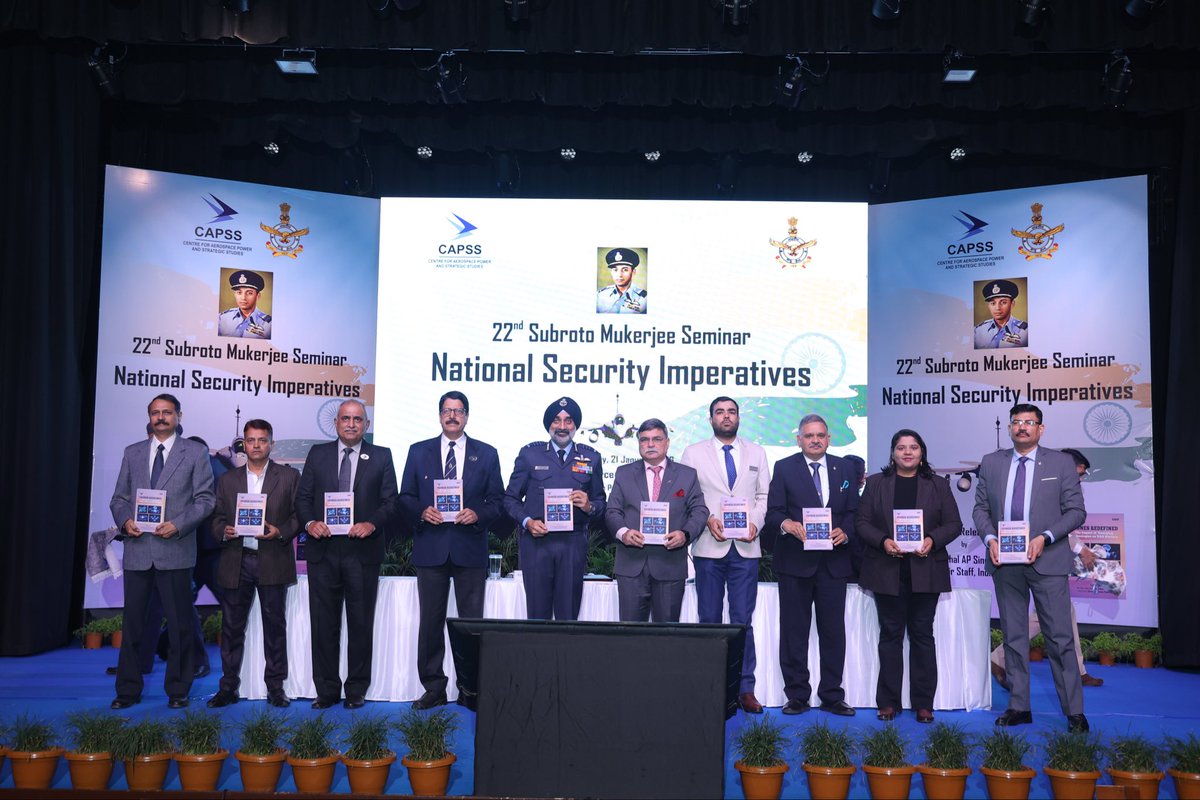
At the seminar, CAPSS released its latest book — titled “Drones Redefined: The Impact of Emerging Technologies on UAS Warfare” — edited by AVM Anil Golani & Dr Dinesh Kumar Pandey.
*** Yaogan-50 - China's First Retrograde LEO Satellite ***
On 13 Jan 2026 China launched Yaogan-50-01, its first LEO satellite in a highly retrograde orbit (ref graphic). While the payload is unknown, a probable contender is a synthetic aperture radar (SAR) system as the higher velocity relative to the earth's surface also serves to increase the spatial resolution(?).
Such a high inclination also provides improved revisit times time for lower latitude locations--such as the South China Sea.
(Orbit data from U.S. Space Forces – Space (S4S) via https://t.co/m3OEycBT6w, used with permission per ODR 24-002-4).
China quietly upgrades its Spratly outposts with new antenna arrays, ISR radomes, and mobile EW systems—expanding its ability to monitor and control the South China Sea. https://t.co/i6LY8SlHrL
🆕 findings show how the clearance of small areas of forest accounts for more than half of net carbon losses across the Tropics: https://t.co/7c0w9FIKLg
The team behind the study is contributing to @esaclimate's RECCAP-2 and Biomass projects.
📸Clearing of tropical forest in Peru 1995–2020
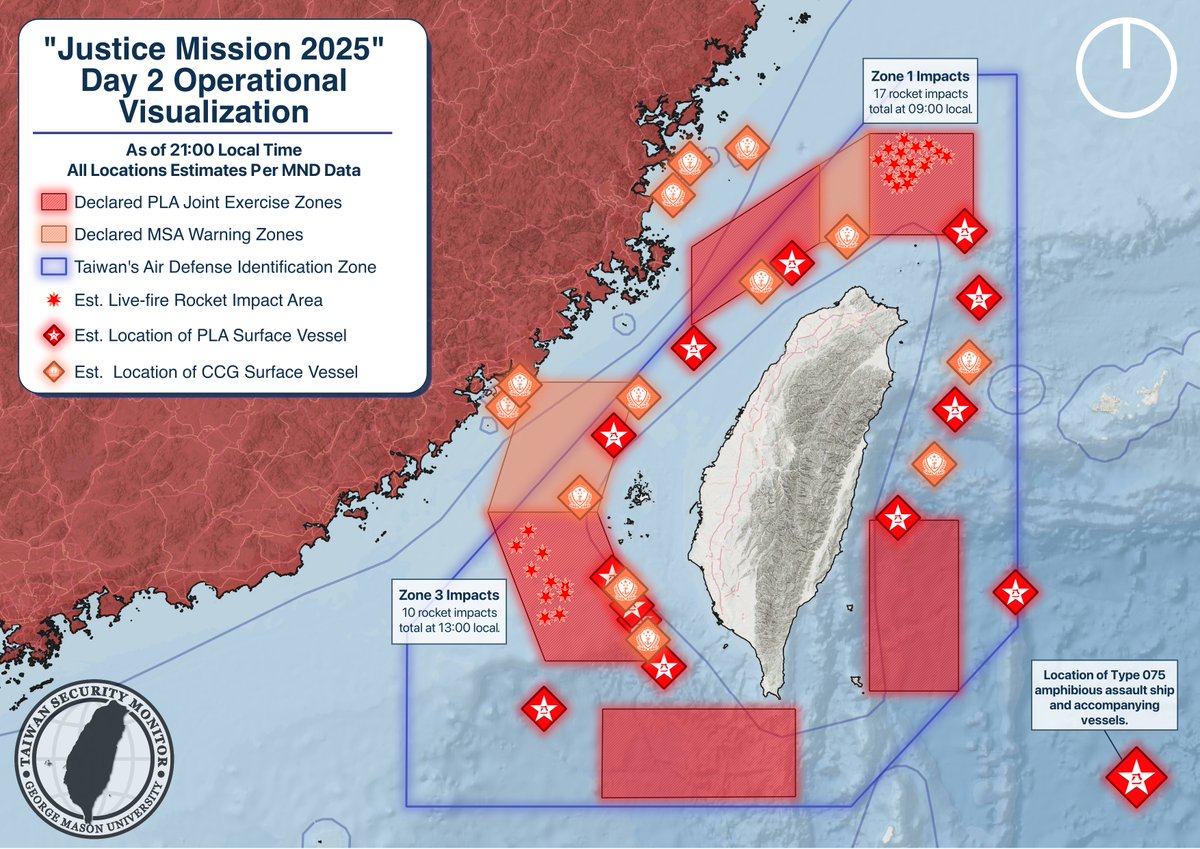
OPERATIONAL MAP: Our visualization shows the estimated position of CCG/PLAN vessels detected around Taiwan during day 2 of the "Justice Mission 2025" joint PLA exercise.
All data is from Taiwan's MND, specifically their press conference this morning regarding the exercise.
This is the air you breathed in 2024🌍
Tiny dust particles and droplets — 'aerosols' — drift around the globe. They can trigger asthma, cause acid rain, and even alter climate by absorbing and scattering sunlight.
The @CopernicusEU Sentinel‑5P mission tracks air pollution from space, giving us a clearer picture of the air we breathe.
🛰️ Starlink nel mirino di Pechino: l’esperimento Cinese per “oscurare” Taiwan - https://t.co/8Epy9iJxhR🛰️-starlink-nel-mirino-di-pechino-lesperimento-cinese-per-oscurare-taiwan/
My expert views embedded for the study.
🛰️ Starlink nel mirino di Pechino: l’esperimento Cinese per “oscurare” Taiwan - https://t.co/8Epy9iJxhR🛰️-starlink-nel-mirino-di-pechino-lesperimento-cinese-per-oscurare-taiwan/
My expert views embedded for the study.
In our image, 22 out of 25 targets were successfully scheduled at 0.5 m resolution (1-look). This corresponds to an acquisition swath of 25 km at 0.5 m resolution. Learn how it was done https://t.co/5oUdJ6CCXc