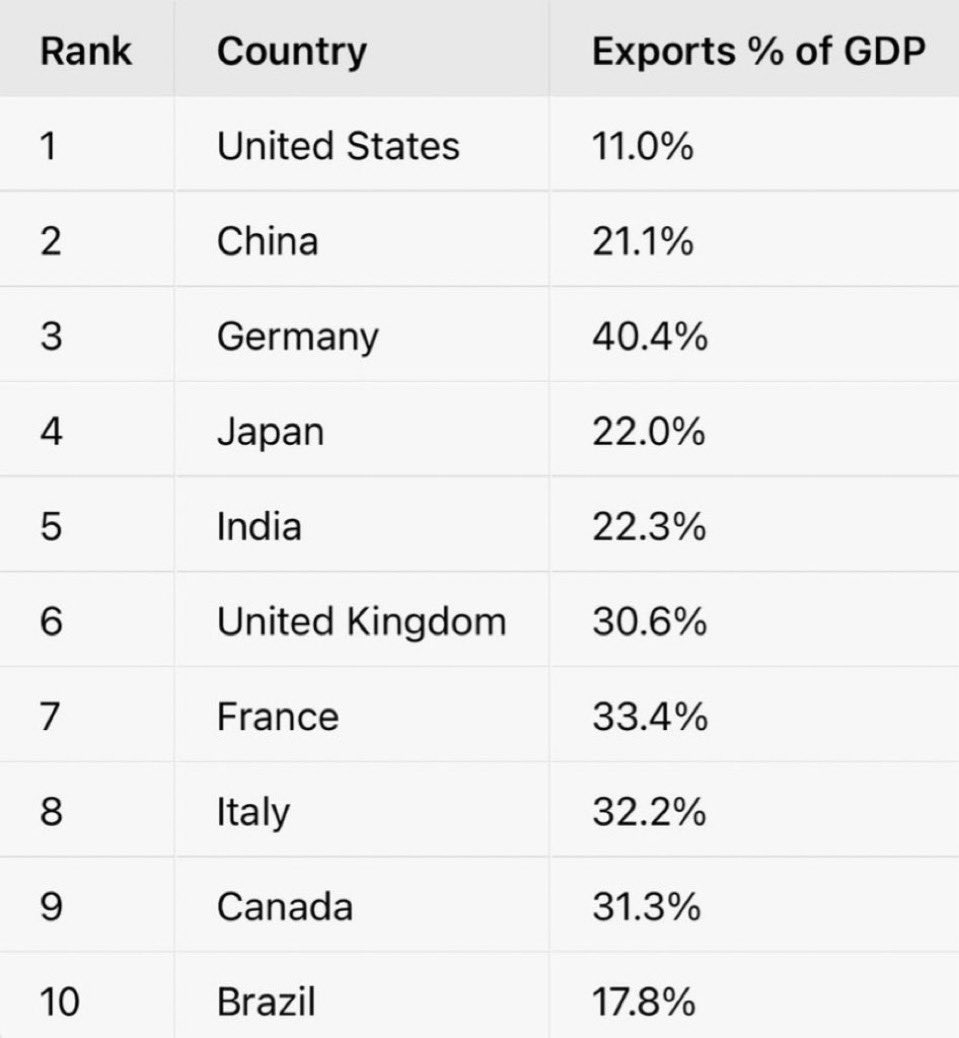
China is one of the least export dependent economies the world.
* It’s even less export dependent than the numbers below suggest.
Different discussion… it might blow your little EU mind. 😈
BREAKING: Michael Burry warns Big Tech's AI filings are hiding major risks.
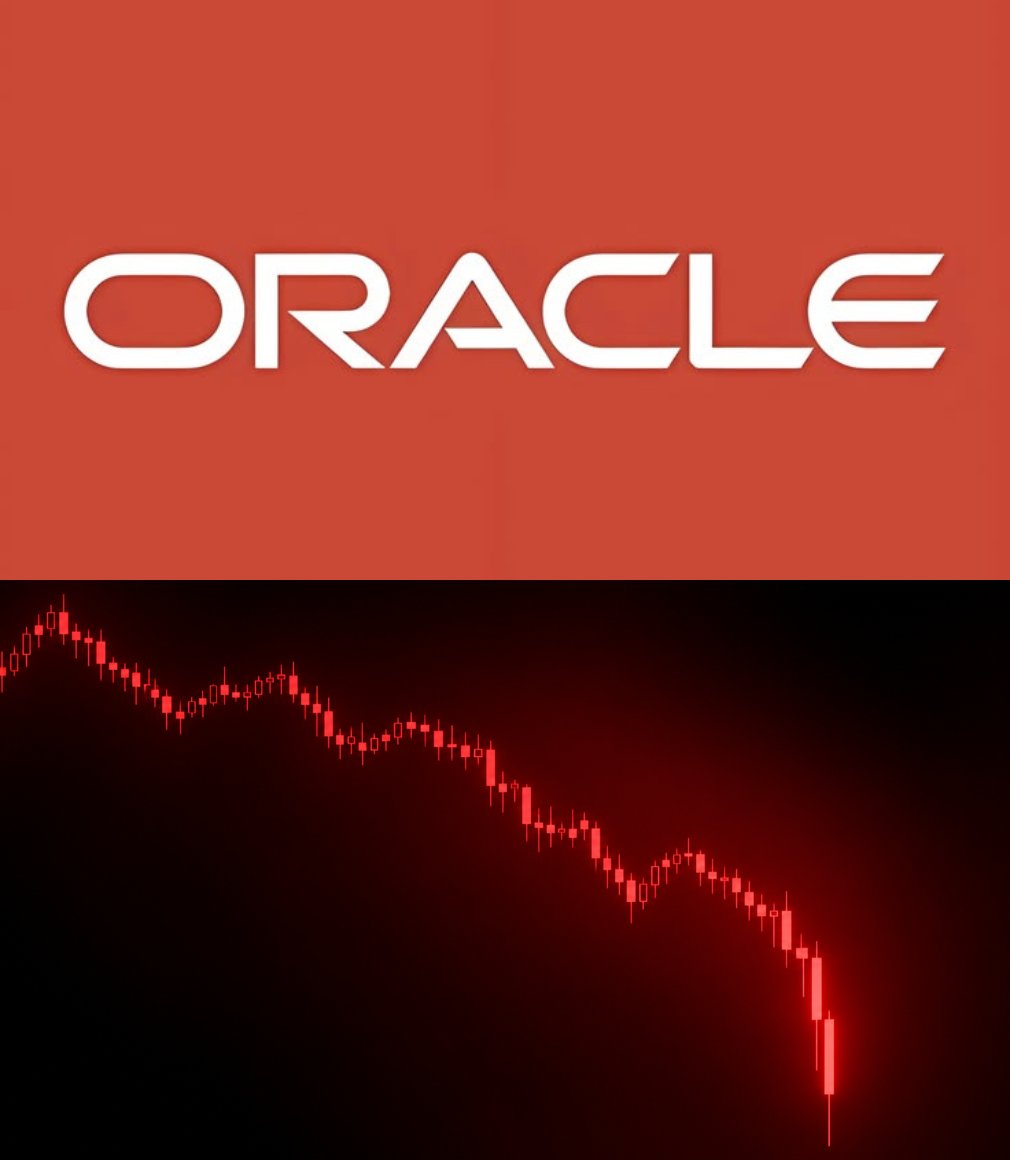
Oracle disclosed $288 billion in leases it hasn't even started paying for yet.
Burry says Big Tech also doesn't disclose how much "AI demand" is just companies paying each other to buy their own products.
Malaysia’s 30% equity requirement strikes again.
This time, tuition centres.
If true, tuition centres needs 30% Bumiputera ownership to operate.
Bumiputera refers broadly to Malays, the "son of land".
More than 50 years ago, Malaysia introduced race-based affirmative action, with good intention to listed companies.
Half a century later, we’re talking about applying it to tuition centres.
Putin probably has made the decision to attack Lithuania, Latvia, and Estonia in the coming months, despite the warning from USA
As Putin, driven into a corner in Ukraine and under internal pressure, and US intelligence allows for the possibility of a Russian ground invasion of the Baltic countries to blackmail NATO and obtain concessions regarding Ukraine.
It is also not ruled out that Putin may order a strike on one of the military plants in Britain to raise the stakes.
🚨 Michael Burry is doubling down on his bearish AI bet, while buying Nvidia calls as a HEDGE.
The "Big Short" investor bought December $NVDA calls with strikes in the mid-to-high $200s, paying single-digit premiums.
Burry says the calls are purely a hedge against his much larger Nvidia short and put positions, which represent roughly 3.5%-4% of his portfolio.
He also added to his shorts in Oracle, Palantir, Nebius and Caterpillar.
His total short stock exposure now exceeds 21% of his portfolio, excluding puts.
Burry said Nvidia's theoretical value is "much lower than today's market value" and the company's monopoly power could have a shorter lifespan than investors expect.
He also warned that Nvidia may not distribute enough capital to shareholders as it increasingly pours money into capex and investments to expand its ecosystem.
Burry is also making value-focused bets, adding to Birkenstock in the mid-$30s and Freddie Mac in the mid-$5s, while holding a large position in Fannie Mae.
Origin, our code hosting platform, is now live.
It's fast, easy to use, and deeply integrated with Cursor.
Get started by syncing your repos from GitHub.
Google has published a paper that might end the entire crypto era.
And it is so dangerous they are refusing to publish the code.
Every major blockchain, including Bitcoin and Ethereum, relies on an encryption standard called the 256-bit Elliptic Curve.
Breaking that encryption requires millions of physical qubits. Which is almost impossible.
But, researchers figured out how to break the 256-bit Elliptic Curve using an order of magnitude fewer resources than anyone thought possible.
Using an optimized version of Shor's algorithm, they calculated that breaking blockchain encryption requires fewer than 1,200 logical qubits and under 90 million Toffoli gates.
On physical superconducting architectures with error correction, those circuits can execute in a matter of minutes using fewer than half a million physical qubits.
That isn't a distant science fiction scenario. That is hardware that is currently being built.
The paper introduces a terrifying concept: on-spend attacks.
When you broadcast a transaction to the public mempool, your public key is exposed for a brief window before it gets mined into a block.
A fast-clock quantum computer could intercept that transaction, run the decryption in minutes, crack your private key, and redirect your funds before your original transaction even clears.
It also exposes a ticking time bomb for the entire industry: abandoned assets.
Millions of Bitcoins sit in lost or dormant wallets where the public keys are already exposed on-chain. When quantum machines arrive, those dead wallets won't stay safe. They will become open targets for automated adversarial theft.
The paper doesn't just outline the threat. It maps out systemic vulnerabilities across smart contracts, Proof-of-Stake consensus, and data availability layers.
Google is already setting an internal deadline to migrate its own infrastructure to Post-Quantum Cryptography (PQC) by 2029.
Meanwhile, most of the crypto ecosystem is still arguing about token prices.
The entire foundation of digital ownership is built on math that is about to expire.
When the first cryptographically relevant quantum computer goes online, it won't just break a protocol.
It will reset the ledger of the modern world.