I was 27kg overweight, had a visible belly and double chin, and I needed to reach 13% body fat before summer ended.
I achieved it with these 26 rules:
1. STOP RUNNING (for your knees).
In the past I've read the advice on writing good ML papers from @NeelNanda5@karpathy@seb_far and many others. So I thought: why not distill all of them into a Claude skill? Now I have an elite research writing partner at hand. Check it out for ICML! https://t.co/tOEQZOAvFO
A lot of folks want a map to Staff Engineer, and just as many Staff Engineers want to better understand their role. Towards that end, I'm working on a small project to collect folks' stories of reaching and operating as staff-plus engineers
https://t.co/CYUB736RJJ
I've tried all (36) AI Coding Agents & IDEs 😵💫
[CreateXyz, Cursor, Softgen, Windsurf, Wrapifai, Copilot, Lovable, Bolt, v0, Replit, MarsX, AmazonQ, Pear, Devin, Github Spark, IDX, Webdraw, Claude 3.7 Sonnet & more]
The most complete list ever made:
This is the youngest Billionaire you've never heard of:
When he discovered Americans spend 30% of their income on rent...
He built a $3.25 Billion tech empire turning their biggest expense into bigger rewards.
Here's why landlords across America are nervous: 🧵
1/n Math Meets AI: Kolmogorov-Arnold Networks Unleash the Power of Composition
Imagine a world where deep learning models, the enigmatic engines driving the AI revolution, are no longer shrouded in mystery. What if we could peer into their inner workings, understand their reasoning, and even collaborate with them to uncover the secrets of the universe? This is the promise of Kolmogorov-Arnold Networks (KANs), a revolutionary new architecture poised to transform the landscape of artificial intelligence.
Step aside, Multi-Layer Perceptrons (MLPs), the workhorses of deep learning. While your contributions are undeniable, your limitations are becoming increasingly apparent. Your black-box nature hinders interpretability, your inefficiency restricts your potential, and your struggle with high-dimensional data leaves vast realms of knowledge unexplored. The time has come for a new breed of neural networks, one that combines the power of deep learning with the elegance of mathematics and the transparency of human understanding.
The core issue with MLPs lies in their structure. While their universal approximation capabilities are well established, their fixed activation functions on nodes and reliance on linear transformations limit their ability to efficiently represent complex functions, especially those with compositional structures. This inefficiency leads to larger models with increased computational costs and hinders interpretability, as understanding the reasoning behind their predictions becomes challenging. Additionally, MLPs often struggle with the curse of dimensionality, where their performance deteriorates as the input data dimensionality increases.
KANs address these pain points by drawing inspiration from the Kolmogorov-Arnold representation theorem, which states that any continuous multivariate function can be decomposed into a composition of univariate functions and addition. Instead of fixed activation functions on nodes, KANs employ learnable activation functions on edges, represented by splines. This key difference allows KANs to efficiently learn both the compositional structure of a function and the individual functions within that composition. As a result, KANs achieve superior accuracy compared to MLPs, particularly when dealing with high-dimensional data and complex functions.
Furthermore, KANs offer significant advantages in terms of interpretability. Their structure allows for intuitive visualization of the learned functions, providing insights into the model's decision-making process. Additionally, the paper introduces techniques for simplifying KANs without sacrificing accuracy, further enhancing their transparency. This interpretability is crucial for scientific applications where understanding the underlying mechanisms and reasoning behind predictions is essential.
The paper demonstrates the capabilities of KANs through various experiments. In data fitting tasks, KANs outperform MLPs in approximating high-dimensional functions and exhibit better scaling laws, meaning their performance degrades less with increasing data dimensionality. In PDE solving, KANs achieve remarkable accuracy with significantly fewer parameters compared to MLPs. Moreover, KANs showcase their potential for scientific discovery by rediscovering known mathematical laws and identifying complex physical phenomena.
Prior research has explored the Kolmogorov-Arnold representation theorem in the context of neural networks, but these efforts were limited by restrictions on network depth and width, lack of modern training techniques, and insufficient empirical validation. KANs overcome these limitations by allowing for arbitrary depths and widths, utilizing backpropagation for efficient training, and providing extensive empirical evidence of their superior performance and interpretability.
In conclusion, KANs represent a significant advancement in deep learning, offering a promising alternative to MLPs with improved accuracy, efficiency, and interpretability. Their ability to effectively handle compositional structures, high-dimensional data, and complex functions makes them particularly well-suited for scientific applications. As research and development in this area continue, KANs have the potential to revolutionize deep learning and accelerate scientific discovery across various domains.
There are over 1,000 engineering blogs. Here are my top 9 favorites:
- Netflix TechBlog
- Uber Blog
- Cloudflare Blog
- Engineering at Meta
- LinkedIn Engineering
- Discord Blog
- AWS Architecture
- Slack Engineering
- Stripe Blog
Over to you - What are some of your favorite engineering blogs?
–
Subscribe to our weekly newsletter to get a Free System Design PDF (158 pages): https://t.co/uc5M7CdXXC
𝗛𝗼𝘄 𝘁𝗼 𝗟𝗲𝗮𝗿𝗻 𝗦𝘆𝘀𝘁𝗲𝗺 𝗗𝗲𝘀𝗶𝗴𝗻?
If you're working as a software developer and you want to move towards a software architect role, or you're preparing for coding interviews for more senior roles, systems design is an important skill you need to have. Without knowing it, you will have a hard time designing new software systems and understanding existing ones.
System design refers to 𝘁𝗵𝗲 𝗽𝗿𝗼𝗰𝗲𝘀𝘀 𝗼𝗳 𝗱𝗲𝗳𝗶𝗻𝗶𝗻𝗴 𝗮 𝘀𝘆𝘀𝘁𝗲𝗺'𝘀 𝗰𝗼𝗺𝗽𝗼𝗻𝗲𝗻𝘁𝘀. Architecture, modules, components, interfaces, and data are a few examples of these aspects. The process of defining, creating, and designing systems that suit the particular objectives and requirements of an organization is what you need to understand when it comes to system design.
To understand system design, you will need to know the following:
𝟭. 𝗣𝗲𝗿𝗳𝗼𝗿𝗺𝗮𝗻𝗰𝗲 𝘃𝘀 𝗦𝗰𝗮𝗹𝗮𝗯𝗶𝗹𝗶𝘁𝘆
𝟮. 𝗟𝗮𝘁𝗲𝗻𝗰𝘆 𝘃𝘀 𝗧𝗵𝗿𝗼𝘂𝗴𝗵𝗽𝘂𝘁 𝗮𝗻𝗱 𝗔𝘃𝗮𝗶𝗹𝗮𝗯𝗶𝗹𝗶𝘁𝘆 𝘃𝘀 𝗖𝗼𝗻𝘀𝗶𝘀𝘁𝗲𝗻𝗰𝘆 (𝘄𝗶𝘁𝗵 𝗽𝗮𝘁𝘁𝗲𝗿𝗻𝘀)
𝟯. 𝗔𝘃𝗮𝗶𝗹𝗮𝗯𝗶𝗹𝗶𝘁𝘆 𝗽𝗮𝘁𝘁𝗲𝗿𝗻𝘀
𝟰. 𝗕𝗮𝗰𝗸𝗴𝗿𝗼𝘂𝗻𝗱 𝗷𝗼𝗯𝘀
𝟱. 𝗗𝗼𝗺𝗮𝗶𝗻 𝗡𝗮𝗺𝗲 𝗦𝘆𝘀𝘁𝗲𝗺𝘀
𝟲. 𝗖𝗗𝗡𝘀
𝟳. 𝗟𝗼𝗮𝗱 𝗕𝗮𝗹𝗮𝗻𝗰𝗲𝗿𝘀
𝟴. 𝗖𝗮𝗰𝗵𝗶𝗻𝗴
𝟵. 𝗔𝘀𝘆𝗻𝗰𝗵𝗿𝗼𝗻𝗶𝘀𝗺
𝟭𝟬. 𝗖𝗼𝗺𝗺𝘂𝗻𝗶𝗰𝗮𝘁𝗶𝗼𝗻 𝗽𝗮𝘁𝘁𝗲𝗿𝗻𝘀
𝟭𝟭. 𝗣𝗲𝗿𝗳𝗼𝗿𝗺𝗮𝗻𝗰𝗲 𝗮𝗻𝘁𝗶𝗽𝗮𝘁𝘁𝗲𝗿𝗻𝘀
𝟭𝟮. 𝗠𝗼𝗻𝗶𝘁𝗼𝗿𝗶𝗻𝗴
𝟭𝟯. 𝗖𝗹𝗼𝘂𝗱 𝗱𝗲𝘀𝗶𝗴𝗻 𝗽𝗮𝘁𝘁𝗲𝗿𝗻𝘀
To learn this, here are some 𝗯𝗼𝗼𝗸𝘀 where you can start learning:
𝟭. 𝗦𝘆𝘀𝘁𝗲𝗺 𝗗𝗲𝘀𝗶𝗴𝗻 𝗜𝗻𝘁𝗲𝗿𝘃𝗶𝗲𝘄
One of the best books in this field, where you will learn how to design systems such as web crawlers or even YouTube.
Link: https://t.co/FS1xScwM1a
𝟮. 𝗗𝗲𝘀𝗶𝗴𝗻𝗶𝗻𝗴 𝗗𝗮𝘁𝗮-𝗜𝗻𝘀𝗲𝗻𝘀𝗶𝘁𝗶𝘃𝗲 𝗔𝗽𝗽𝗹𝗶𝗰𝗮𝘁𝗶𝗼𝗻𝘀
In this book, the author writes about different technologies used to store and process data. By reading it, you will gain insight into different algorithms used in the database world.
Link: https://t.co/FeB1UiM2qp
𝟯. 𝗛𝗲𝗮𝗱 𝗙𝗶𝗿𝘀𝘁 𝗗𝗲𝘀𝗶𝗴𝗻 𝗣𝗮𝘁𝘁𝗲𝗿𝗻𝘀
A great book on OO design patterns, written in a simple style with examples in Java.
Link: https://t.co/SiqEzg1Fug
𝟰. 𝗖𝗿𝗮𝗰𝗸𝗶𝗻𝗴 𝘁𝗵𝗲 𝗖𝗼𝗱𝗶𝗻𝗴 𝗜𝗻𝘁𝗲𝗿𝘃𝗶𝗲𝘄
It is a general-purpose coding interview book where the author shares her insights into programming interviews at big tech companies like Microsoft and Google. It covers all basic topics like algorithms, data structures, SQL, etc.
Link: https://t.co/j295Zvs8KW
𝟱. 𝗙𝘂𝗻𝗱𝗮𝗺𝗲𝗻𝘁𝗮𝗹𝘀 𝗼𝗳 𝗦𝗼𝗳𝘁𝘄𝗮𝗿𝗲 𝗔𝗿𝗰𝗵𝗶𝘁𝗲𝗰𝘁𝘂𝗿𝗲
As System Design is related to Software Architecture, this book will give you an introduction to how to architect software systems. This book examines architecture patterns, components, soft skills, modernity, architecture as engineering, and many more.
Link: https://t.co/nhNA8xXvDr
Check the System Design Roadmap in the image (by roadmap .sh).
#softwareengineering
𝗧𝗼𝗽 𝟭𝟬 𝗔𝗿𝗰𝗵𝗶𝘁𝗲𝗰𝘁𝘂𝗿𝗮𝗹 𝗣𝗮𝘁𝘁𝗲𝗿𝗻𝘀
𝗦𝗼𝗳𝘁𝘄𝗮𝗿𝗲 𝗮𝗿𝗰𝗵𝗶𝘁𝗲𝗰𝘁𝘂𝗿𝗲 is the process of designing the structure and behavior of a software system, which includes making decisions about components, modules, interfaces, and the system's organization.
𝗦𝗼𝗳𝘁𝘄𝗮𝗿𝗲 𝗮𝗿𝗰𝗵𝗶𝘁𝗲𝗰𝘁𝘂𝗿𝗲 𝗽𝗮𝘁𝘁𝗲𝗿𝗻𝘀 are important because they provide reusable solutions to common problems in software design. They capture best practices and proven solutions for designing reliable, scalable, maintainable, and extensible software systems.
There are many software architecture design patterns to know, but some of the most important ones are:
𝟭. 𝗟𝗮𝘆𝗲𝗿𝗲𝗱 𝗔𝗿𝗰𝗵𝗶𝘁𝗲𝗰𝘁𝘂𝗿𝗲: This pattern is based on dividing the application into logical layers, where each layer has a specific responsibility and interacts with the layers above and below it.
𝟮. 𝗠𝗶𝗰𝗿𝗼𝘀𝗲𝗿𝘃𝗶𝗰𝗲𝘀 𝗔𝗿𝗰𝗵𝗶𝘁𝗲𝗰𝘁𝘂𝗿𝗲: This pattern is based on decomposing the application into small, independent services that communicate through well-defined APIs.
𝟯. 𝗘𝘃𝗲𝗻𝘁-𝗗𝗿𝗶𝘃𝗲𝗻 𝗔𝗿𝗰𝗵𝗶𝘁𝗲𝗰𝘁𝘂𝗿𝗲: This pattern uses events to communicate between different components or services, where events trigger actions or reactions in the system.
𝟰. 𝗦𝗽𝗮𝗰𝗲-𝗯𝗮𝘀𝗲𝗱 𝗮𝗿𝗰𝗵𝗶𝘁𝗲𝗰𝘁𝘂𝗿𝗲 (𝗦𝗕𝗔): is a software design method that centers the system's structure around the idea of "spaces," which are independent and autonomous units.
𝟱. 𝗠𝗶𝗰𝗿𝗼𝗸𝗲𝗿𝗻𝗲𝗹 𝗮𝗿𝗰𝗵𝗶𝘁𝗲𝗰𝘁𝘂𝗿𝗲: this is an approach where the kernel provides minimal functionality and services are implemented as separate modules outside the kernel.
𝟲. 𝗣𝗲𝗲𝗿 𝘁𝗼 𝗣𝗲𝗲𝗿 𝗮𝗿𝗰𝗵𝗶𝘁𝗲𝗰𝘁𝘂𝗿𝗮𝗹 𝗽𝗮𝘁𝘁𝗲𝗿𝗻: this is a decentralized model where nodes in a network can act as both clients and servers, allowing for distributed sharing of resources and information without a central authority.
𝟳. 𝗖𝗹𝗼𝘂𝗱 𝗻𝗮𝘁𝗶𝘃𝗲 𝘀𝗼𝗳𝘁𝘄𝗮𝗿𝗲 𝗮𝗿𝗰𝗵𝗶𝘁𝗲𝗰𝘁𝘂𝗿𝗲: this is a pattern where applications are developed and deployed to run on cloud platforms, leveraging cloud services and infrastructure for scalability, reliability, and agility.
𝟴. 𝗖𝗤𝗥𝗦 (𝗖𝗼𝗺𝗺𝗮𝗻𝗱 𝗤𝘂𝗲𝗿𝘆 𝗥𝗲𝘀𝗽𝗼𝗻𝘀𝗶𝗯𝗶𝗹𝗶𝘁𝘆 𝗦𝗲𝗴𝗿𝗲𝗴𝗮𝘁𝗶𝗼𝗻): This pattern separates the command and query responsibilities of an application's model, making it easier to scale and optimize the application.
𝟵. 𝗛𝗲𝘅𝗮𝗴𝗼𝗻𝗮𝗹 𝗔𝗿𝗰𝗵𝗶𝘁𝗲𝗰𝘁𝘂𝗿𝗲: This pattern separates the application into an inner and outer layer, where the inner layer contains the business logic and the outer layer contains the interfaces with the outside world.
𝟭𝟬. 𝗖𝗹𝗲𝗮𝗻 𝗔𝗿𝗰𝗵𝗶𝘁𝗲𝗰𝘁𝘂𝗿𝗲: This pattern emphasizes separating concerns and decoupling components, making it easier to maintain and change an application over time.
#technology #softwareengineering #softwaredesign #techworldwithmilan #softwarearchitecture
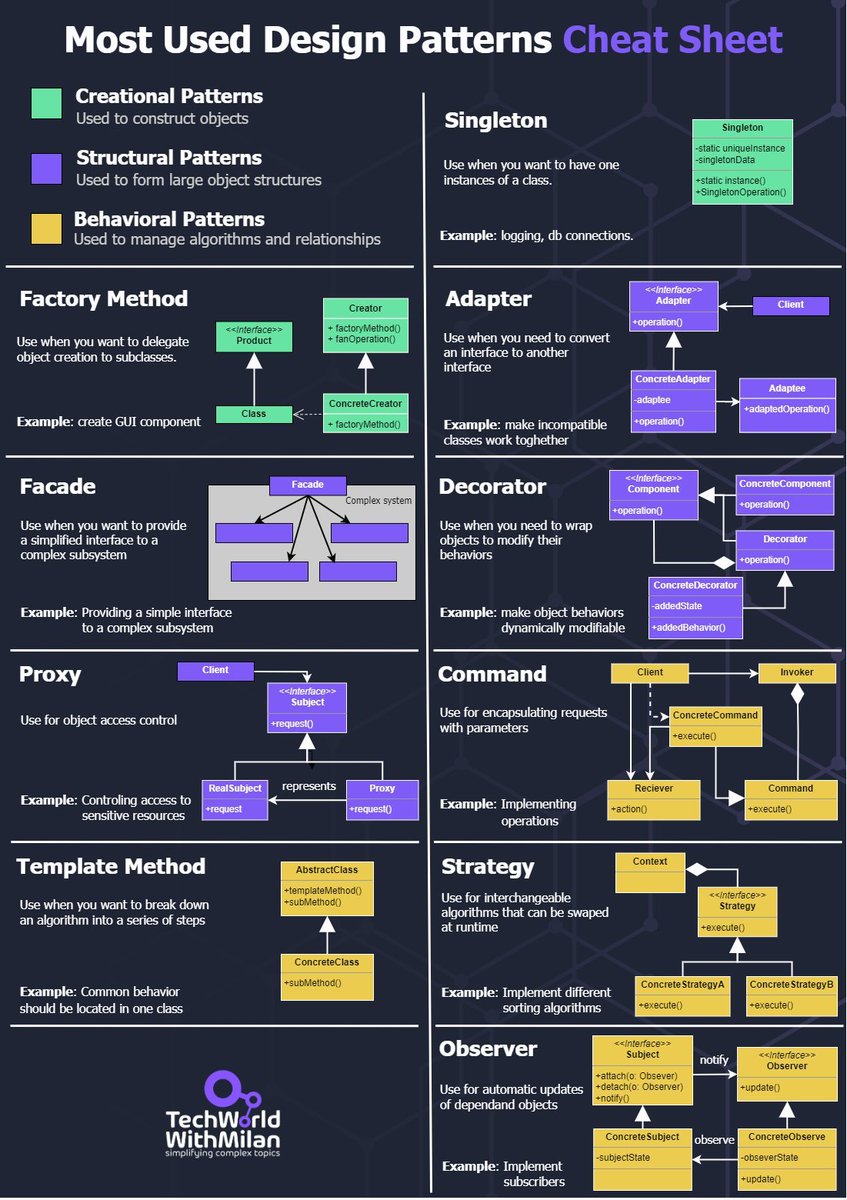
𝗗𝗲𝘀𝗶𝗴𝗻 𝗣𝗮𝘁𝘁𝗲𝗿𝗻𝘀 𝗖𝗵𝗲𝗮𝘁 𝗦𝗵𝗲𝗲𝘁
Design patterns can be divided into three main types:
𝟭. 𝗖𝗿𝗲𝗮𝘁𝗶𝗼𝗻𝗮𝗹 𝗣𝗮𝘁𝘁𝗲𝗿𝗻𝘀
These design patterns deal with object creation mechanisms, trying to create objects in a manner suitable to the situation.
Important patterns in this group are:
𝗙𝗮𝗰𝘁𝗼𝗿𝘆: This pattern allows delegating the instantiation logic to factory classes. The Factory Method creates objects without exposing the instantiation logic to the client.
𝗦𝗶𝗻𝗴𝗹𝗲𝘁𝗼𝗻 The Singleton pattern ensures that a class has only one instance and provides a global point of access to it. It's useful when exactly one object is needed to coordinate actions across the system.
𝟮. 𝗦𝘁𝗿𝘂𝗰𝘁𝘂𝗿𝗮𝗹 𝗣𝗮𝘁𝘁𝗲𝗿𝗻𝘀
These patterns deal with the composition of classes and objects that form larger structures.
Important patterns in this group are:
𝗔𝗱𝗮𝗽𝘁𝗲𝗿: This pattern works as a bridge between two incompatible interfaces. It wraps an existing class with a new interface to become compatible with the client's interface.
𝗙𝗮𝗰𝗮𝗱𝗲: The Façade pattern provides a unified interface to a set of interfaces in a subsystem. Façade defines a higher-level interface that makes the subsystem easier to use.
𝗗𝗲𝗰𝗼𝗿𝗮𝘁𝗼𝗿: This pattern dynamically adds/overrides behavior in an existing method of an object. This pattern provides a flexible alternative to subclassing for extending functionality.
𝗣𝗿𝗼𝘅𝘆: The Proxy pattern provides a surrogate or placeholder for another object to control access to it. In its most general form, a proxy is a class functioning as an interface to something else.
𝟯. 𝗕𝗲𝗵𝗮𝘃𝗶𝗼𝗿𝗮𝗹 𝗣𝗮𝘁𝘁𝗲𝗿𝗻𝘀
These patterns are specifically concerned with communication between objects and how they interact and distribute work.
Important patterns in this group are:
𝗖𝗼𝗺𝗺𝗮𝗻𝗱: The Command pattern encapsulates a request as an object, thus allowing users to parameterize clients with queues, requests, and operations.
𝗧𝗲𝗺𝗽𝗹𝗮𝘁𝗲 𝗠𝗲𝘁𝗵𝗼𝗱: This pattern defines the program skeleton of an algorithm in a method called template method, which defers some steps to subclasses.
𝗦𝘁𝗿𝗮𝘁𝗲𝗴𝘆: The Strategy pattern defines a family of algorithms, encapsulates each one, and makes them interchangeable. Strategy lets the algorithm vary independently from clients that use it.
𝗢𝗯𝘀𝗲𝗿𝘃𝗲𝗿: This pattern defines a one-to-many dependency between objects so that all its dependents are notified and updated automatically when one object changes state.
#technology #softwareengineering #programming #techworldwithmilan #developers