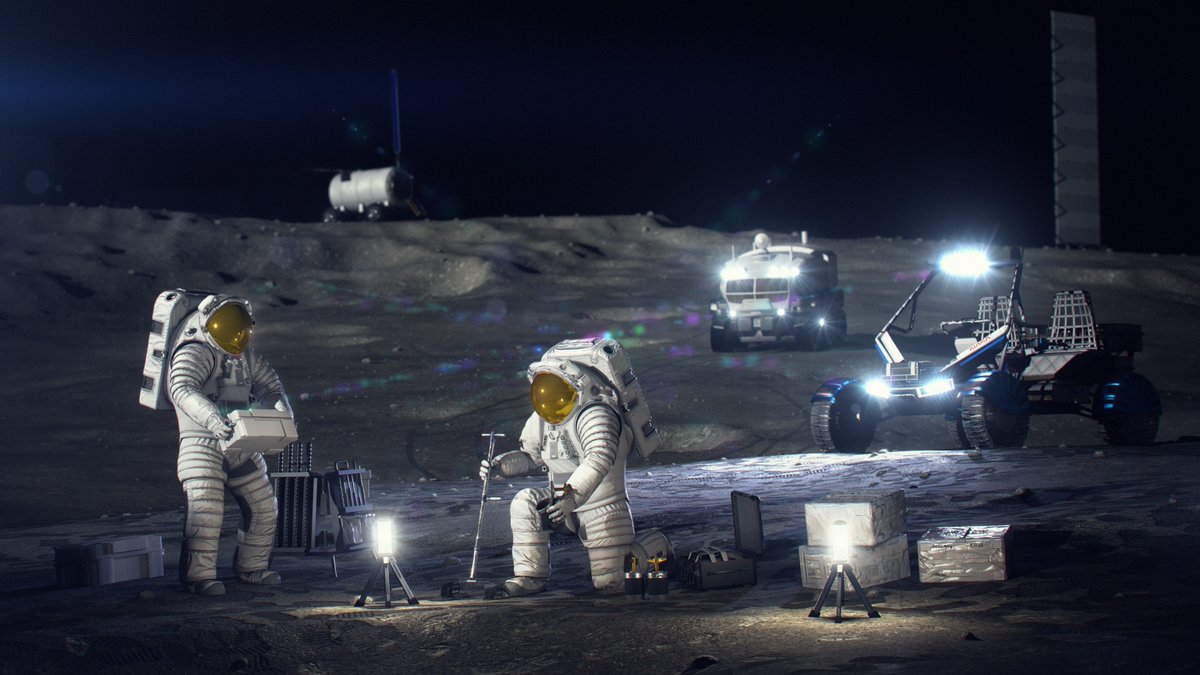
We're building a Moon Base!
@NASAMoonBase will serve as a habitat where astronauts live and work during long-term science missions.
Join us at 2pm ET on Tuesday, May 26, for a live news event where we’ll share updates on our lunar exploration plans: https://t.co/IJXA7xYwju
Only one chance in this lifetime…
Like watching sunset at the beach from the most foreign seat in the cosmos, I couldn’t resist a cell phone video of Earthset. You can hear the shutter on the Nikon as @Astro_Christina is hammering away on 3-shot brackets and capturing those exceptional Earthset photos through the 400mm lens. @AstroVicGlover was in window 3 watching with @Astro_Jeremy next to him.
I could barely see the Moon through the docking hatch window but the iPhone was the perfect size to catch the view…this is uncropped, uncut with 8x zoom which is quite comparable to the view of the human eye. Enjoy.
‘Save the best for last 😋’, a little rocky planet discovered by our #ESACheops might think – born later than its gaseous sibling-planets, it might flip our understanding of how planets form upside down.
Our full story 👉 https://t.co/530CA6d8lL
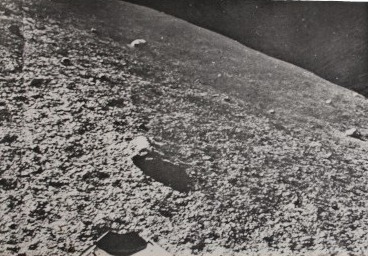
60 years ago today, the world saw the first photos taken from the surface of the Moon!
Nine images from Luna 9—the first spacecraft to survive a lunar landing—were received in Moscow Feb 4–5, 1966, but also intercepted and released by the Jodrell Bank Observatory in England.
Curiosity has been working the night shift on Mars!
Using the LED lights on the end of its robotic arm, it created this rare nighttime view. It shows a small hole that the robotic geologist bored into the bedrock, revealing layers inside. Drill into the details: https://t.co/IBOpggoenu
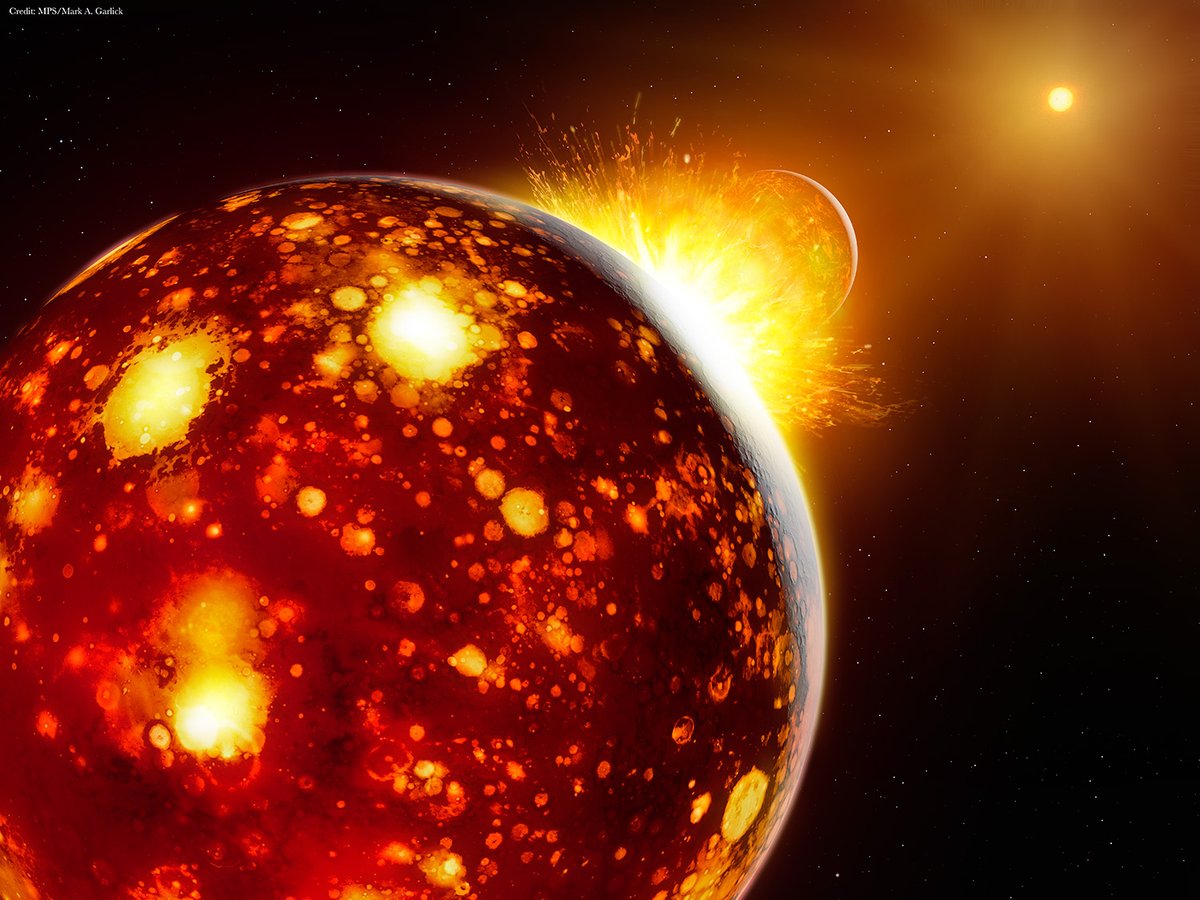
By tracking the isotopic fingerprints of iron in lunar and terrestrial rocks, researchers trying to understand the origin of Theia, the Moon’s mysterious progenitor, add evidence to the idea that it came from the inner Solar System.
Learn more in Science: https://t.co/4lhyPJiEFZ
Did you know that slab break-off and subduction polarity reversal after collision can be very fast? And by fast, we mean less than six million years…
A study in #Geology from University of Toronto Scarborough and University of Toronto colleagues compares geological examples of slab break-off (e.g., Western Alps) and polarity reversal (e.g., Ontong Java) with previous numerical modeling studies to uncover a discrepancy between the timing of most simulations and geological evidence.
Gün et al. provide a synthesis of the available data for 17 ancient and contemporary subduction zones (alongside new numerical models) to propose that slab break-off and polarity reversal can occur on geologically short time scales (<6 million years), which is faster than most previous numerical models. The new work highlights the importance of a global perspective to local tectonic events.
Read more: https://t.co/E8ue98Diey
#Tectonics #Subduction #GSAPubs
Sapphire Canyon, a Martian sample collected by our Perseverance rover, could preserve evidence of ancient life on the Red Planet. Here's what we've learned after a year of scientific scrutiny: https://t.co/Ciohk9ly8k
After a year of scientific scrutiny, a rock sample collected by the Perseverance rover has been confirmed to contain a potential biosignature. The sample is the best candidate so far to provide evidence of ancient microbial life on Mars. https://t.co/0BAO1dhMG8
Scientists at ETH Zurich have reconstructed the history of the Earth's magnetic field and found that it already existed more than a billion years ago, much earlier than previously thought. Article via @swissinfo_en
https://t.co/ni3fFo2FhM
A glimpse of a planet in its star’s habitable zone — the ‘just right’ region where life could flourish — has astronomers reeling
https://t.co/dmrsdfB6NY
A paper in @Nature presents a model of climate evolution on Mars that offers an explanation for past fluctuating water availability on the Red Planet. https://t.co/5h1LkGkXMn
"Swiss-cheese rock," or tafoni, are small, smooth-edged holes found in rock surfaces—often sandstone or granite. These honeycomb-like features also form in rhyolite, like at The Honeycombs in Utah. #utahgeology#tafoni