@robgo@Rick_Zullo I think there is a non zero chance that the returns from consolidation flow to all parts of the venture value chain. Its the fix for 2021.
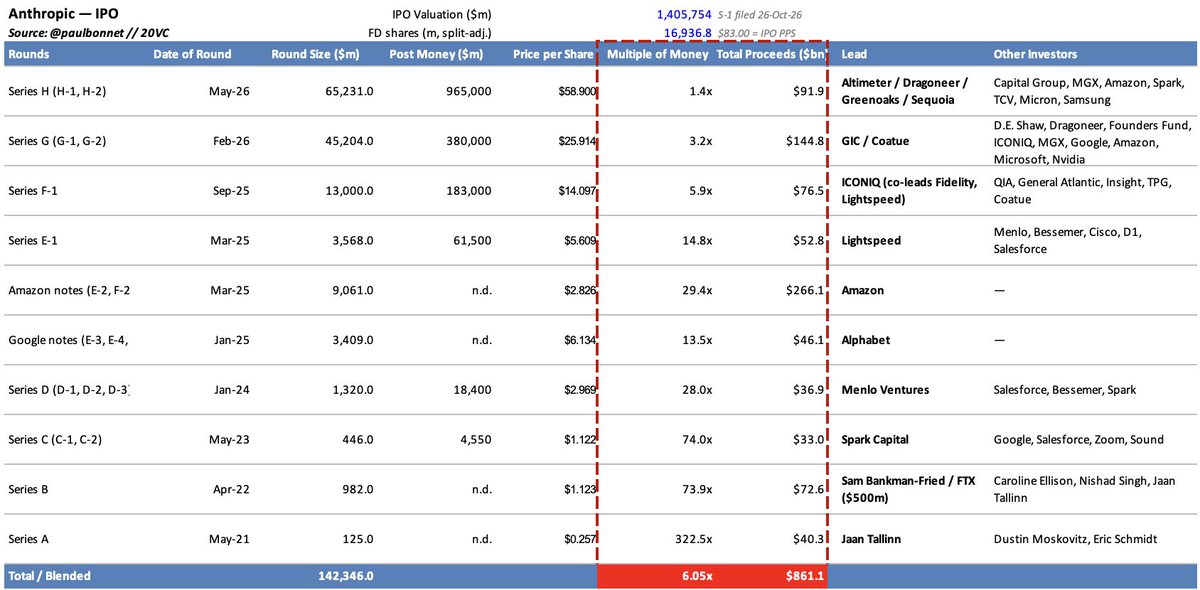
Anthropic IPO: who gets to get the 💰? Updated analysis for final $83.00 offer price below.
Investors will be sharing ~$860b of proceeds, on ~$142b invested. A ~6x blended multiple on a huge amount of capital, in just 5 years.
Note: all numbers are now based on the final $83.00 IPO price, or ~$1.4 trillion fully diluted.
Refresh of the themes explored in previous breakdown 🔎
1) The craziest fact: no VC in the Series A or Series B 🤯
The $124m Series A in May-21 was led by Jaan Tallinn (Skype’s co-founder), with Dustin Moskovitz and Eric Schmidt. It will return ~320x the original capital, or ~$40b to those early angels. Mind-boggling.
2) The $982m Series B in 2022 was led by... SBF and FTX: it will return ~74x the capital invested. FTX’s $500m would be worth ~$37b today.
Plot twist: the estate sold it for ~$1.3b in 2024, in one of the worst trades ever.
3) The first VCs in: Spark and Menlo are killing it 🏆
Spark will make over $10b from its Anthropic investments. Hats off to @YasminRazavi 👏
They first came into the 2023 Series C and are making ~74x their investment in that round. They followed in every single round since, investing $777m in total, now worth ~$10b.
Menlo led the Jan-24 Series D and will make ~28x its money on that round. And finally, Lightspeed’s Series E lead will make ~15x in 18 months.
4) The real winners in $ terms: the strategics 💰
Amazon put a grand total of ~$18b in, mostly via convertible notes converting at ~$2 a share, against $83 at IPO. That gives Amazon ~21% of the company, worth ~$290b. That’s ~16x its investment.
Google is not far behind: its notes and the $10b it put in this April alone will be worth ~$78b.
And that’s before the compute: Anthropic has committed $110b+ to AWS and $111b to Google Cloud. They are both investors and suppliers, so they win twice.
5) Founders and team: incredible outcome, and giving most of it away 🙏
The seven co-founders hold ~240m shares each. That’s ~$20b each, or ~$140b combined.
And each of them has pledged 80% of it to philanthropy: ~$112b going to good causes. On top of that, Anthropic put 5% of the company (~$70b) into its own Public Benefit Fund.
The team will share ~$335b in shares, options and RSUs. The biggest employee wealth creation event since early Google.
Congrats to Dario, Daniela and all the investors involved. Legendary. 👏
This year we passed 1 million members, crossed $100M in ARR, and now we've acquired MBI, the team behind HMBradley.
Most of us ended up at Monarch because of our own money stories. So getting to build alongside people who share our vision, our energy, and our bar for getting it right? That's not a team you pass on.
@zbruhnke and his team are starting Monarch Labs, where they'll explore new ways to help people with their money and give us a head start on what's next.
We have the same goal as always: better financial health for every household, and less of the fragmentation, stress, and confusion that comes with managing money. With this acquisition it means building what's next while making the Monarch you use every day even better.
We asked 25 top VCs:
If you could invest in any venture fund started in the last 5 years, what would it be?
There was one resounding answer @conviction
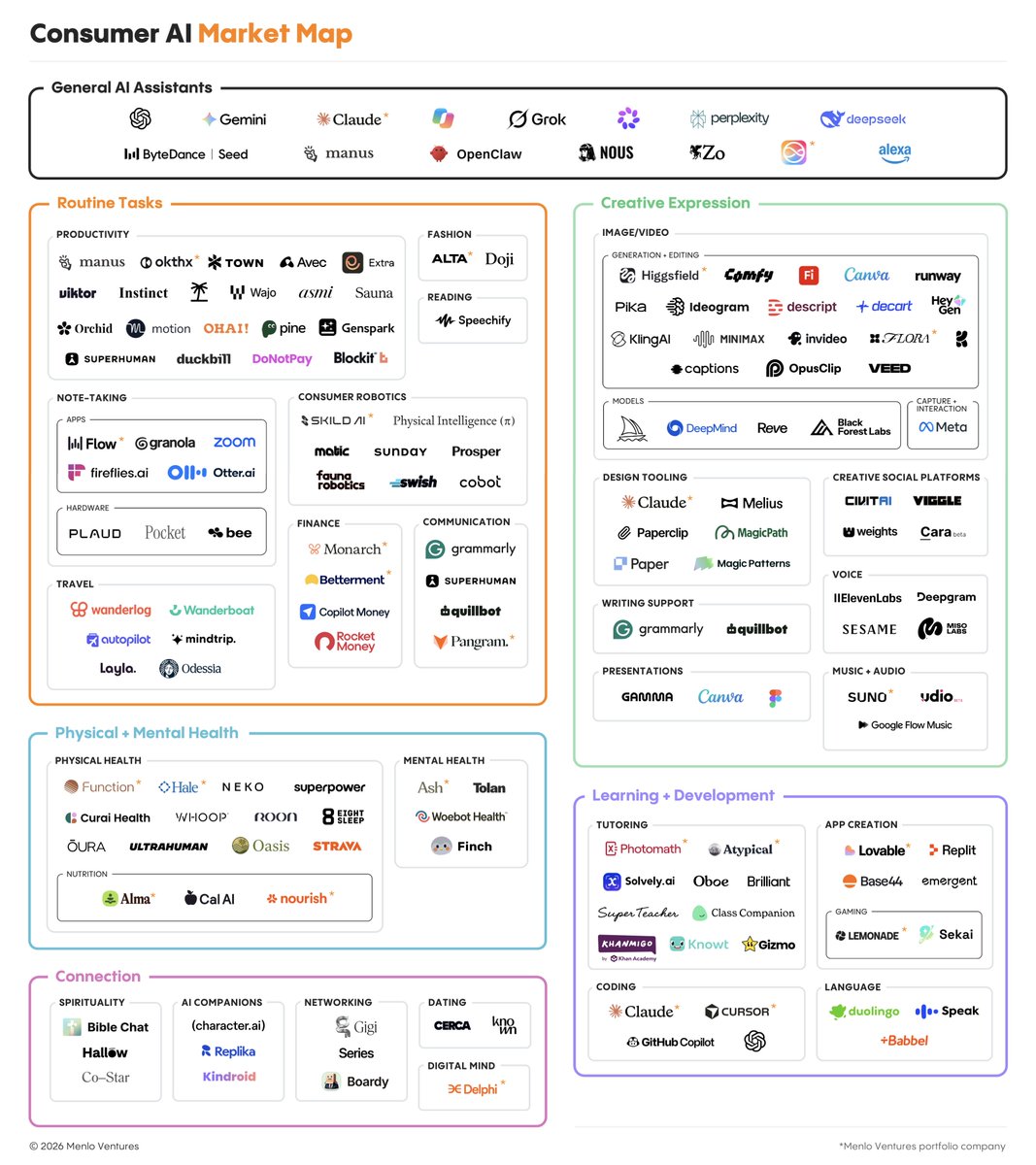
Our 2026 State of Consumer AI report mapped the field: assistants, creative tools, productivity, learning, health, finance, connection, and more.
Last year, admin tasks led AI adoption. This year, discovery and creation grew fastest.
AI doing more than outsourcing tasks, it's now expanding what people can do. https://t.co/YZ1a9rfbpX
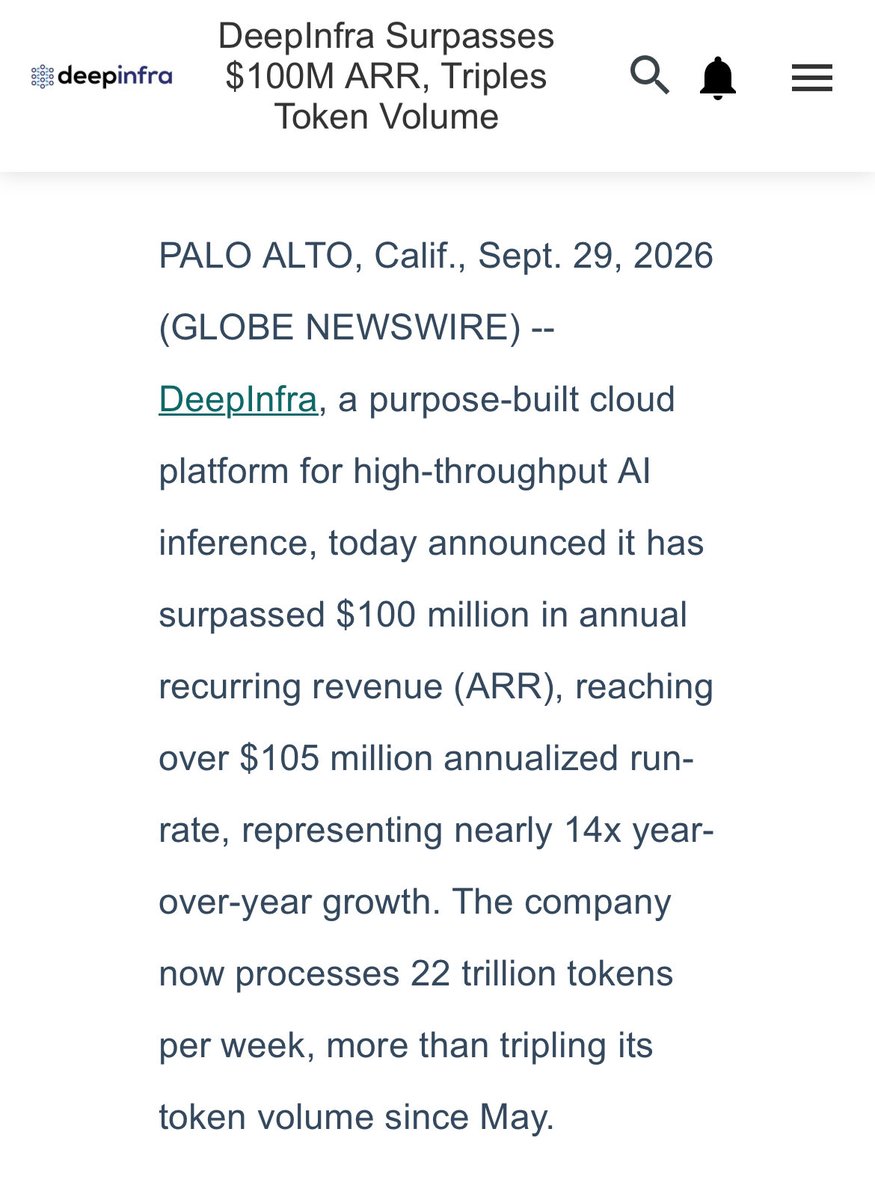
We just hit 100M ARR within 10 months of starting deployments.
We are in factory lines. On construction sites. In kitchens. In data centers.
Cleaning. Welding. Building. Cooking.
Deploying.
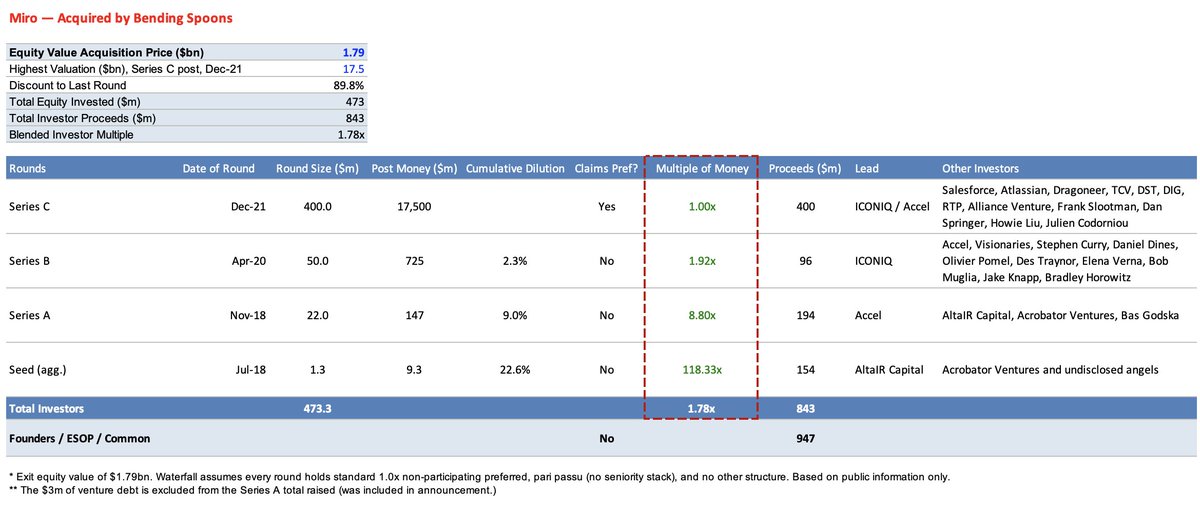
Bending Spoons acquires Miro for ~$1.79b. But who gets the 💰? My usual breakdown below 👇
*This is 89.8% below the last round, and <3x EV/ARR* 📉
Yet, investors are making $370m of profits on a company that was once valued at $17.5b! Not a glorious outcome but a 1.78x blended multiple on $473m invested. 👀
There are mainly three parties doing well here: (1) founders & team, (2) @altairvc, and (3) @Accel.
Most of the capital came in at the top, and the preference sheltered investors nicely from a 90% haircut... Not a great return after 5 years of equity cost of capital, but "better 1.0x than 0.1x".
So let's dive in:
*1) Founders, Team and Common shareholders will be sharing nearly $1b* 🥳
While I am sure they expected much better in 2021 at the height of the bubble, this is an acceptable outcome.
Miro can thank its frugality for this outcome: (1) the acquisition press release implies it still has $435m on balance sheet at closing, and (2) the company only ever raised $473m!
The cash added back to the $1.355b enterprise value effectively paid by Bending Spoons really helps (<3x ARR), and only the Series C claims pref.
*2) Accel is getting the most $ back, but not without regrets* 🫠
They are making c.9x from the Series A.
But they will have mixed feelings today, and will regret following on in the Series B and C which will return ~1.9x and 1.0x respectively. Both of which are obviously not great for six and five years of equity risk, respectively.
*3) AltaIR likely still returns >100x ‼️*: investing at pre-seed can pay off, even when growth investors do not make money.
*4) Disappointing outcome for growth investors. But the pref worked as intended.* 😮💨
The acquisition is a 90% haircut to the Series C price of $17.5b. However, the Series C investors will still make 1.0x back thanks to liq pref.
ICONIQ, Salesforce, Atlassian, Dragoneer, TCV, DST and @codorniou can all thank this mechanism, without which there would have been a few very awkward LP calls!
From an upcoming essay
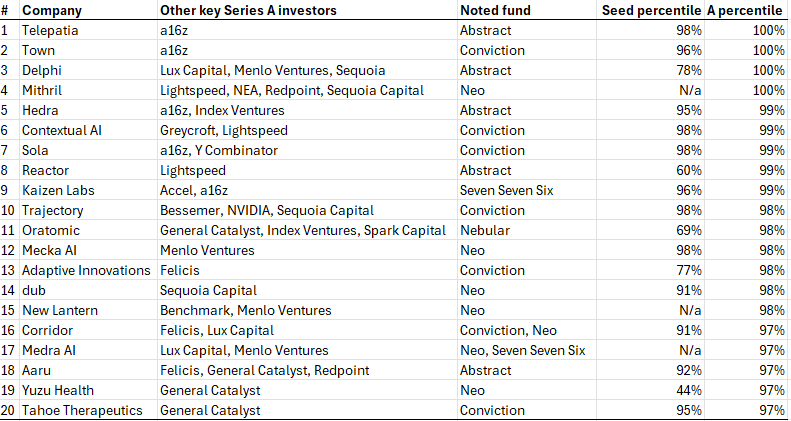
Since 2015, the chance of a 95th percentile Seed startup successfully raising Series A in a given quarter has halved from 50% to ~25%
More: the median Seed startup graduating to Series A used to come from the 10-15% of companies. Now it's the top 2-3%