Mheshimiwa Spika, kauli zako ni nzuri kusikiliza, lakini uhalisia wa Bunge la leo unaonekana kusema kitu tofauti kabisa.
Umesema jukumu kuu la Bunge ni kuisimamia Serikali. Swali la msingi ni hili: nani anaisimamia Serikali ikiwa Bunge lenyewe linaonekana kuogopa kuikosoa?
Bunge halikuundwa kuwa muhuri wa maamuzi ya Serikali. Halikuundwa kuwa jukwaa la kusifia utendaji wa Serikali. Halikuundwa kuwa idara ya mawasiliano ya Serikali. Liliundwa kuwa chombo huru cha kuhoji, kukosoa, kuchunguza na kuwawajibisha waliokabidhiwa mamlaka kwa niaba ya wananchi.
Kwa miaka ya karibuni, Watanzania wameona mawaziri wakifanya makosa bila kuwajibishwa, taasisi zikituhumiwa kwa uzembe na matumizi mabaya ya fedha za umma bila uchunguzi wa kina unaozaa uwajibikaji, na hoja nzito zikizimwa kwa wingi wa kura badala ya kujibiwa kwa hoja. Huo si usimamizi; huo ni ulinzi wa mamlaka.
Umesema Bunge si sehemu ya migogoro na malumbano yasiyo na tija. Lakini demokrasia haijengwi kwa ukimya. Demokrasia hujengwa na maswali magumu, hoja kali na mijadala huru. Serikali inayotaka Bunge lisiihoji, haijengi uwajibikaji; inajenga utiifu.
Historia ya miaka 100 ya Bunge haina maana kama Bunge la leo linashindwa kutekeleza wajibu wake wa msingi. Taasisi huhukumiwa kwa kile zinachofanya sasa, si kwa heshima ya jana.
Wananchi hawahitaji hotuba zinazosema Bunge linaisimamia Serikali. Wanahitaji ushahidi. Wanahitaji kuona mawaziri wakiwajibishwa. Wanahitaji kuona Kamati za Bunge zikifanya kazi bila upendeleo. Wanahitaji kuona Spika akilinda haki ya wabunge kuhoji Serikali, hata pale maswali yao yanapoiumiza Serikali.
Bunge linapokuwa dhaifu, Serikali huwa na nguvu kupita kiasi. Na Serikali yenye nguvu isiyodhibitiwa ndiyo mwanzo wa kuporomoka kwa utawala bora.
Kwa hiyo, heshima ya Bunge haitokani na ukubwa wa jengo lake wala umri wake wa miaka 100. Heshima ya Bunge hutokana na ujasiri wake wa kusimama mbele ya Serikali na kusema: “Hapa mmekosea, na mtawajibika.”
Mpaka siku hiyo itakapodhihirika kwa vitendo, kauli kwamba Bunge linaisimamia Serikali itabaki kuwa ahadi nzuri kuliko uhalisia unaoonekana mbele ya macho ya Watanzania.
Bunge lisipowajibisha Serikali, basi wananchi hupoteza ngao yao ya mwisho dhidi ya matumizi mabaya ya madaraka.
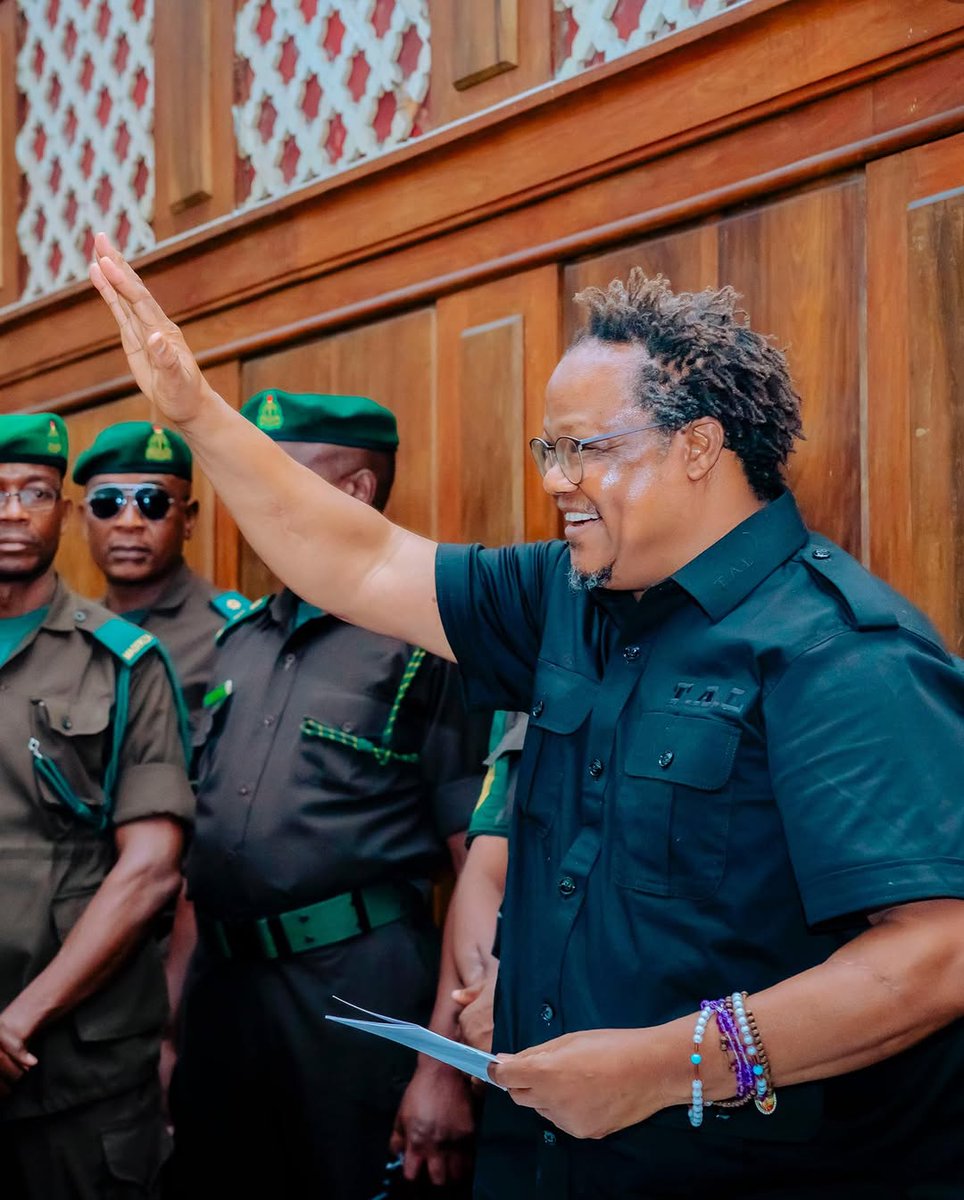
Siku nzima ya leo magari mawili ya polisi na polisi wakiwa wameziba nyuso zao na silaha kubwa kubwa, wamenifuatilia tangu nikiwa Urambo kwa kupokezana mpaka nafika Kigoma.. njiani nimesimama mara mbili kuwauliza shida yao ni nini kwangu hawakuwa na majibu ya maana.
Nimefika hapa Kigoma kila ninakopita na hapa Hotelin kwangu wamejaa maafisa wakiwa na nguo za Kiraia..
Mimi ni Mwanasiasa wa upinzani ninaetimiza wajibu wangu wa kikatiba… Chama chetu ni chama cha siasa ambacho kimesajiliwa na chenye haki zote katika Nchi hii.
Nimepokea taarifa nyingi kwa watu wema wakitaka niwe makini, wengine wanasema mimi na familia yangu tumetolewa maelekezo mabaya.
Nitatimiza wajibu wangu bila uoga wala hofu, hakuna mtu anaweza kuniondoa kwenye haki na wajibu wa kutetea Nchi yangu na watu wetu.
Ninawashauri watawala dhalimu kuacha kucheza na utulivu huu uliopo . Hofu haijawahi kuzaa amani, hofu huzaa hofu zaidi.
Hakuna siku nitakimbia Nchi yangu.
Waziri Wa Mambo ya ndani acha Kuvunja Katiba.
MLINZI WA KATIBA ? AU MVUNJA KATIBA?
Waziri wa Mambo ya Ndani hana Mamlaka yeyote ya Kuzuia au kutozuia Mikutano ikiyoruhusiwa Kisheria. Aidha siyo jukumu la IGP kutoa vibali vya mkutano au ruhisa ya mkutano.
Mukutano ya ndani ya vyama inaratibiwa na vyama vyenyewe na Jukumu la Polisi nikutoa Ulinzi tu.
TLS imepokea kwa mshtuko taarifa hizi na tutakaa na kuona namna ambayo tutachukua hatua za kisheria za ndani ya nchi na nje ya nchi dhidi ya yeyote atakaye jaribu kutekeleza agizo hili Haramu na Batili kwa kukiuka Katiba na sheria za nchi.
Tafsiri
“Guardian of the Constitution… or Its Chief Violator?”
The Minister for Home Affairs has no legal authority whatsoever to prohibit or permit meetings that are lawfully allowed under the law. Equally, it is not the mandate of the Inspector General of Police (IGP) to issue permits or authorizations for meetings.
Internal meetings of political parties are regulated by the parties themselves, and the role of the Police is strictly limited to the provision of security and maintenance of public order nothing more.
The Tanganyika Law Society (TLS) has received these developments with profound shock and concern .
We shall convene urgently to determine appropriate legal measures, both domestically and internationally, against not only against this position but also against any individual or authority who will attempt to implement this unlawful and void directive, in blatant violation of the Constitution and the laws of the land.
BAK MWABUKUSI
PRESIDENT, TANGANYIKA LAW SOCIETY (TLS)
Chama Cha Mapinduzi na Serikali yake, mtaendelea kukwepa uhalisia hadi lini?
Amri iliyotolewa na Bwana Katambi ya kuzuia mikutano ya hadhara ya vyama vya siasa imezua maswali makubwa kuhusu haki za kisiasa, uhuru wa kujieleza na mustakabali wa demokrasia nchini. Hatua kama hii inaweza kutafsiriwa na wengi kuwa ni njia ya kuzuia ushindani wa hoja badala ya kujibu hoja za wapinzani kupitia mjadala wa wazi.
Wananchi wanahitaji majibu ya maswali ya msingi:
Je, kuzuia mikutano ya hadhara kutapunguza ugumu wa maisha unaowakabili wananchi?
Je, kutarejesha imani ya wawekezaji na washirika wa maendeleo?
Je, kutatoa majibu kuhusu madai ya ukiukwaji wa haki za binadamu, yakiwemo matukio yaliyoripotiwa tarehe 29/10/2025?
Je, kutatoa majibu kuhusu tuhuma za ufisadi na utajiri mkubwa wa baadhi ya mawaziri na watumishi waandamizi wa serikali, ambazo zimeendelea kuzua mjadala na maswali mengi ya uwajibikaji?
Changamoto za taifa haziwezi kutatuliwa kwa kuzuia mikutano ya kisiasa. Wananchi wanatarajia kuona uwajibikaji, utawala unaozingatia sheria, taasisi imara na majibu ya hoja zinazogusa maisha yao ya kila siku.
Demokrasia yenye afya hujengwa kwa kuheshimu haki za wananchi za kukutana, kujieleza na kushindana kwa hoja. Serikali yenye kujiamini haipaswi kuogopa maoni tofauti; inapaswa kuyajibu kwa hoja, uwazi na matendo yanayojenga imani ya wananchi.
The Finance Act, 2026: What safeguard amendments could regulate Government Borrowing from the Central Bank?
1. The power to tax is one of the greatest powers of government. The power to create money is even greater. History teaches that this power can rescue nations in times of crisis, but it can also destroy currencies when discipline breaks down.
2. Governments are generally expected to borrow from financial markets, commercial banks, pension funds and the public through Treasury Bills and Treasury Bonds. Governments are discouraged from borrowing directly from their central banks because central banks possess a unique power: they can create money.
3. Also, when Government borrows from the public through Treasury Bills and Bonds, it must persuade investors to lend. Direct access to central-bank financing weakens this market discipline because Government no longer depends entirely on the judgement of investors.
4. The recent Finance Act, 2026, specifically the proposed amendments to section 69 of the Bank of Tanzania Act, has therefore generated considerable public debate. It introduces new provisions allowing Government, under specified emergency circumstances, to obtain temporary advances from the Bank of Tanzania.
5. Supporters argue that every country requires emergency financing mechanisms during disasters and major economic shocks. Critics fear that such provisions could become a back door through which governments gradually finance ordinary budget deficits by creating new money. Who is right? Both because the Finance Act, 2026 raises a question that goes beyond economics: not whether Government should ever borrow from the Central Bank, but whether the safeguards are strong enough to ensure that an emergency measure never becomes a habit.
7. Section 69(3) defines the conditions for drawing on funds from the Bank of Tanzania by the government: including the disaster clause under section 69(3)(a), the unforeseen economic shocks clause under section 69(3)(b) and the constitutional emergency clause under 69(3)(c).
8. Of the 3 provisions the riskiest one is section (b) because its current formulation is open ended and extremely broad stated as "an external economic event, circumstance or cause of exceptional magnitude and impact".
8. I propose it be replaced with something more objective like "an external economic shock certified jointly by the Minister responsible for Finance and the Governor of the Bank and reported to Parliament at its next sitting or within fourteen days, whichever is earlier."
The present wording is simply too elastic and could lead to problems. Why and how? Because it fails to define what constitutes: “exceptional” or “magnitude” or “impact” or “external economic event”? It does not guide what would qualify and what would not from an array of probable economic shocks including, a drought, a fall in gold prices, a rise in oil prices, a global recession, a decline in aid flows, a depreciation of the shilling and/or a failed tax collection target? As currently drafted, almost any significant economic difficulty could potentially be interpreted as falling within paragraph (b). That is where the real governance risk lies.
9. A parliamentarian's test: Whenever Parliament grants extraordinary powers to the Executive, it should ask three questions: Who decides? How much can be borrowed? Who checks the decision? The proposed section answers none of these clearly.
In this regard let me make some practical suggestions that might help preserve emergency flexibility while preventing possible abuse for consideration by our sitting Parliament.
SEE PART TWO
10. In this regard let me make some practical suggestions that might help preserve emergency flexibility while preventing possible abuse for consideration by our sitting Parliament.
https://t.co/sWFoN1dbxh creates transparency introduce New subsection (4)
‘The Minister responsible for Finance shall, within fourteen days of obtaining any advance under this section, submit to the National Assembly a report stating: (a) the nature of the unforeseeable or unavoidable event; (b) the amount advanced; (c) the applicable interest rate; (d) the proposed source of repayment; and (e) the expected impact on inflation, public debt and monetary stability.”
B. To prevent temporary advances from becoming permanent financing introduce New subsection (5) ‘Any advance granted under this section shall be repaid within one hundred and eighty days and shall not be renewed without prior approval of the National Assembly”.
C. To allow public scrutiny introduce New subsection (6) ‘The Bank shall publish in its Annual Report all advances granted under this section, including the amount, duration, purpose and repayment status”.
D. To protect Bank of Tanzania independence introduce New subsection (7)” Prior to granting an advance under this section, the Governor shall certify in writing that such advance is consistent with the Bank's mandate to maintain price stability and shall not materially undermine monetary stability.
11. This debate therefore is not whether the government should borrow from the Central Bank. Governments do, but must do it responsibly to avoid the negative consequences it could bring.
12. For example, during the COVID-19 pandemic, the US Federal Reserve undertook extraordinary purchases of government securities and other interventions that helped finance emergency spending and stabilise financial markets. South Africa's Reserve Bank supported financial stability during the pandemic while maintaining its institutional independence and avoiding routine financing of government deficits.
13. History also provides cautionary lessons.
Zimbabwe remains perhaps the most familiar challenging example in Africa. Faced with growing fiscal pressures and limited financing options, the government increasingly relied on its central bank to finance public expenditure. What began as a response to economic difficulties gradually evolved into persistent monetary financing. The result was runaway inflation that destroyed savings, eroded public confidence and ultimately forced widespread reliance on foreign currencies. Subsequent reforms have not succeeded to remedy the situation adequately,
14. Ghana's more recent experience illustrates a different but equally important lesson. Extensive financing of government deficits by the central bank contributed to inflationary pressures, exchange-rate instability and the painful economic adjustments that eventually required IMF support. Ghana did not experience Zimbabwe's hyperinflation, but it demonstrates how central-bank financing can weaken macroeconomic stability when fiscal pressures become excessive.
15. Tanzania will require to change its culture of opacity to avoid these shortfalls.
@SaageMartini@neglbaren@Megatron_ron So you mean all Muslims are terrorist? We have so many bad people who are Christians...The Epstein files are full of Christians