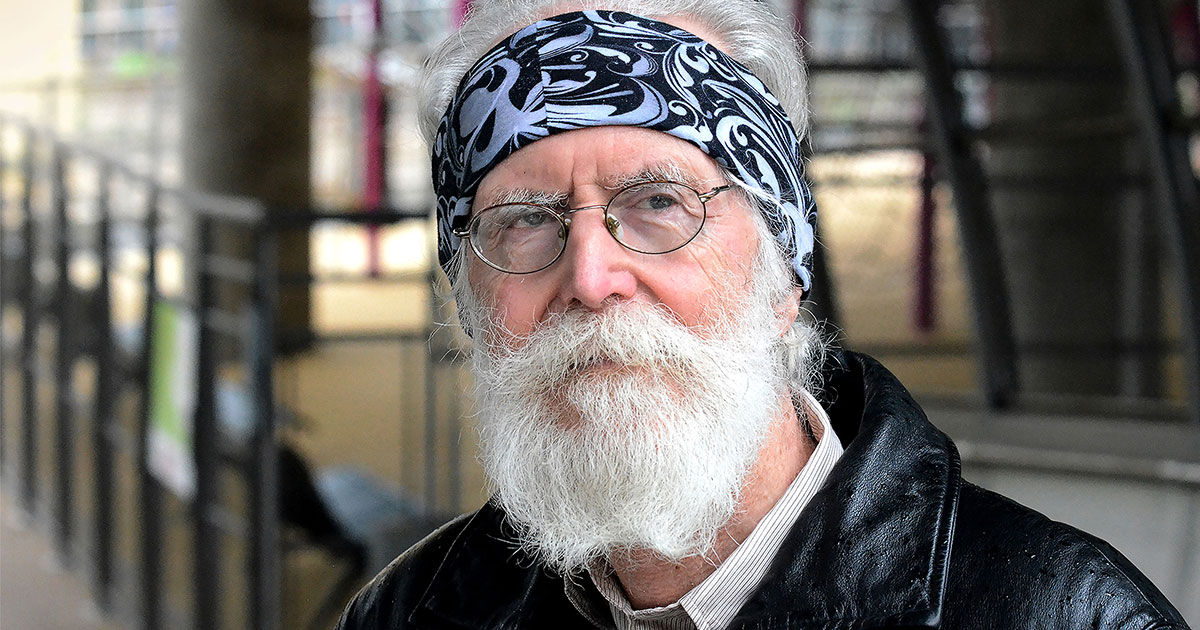
I wrote something mildly irresponsible:
A Bestiary of Modern Scientists
Featuring:
- The McScientist
- The Broker
- The Hipster
- The Socialite
- The Costanza
- The Late Blooming Theorist
I suspect many will recognize local fauna.
https://t.co/Q4rjLchByX
#AcademicTwitter
Announcements for Open Mind, an MIT Press Open Access journal for Cognitive Science
1. We are now “Diamond” access for the foreseeable future (at least 2 years at this point): this means there are NO CHARGES for publication (or submission, or anything)
https://t.co/LrUMGJ5fFK
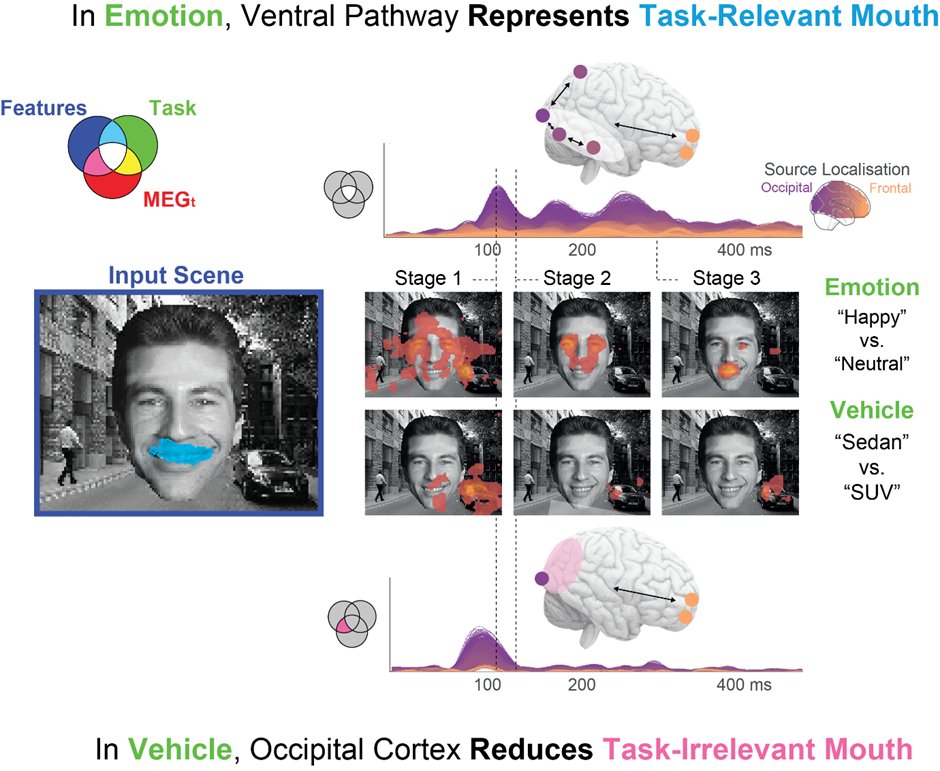
New @CurrentBiology paper from @SchynsPhilippe lab funded by
@wellcometrust: “Pre-frontal cortex guides dimension-reducing transformations in the occipito-ventral pathway for categorization behaviors” with @JiayuZhan @Joachim__Gross @drrobinince. We investigate how brain networks actively transform the same complex input scene images into their task-specific lower-dimensional manifolds to support flexible categorization behaviors. Read more from https://t.co/IbEMZtMZfQ…1/5
"An academic career in which a person is forced to produce scientific writings in great amounts creates a danger of intellectual superficiality"
- Einstein, 1956.
Michel Talagrand has been awarded the Abel Prize, one of the highest honors in mathematics, for applying tools from high-dimensional geometry to complex probability problems. @jordanacep reports: https://t.co/JonxMN34u6
Our latest work @MoMiLab_IMT by @GiadaLettieri2 and collaborators Dissecting abstract, modality-specific and experience-dependent coding of affect in the human brain | Science Advances https://t.co/3I1ObDbWya
Brief category learning distorts the perceptual space of complex scenes! Our new paper is now in Psychonomic Bulletin & Review: https://t.co/uP3cAYEDRH.
@DirkBWalther@mmack
Just released our Python EEG Handbook! It's designed as a very easy-to-follow learning guide for anyone looking to get started with EEG data processing using Python.
Save a copy of the PDF 📁 and share it around! 🔄 #EEG#Python#OpenScience https://t.co/PfSTpVLQfh
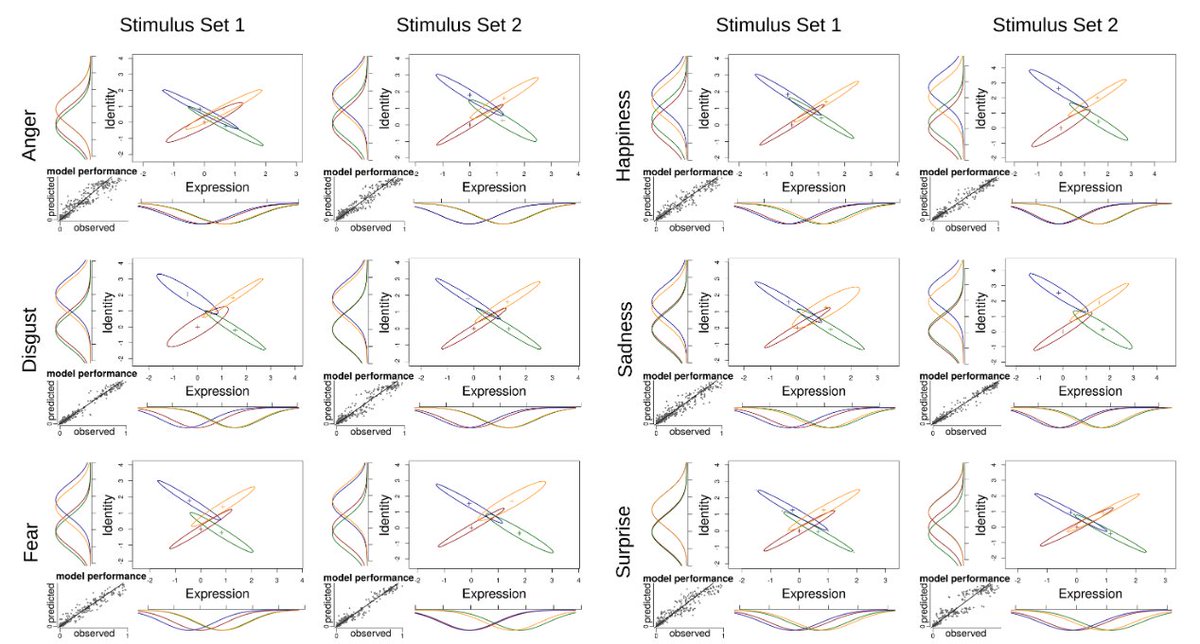
With strong stimulus control and a model-based analysis that differentiates between multiple forms of perceptual independence, we consistently find across 12 experiments that face identity and expression are perceived as a "Gestalt" (according to formal definition from SDT)
Now accepted for publication in @APA_Journals Emotion: "Multidimensional Signal Detection Modeling Reveals Gestalt-Like Perceptual Integration of Face Emotion and Identity." With @S_SanazHosseini as lead author. https://t.co/6IBbw1Q8tE.
🚨New preprint
Comparing the test-retest reliability of behavioral computational and self-reported individual measures of reward and punishment sensitivity in relation to mental health symptoms
@stefanovrizzi@anis_najar Lemogne and & @mael_lebreton 1/n
https://t.co/0UKPBx51Fn
What is the computation underlying confidence? With @DobyRahnev and @Mynameismedha, we compared distance-to-criterion models to Bayesian models in two experiments, and provided support for the distance-to-criterion models over Bayesian models. 1/13
https://t.co/5KB8cJTQb2
Thanks-36 authors went thru this in month after publication. Sig errors in method, reporting and inference, covered here in depth #LeakyUmbrella ☂https://t.co/KtwRX5zU2L