Not active here anymore. Follow me on: @laurastoinski.bsky.social
PHD candidate in the "Vision and Computational Cognition" group at @MPI_CBS and @UniLeipzig.
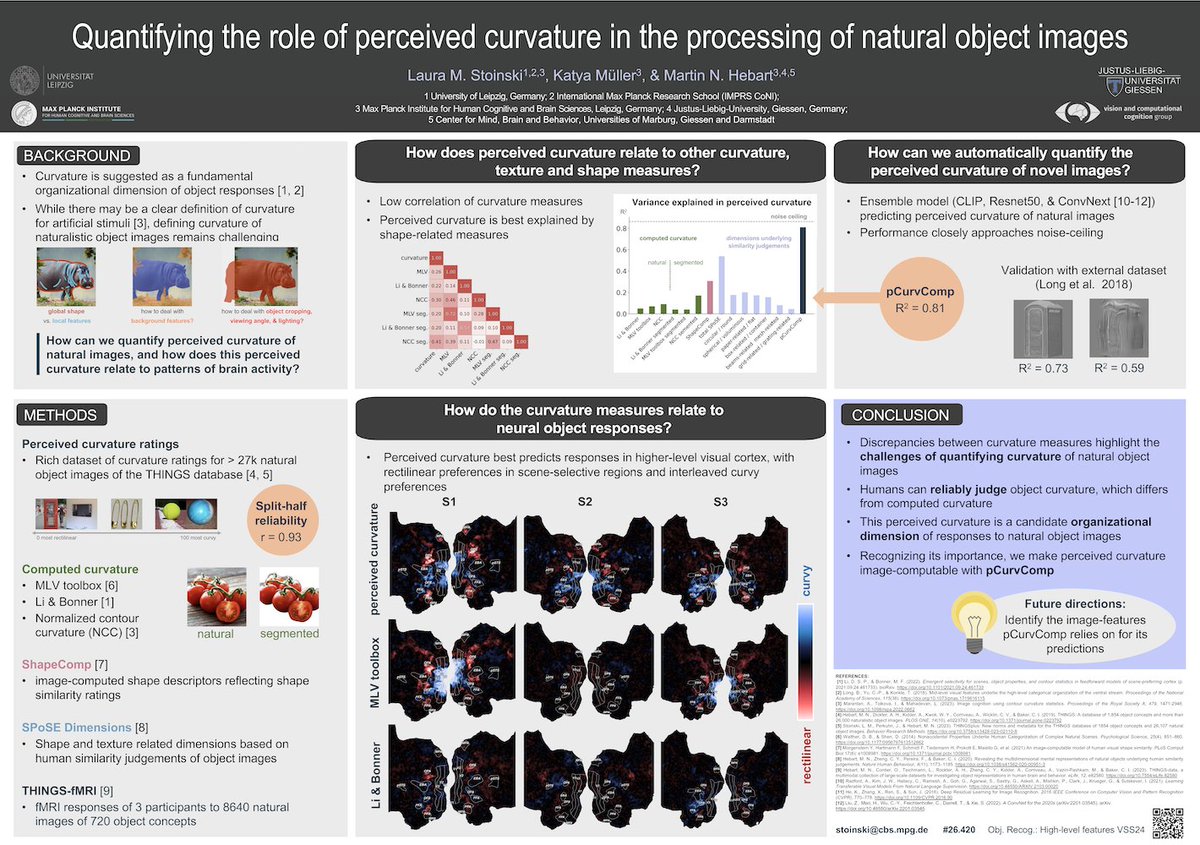
Hey @VSSMtg! Curious if people's perception of curvature organizes visual responses similar to image-computed curvature? Don't miss mine and @martin_hebart's Poster in the Pavilion today, 2:45 - 6:45 pm. Excited to discuss!
Excited to share our preprint! w/@martin_hebart
To understand how primates visually process objects in the world, we rely on both research in human and macaque IT. But what representations of object space are actually shared between them?
https://t.co/4lCyl1Fh5O
Quick thread🧵
Hugely excited that this work with @martin_hebart and @Chris_I_Baker is now out in @NatureHumBehav !!!
By moving from a category-focused to a behaviour-focused model, we identified behaviourally relevant object information throughout visual cortex.
https://t.co/NflwCQmKyI
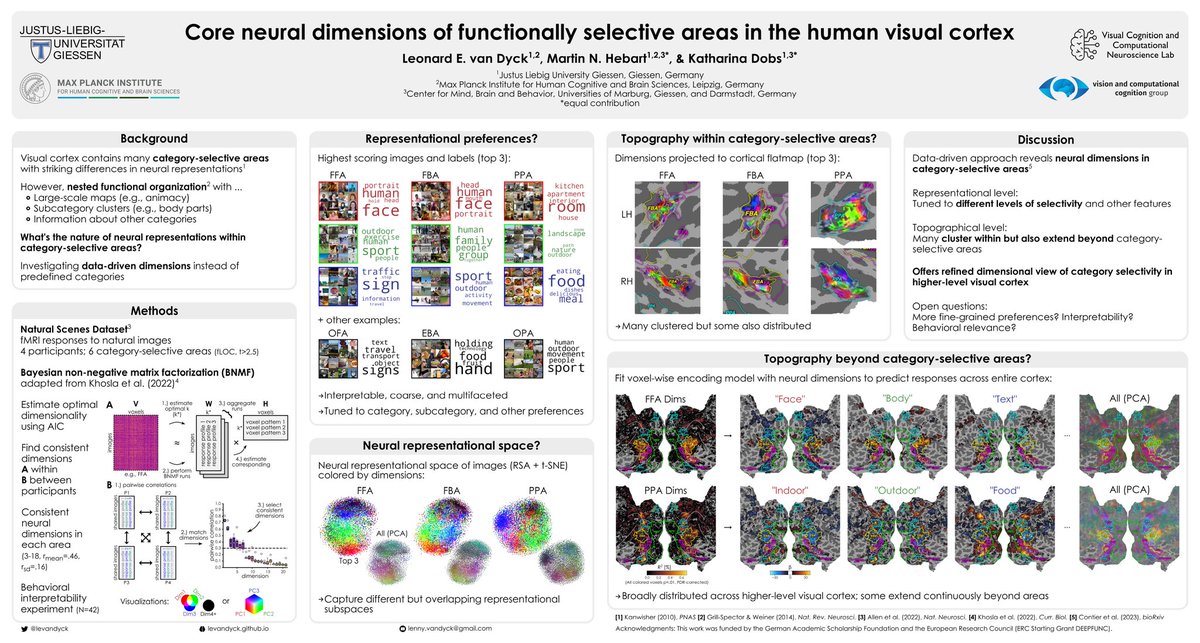
Excited to present findings from my first PhD project with @martin_hebart and @KathaDobs at #CCN2024
If you're into visual cortex, functional selectivity, and/or representational dimensions, make sure to stop by poster P154 today! 🧠🌈
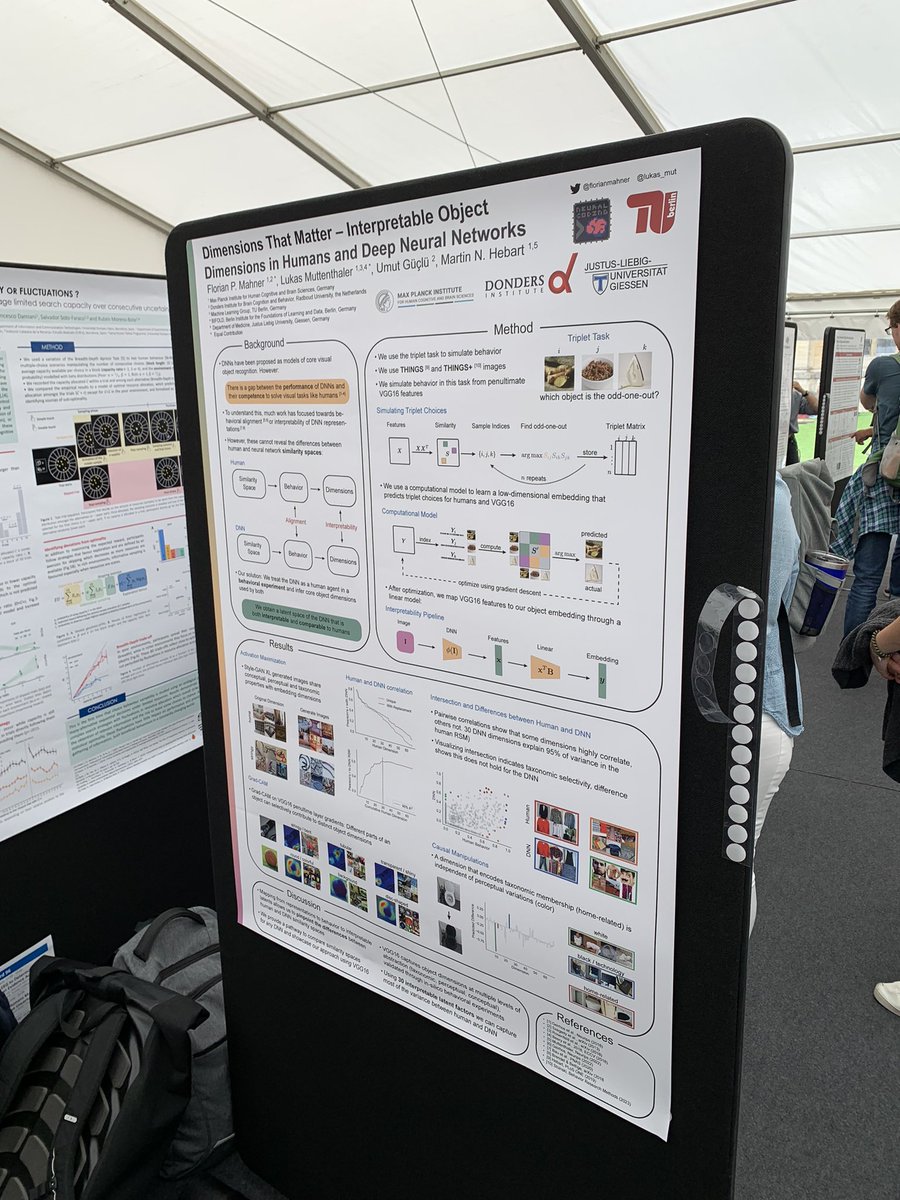
What makes humans similar or different to AI? In a new study, led by @florianmahner and @lukas_mut and w/ @umuguc, we took a deep look at the factors underlying their representational alignment, with surprising results. https://t.co/w1YNZhS6ZW 🧵
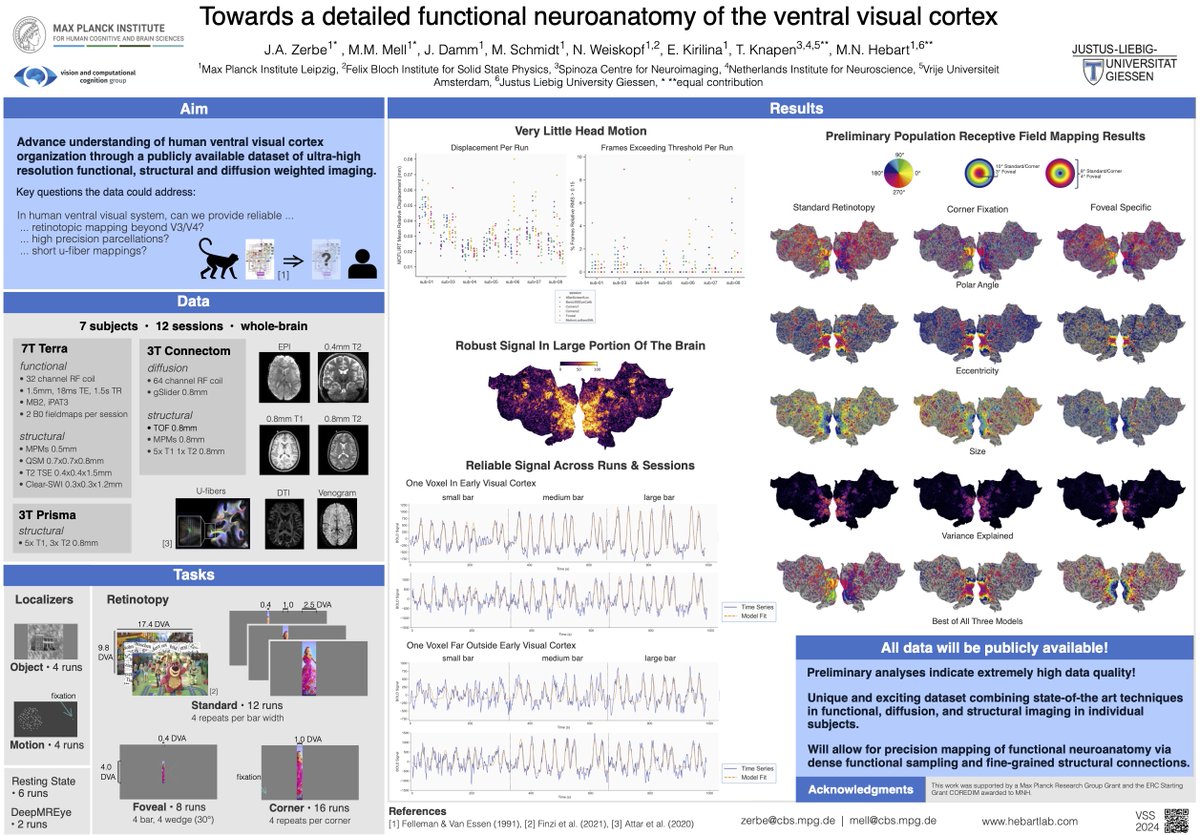
Check out Josefine’s and @MaggieMaeWokeUp's amazing dataset merging state-of-the art techniques in functional, diffusion, and structural imaging! Today 8:30 am – 12:30 pm in Banyan Breezeway @VSSMtg@martin_hebart@Tknapen
How does our brain enable us to make sense of our visual world? 🗺👀🧠
Excited to share our latest work with @Chris_I_Baker and @martin_hebart : “Distributed representations of behaviorally relevant object dimensions in the human visual system”
https://t.co/fN1GK5Gjf0
🧵 1/n
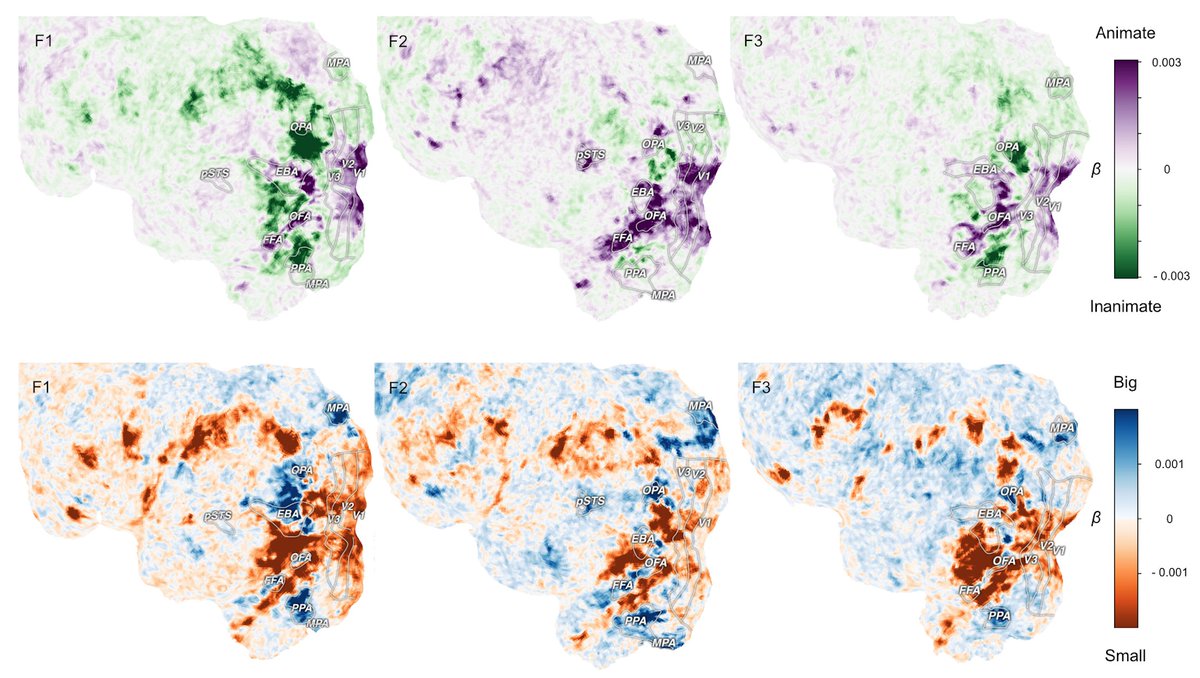
Hi #VSS2023! I'm excited to share my poster #316 tomorrow, providing a fresh perspective on the animacy, size & curvature organization for hundreds of objects in THINGS-fMRI. We explore factors modulating animacy-size preferences & introduce a rich dataset of perceived curvature!
Finally, PhD @StoinskiLaura revisits the animacy, size & curvature organization in visual cortex for hundreds of categories using THINGS-fMRI. She updates our understanding of these dimensions, reveals modulatory factors & introduces a massive new dataset of perceived curvature.
(3) Rich metadata: THINGS-data allows for testing countless hypotheses, using semantic feature norms for all 1854 objects, typicality ratings for 53 high-level categories, or diverse ratings incl. animacy, size or manipulability. @StoinskiLaura 7/n https://t.co/xQzoC7nQ8b
What hypotheses can be tested? THINGSplus (@StoinskiLaura https://t.co/Fx03q5MYlM) contains rich metadata about objects, allowing to address a wide range of questions. We demonstrate this potential by replicating seminal findings on object animacy and size on a large scale.
I’m so excited to finally see THINGS-data released! Working on this fMRI dataset was an awesome challenge for me and motivated me to learn a ton. So many thanks to @martin_hebart ,
@Chris_I_Baker , @lina_teichmann and everyone involved for bringing me on board! 1/n
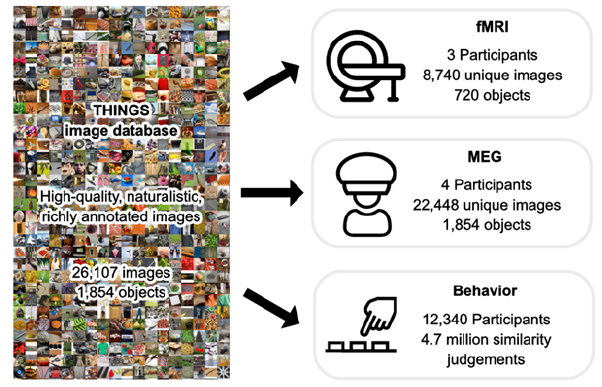
I'm thrilled that THINGS-data is now online! We provide 3 massive datasets of fMRI, MEG, & behavior in response to up to 1854 objects and >22k images. We hope this will allow studying objects in vision, memory & language with unique semantic breadth! Link: https://t.co/hCTpymmRjU
Our visual world contains 𝕥𝕙𝕚𝕟𝕘𝕤, like plants, people, animals, or vehicles. But there is also 𝕤𝕥𝕦𝕗𝕗, what these things are made of, like glass, metal, or hair.
But how do we make sense of stuff? How do we structure it in our minds? 🧵 1/n
https://t.co/XKoVU0sgNI
I am delighted to see VICE being accepted at #NeurIPS2022. It has been a long journey but it was worth every effort! Can't tell how excited I am. Thanks to all my wonderful co-authors! It's time to call it a day.
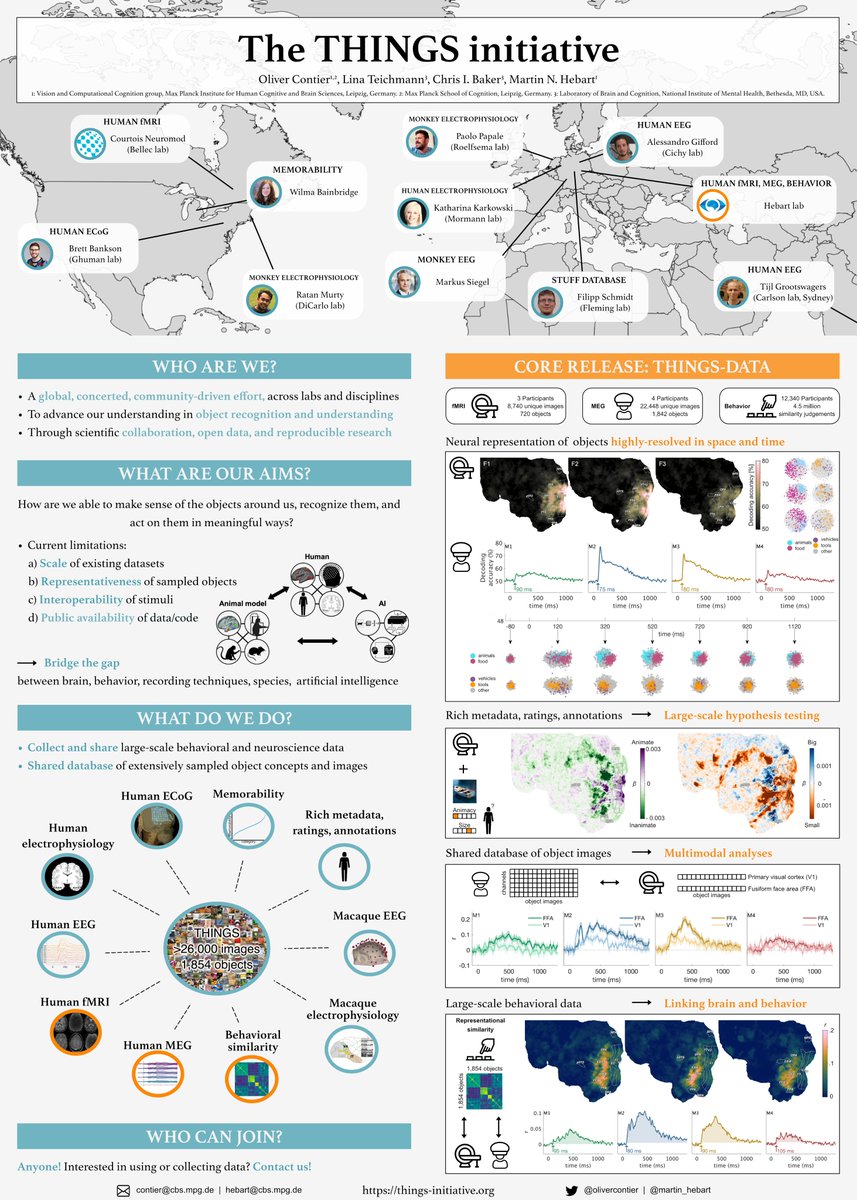
Excited about the potential of large-scale open data? Visit our #PuG2022 poster (tomorrow 14:30-16:00): Introducing the THINGS initiative, a joint effort for collecting behavioral/neuro data in object recognition & understanding using the same image database! With @martin_hebart
🥳 I’m happy that our paper “Feature-reweighted representational similarity analysis: A method for improving the fit between computational models, brains, and behavior” is now published in @NeuroImage_EiC . Why would you want to use FR-RSA? https://t.co/4RAYAGA6Iy 1/n
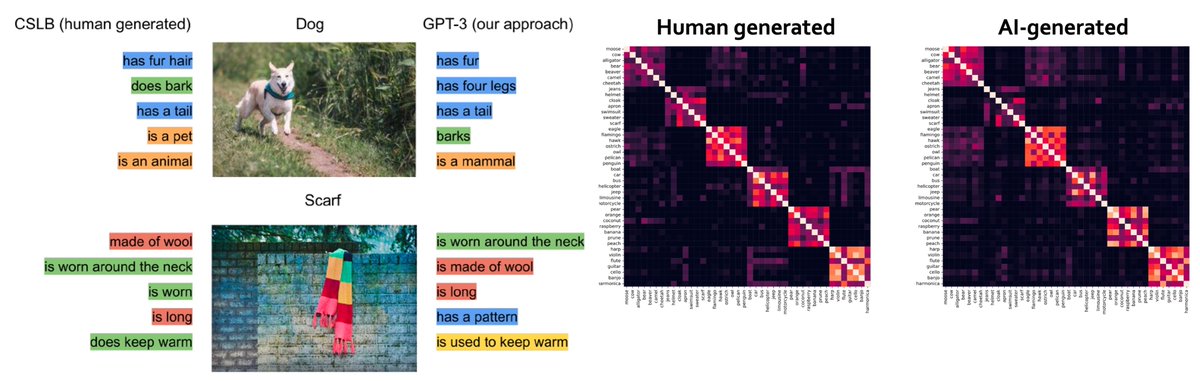
Please come to the poster of @hannes_hansen_ on Sunday morning 33.312 in the Banyan Breezeway at #VSS2022 ! He will show you how he used the large language model GPT-3 to generate human-level semantic feature norms for 1854 objects.