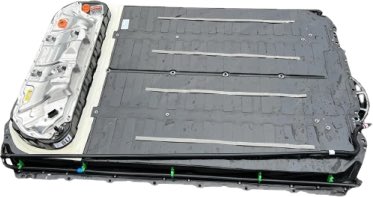
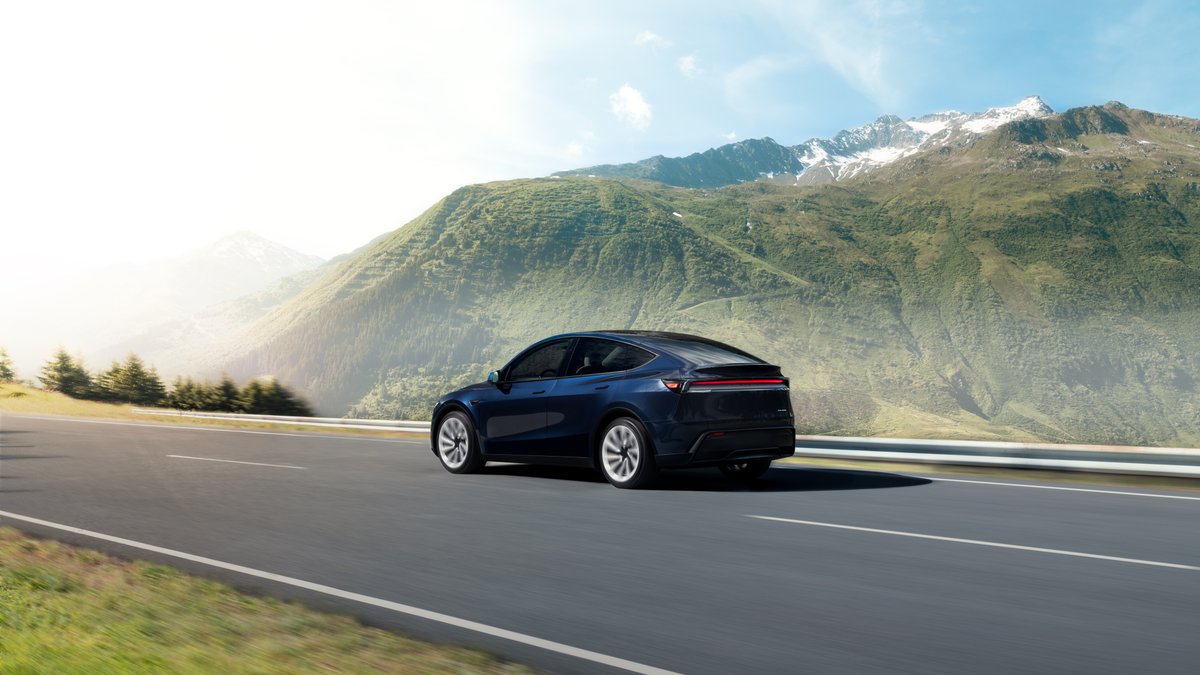
Mein letztes Verbrenner Erlebnis sah so aus.
Dann bin ich (ohne je eine Probefahrt gemacht zu haben) zu Tesla gegangen und habe gesagt: Gebt mir ein Auto.
Seit diesem Tag vor genau fünf Jahren musste ich nie wieder wegen eines Keilriemens, merkwürdigen Motorlichtern oder einer rostigen Auspuffanlage zur Werkstatt. Ich steige, egal ob draußen -10 oder 35 Grad sind, in ein 21 Grad warmes Auto und fahre einfach los.
Das Auto öffnet schlüssellos, spielt meine Lieblingssender, aktiviert meine Klimaeinstellung und erkennt meine Sitz- und Spiegelpostition vollautomatisch. Mittlerweile spricht es sogar mit mir, das es @grok hat.
Alles in dieser Welt ist irgendwie einfacher, wenn man Tesla fährt.
The creator of Linux just publicly called out the AI hype. Word for word.
Linus Torvalds took the stage at Open Source Summit 2026 and said this:
"When I see people saying 99% of our code is written by AI, I literally get angry. Because those same people — I can pretty much guarantee — 100% of their code is written by compilers. But they never say that."
He is not anti AI. The Linux kernel saw a 20% jump in submissions this release because of AI tools. He uses it. He gets it.
His point is something most people are too afraid to say.
AI is a productivity tool exactly like compilers were. Compilers boosted programming by 1000x. AI adds another 10x on top. Enormous. But nobody says "the compiler wrote my code." So why are we saying AI wrote it?
He also flagged something nobody is talking about.
AI is flooding small open source projects with drive-by bug reports. Someone runs a prompt, files a report and disappears when asked for a patch. Maintainers with one or two people are drowning trying to keep up.
"Sometimes AI reports a bug and when you ask for more information the person has done that drive-by and does not even answer your question. That is the real burnout issue."
And his final warning was the sharpest of all.
"People who do not understand the complexity of systems will prompt systems and write processes that will fail."
The AI hype crowd is very loud right now.
Linus has been building real systems for 35 years. When he talks, engineers listen.
Full interview here:
https://t.co/LmXJtvKc4O
The French hate air conditioning.
So Paris built a 120-kilometre machine under its streets for producing cold.
It’s called Fraîcheur de Paris, and it does for summer heat what district heating did for winter: centralise the problem.
Instead of every museum, office, hotel, hospital and shop bolting its own cooling plant onto the building, Paris moves cold through pipes.
The network sends water chilled to 2 to 4°C through buried supply lines. The water enters a connected building, absorbs heat through an exchange station, then returns at 12 to 14°C to be cooled again.
It essentially functions with two pipes. One carries the cold out, the other carries heat back.
The production plants cool the circuit from 12°C to 4°C. Some sites use the Seine as a heat sink. In colder periods, the system can use the river’s own temperature for free cooling, which means the machines work less and the electricity demand drops. The Seine water doesn’t become the building water. It stays separate, passing temperature across heat exchangers.
The scale is pretty strange when you see it written down though.
It's got 15 production sites, 4 storage sites, 120 km of underground network with 924 subscribers. This has resulted in 7 million square metres cooled, and 493 GWh of cooling sold.
A cold utility running beneath one of the densest cities in Europe.
The Forum des Halles has been cooled this way since 1979. The Louvre since 1986. Galeries Lafayette, Opéra Garnier, Hôtel de Ville, Station F, La Samaritaine and the National Assembly all sit on the same idea. Tourists stand in the Louvre looking at paintings while a municipal cold loop does part of the dull work below ground.
The boring part is the breakthrough.
Cold can be stored at night in chilled water or ice, then used during daytime peaks. The network is monitored from a control room with more than 125,000 control points. A delivery station inside a building takes 5 to 7 times less space than a standalone cooling installation and avoids the roof and façade clutter that turns cities into compressor farms.
That matters because conventional air conditioning solves heat by moving it somewhere nearby. In a dense city, thousands of private machines mean thousands of outdoor units rejecting heat into streets, courtyards and roofs, plus refrigerants, noise, vibration and maintenance spread across every building.
Paris’s public cooling network has a stated coefficient of performance of 4, against 3 for a wet standalone system and 2 for a dry standalone system. Against an equivalent set of autonomous installations, Fraîcheur de Paris says the network gives 100% higher energy efficiency, 35% less electricity use, 90% fewer refrigerant-fluid emissions and 50% lower CO2 emissions.
The climate backdrop is the real reason this exists.
Paris ran a full crisis exercise called “Paris at 50°C” in 2023. Météo-France’s 2050 reference trajectory for France points to heatwave days becoming five times more frequent, hot nights rising sharply in urban centres, and some local extremes around 48°C becoming possible.
The city signed a 20-year concession in 2022 with Fraîcheur de Paris, owned 85% by ENGIE and 15% by RATP. The contract is worth a projected €2.4 billion. The plan is to extend the network by 158 km by 2042, add 20 production plants and 10 storage sites, and reach more than 3,000 subscribers, including hospitals, nurseries, schools and care homes.
This is basically the infrastructure version of admitting that summer is becoming a public systems problem...
Since the 1980s, the Sahara has shrunk by roughly 8%. Satellite data show widespread greening, a pattern that is playing out across the planet.
Around 50% of Earth's vegetated land has become significantly greener, an area roughly three times the size of the United States.
The dominant driver is not rainfall or land use change, it is rising atmospheric CO2.
Higher CO2 lets plants photosynthesize more efficiently, they lose less water, they tolerate heat and dryness better.
The effect is strongest along desert margins, across the Sahel, the Middle East, Australia's interior and the southern edge of the Sahara.
Rising CO2 is making the deserts, and the planet as a whole, greener.
Tesla registered 5,111 vehicles in Germany in May, up 322% from a year earlier, according to data released by Germany's Federal Motor Transport Authority.
Tesla’s sales numbers across Europe in Q2 continue to look very strong. https://t.co/C4zeHmakE8
Un ingénieur en sécurité de SpaceX découvre CIFSwitch, la plus vieille faille (19 ans) critique de sécurité active sous certaines distros Linux (en s'aidant de leur IA, parce que c'est comme ça que ça marche, maintenant, la détection de vulnérabilités) https://t.co/KY3XBzQjYe
Comment mieux supporter les canicules en ville ? Quelles sont les solutions qui fonctionnent le mieux ?
On a fait le test à Paris lors d’une vague de chaleur il y a 2 ans dans #SurLeFront avec @TanguiLeDantec et les résultats sont sans appel !
Vidéo complète dispo sur la chaîne YouTube ⤵️
https://t.co/erUkTfrnpW
Glad Dutch media give a lot of attention to the V2G demo of KIA and Hyundai. Using the batteries of cars to SUPPLY energy to the grid during peaks could be a major solution for the "world leading grid congestion" in the Netherlands.
https://t.co/AXvvoEEzWs
A new $116 million @Tesla Megapack battery energy storage facility has started construction in Belgium. The 700MWh big battery will use 180 Megapack units.
Work has already started, with testing and commissioning expected to be completed by the end of 2027. https://t.co/HHZfrV1nKU
@SawyerMerritt@SpaceX Although Robinhood participates, Europeans with a Robinhood account cannot enable US IPO stuff.
I don't think the other brokerages offer any option for European citizens, so it looks (so far) like we are barred from participating.
@SawyerMerritt@Tesla 🤯That comes at ~$6/home/month over 20 years (maintenance excluded, but I doubt it would be significant).
Interesting metric to track.
LFP batteries loose about 1-2% capacity per year after 10 years, so they can be used for ~50 years without major issue, then recycled 💪
~58€/foyer/an, ou 5€/foyer/mois (étalés sur 20 ans) pour s'assurer qu'une maison n'est plus jamais soumise à une coupure d'énergie et qu'elle profite des meilleurs tarifs sur l'électricité et d'un max d'énergies renouvelables, systématiquement. C'est pas beau, ça ?
Le calcul ? $60M pour 44.000 maisons, couvrant leurs besoins énergétiques pendant 2h.
2 heures, ce n'est pas beaucoup, mais quand on parle de coupures d'énergie, c'est généralement suffisant, et quand on parle de coûts d'énergie élevés, on parle en général des pics de consommation, qui ne durent pas 2h.
J'imagine que ce prix (5€/foyer/mois) va encore diminuer avec le temps, mais nous sommes déjà à un niveau tout à fait acceptable de coût pour réduire considérablement l'utilisation d'énergie fossiles avec le trio panneaux solaires-éoliennes-batteries.
Les batteries à échelle industrielle, c'est *la* meilleure solution en termes de rentabilisation, maintenance, efficacité.
Les batteries LFP, sans Cobalt, perdent entre 1 et 2% par an de capacité après 10 ans (on peut donc raisonnablement les utiliser pendant 50 ans), puis elles sont recyclables à +90% pour refaire des batteries, dont la capacité sera supérieure (par kilogramme de matière) grâce aux avancées technologiques.
A new $60 million @Tesla Megapack battery energy storage system is now online in New Zealand, capable of powering the equivalent of around 44,000 homes for up to two hours.
The battery stores largely renewable energy when demand is low and supplies it back to the grid when demand is high.
Contact Energy CEO Mike Fuge described the battery storage system as “a bit like the Swiss Army Knife of the electricity system,” capable of storing excess renewable energy generated during off-peak periods and discharging it rapidly when demand spikes.
This Glenbrook Ohurua Battery 1, features 56 Tesla Megapack 2XL units, has a duration of up to 2-hours and can respond to grid signals in 0.2 seconds.
GOOD NEWS 🇨🇳 Tesla just unlocked a massive revenue lever in China by opening its Supercharger network to non-Tesla owners via WeChat prepaid cards 🔥
This move effectively shifts Tesla from a private automaker into a universal energy provider, acting much like a traditional gas station network that profits off every brand on the road 🔥
The program offers two distinct entry points:
🔋 There is a Trial Pass priced at 79 RMB (approximately $11.63 USD) for 50 kilowatt-hours of energy, which equals roughly 1.58 RMB ($0.23 USD) per kilowatt-hour and remains valid for 30 days.
🔋 For higher mileage drivers, the Enjoy Pass costs 599 RMB (approximately $88.16 USD) for 400 kilowatt-hours, dropping the cost to about 1.50 RMB ($0.22 USD) per kilowatt-hour with a 180-day expiration window.
This strategy impacts Tesla's financial performance in three distinct ways:
💰 Upfront working capital, which represents the operating liquidity used to fund day-to-day business, scales instantly. Capturing an estimated baseline of 100,000 active non-Tesla subscribers on the 599 RMB, or roughly $83 USD, Enjoy Pass injects 59.9 million RMB, or about $8.3 million USD, in immediate cash float. This cash arrives months before the energy is actually delivered, mimicking a gym membership model where revenue is locked in upfront before services are rendered.
🔋 Asset utilization rates will spike across the network. Adding just two non-Tesla charging sessions per stall daily across 1,000 open stations, assuming an average of ten stalls per station, drives an extra 600,000 kilowatt-hours of daily energy sales. At an average pass rate, this incremental volume generates roughly 328 million RMB, or about $45 million USD, in high-margin annual revenue. This surge directly accelerates the payback period on Capex, which means the capital expenditure required to manufacture and install the physical charging hardware, shifting the network from an infrastructure cost center into a highly efficient profit engine.
📈 Customer acquisition turns into a powerful, low-cost marketing pipeline. If those 100,000 rival EV drivers regularly route to Superchargers, a conservative 1% vehicle conversion rate yields 1,000 future Tesla buyers. At an average vehicle price of 220,000 RMB, or roughly $30,500 USD, this ecosystem funnel generates 220 million RMB, or about $30.5 million USD, in organic future sales. This familiarity effectively reduces the long-term customer acquisition cost, which is the total marketing spend required to win over a new buyer from domestic competitors.
Uncut grass keeps the ground at around 19.5°C
Grass cut to 10 cm raises the ground temperature to about 24.5°C
Bare ground in the middle of summer rises to over 40°C
It's important to raise awareness #NoMowMay
In the Netherlands 🇳🇱, FSD clearly recognizes the yellow lane markings and stays well positioned in the correct lane.
Strong performance from Tesla Vision.
Great news, retail investors will officially be offered @SpaceX IPO shares!
SpaceX shares will be offered to retail investors through the brokerages of Charles Schwab, Fidelity, Robinhood, SoFi and E*Trade.
"Any purchase of our Class A common stock in this offering through these platforms will be at the same IPO price, and at the same time, as any other purchases in this offering, including purchases by institutions and other large investors." - SpaceX