geçen hafta claude ile 6 saat dijital ayak izimi sildim.
sonuç: 47 data broker listingi kaldırıldı. 12 ölü hesap silindi. 3 arama sonucu bastırıldı.
nasıl yaptım, adım adım. thread.
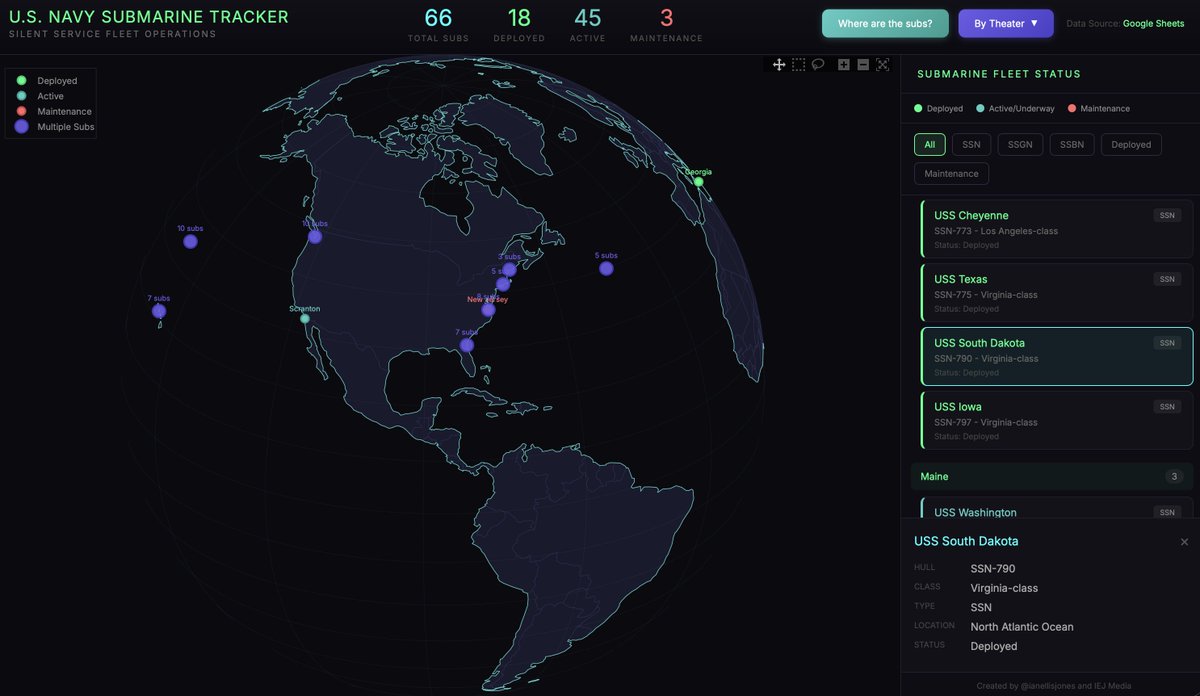
Interactive U.S. Navy sub tracker live for @iejmedia subscribers.
Note: Created using publicly available info and sources including government websites and releases, DVIDS, AIS, and OSINT/ship spotter accounts. Precise locations not revealed for opsec.
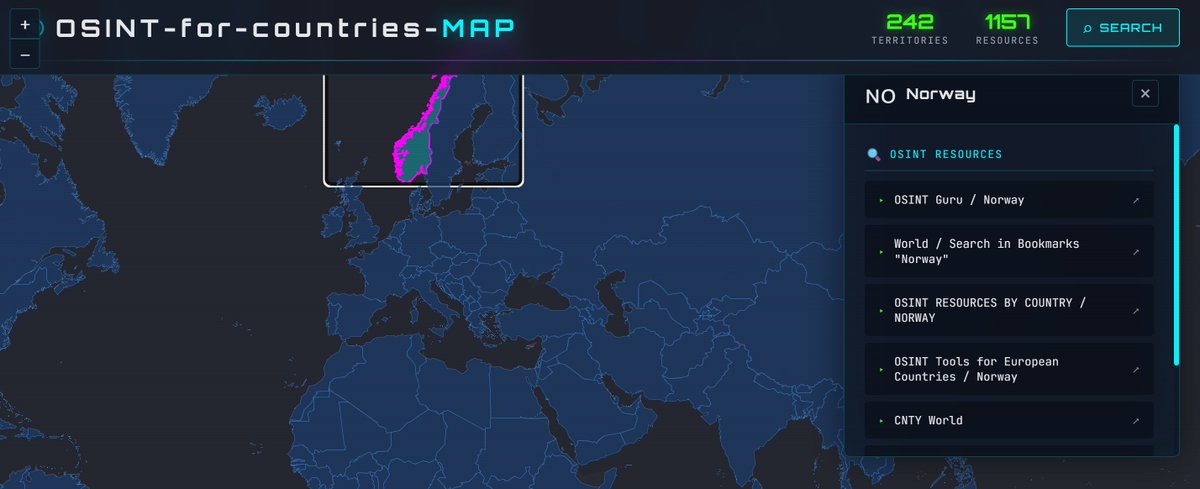
OSINT WORLD MAP
Together with @Sox0j, we created OSINT WORLD MAP — a curated collection of links to OSINT tools, websites, and projects, organized by geographic location. It includes:
• 193 UN member states
• Dependent territories
• Special administrative regions
• Partially recognized states and disputed territories
• Other regions
https://t.co/6o8BM6Y9xK
Just select or search for the country you need — and that’s it. All relevant OSINT tools and resources are listed right in front of you. If you have new links make PR here https://t.co/hVRNJZ7H8N
I've held this in for a while now...
But as we're heading into 2026, it's time for real change in the streaming world. I've talked to creators at every level—from small grinders to the top names—and it's clear the industry needs transparency. So here it is: the unspoken truths of live streaming. No TL;DR here. If you're serious about growing or understanding this space, read it all.
1. The Clipping Monopoly
The industry is dominated by a small network of clippers and the high-rollers who fund them.
Viewers have largely shifted from watching full streams to consuming short highlights on platforms like TikTok, YouTube Shorts, and Reels. Platforms know this, so the big players invest heavily in controlled creators, paying elite clippers to promote only their circle.
Clippers prioritize "proven" content for easier payouts—think high-view clips from established names like Adin Ross, where the ecosystem rewards loyalty. This creates a closed loop: the top 0.01% funds and controls the attention economy. You'll notice the same faces dominating short-form feeds, often connected through collabs or management. When someone like Adin seems to dip, a "new" personality suddenly emerges tied to him, reigniting the hype. It's not organic—it's strategic network-building.
2. Viewbots and Advanced Chatbots
Not every big creator uses them (I'm not accusing specifics like Adin), but the top tiers often share exclusive bot services from the same providers.
These aren't basic bots anymore. High-paying clients get AI-powered chatbots that interact realistically—responding to stream events, conversing with each other, and even "reacting" to voice/audio cues in real time. It's sophisticated enough to mimic genuine engagement, inflating viewer counts and chat activity. Platforms struggle to detect the best ones, and this gives an unfair edge in algorithms and visibility.
3. Studios and Management Agencies
Many top creators aren't fully independent—they're backed by professional studios that also manage rappers, celebrities, and influencers.
This explains the constant crossovers: celebrities and artists appearing on streams. It's essentially a modern Hollywood network—deals are brokered for exposure, collabs, and sponsorships. Creators trade a percentage of earnings for access to these connections, turning streaming into an extension of the entertainment industry elite. If you're not invited to the table, breaking in is tough.
4. Shifting Monetization Trends
Early 2025 saw heavy reliance on platform incentives (like Kick's Creator Incentive Program, tied to performance metrics such as concurrent viewers and stream hours). Many "farmed" these for guaranteed payouts.
But by mid-2025, the meta shifted toward lucrative gambling sponsorships and affiliate deals—especially on platforms like Kick, where slots and casino streams exploded due to lax rules and ties to sites like Stake. Top creators now boast massive earnings from these, often promoted loudly to attract viewers. However, controversies around addiction risks and platform changes (like Kick restricting certain gambling payouts) have displaced some, pushing others to diversify.
5. The Subscriber Illusion
Ever wonder how some channels rack up thousands—or millions—of subs overnight, with explosive subathons?
Behind the scenes, managers and agencies often orchestrate "sub farms": routing payments through controlled accounts so creators recoup 95% (or more) while inflating numbers. This triggers social proof—real viewers see the frenzy and feel pressured to join in, fearing they'll miss out. It's basic psychology: perceived popularity drives actual engagement. Platforms benefit from the hype, but it distorts true growth.
6. The Wildcard: Independent Platforms
Mainstream sites like Twitch and Kick are often intertwined with these networks—agencies and big creators influence discoverability.
Platforms outside their control, like Rumble, get dismissed or downplayed.
Hope this helped. ❤️
It gets even crazier: this assassinated MIT plasma scientist warned that Earth REQUIRES periodic magnetic reversals to sustain its field. No reversal → no dynamo → the magnetic field dissipates. 🌍⚡
The last time a reversal happened? Noah's flood.
@SunWeatherMan this is a huge confirmation of your thesis, unfortunately.
👇👇
@elonmusk Traditional solar panels require vast land coverage because of low energy density, leading to unnecessary infrastructure and environmental disruption, making them an inefficient approach to large-scale solar energy conversion. We need to find better ways.
Jeff Bezos on his favorite interview question
“When I interview people, I ask them to give me an example of something they've invented. And I always point out, it doesn't have to be something that you actually took to the patent office. It could be a metric that you invented and followed carefully. It could be a business process that you invented. You want to select people who like to invent their way out of boxes.”
A lot of people will immediately jump to what Jeff calls an “either or” solution (e.g. “We can do A or B.”). But as Jeff explains:
“The right question is how can we do A and B? What invention do we need to be able to do both?”
@BullTheoryio 1. Profit taking
2. Top wicks
3. Unable to break PM highs
4. Japan
5. Ai Bubble Fears
6. No rate cut in December
7. Covert Action in Venezuela
Marijuana contributes to Brain Damage: “It’s a Weapon of Mass Destruction,” Says Dr. Daniel Amen
Dr. Daniel Amen, a psychiatrist and brain-imaging specialist, warns that marijuana use causes visible damage on brain scans, which he describes as producing a “toxic-looking brain.”
He specifically highlights the cerebellum — the area at the back-bottom of the brain that contains about 50% of the brain’s total neurons despite taking up only 10% of its volume.
- Just as heavy alcohol use is notoriously toxic to the cerebellum, Dr. Amen states that marijuana is similarly damaging to this region.
- The cerebellum was once thought to be mainly responsible for physical coordination and balance.
- Modern research shows it also plays a critical role in thought coordination — how quickly and efficiently you process, integrate, and retrieve information.
Because marijuana impairs cerebellar function, it literally slows down your thinking — making mental processing less sharp, less fluid, and slower overall.
In Dr. Amen’s words, marijuana acts like a “weapon of mass destruction” to the brain.
Clip
https://t.co/SljBwKGPFu
Full Interview
https://t.co/u8mkMACadt
🚨NEW: Sam Altman is confronted by Tucker Carlson about the death of the OpenAI whistleblower, Suchir Balaji (WILD) 😲
Sam Altman suggests that Tucker Carlson is accusing him of murder.
"I haven't done too many interviews where I have been accused of murder."