Registration is now open for EHS 2027! 🎉
Join the world’s biggest event dedicated to hernia and abdominal wall surgery!
Register now and join us in Antwerp: https://t.co/VTNGzUc8WE
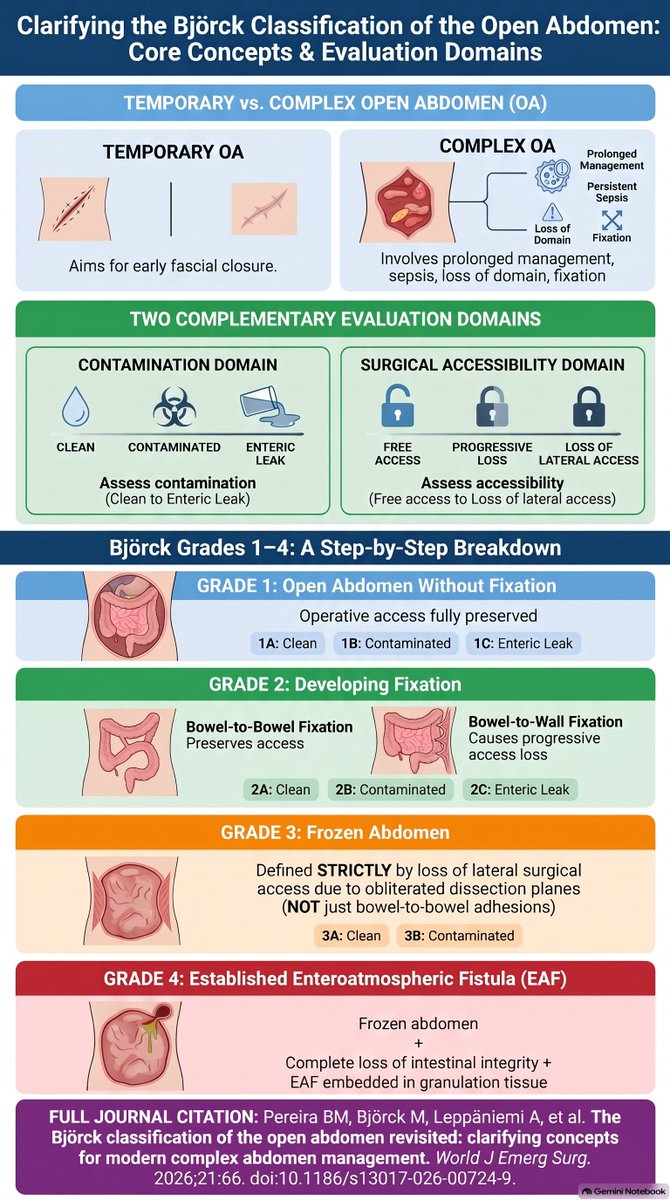
The Björck classification of the open abdomen revisited: clarifying concepts for modern complex abdomen management.
Pereira BM, Björck M, Leppäniemi A, Kirkpatrick AW, Sugrue M, Ottolino PR, Ribeiro MAF Jr, Seternes A.
World J Emerg Surg. 2026;21:66.
My partners at The Buncke Clinic are master surgeons and great colleagues. Dr. Safa recently co-surgeoned a case with me, and I wanted to capture his end-to-side anastomosis technique so others could learn from it.
Operative video is a powerful teaching tool but labor-intensive to produce. I used Codex from @OpenAIDevs to turn my hand-drawn sketches into this animation.
I hope AI makes it easier for surgeons to share the nuances of their operative techniques. This may improve surgical education and the quality of patient care!
This was my first attempt at turning my operative sketches into a teaching film. I’d love to hear what you think and what you’d want to see next.
Prophylactic central neck dissection adds little to total thyroidectomy in node-negative papillary thyroid cancer
by Finn CB, Cher BAY (...) Balentine CJ et 20 al. in BMC Surg
🪡 https://t.co/sw1ECkjO6M
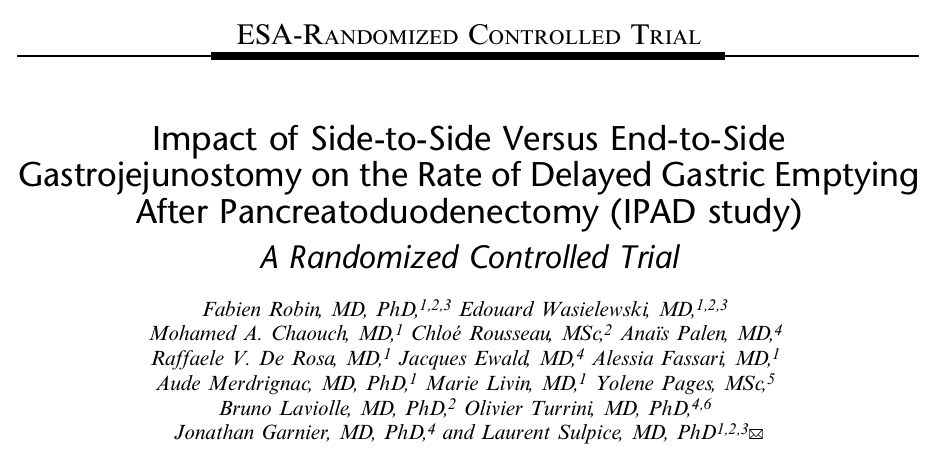
In the IPAD trial, pancreatic fistula, biliary fistula, reintervention, mortality, 90-day nutritional parameters, and quality of life were similar after side-to-side vs end-to-side gastrojejunostomy. https://t.co/W4H2iznmpn
Emergency Robotic Chole and CBD Exploration in a Pregnant Patient
Presentation:
🔵23 year old 20/52 pregnant presents with obstructive jaundice
➡️Uterus at the level of umbilicus
🔵MRCP demonstrated GB and CBD stones
➡️A single 8mm stone impacted in the distal CBD
➡️CBD >8mm in diameter.
🔵Benign MDT decision that MIS chole and CBDE was the best approach to manage her condition
🔵Proceeded to Robotic Assisted Chole and CBDE
Surgical Approach:
🔴4 robotic arms and 1 assistant port
🔴Careful open cut down just below umbilicus taking care to access the peritoneal cavity taking particular attention to avoid injury to the uterus
🔴Early positioning of patient in reverse trendelenburg with right side tilt to take pressure off IVC
🔴Cystic artery dissected and ligated
🔴Choledocotomy
➡️Clear bile indicative of obstructed CBD
➡️Open jaw technique
➡️Extension of choledochotomy over the captured stone in the basket pulled to the entry of the choledochotomy
🔴Choledochoscope through cystic duct and irrigated to flush out smaller stones via choledochotomy
🔴Wide cystic duct dissected
🔴Proximal extent of the duct suture ligated
🔴Cystic duct divided to release cystic duct stones
🔴Stones flushed through the cystic duct during transcystic choledochoscopy
🔴Cystic duct sutured closed with 2/0 Vicryl
Benefits of Robotic Platform:
🔴Low pressure pneumoperitoneum at 8mmHg feasible with precision wristed robotic instruments and magnified 3D enhanced vision
🔴Improved ergonomics for closure of choledochotomy
See our paper in @SurgEndosc on RCBDE:
https://t.co/hFKqksipRv
Does stitch size matter when closing the abdomen? 🤔
10 RCTs, 2617 patients: 43% fewer incisional hernias with small bites
Small-bite compared with large-bite closure of midline laparotomy: meta-analysis of short- and long-term outcomes with trial sequential analysis
➡️ https://t.co/JgPX5voqwO
Small-bite closure reduces incisional hernia and postoperative complications after midline laparotomy
The benefit is durable beyond 2 years
Work by Sameh Hany Emile , Asmaa Elhadad , Ahmed Hossam Elsayed
#SoMe4Surgery #MedTwitter #SurgEd #Surgery @RCPSGTrainees @aecirujanos@SEIQuirurgica@iss_sic #MedicalTechniques @BJSAcademy@young_bjs@BJSOpen@evanscolorectal@robhinchliffe1@bplwijn@MalinASund@nfmkok@TejedorPat@paulo_sutt@PVaughanShaw@JJEarnshaw@juliomayol@ksoreide #HerniaSurgery #AbdominalWall #IncisionalHernia #GeneralSurgery
Excellent evidence-based overview. However, I believe a few important aspects deserve further discussion.
Anastomotic healing is far more complex than a series of preventive measures, and perhaps ICG fluorescence angiography is one of the best examples of how we sometimes expect more from technology than it can actually tell us.
ICG fluorescence demonstrates perfusion at a particular moment, not the biological capacity of an anastomosis to heal. It does not reliably assess venous drainage, tissue oxygenation, microscopic tissue injury, or systemic factors affecting wound healing. It cannot tell us whether the delivered blood carries sufficient oxygen, whether the microcirculation is functioning adequately, or whether the tissue has the biological capacity to repair itself.
Moreover, many anastomotic leaks occur without overt ischemic necrosis. Anastomotic failure is multifactorial, not simply a perfusion problem. Adequate arterial inflow does not necessarily imply adequate venous outflow, normal tissue metabolism, or successful healing.
ICG is undoubtedly a valuable adjunct, and growing evidence supports its role in reducing anastomotic leakage. But fluorescence should never be mistaken for proof of anastomotic viability or healing. Seeing blood reach the tissue is not the same as knowing that the tissue will heal.
Beyond ICG, several other distinctions are equally important.
The evidence supporting mechanical bowel preparation combined with oral antibiotics is convincing, but this should not be confused with the effect of mechanical preparation alone. Patient optimization is essential, although anemia, malnutrition, diabetes, smoking, and other risk factors influence healing through different biological pathways.
An intraoperative air leak test may reveal an immediate mechanical defect, but a negative result cannot predict what will happen to the anastomosis several days later. Similarly, a diverting stoma primarily reduces the clinical consequences of leakage rather than necessarily preventing anastomotic dehiscence itself.
NSAID-related risks should be interpreted according to the specific drug rather than generalized to the entire class. CRP is valuable for recognizing complications early, but surveillance should not be confused with prevention.
Perhaps the greatest challenge in colorectal surgery is accepting that a technically perfect anastomosis is not always a biologically successful one.
We can optimize the patient, assess perfusion, test mechanical integrity, and minimize risk. Yet we cannot fully predict or control the complex biological events that follow.
Evidence should guide our decisions, but understanding the limitations of that evidence is just as important as applying it.
After all, we do not simply join two ends of bowel. We create the conditions for two living tissues to heal together.
And ultimately, it is biology, not the surgeon, that completes the anastomosis.
@TKRCD_@Genc_TKRCD@escp_tweets@YouESCP@nlavellaneda@SezaiLeventoglu@DrErmanAytac@smailCemEray2@SWexner@eras_turkiye@ErasSociety@s_utkucelik@me4_so@SoTrainees@JimkhanMD@ibrahimozatamd
Preventing Anastomotic Leak
The Leak You Can Prevent: 7 Moves That Work (and 5 That Don’t)
Most leaks are decided before the patient reaches the ward. The evidence finally tells us which decisions matter.
https://t.co/QBms5HLGXq
General surgeons may have an opportunity to help reduce ovarian cancer risk during planned surgery.
A new ACS Bulletin article explores the evidence for removing the fallopian tubes during another procedure and why the conversation starts before surgery. https://t.co/0uDjjywd9j
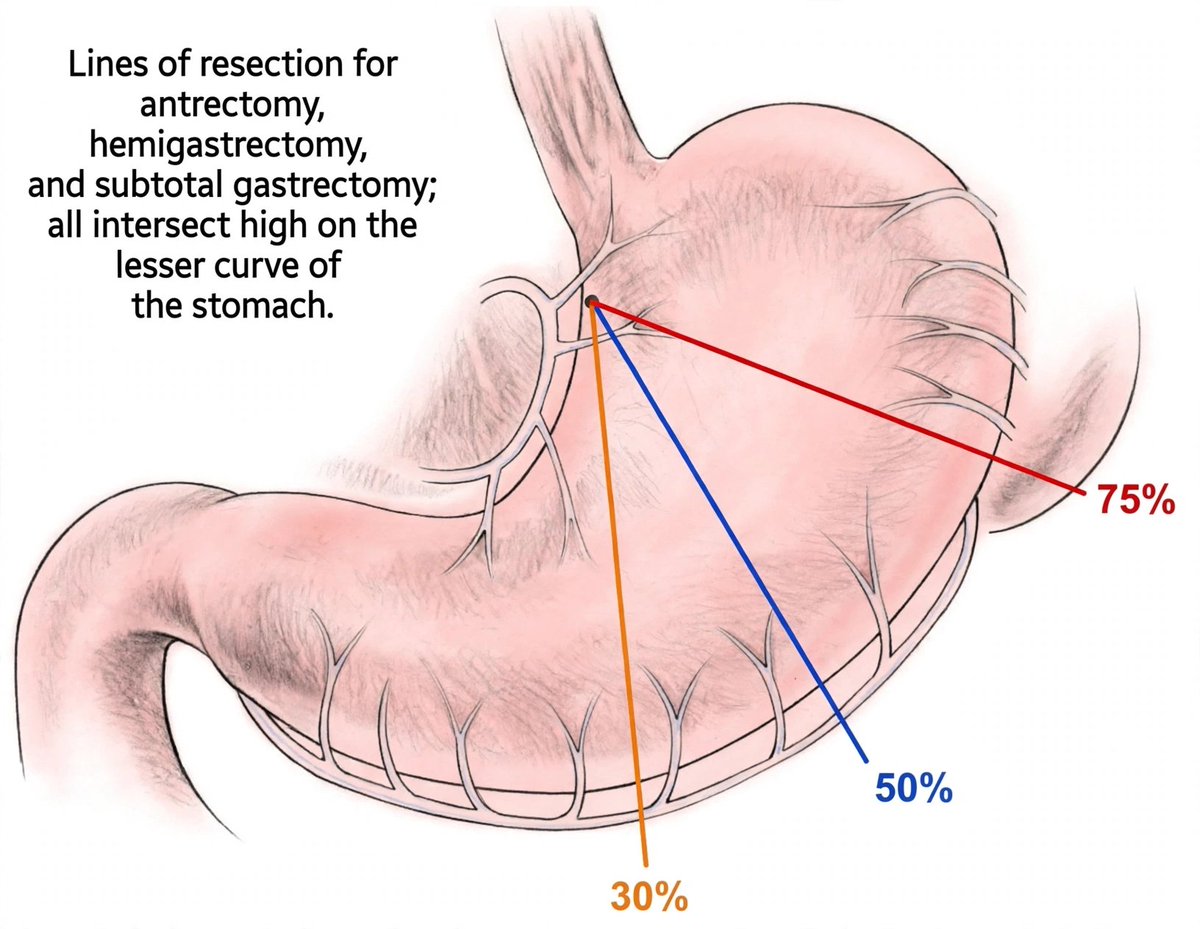
Gastric Resection Landmarks 🩺
All resection lines converge high on the lesser curvature.
📍 30% Antrectomy: pyloric antrum.
📍 50% Hemigastrectomy: mid-greater to high lesser curvature.
📍 75% Subtotal: leaves only fundus and cardia, supplied by short gastrics.
#SoMe4Surgery
40% of ERCPs after subtotal cholecystectomy had no associated finding of bile leak or retained common bile duct stones.
In a prospective 11-hospital study, 71% of ERCPs occurred by postoperative day 2.
Read the full study by Johnson and colleagues at: https://t.co/QIoZht5dwL
🧵regarding 'the crimp' and other technical pointers having to do with securing surgical drains with suture.
We'll go over my preferred method, other methods like the Roman sandal, some errors people make, and other factoids.
(1/ )
6 PASOS PARA COLOCAR UN ACCESO VENOSO CENTRAL GUIADO POR USG 💉🩸
✏️Los seis pasos van desde la evaluación ecográfica de la vena hasta la confirmación de la posición de la aguja, la guía y el catéter