We're convening experts around the world—including from @WFP, @WorldResources, @CIMMYT, NASA @HarvestProgram, @Bayer, & @planet—to improve usability of the first open ecosystem for global agricultural field boundary detection from satellite imagery: https://t.co/ej2CBfsJna
Devex looks at how @TaylorGEOAI funded teams, including an @ASU-led project with NASA Harvest, are using GeoAI to support food security response. https://t.co/IIGak4b33m
We are excited to embark upon the next phase of Fields of The World and to announce several new efforts in our innovation portfolio, including Features of The World and Benchmarks of the World. Learn more and contribute: https://t.co/R2XKRivcFx.
#GeoAI#geospatial#opensource
SCAI researchers are developing AI-powered geospatial tools to help humanitarian organizations identify food security risks in conflict zones before crises escalate. Supported by the GIFS Challenge from @TaylorGeoAI. #GeoAI#FoodSecurity#AIforGood
https://t.co/wE3uwc0PH8
#GeoAI has real potential to address critical global challenges, including #FoodSecurity and #SustainableAg. We're proud to support this international humanitarian work by investing in foundational technical research and development.
https://t.co/Bd30kuywtU
A St. Louis nonprofit is investing in AI to help the World Food Programme, FEWS NET, and other groups build and improve open-source tools for humanitarians to deliver food aid much more quickly and efficiently to people in need. https://t.co/oKHurLCagI
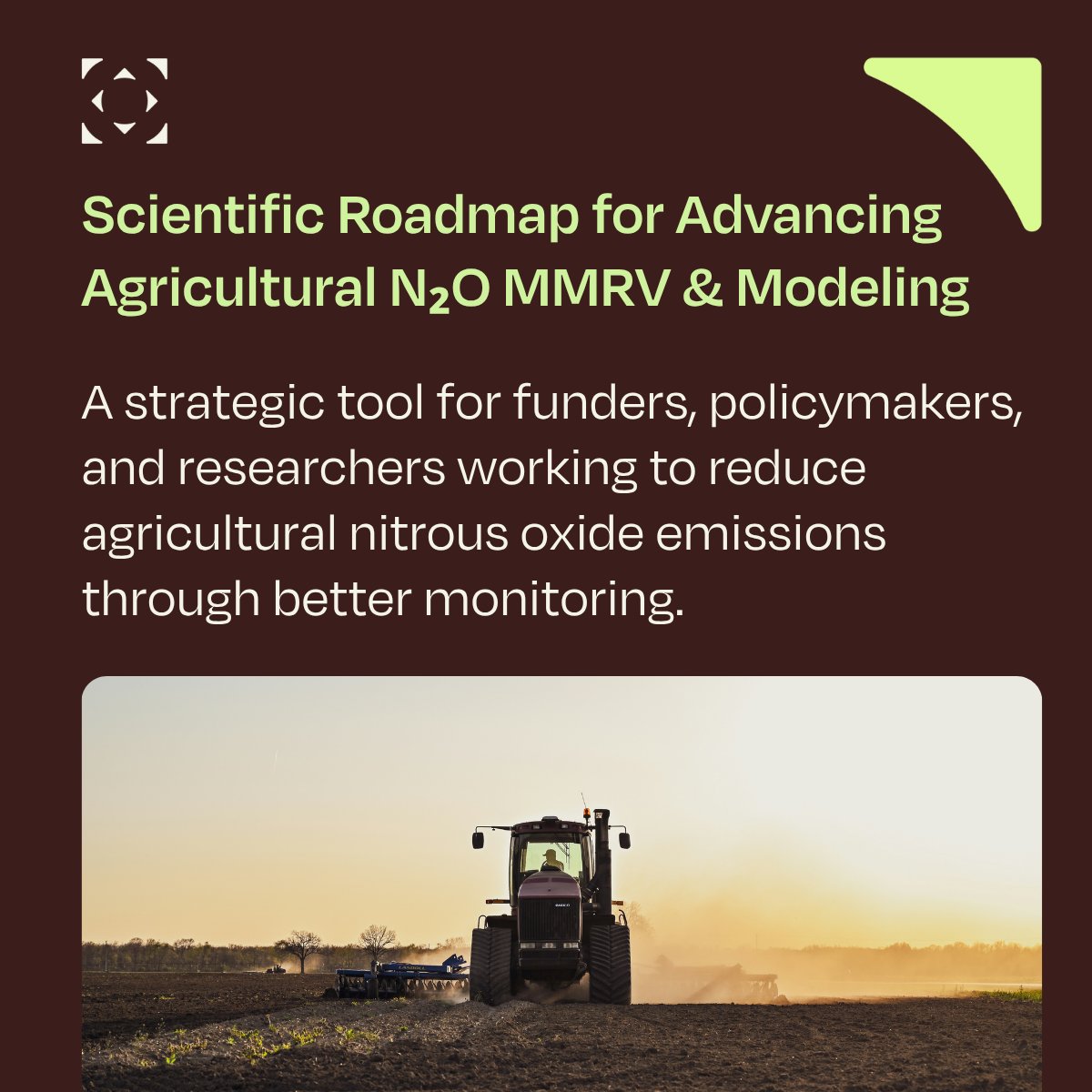
🌽 Join us July 16 for a briefing on the Scientific Roadmap for Advancing Agricultural Nitrous Oxide MMRV and Modeling, hosted by @eesionline & @NRDC. Learn how foundational geospatial innovation can improve sustainability and reduce the cost of farming: https://t.co/GodVGcnWI6.
Congratulations to our research advisor @hannah_kerner (@SCAI_ASU) on being recognized for her work developing and deploying ML solutions to advance agricultural insights and strengthen community resilience to natural disasters and food insecurity. #GeoAI
https://t.co/ZVmVpqGEQY
Co-investment from @awscloud enables addition of 10 pilot projects to our Geospatial Innovation for #FoodSecurity program. Recipients span academia, nonprofits and industry.
Read more: https://t.co/WtZJfqqdo9
#GeoAI#OpenSource#Sustainability
SCAI researchers are developing AI-powered geospatial tools to help humanitarian organizations identify food security risks in conflict zones before crises escalate. Supported by the GIFS Challenge from @TaylorGeoAI. #GeoAI#FoodSecurity#AIforGood
https://t.co/wE3uwc0PH8
“I feel that this is a game changer. We can leverage this to answer all kinds of very, very complex questions." said Dr. Tim Haithcoat, the MU Extension Director of Data Science and Analytics. https://t.co/tTlFg4jYfL
🎙️ Your Fields of The World podcast playlist:
🌍 Spatial Stack w/Matt Forrest -https://t.co/r08VOvgP6o
🛰️ Satellite Image Deep Learning w/@robmarkcole -https://t.co/9NwtKw5SIF
💡 Great Data Products w/@jedsundwall@OurRadiantEarth@source_coop -https://t.co/3ryOXjDu1f
Join us for a conversation about the world's first #opensource global field boundaries dataset with Spatial Stack's Matt Forrest and our VP of Strategic Innovation Jen Marcus and Director of AI/ML Research @isaaccorley_#GeoAI#OpenData#collaboration
https://t.co/OMkRUFWOuu
Taylor Geospatial, the nonprofit dedicated to advancing geospatial artificial intelligence, has awarded $550,000 each to three projects focused on global food security.
https://t.co/myLGL2H5ej via @TechSTLmo@stlbiznrubbelke
Via @Mizzou University of Missouri and MU Extension Selected as Awardees in Taylor Geospatials’ Global Geospatial Innovation for Food Security (GIFS) Challenge
https://t.co/yTCOpz2D1P
How can AI help detect food crises before they escalate?
@HarvestProgram, @ASU, @WashU + @FEWSNET are building a GeoAI tool to spot early signs of food system instability in conflict and climate-impacted regions.
Via Taylor Geospatial's GIFS Challenge
https://t.co/rnGb6Asadj