New Ventures @ForesiteLabs applying emerging technology to biotech and therapeutics. Former @NSFGRFP fellow studying cancer & signaling dynamics @JohnsHopkins
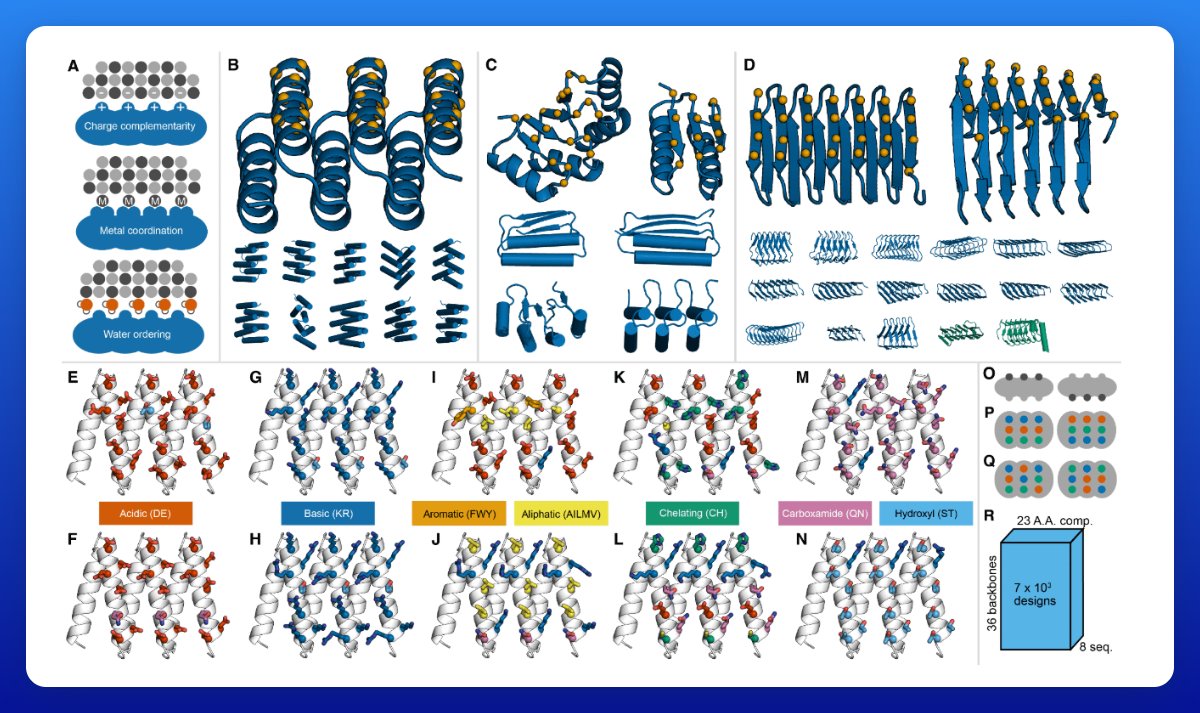
1/ Excited to share our new paper in Science: “Toward life with a 19-amino acid alphabet through generative artificial intelligence design.” @ColumbiaSysBio@ColumbiaBME@Columbia
https://t.co/ZT3Ygw9tiG 🦠🧬🛠️🖥️💥
Thrilled to share my lab’s new preprint describing our discovery of the E2 ubiquitin conjugating enzyme UBE2H as a widely-shared dependency in aneuploid cancer cells. @biorxivpreprint@biorxiv_cancer
Excited to share our work on ErbB receptors published today @CellCellPress! Using multicolor, photostable UCNPs, we perform long-term (>15 min) single-particle tracking of EGFR, HER2, and HER3, enabling direct visualization of dimerization in live cells. https://t.co/BZdJHyctl2
New preprint! 🚨 We uncover a slow adaptation to stretch that links star-bundling of keratin filaments with nuclear escape from its keratin cage. Led by @tom_golde 🙌 @IBECBarcelona https://t.co/HZVLYVkcde
❄️Time-deterministic cryo-optical microscopy, developed by researchers at @UOsaka_en, Janelia & collaborating institutions, rapidly freezes live cells under an optical microscope, capturing a snapshot of cellular activity in high resolution.
I'm often asked how human genetics can be used to validate drug targets.
In our new @NatureCVR paper, we provide an end-to-end framework for IL-6 inhibition🧵
👉build a genetic proxy
👉demonstrate potential for cardiovascular benefit
👉assess expected & unexpected safety signals
3D cross-sectional views of the dynamics of chromosomes (H2B, blue) and the endoplasmic reticulum (orange) in interphase and mitotic LLC-PK1 cells over a 50 x 180 um field at 6 sec intervals, as seen in the lattice light sheet structured illumination mode of MOSAIC.
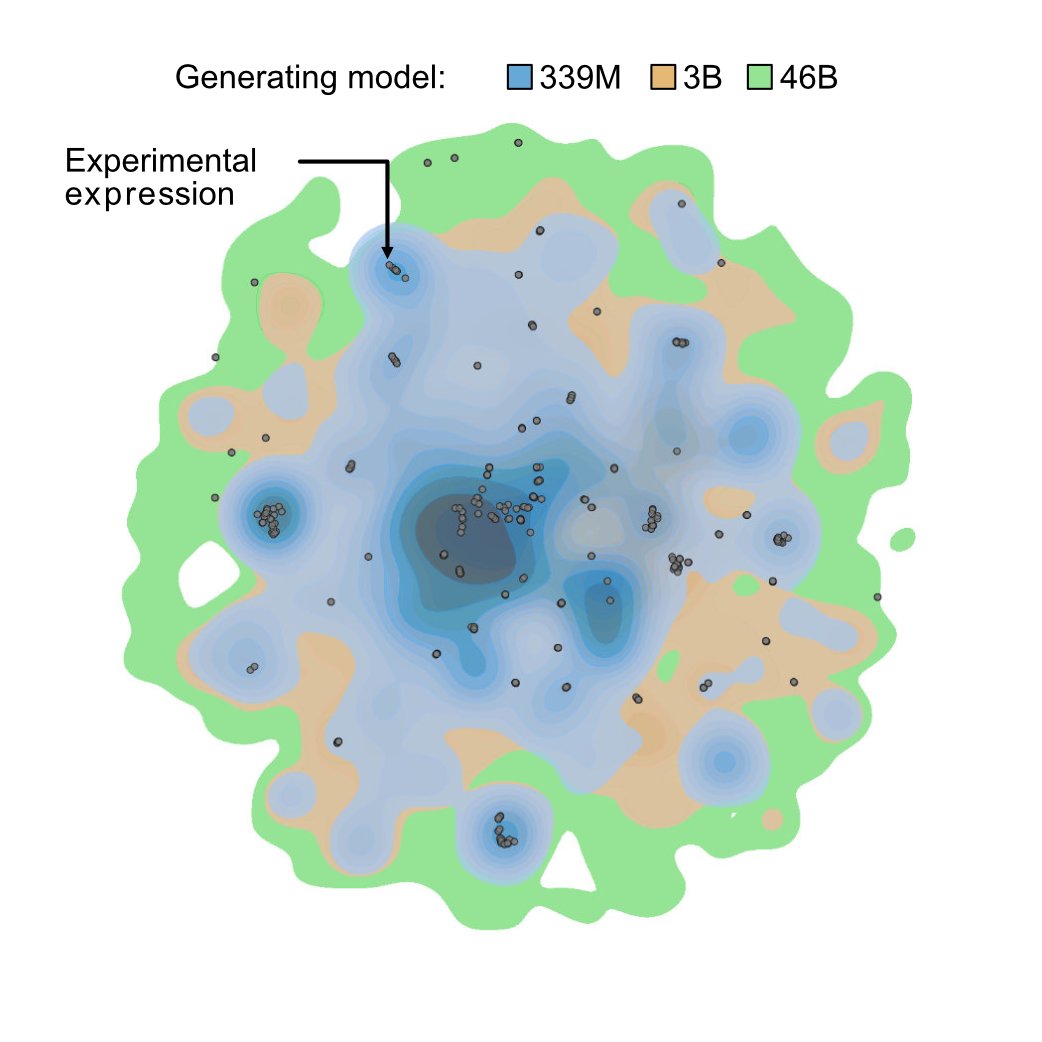
What does pushing the boundaries of model capacity and data scale do for generative protein language models? I’m super excited to share our latest work @ProfluentBio where we begin to explore and test some of our hypotheses!
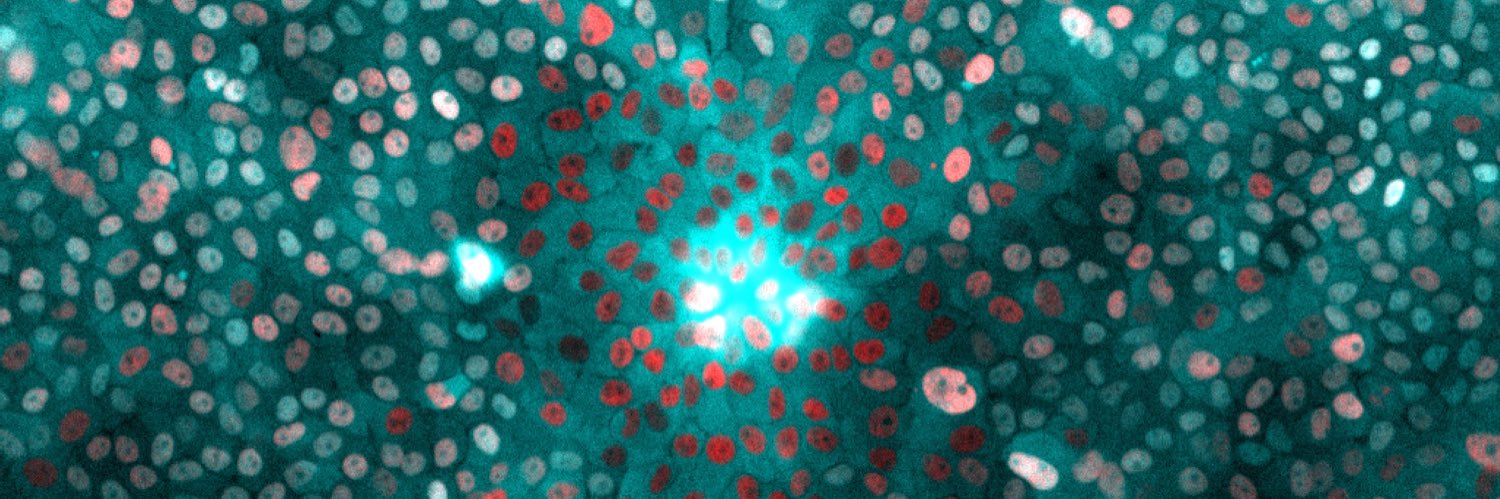
Astonishing breakthrough in #organoid engineering, as reported in @Nature by T Recaldin,M Harter,L Steinacher,B Gjeta, and colleagues: intestinal epithelial organoids incorporating tissue-resident immune cells. @IHB_Research@Roche https://t.co/kALIiabRFK
We’re excited to share our study in @CellCellPress on the role of the MAP3 kinase ZAK in UV-induced apoptosis led by @2primehydroxyl! We studied cell signaling kinetics following UV-damage and found that ZAK drives apoptosis via ribosome collisions. https://t.co/A3RjOkq62k
@NikoMcCarty@ProfTomEllis@hsalis@chofski Wondering how doubling times restrict genome size
Does replication machinery processivity scale with genome size to maintain consistent doubling times? Or do different species accommodate different replication times based on genome size?
We are delighted to share our work, now available in
@Nature:
https://t.co/E5FBUsH2YW
Our scoring system can be accessed here: https://t.co/uPmrvbqD50
Coming soon --> the tyrosine kinome and an improved system with many new functionalities & features!
#TheKinaseLibrary#KL
I remember the first time I heard about this effort from @RegotLab
Very excited to dive into this for two reasons - identification of orphan kinase substrates (new pathways) and development of new synbio tools for kinase signaling.
Great work!
Connor's paper is out in Science! Thanks to all the present and former lab members for making this possible.
If you are interested in the mechanisms behind stress induced endocycling or the role of CDK4/6 in maintaining G2 arrest, check it out:
https://t.co/jNRSQhfGCh
We joined forces with ARCH Venture Partners /
@rtnarch to incubate @xaira_thera, a biotech company using AI to re-engineer the entire drug discovery and development process. Read more: https://t.co/XTcBoMIS2h
LLMs have proven useful for increasing sequence diversity while maintaining properties and structure, such as binding of antibodies and peptides.
Here @jeffruffolo and @ProfluentBio team demonstrate enzyme sequence diversification while maintaining editing functions. Nice work!
One of the first projects we took on at @ProfluentBio was designing novel gene editing proteins with language models. This grew into an initiative called OpenCRISPR, and today I’m excited to share that work (including the sequences we designed)!
https://t.co/4afhk4vT6B