Every generation should modernise enough to free the next from yesterday’s problems.
America built roads and infrastructure; Zuckerberg and Altman can focus on AI.
Development is cumulative: solve the basics, then move the frontier.
My fundamental disagreement with @KagutaMuseveni :
If he’s going to squeeze the private sector for 40 years, he shouldn’t block federalism.
Let him keep high interest rates to appease the IMF, while regions mobilise their own resources for development.
God have mercy on Ugandans and their businesses!
A 2.25% hike on BoU rates is terrible.
Inflation is mostly coming from higher oil prices.. killing demand won't make oil cheaper or more available.
Capital will now increasingly flow towards the BoU rather than the private sector
I would, but only under a federal system where every nation governs itself, manages its own resources, and determines its own development priorities.
Unity should be a choice, not a constraint.
"The reason it has declined in certain populations or social classes lies in two things that are corrosive to durable institutions: the overemphasis on the individual and the inability to plan beyond the present moment."
Monogamous marriage, which enables the extended family and provisions resources across generations, constitutes deep cultural technology. We evolved and developed this technology over generations as our culture grew in complexity.
Marriage is not the default state or institution of our species. It represents the advancement of multiple seemingly unrelated concepts: honor, contract law, fidelity, inheritance, romantic love, etc. We had to develop marriage to climb out of the muck of prehistory.
The reason it has declined in certain populations or social classes lies in two things that are corrosive to durable institutions: the overemphasis on the individual and the inability to plan beyond the present moment.
Thembo, this is one of the most selfish and short-sighted moves you can make as a regulator!
First of all tell @mtnug , @Airtel_Ug and other "stake holders to make internet cheaper!! let us breathe
I don't know how much project management experience you have, but anyone who has managed projects understands that when people identify a market gap and start solving a real problem, the sensible thing is to create an enabling environment, streamline licensing, and let them operate legally—not disrupt their businesses while thousands of people depend on them.
Ugandans are struggling with the cost of internet access. Then someone comes up with a model that makes connectivity more affordable, extends access to underserved communities, and creates business opportunities for ordinary people, and our response is to make their operations difficult? Where is the logic in that?
a quick one Thembo, what is the fundamental difference between an office buying internet from MTN or Airtel and distributing it internally across its premises using routers, and an entrepreneur buying internet capacity and distributing it across a village, trading centre or neighbourhood at an affordable fee?
we admit .. there are legitimate questions around resale rights, network security, service quality, consumer protection, and licensing. Nobody is saying the communications sector should operate without rules. But surely, regulation should be proportionate to the scale and nature of the service being provided!
Why should a small entrepreneur trying to bridge the digital divide be subjected to a regulatory process designed in a way that could make the business unviable? Why can't UCC establish a simple, affordable, and fast-track licensing category for community Wi-Fi operators, publish clear requirements, and help these businesses comply?
You cannot preach digital inclusion while making it harder for people to access affordable internet. You cannot talk about innovation and entrepreneurship, then create barriers for the very people innovating at the grassroots.
REGULATE THE MODEL, NOT THE EXISTENCE OF THE MODEL. Make licensing accessible, enforce reasonable technical standards, and protect consumers without destroying the economics that make affordable community internet possible in the first place.
The objective should be to get more Ugandans connected, encourage competition, and expand access not protect the status quo at the expense of ordinary citizens.
honestly, Thembo, if these operators are willing to comply, help them regularize their businesses. Make the process swift, transparent, and affordable. Give them a clear transition period. Work with them, not against them.
Because at the end of the day, the person who loses when affordable community internet disappears is not the big telecom company. It is the student who cannot afford expensive data, the small business owner trying to operate online, and the rural household being priced out of the digital economy.
@Bbossa - What exactly are we regulating for if the outcome is that fewer people can afford to get online?
Eyes on Bank of Uganda today. No amount of monetary policy interventions will cure our situation. It is cyclical. We failed to understand that extractive politics is not an economic activity. We frustrate production & local industry. We talk more than we execute. We're scattered.
In 2021, the Attorney General (Kiryowa Kiwanuka), on behalf of Gov't approved the Digital number Plates contract with Joint stock company -Global security.
Yet, the Attorney General's law firm is the private firm for this "Russian Company" implementing @itmsug
The composition of the money supply is the smoking gun, exposing why a purely monetarist remedy is likely to fail. Look at who holds the money and how it is created, and it becomes clear why an aggressive monetary squeeze may do little to stabilise the exchange rate.
In macroeconomics, Broad Money (M₃) is not one uniform pool of cash. It comprises Net Foreign Assets (NFA) and Net Domestic Assets (NDA). NDA, in turn, includes credit to the Central Government and credit to the Private Sector.
When Uganda’s M₃ grows by 18.1%, the critical question is what drives that growth. If it is predominantly credit to the Central Government, with commercial banks buying Treasury bills to finance the budget, rather than credit to the Private Sector, which funds local businesses, then the implications for monetary policy are profound.
When the Bank of Uganda tightens monetary policy by raising interest rates, the effects are asymmetric:
Government borrowing is relatively inelastic. The state may continue borrowing to finance its spending, including long term infrastructure and oil projects, even at higher interest rates. The additional cost is ultimately borne by taxpayers or reflected in future public spending.
Private sector borrowing is far more sensitive to interest rates. Businesses, farmers and manufacturers facing higher borrowing costs may defer investment, cut production or abandon expansion plans.
The result is a serious policy dilemma. If government borrowing continues while the cost of credit rises, aggressive monetary tightening risks squeezing the productive private sector without adequately addressing the underlying fiscal pressure.
You cannot sustainably stabilise the exchange rate by squeezing productive businesses while leaving the fiscal engine of domestic borrowing largely untouched. Monetary discipline must therefore be accompanied by fiscal discipline. Otherwise, the burden falls disproportionately on the very businesses Uganda needs to produce, export and earn foreign exchange.
A strong Tooro Kingdom and a federal Uganda go together.
Federalism would let Tooro keep more of what it generates, from tourism to agriculture, and decide its own development priorities.
Regions that run their own affairs grow faster.
Buganda wants that for Tooro too.
You Batooro.
From 1995 to 2026, we had a Bazungu-Babiito royal family: King Oyo, Princess Komuntale.
In September, we were days away from another Muzungu king and Luo-pean queen.
Let's use the Nyabongo reign to continue this Luopean tradition.
Make Fort Portal great again!
According to game theory: Rules only coordinate behavior as long as people trust the rule. If standards are applied inconsistently, punishment is given selectively, changing expectations without warning, and in due course you have people optimizing a way around the system or figure out a way to cheat the system. If rules are not standardised, ignoring them becomes the rational option. This is why people ignore laws in low-trust societies like India.
Africa's problem is centralization, not capacity.
Colonial borders and post-independence concentration of power (Uganda scrapped federal arrangements in 1966-67) weakened local accountability.
That's an institutional failure, not an imagination deficit.
I heard TT talking and I was never surprised. Whites will remain a superior race to blacks because of their superior imagination and ability to do the impossible.
Eswatini, Botswana & Namibia each have a comparable population to our regions of @BugandaKingdom_, Bunyoro, Tooro, Busoga, Ankole, Kigezi, Rwenzori, Madi, Acoli, Lango, Teso, Bugisu, Bukedi, West Nile & Karamoga. This shows that each region can actually be a country of its own!
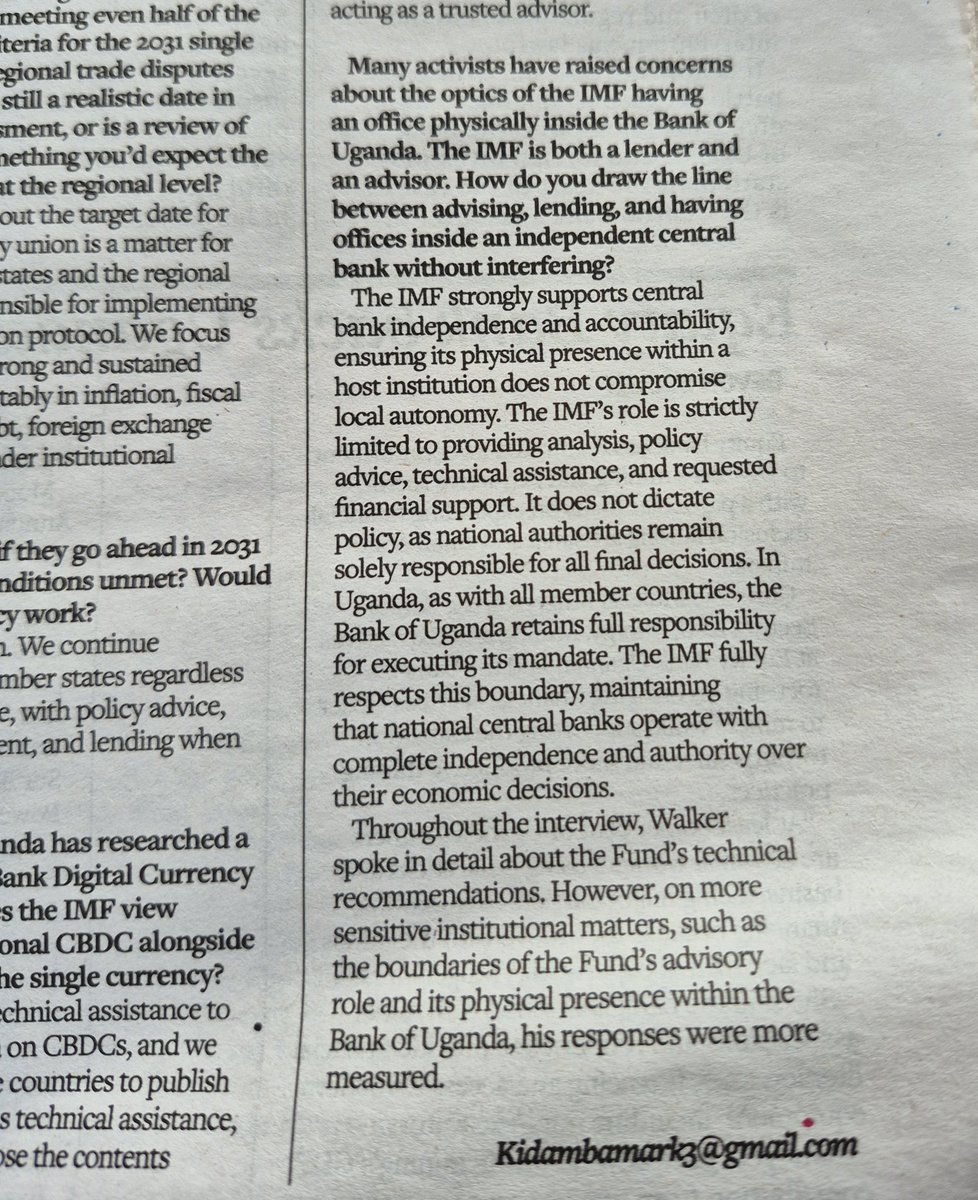
IMF offices in Uganda are inside Bank of Uganda building. I struggle to understand why? This explanation here by Sebastian Walker – IMF resident representative – isn't sufficient at all.
Is this the IMF practice everywhere?
Omukama Kabalega is actually the reason the Africans were defeated and he and Kabaka Mwanga were captured.
In February 1897 Omukama Kabalega, Kabaka Mwanga and Chief Owinyi Akullu of Lango formed a triple entente alliance of Africans to fight the British. Kabaka Mwanga was represented in these negotiations by his sister Naalinya Nabweteme who he had installed secretly to replace Naalinya Semiramis Nakalema who had married Semei Kakungulu.
Following these negotiations Kabaka Mwanga escaped from Mengo in July 1897 to Buddu where he was joined by his army commanded by Gabudyeri Kintu and about 10,000 soldiers(mainly Catholics) with 3000 guns. The plan was to keep the British busy on the southern axis while Kabalega and Akullu attacked from the North through Bulemeezi to cut off reinforcements. However Kabalega was unable to commandeer his generals so the first army of 1400 Baganda soldiers led by Lui Kibanyi was defeated by the British forces at Kabwoko. This started rumors that Kabalega had betrayed the resistance and Mwanga was forced to withdraw to Tanganyika where he was captured by the Germans.
The TV host should have challenged that claim.
Malaysia demonstrates that constitutional arrangements can accommodate different levels of regional autonomy.
The British wanted an East African Federation, but the Baganda resisted, leading to the King’s exile in 1953. Much of Uganda’s politics traces back to this period, as resistance and divide-and-rule policies deepened political divisions - @babuedward#UBCBehindtheHeadlines
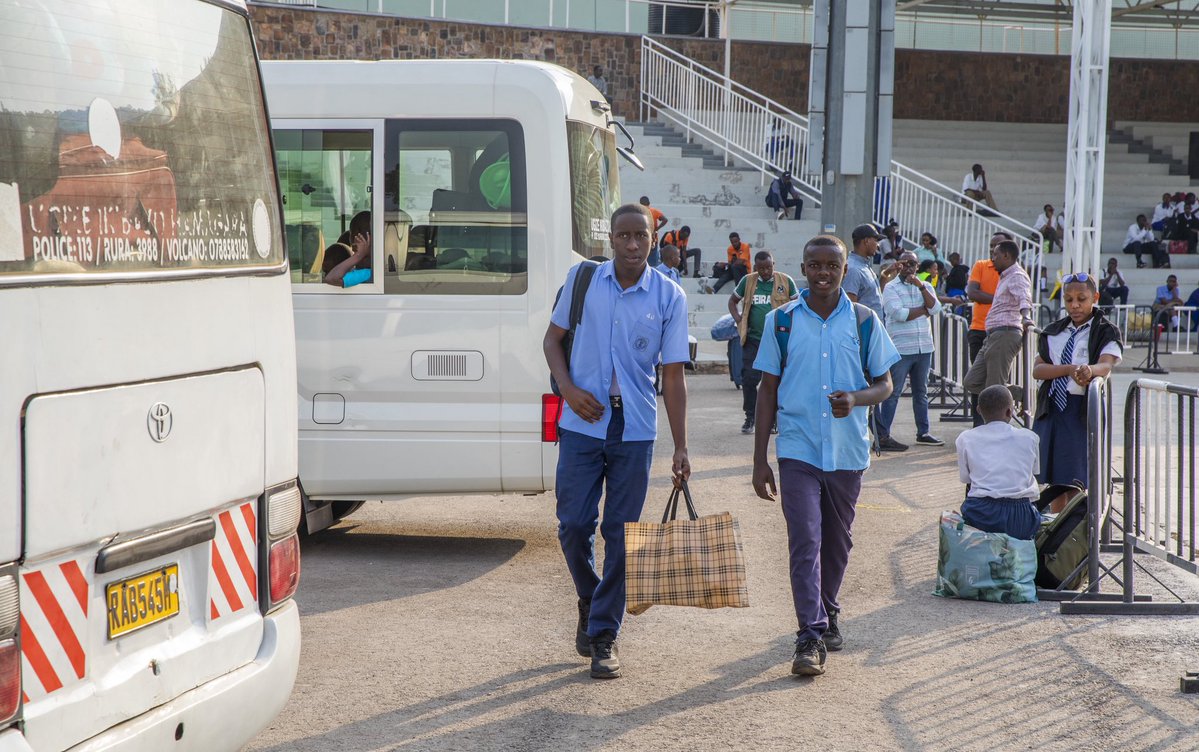
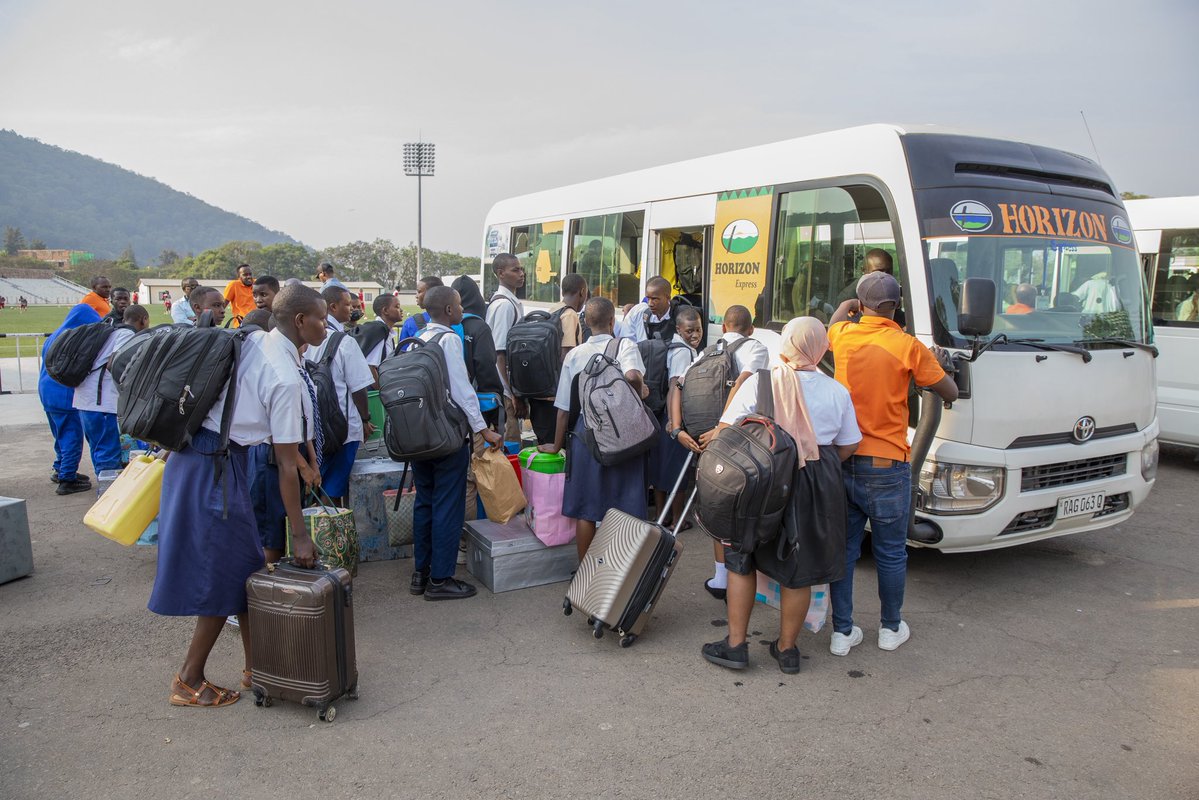
More than 19,000 learners across #Rwanda had not returned to school nearly a month after the 2026/27 academic year began on September 7.
• Financial difficulties, lack of school materials, family challenges, and some learners dropping out to seek work are among the reasons for the delay.
• The Western Province recorded 15,993 learners who had not returned out of 1,041,859 expected to report for the new academic year.
• In the Northern Province, 3,793 learners had not returned, including 1,202 in Musanze, 1,050 in Rulindo, 798 in Burera, 523 in Gakenke, and 220 in Gicumbi.
• Northern Province Governor Maurice Mugabowagahunde said delayed return was linked to factors including inadequate parental follow-up, weak cooperation between parents, teachers, and schools, and limited appreciation of the importance of education in some families.
• In the Western Province, authorities said some parents were unable to provide all required school materials immediately and encouraged families to communicate with schools so children can continue attending lessons as they seek the missing materials.
• In the Southern Province, 98.8% of learners expected to attend school from nursery to Senior Six had reported, but authorities said some older or late-starting learners had dropped out to seek income or engage in work.
Read more: https://t.co/6sQrNTepuR
Federalism can put a coat on low productivity: autonomy creates incentives for regions to become more productive because they bear the consequences of poor performance.
Under unitary systems, the whole country absorbs the cost.
low productivity is our biggest problem.
even when we [artificially] raise wages (eg in govt, NGOs etc), the increase in wages never increases the productivity of the people in those entities
Buganda generates enough tax revenue.
If more of that revenue were retained, it could invest heavily in irrigation and even ambitious projects like a canal from Lake Nalubaale to the dry cattle corridor.
Instead, much of the revenue finances the entire country.
This is how most of the coffee gardens in Masaka look like now. The trees flowered (for the big May season), and, due to the prolonged drought, all the flowers dried up with no berries formed. Many people in Masaka survive on coffee now, and they’ve heavily invested in fertilisers. Many gave up on matooke, which was only failing and failing despite care. We better get set for terrible hunger and other problems associated with sudden poverty.