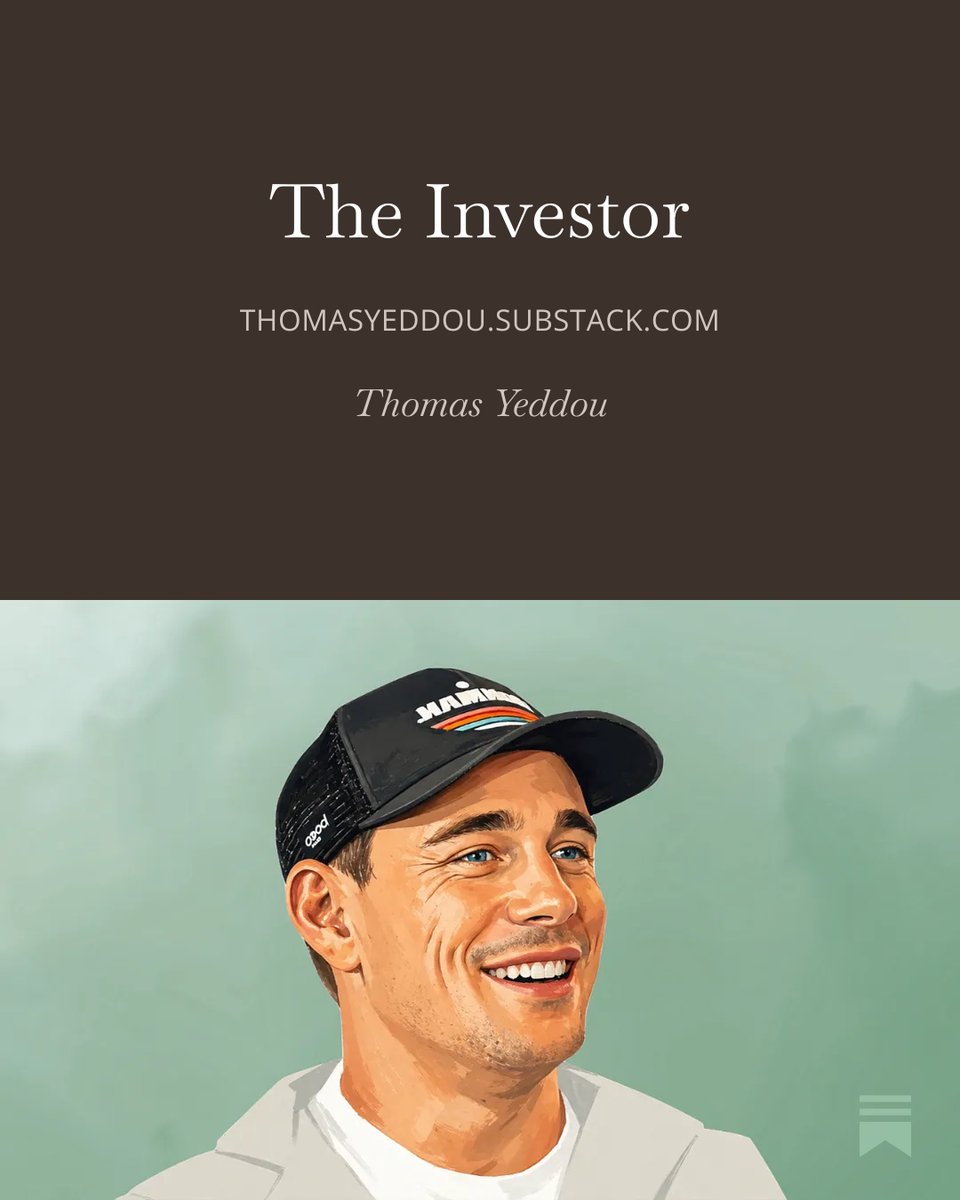
When I pitched @2lr on a profile, in March, he was immediately in. "I'm willing to share everything," he told me. From our very first conversation, while he was walking along the harbor of Bormes-les-Mimosas, he did.
Throughout our many phone calls in April, we talked about his early days as a fundraising advisor, his time at The Family, the first time he met Xavier Niel and what that relationship became, and about New Wave—probably the most complicated period of his life. Most of all, we talked about his fears, his doubts, and what drives him.
I also spoke with the people around him.
@pascalmercier welcomed me in his office near the Champs-Élysées. He told me about their first meeting over a beer and what he's watched Jean become since.
@an21m welcomed me in his office too (and I had never seen anything like it). We'd scheduled thirty minutes, we talked for two hours. He told me how Jean cold-emailed him at six in the morning on the day of their launch, and about their years together across Paris, London, and Silicon Valley.
I sat with @AlexLouisy, with whom I share the same WeWork. He told me about what their investor-founder relationship actually looks like.
And @ale6_ told me about the human behind the machine, how Jean operates, and the balance @kimaventures rests on.
For ten years, Jean has invested Xavier Niel's money in more than a thousand startups. What drives him?
Link in comments.
Last June, while working on his profile, I watch Nicolas Dessaigne from afar at YC Startup School at Station F. It’s 8:30pm, and for two hours he’s been surrounded by about twenty founders asking him questions. Leaning on a high table, I take out my phone and write down three things:
- What I see: a tight half-circle has formed around him. His back is to a wall and the stream of people never stops. He answers each person, one at a time, in the order they arrived. He holds a bottle of San Pellegrino but barely drinks from it.
- What I feel: it’s long, and I’m waiting for him to say “I have to go.” I’m impressed by how he answers every question with the same care.
- What I think: he listens closely and genuinely wants to help these young founders. The Listener will become the title of the profile, and this scene its final one.
Telling a story well starts with writing down, as quickly as possible, what you see, feel and think.
June 29. It's 9pm at Station F, and I've been watching @dessaigne answer questions from the young entrepreneurs around him for the past two hours. He’s here for YC Startup School Paris, and I have to admit I feel relieved when I hear him say "Sorry, I have to go, I need to speak with Thomas.”
We've spent many hours together over the past few weeks—over coffee, at this event at Station F, on video calls. We talked about @algolia's early days, his life in Silicon Valley, the doubts that led him to step down as CEO, and his long journey at @ycombinator.
@jlemoine_algo, his long-time business partner, was the first person in his inner circle I spoke to. We went into detail about the history of Algolia.
Audrey Liese, Nicolas's wife, told me about the great adventure of moving to the United States, and how she supported him at every key moment in his career.
@mwseibel, Partner Emeritus at Y Combinator, told me about his first encounter with Nicolas, and why he asked him to become a Partner at the accelerator.
@byAnhtho and @alextoussss told me how Nicolas has supported them since their time at Y Combinator.
Finally, thank you to @ludogranger for connecting us.
If you sometimes doubt yourself, your legitimacy, your choices, this story should resonate.
My latest profile, The Listener, is out. Link in comments.
@rahulcreates95 A lot of the content out there is about what happened. Storytelling is about how and why. It’s an event seen through the people who lived it, with tension and emotion.
A company’s narrative can only come from its founders. It comes down to identifying who the company is fighting against, and what the better world looks like when it wins. It’s the company’s reason to exist, not just comms.
The role of the content team is then to show how the company moves toward that better world and what it looks like.
Good storytellers turn words into images in their listener’s mind. They start by showing where they are, what they see, feel, hear. Then they wrap their reasoning around those scenes.
All the successful entrepreneurs I’ve written about are curious about many topics, and their obsession with their business means they tie everything they watch, read and listen to back to it. The unusual connections they make give them an edge.
@briannekimmel Yes! And to take it even further, I'd turn these interviews into real stories, with characters, the problem they face, and how they solve it using the product or service.
I’ve had several conversations with heads of content at VC firms, and portfolio founder profiles are becoming a popular format. There are two types of profiles that make sense depending on the firm’s track record.
A firm like Sequoia or a16z, with well-known founders, has a choice. It can go for a profile centered on the founder’s life and learnings, meant to inspire. It can also lean toward a profile that tells the story of an industry through that founder’s eyes.
A firm without a major track record will struggle with the more inspirational type, because its founders are still building their credibility. A profile focused on how an industry is changing, seen through a founder who is driving that change, makes more sense. It also lets the firm put forward a thesis. The industry becomes the subject, but the founder remains the guide.
We're about to enter a period where not reading or writing becomes as ubiquitous as smoking once was. We can hope people will eventually realize this is bad for them, as they did with smoking. But this is far from certain; the cost may not be as obvious.
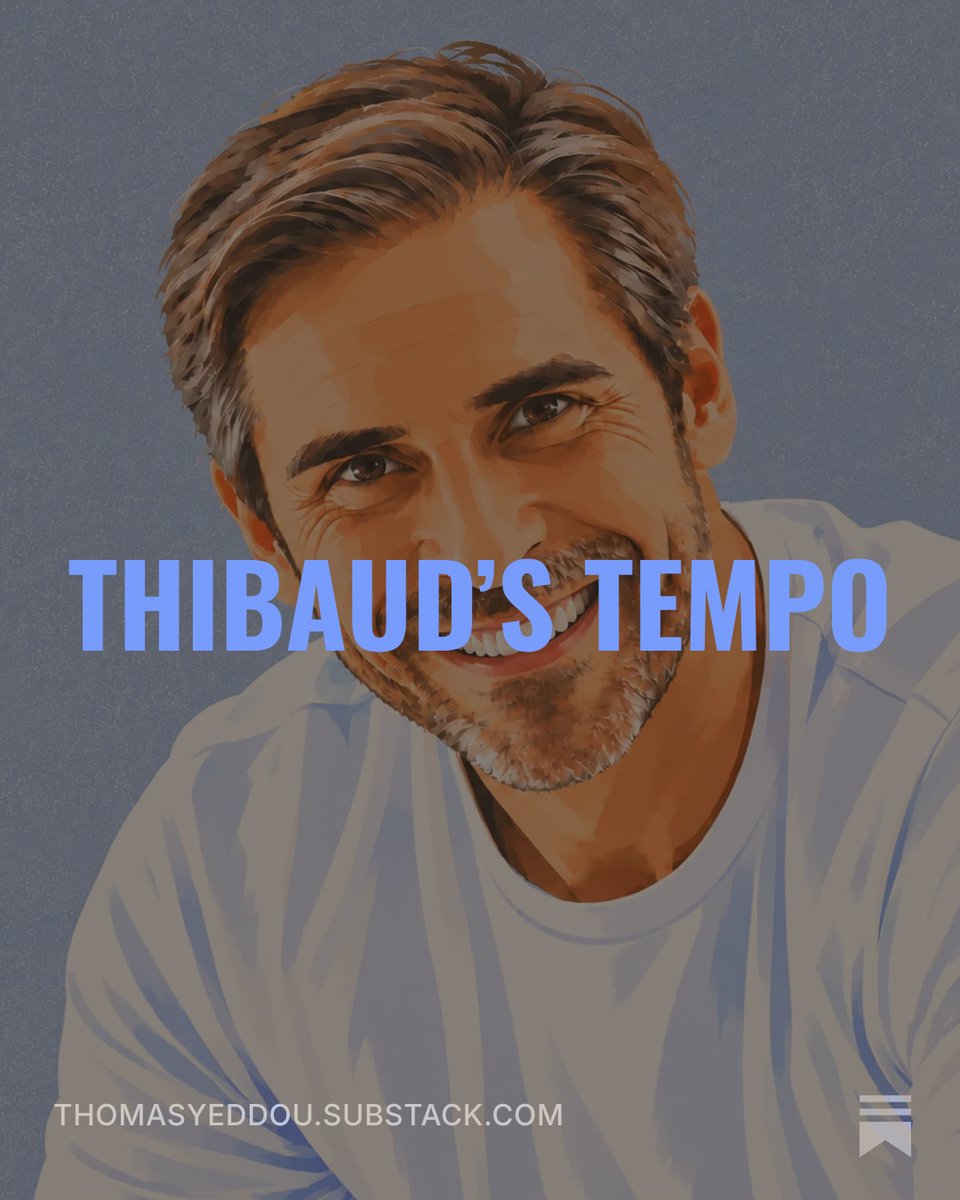
Telling Thibaud Elzière’s story in under 5,000 words was a challenge.
Fotolia, Zilok, Mobya, Hexa and its startups, Folk, Gama, Iconic House, Kate, and now WAT in Brussels. For twenty years, Thibaud has been starting stories that others carry forward.
I spent the summer reading his book, then spoke with Quentin Nickmans, his partner at @joinhexa; Marine de Waziers, his wife; Robin Michel, his brother and partner at Iconic House; Oleg Tscheltzoff, his investor and partner at Fotolia; and Charlotte Keup, Thibaud’s right hand at Iconic Group and WAT.
I also spent a few hours talking one-on-one with Thibaud in two beautiful places: the Villa Junot, tucked away on Montmartre hill, and La Maison, a loft turned living space in the heart of Paris's 10th district.
If one trait came up in every conversation, it was the speed and intensity he brings to everything he does.
Thibaud’s Tempo, my new profile, is out: https://t.co/2OmfREdg2V
Great profile at the intersection of tech, money and power by @yaffebellany. Binance often made the headlines, and it was interesting to get a glimpse of what happened behind the scenes, especially through CZ's eyes.
Also enjoyed how the piece is split into parts, which gives the text room to breathe, and the scenes and anecdotes opening each part that keep you reading.
https://t.co/h7DDHVf807
@jonahweiner It was super interesting to learn what you negotiate for access:
1. a sit-down interview
2. time just hanging out in their orbit
3. time watching work happen
Thanks!