🚨 $NUAI – ANOTHER MAJOR PIECE OF THE PUZZLE? 🔥
Monday, November 16, marks the 60-day deadline for NUAI and Vistra to finalize the Purchase and Sale Agreement for the infrastructure needed to deliver 207MW of secured power at Odessa.
Here’s what makes this particularly interesting:
NUAI has already secured a 20-year power agreement, and management has discussed the possibility of a hyperscaler funding equipment upfront.
Now we’re approaching another critical infrastructure milestone.
Could these developments be connected? 👀
If NUAI can finalize the infrastructure agreement while securing substantial upfront funding from a hyperscaler, it could dramatically reduce the capital burden and execution risk for Phase 1.
And here’s the bigger picture:
NUAI has the advantage of entering this market later, learning from competitors’ expensive mistakes, potentially building at significantly lower costs, and negotiating in an environment where powered capacity is increasingly valuable.
207MW secured.
20-year power agreement.
Infrastructure milestone approaching.
Potential hyperscaler prepayments.
No massive legacy Bitcoin mining debt.
And the market is STILL valuing NUAI like an early-stage speculative project!
I believe the gap between NUAI’s underlying assets and its market valuation is becoming increasingly difficult to ignore.
The market is waiting for proof. NUAI may be getting closer to delivering exactly that. 🔥🚀
https://t.co/BDo5MurpBk
So, NUAI $NUAI earnings today.
The market has been treating NUAI as a binary event over the last few months. Either you get a tenant or you don’t. And from a risk perspective, I fully understand that, especially when you look at the financing obligations and the amount of work involved in developing these projects.
But in the thesis we wrote out, I’m a strong believer in the scarcity in power. Looking at the industry over the last few months and the latest deals, it seems that legislation and permitting constraints are pushing customers even harder to secure capacity. To me, that strengthens the thesis.
Some people might have been expecting a binding LOI today. I personally think the timing was too tight for that, so I don’t see that as a miss.
Management gave us good color on how close the Phase 1 discussions actually are, what the tenant is already doing to help, and how the build and financing could be structured. These things matter a lot for how much NUAI needs to put in and what it can earn on that capital.
I think the recent Riot deal gave us a glimpse of the economics and structure we could see on the NUAI lease.
Management also gave some color on how the pieces fit together. Like I said, scarce 2027 power. Next to that, a lower-cost modular build. Back in Q1, management used $13 million per critical IT MW as an illustrative assumption. Now they’re talking about build costs below half of comparable traditional builds, which could be a real building edge.
It comes with certain execution and planning risks that people generally underestimate around modular building. I’ll touch on that a little later.
But put together, this could give NUAI substantially better economics than the market is currently focusing on.
Ted said that he believes both sides, NUAI and the tenant, are aligned on the Phase 1 economics, with a few technical details still to work through. So, to me, that is consistent with the deal being close.
The non-binding LOI currently covers both phases with the same tenant. Phase 1 lease documentation is well advanced, while Phase 2 is being worked on separately and in parallel.
Also good color from management, and I think this is very logical. I can understand why the customer would want exclusivity on Phase 2, with the air permit being a condition in the separate Phase 2 lease documentation.
You have to read those discussions together with the permitting. Evan reiterated management’s expectation for the Phase 2 air permit by the end of the year. Management seems confident on that, and let’s see if it plays out that way.
Another thing you’re seeing across the industry, and also heard on the NUAI call, is the tenant already helping source long-lead equipment through its supply chain.
The procurement involvement and the type of modular structure being discussed also fit how I see Anthropic securing capacity for its buildout. That remains my read on the potential tenant. With Anthropic’s roadshow now underway, I think investors will want to understand how they’re securing the capacity needed to deliver those targets.
Prepayments and tenant support have also become increasingly important across the industry. If NUAI can secure that support, it could leave them needing less upfront equity. Together with lower build costs and favorable lease pricing, that could materially improve the returns on the capital they put in.
So I think the latest market developments have improved the potential deal economics, and that works in their benefit.
Operationally, clearing and grading are underway. Management also talked about significant cleanup, which was obviously necessary. Mark explained what had to be done there in our technical series on the TCDC build. So that’s moving along nicely as well.
Mark was also happy that management pointed out the usable voltage range of the existing supply. That matters a lot because new high-voltage step-down transformers can be really difficult to obtain on an aggressive schedule.
Management’s point was that they’re already down in that usable voltage range, reducing their exposure to the long lead times associated with new 345 kV step-down transformers. That addresses one of Mark’s points of concern.
Touching a bit more on modular building, the potential build costs per megawatt are significantly lower. NUAI is also making some really strong hires, and I’ve been impressed with their hires overall. I think they’re building a highly capable team. Of course, it’s a new team in terms of working together, but the experience is definitely there.
Modular can be a lot faster because factory production and site preparation can run at the same time. Testing can also be done in the factory.
But what a lot of people forget is how meticulous the pre-planning needs to be. When done right, it saves a ton of time, but it takes a lot of effort and good coordination to make it work.
Whether it’s the cooling module, piping module or power module, the right parts need to arrive at the right time and in exactly the right order so the crews on site can keep working.
That’s a big part of the benefit of modular building: you can continuously keep building and progressing without crews having to leave and return to the site, together with the work happening in parallel.
And you really need to get the interfaces right and coordinate with suppliers before the modules leave the factory. If anything is incompatible after delivery, it can immediately eat into the time you saved beforehand.
So it’s a real logistical challenge.
This is why the engineering, construction, program delivery and commissioning hires matter. It’s also why we like that the tenant is helping with long-lead equipment.
I think management is building a team that can take this approach through the full TCDC campus and then take it to other sites. If they can execute consistently, that experience becomes repeatable. So overall, I’m happy with how they discussed it on the call.
One other thing I liked was how they’re looking at water for TCDC.
We have a write-up about LandBridge and its affiliate WaterBridge. The Permian Basin has years of experience gathering and recycling produced water for oilfield use, and WaterBridge, for example, has a network capable of handling it at scale.
LandBridge has also highlighted the potential to connect that infrastructure with data center cooling. So I was really happy to hear that NUAI is looking at those possibilities too.
If they can make it work, with the necessary treatment, it could reduce freshwater demand and give water that would otherwise go to disposal wells another use. Beyond the operational benefits, it also fits management’s focus on avoiding additional burdens on local communities.
Then finally, putting everything together, this is where I see potential upside to the whole NUAI case.
It’s early to talk about it, but it’s a scenario I’m considering.
If you look at the recent Riot deal structure, then combine lower build costs, better pricing and the tenant funding more equipment upfront, NUAI may need less of its own cash before revenue starts.
Simply put, if they can get their cash back faster and have more available, that could help fund the next phase sooner than initially planned. Together with the tenant’s efforts on equipment procurement, that could accelerate the buildout.
I don’t want to get ahead of it. Let’s get the Phase 1 lease signed first, and preferably Phase 1 and Phase 2 at the same time.
But looking a bit ahead already, I can see a scenario where the full TCDC campus is energized a lot faster than initially thought.
Those are my two cents on the NUAI call. We’re already writing a more extensive update. Will be on substack soon.
Happy with the call, and the share price shows it today as well. Looking forward to seeing them sign the tenant.
Here is the interesting calculus for $NUAI:
Wider credit spreads for neoclouds make financing harder but not impossible.
What if neoclouds’ historical contracts are well below spot?
And if the only way to improve their credit rating is developing more compute and selling today at high spot rates?
And what if their (and the DC developer’s) credit ratings respond instantly and favourable to new compute they bring online?
That’s exactly what’s happening and the same is true for frontier labs.
Those with vast amounts of power have all the leverage. Neoclouds/frontier labs should pay high lease rates because power is scarce and is the panacea for what ails them.
Here are the resulting economics for $NUAI and $IREN: they can contract at high rates reflecting high counterparty credit risk on day zero, then instantly refinance at lower cost of capital as risk drops—insane margins for the DC owner. Said another way, these CDS spikes are a boon for DC developers because it’s heightens the demand for power.
For the right projects like TCDC, ample tenant demand and liquidity exist.
Don’t overthink it.
👀When Politicians and Buffet align. WE PAY ATTENTION
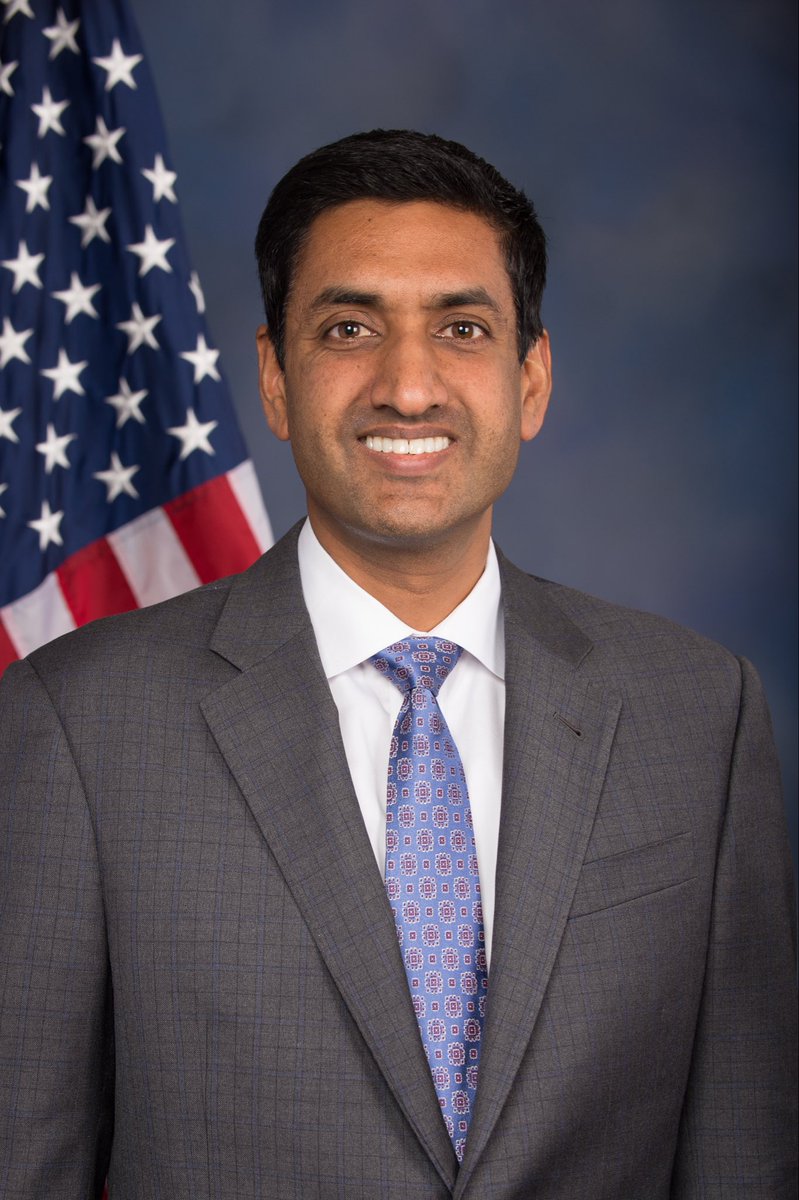
$BRK.B AND RO KHANNA ARE BUYING THE SAME STOCK
$LEN
🟢 Berkshire: $163M in 2 days
🟢 Rep. Khanna: 3 buys
We can buy at lower prices.👀
Is Anthropic about to become $NUAI's anchor tenant? The paper trail is remarkable. I'll let you decide.
Anthropic has committed more than $500B to AI infrastructure.
It signed a $19B lease with TeraWulf. It's reported behind a $9.1B lease in Texas.
In August it went further and co-founded its own data center company: Theseus. The CEO's job description, in his words: "build, run, and lease the data centers Anthropic needs to keep up with demand for Claude."
Theseus is owned by funds managed by Macquarie's asset management arm, alongside GIC. They fund the majority of equity for every project.
Here's where it gets interesting.
Macquarie is also NUAI's lender. Same financial group, both sides of the table. And they didn't stop at lending. Macquarie bought $NUAI shares too. Debt exposure and equity upside.
Now meet the man in the middle: Trent Yang.
Yang sits on NUAI's board. Before that, he co-founded an investment firm called Galway. Who funded Galway? Macquarie's asset management arm put in $250M. The same arm whose funds now own Theseus.
In other words: the people funding Anthropic's data center buildout spent years as Trent Yang's backers. And Yang has held a seat in NUAI's boardroom since June 2025, before Theseus existed. He is the bridge between NUAI and Anthropic's infrastructure capital.
Now the timing. Theseus launched August 10. On September 18, NUAI signed a 20 year power deal with Vistra. Six days later it told the SEC it's negotiating a direct anchor lease with "one of the world's largest consumers of AI infrastructure."
Not a hyperscaler. A consumer. That's how you describe an AI lab.
One more detail worth watching: the credit.
TeraWulf says its Anthropic lease comes with investment-grade credit support. Riot says the same structure is being finalised for its AI lab lease. And NUAI's own financing requires an investment-grade counterparty behind its lease. The name on the lease matters. So does who stands behind the rent. These structures fit together.
One financial group connecting everything. One board member inside that network for years. One tenant signing $10B+ leases every few weeks. One developer holding freshly contracted Texas power.
This post builds on @bitcoinbutcher1's thread connecting Theseus to the Sep 24 filing. He found the door. The board seat and the bank are what's behind it.
Let me get this straight.
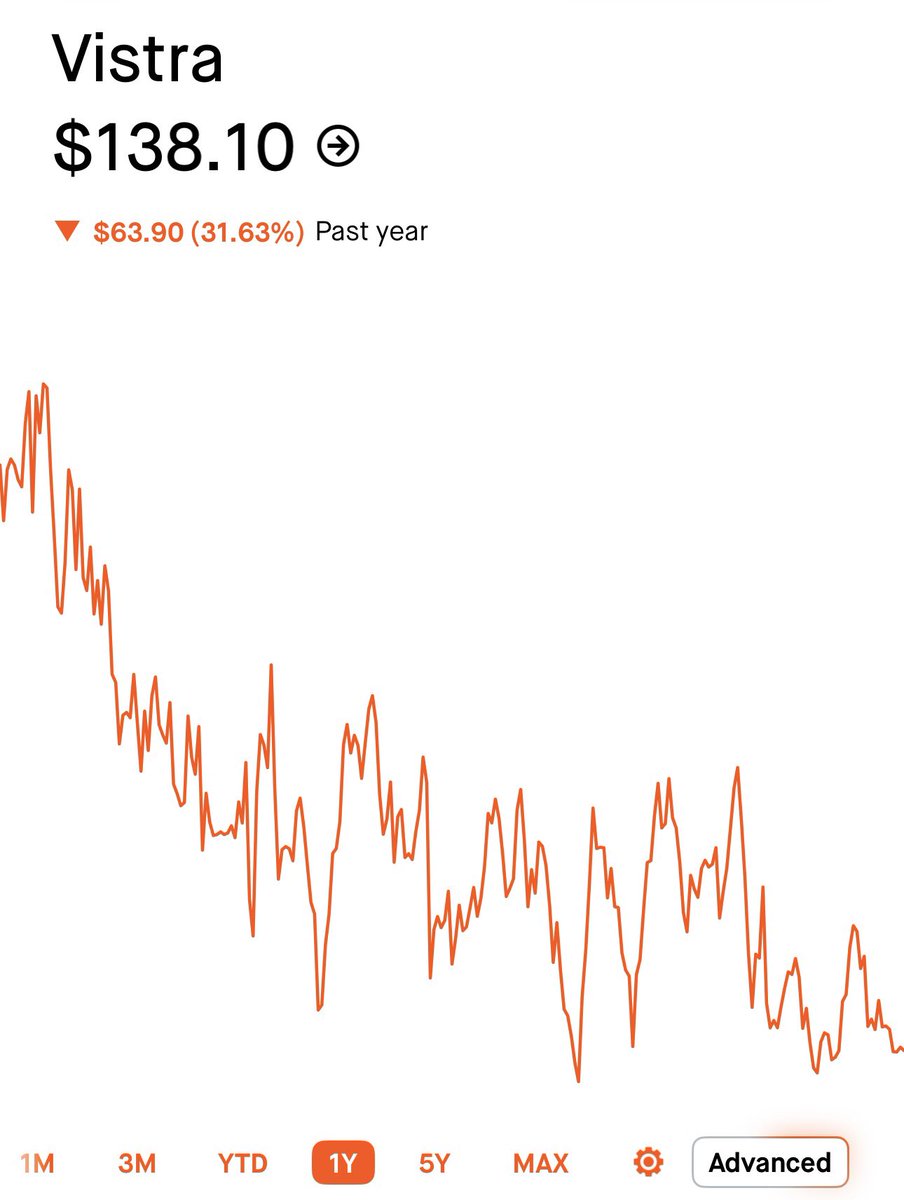
Nancy Pelosi bought $VST around ~$170.
Donald Trump bought $VST around ~$160.
Peter Thiel bought $VST around ~$158.
David Tepper bought $VST around ~$155.
CEO Jim Burke bought $VST at ~$135.
At the same time:
$VST trades at just ~13x forward earnings.
It’s down over 35% from ATH.
It’s secured 20-year nuclear PPAs with $META & $AMZN.
AI power demand is creating a structural bottleneck for reliable power.
FY26 EBITDA & FCF are expected to grow 20%+ YoY.
Today, you can buy $VST below almost ALL of them at ~$138.
Do with this information as you will.
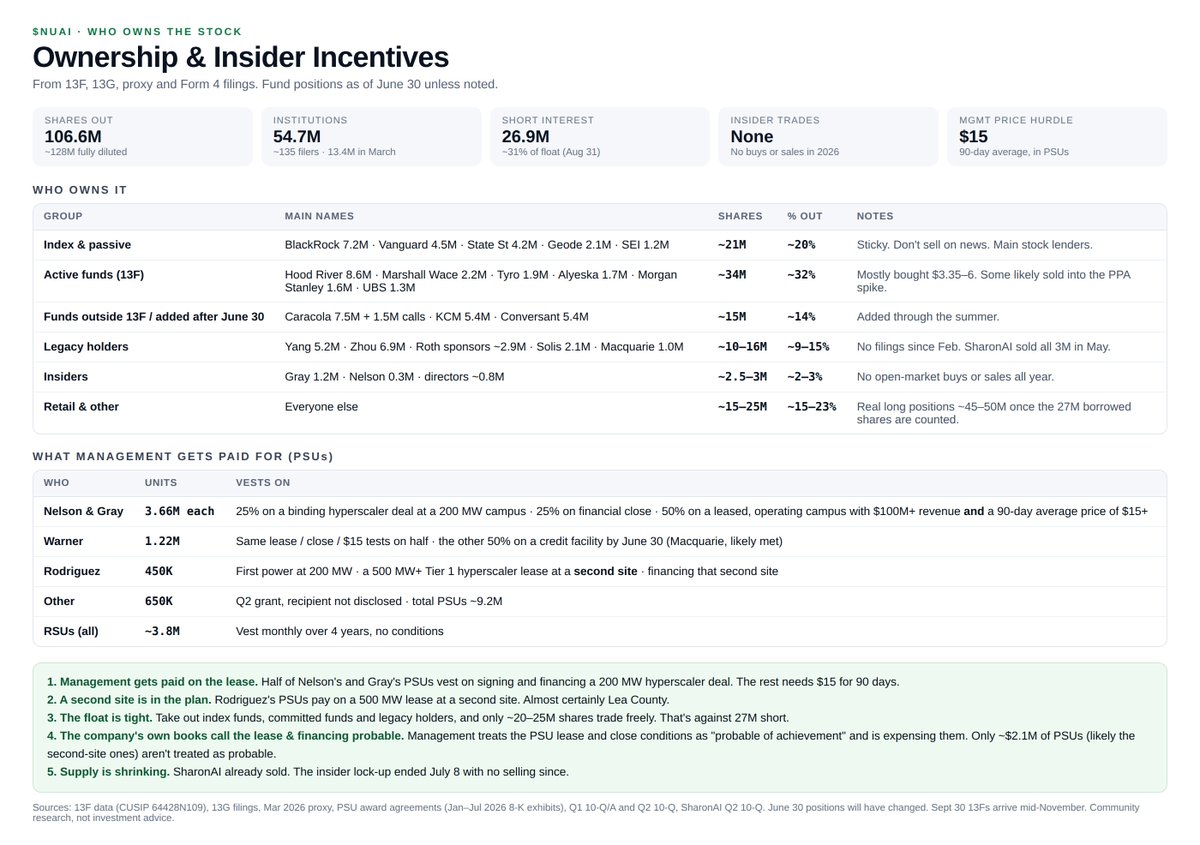
Super bullish for $NUAI. We created a detailed summary of the company's stock ownership, including management incentives and short interest. You can do the math, and then position yourself accordingly. 🔥🔥 @LovedropV@fnitefiend
I always find it funny that “selling plates” out of your house is exclusive to one race and the reason for that being it’s literally just EBT fraud. Every time.