Our paper is finally out in Oncogene! It took years of research, 15 months from the first submission and 10 rejections. Despite all that I really appreciated how reviewer's suggestions made this paper better. We will post more details about this work soon.
🎆2026 https://t.co/5xo7LSIrN4 New Year Airdrop🎉
Snag your slice of 10,000 $ANB rewards by finishing a few quick tasks:
🔶Connect your X account and follow @ant_fun_trade
🔶Retweet our post
🔶Make your first trade on Web (0 fees!) or in the App
🔶Invite friends and earn extra bonuses
Event ends in 15 days, check the details on the event page.
Join now: https://t.co/YgHTiUmKnk
Fully Local Wallet Control + Multi-Chain All-in-One + Zero Platform Fee = Your Future Trading!
3/11 Using long-term live imaging & tracking (by @_amolf), we followed hundreds of extrusion events. Most villus cells extruded alive, not apoptotic. Extrusion did not correlate with density.
1/11 In @ScienceMagazine: A new perspective on how our intestines renew. Cells are not “pushed out” by crowding or die from apoptosis. Instead, cells play a mechanical tug-of-war, where weaker cells extrude, reframing gut renewal as force-regulated. https://t.co/Y2EI9bhhWT
@AdrianoAguzzi Recently we got our paper automatically transferred between two CellPress journals without corresponding author actively agreeing to the transfer. While he was considering transfer they've already done it. Didn't even think such thing was possible.
Proud to share the collaborative work with @NasuLab_IBC & @Campbell_FPs (Robert E. Campbell)! Split biosensors have been developed to intrinsically monitor membrane contact & Ca²⁺ exchange simultaneously—no chemical fluorophores required! 👉 https://t.co/e562JyYR11"
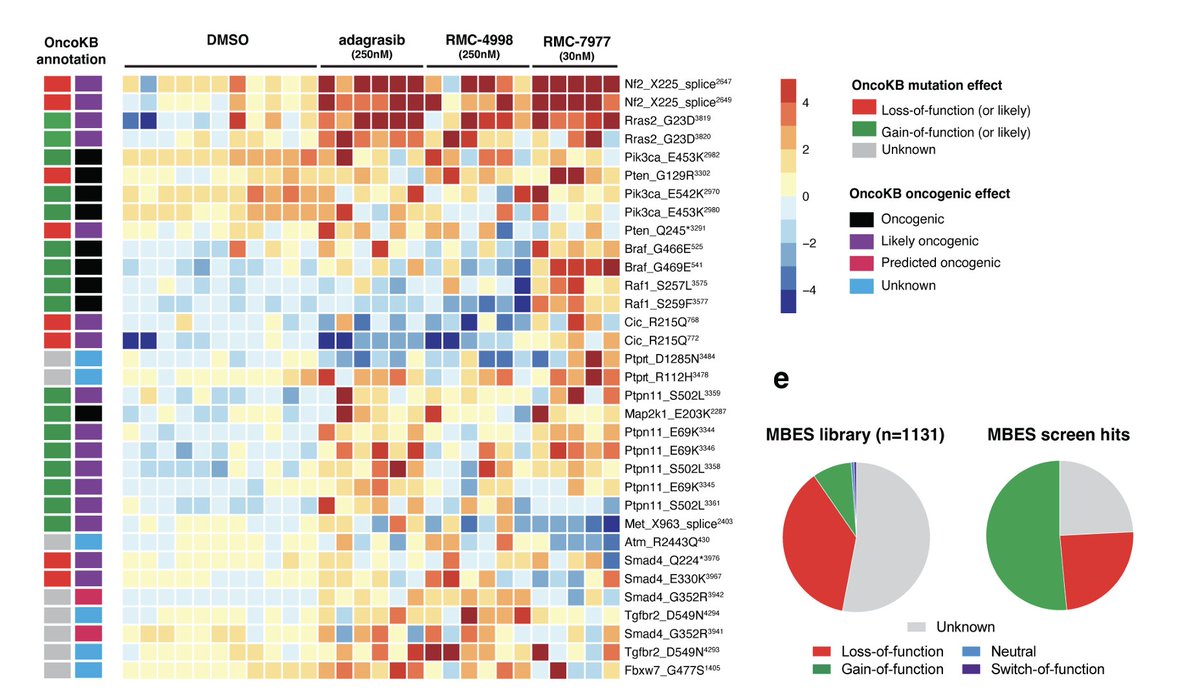
Preprint from @dow_lab@WeillCornell using CRISPR base editing screens:
Genetic mechanisms of resistance to targeted KRAS inhibition
https://t.co/2jOLx1TzM6
MAPK reactivation remains the predominant mechanism of resistance to KRASinh. Also identifies a hotspot mutation in CiC.
🛡️How do macrophages tailor their defenses to different pathogens? Our new paper in @CellSystems combines dense multi-omics time series with high‐content CRISPR screens (CROP-seq) to map the regulatory landscape underlying macrophage immune responses. #Immunity#Screening (1/9)
You can find these and a million more dose–response curves in this resource article:
Decrypting the molecular basis of cellular drug phenotypes by dose-resolved expression proteomics
https://t.co/McIF1mLx1l
A new article shows how tumor-associated #macrophages' extracellular vesicles drive regulatory T cell differentiation and #glioma progression, revealing potential new therapeutic targets for combating this type of tumor.
Read now 🔗
https://t.co/5R8w6fjP51
My continued biomedical education
Re-imagining human cell culture media: Challenges, innovations, and future directions
Table 1 summarizes pros & cons of commonly used culture media
#AI
High-throughput Omics (epigenomics metabolomics proteomics)
Automation
On-demand optimization of xeno-free, chemically defined culture media
"...as most fields clung to DMEM/RPMI—formulations ill-suited for human cells' lower antioxidant capacity and distinct nutrient uptake"😬
Critical reading for one of the most important consumables in biomedical research🥸
Stanislav Sokolenko lab Biotechnol Adv 2025
https://t.co/gQuO3W9Rs3