The year is 203(..)....
You arrive at a hospital. Your face is scanned at the entrance.
A warning appears on the screen:
“Your 30-day mortality risk is high.”
You haven’t seen a doctor yet. No blood tests have been performed. But the system has already classified you.
What comes next? Will access to healthcare be determined by this score?
Sounds like science fiction.
Yet a study published just a few days ago showed that AI could predict 30-day mortality from facial photographs alone (AUC 0.77).
What if, one day, an algorithm also decides who is worth treating?
Algorithms are advancing at a frightening pace. And we haven't even begun to discuss the consequences.
https://t.co/7VQyDqv3bK
Final 7.5y outcomes with 1L nivolumab + ipilimumab for NSCLC on CheckMate 227 @JTOonline. In PD-L1+, 7y OS 19% with nivo/ipi vs 10% with chemo with rates of ongoing response 25% vs 3%. In PD-L1 negative, 7y OS 14% vs 4%, ongoing responses 20% vs 3%.
https://t.co/hcZVQAmMDw
In our second episode of #ESMO26 highlights for the @IASLC podcast Lung Cancer Considered, we discuss PERSEE with Dr. @decroisette, SAFFRON with Dr. Xiao-Rong Dong, and SANOVO with Dr. Yi-Long Wu @ThomasW35874311
https://t.co/hv9SktBH7D
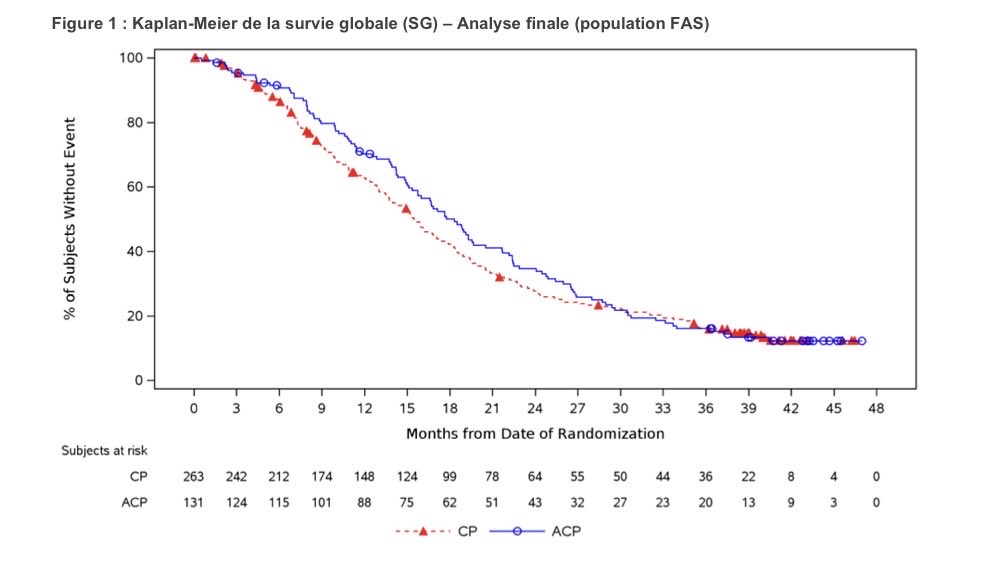
EGFRm NSCLC after osimertinib:
How should we weigh PFS when OS is not statistically significant?
Recent HAS & FDA decisions on amivantamab and ivonescimab raise a key question:
Is delaying progression enough?clinical benefit?
Final OS curves from MARIPOSA-2 attached. #LungCancer
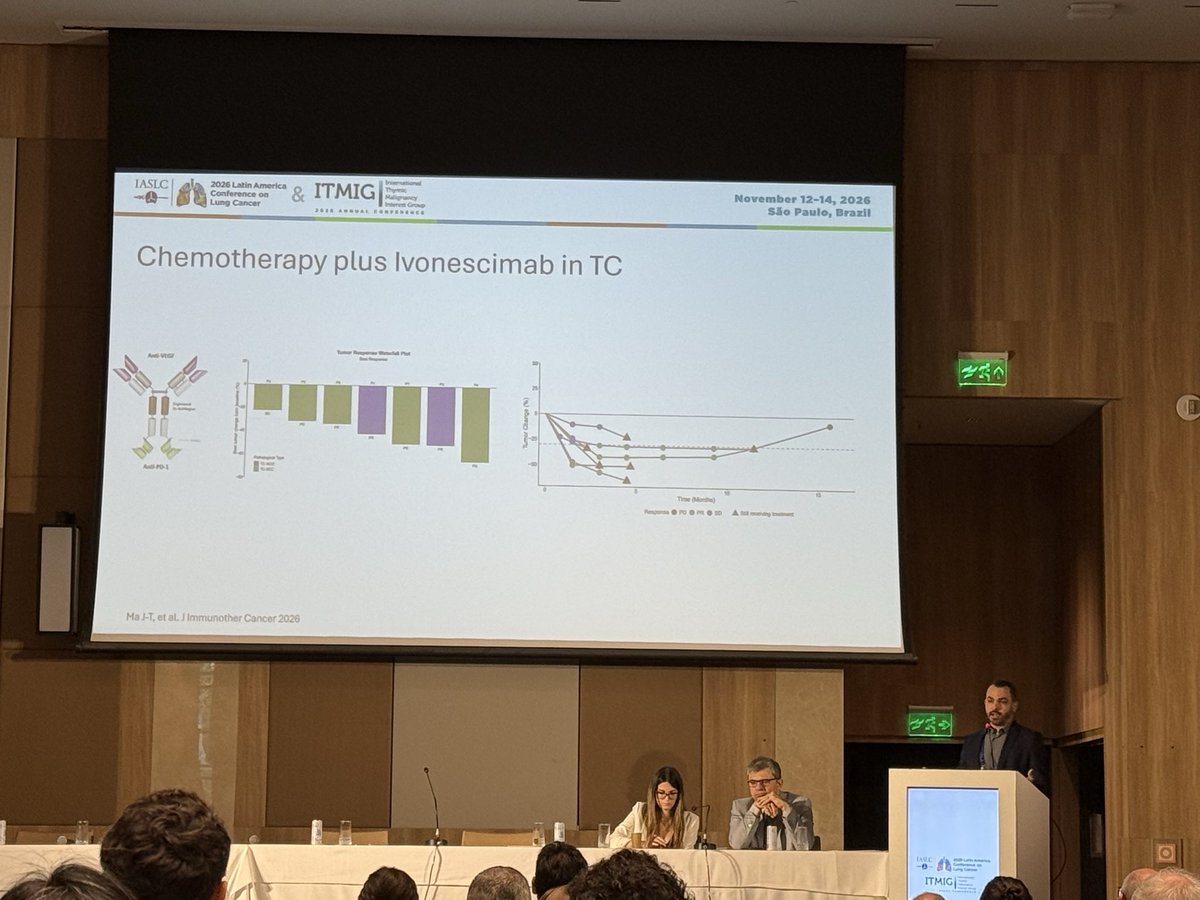
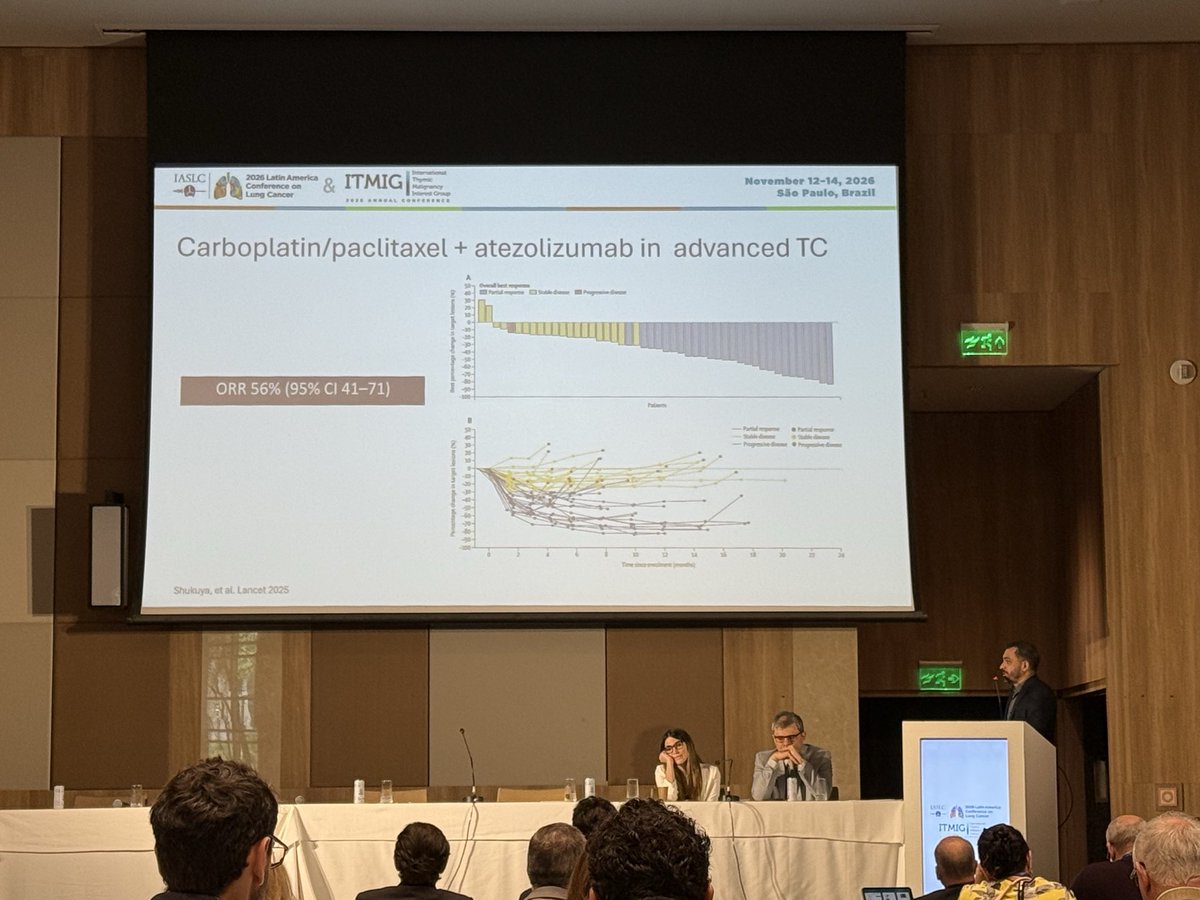
Dr. @laerciolopesMD reviews first-line regimens for TET: chemo + ramucirumab and chemo + IO for thymic carcinoma highlighting (note recent data: ivonescimab + chemo data from #ESMO2026 and the importance of monitoring immune-related adverse events). Great talk! #ITMIG2026
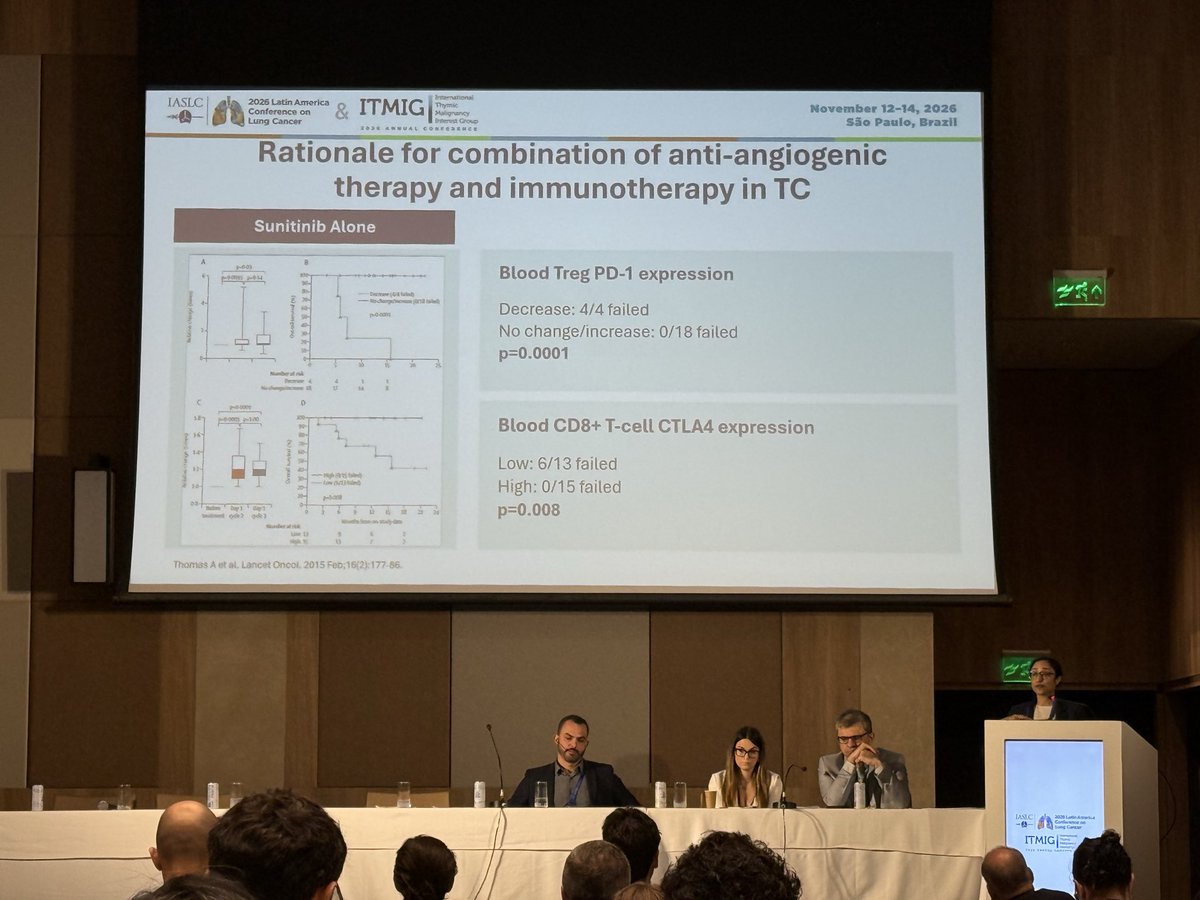
Fantastic talk by Dr. @jennifermarksmd on emerging targets and therapies in TET: bispecifics, MTAP, VEGF inhibition, and ADCs among others.
Encouraging progress in systemic therapy!
#ITMIG2026
One of the most intense and profound moments in history. 11am on the 11th November 1918 when the guns fell silent. This should be shown in every school.
Example of why having multiple agents is helpful. Series @JCOPO_ASCO of 12 pts with EGFR mutant NSCLC who switched to lazertinib due to osimertinib toxicity (pulmonary, cardiac, heme). Both 3G TKIs with similar efficacy but different toxicity profiles.
https://t.co/z8fOseVcAA
Brief report: Tumor Inflammation-Associated Neurotoxicity (TIAN) in patients with small cell lung cancer treated with tarlatamab
New drugs, new toxicity terms👇
https://t.co/ITrxW98qpY
Remarkable results from SBRT +/- immunotherapy for unresected stage I-II NSCLC. No benefit from adding
IO & surgery remains standard of care for fit pts w stage I-II, EFS of ~30m w SBRT vs 46-65m for much more advanced disease in trials of neoadj IO #lcsm https://t.co/yS4AEhfMv3
My *practice changing* take home messages from #ESMO26 to NHS lung cancer teams:
Immediate change:
1. PERSEE. Bottom line - Chemo still alive for PDL1 >50%. Median OS 50.2m Vs 29.9m. Works just as well for 90-100% group too
Fitter, younger should get Chemo even PDL1 100%
#ESMO26
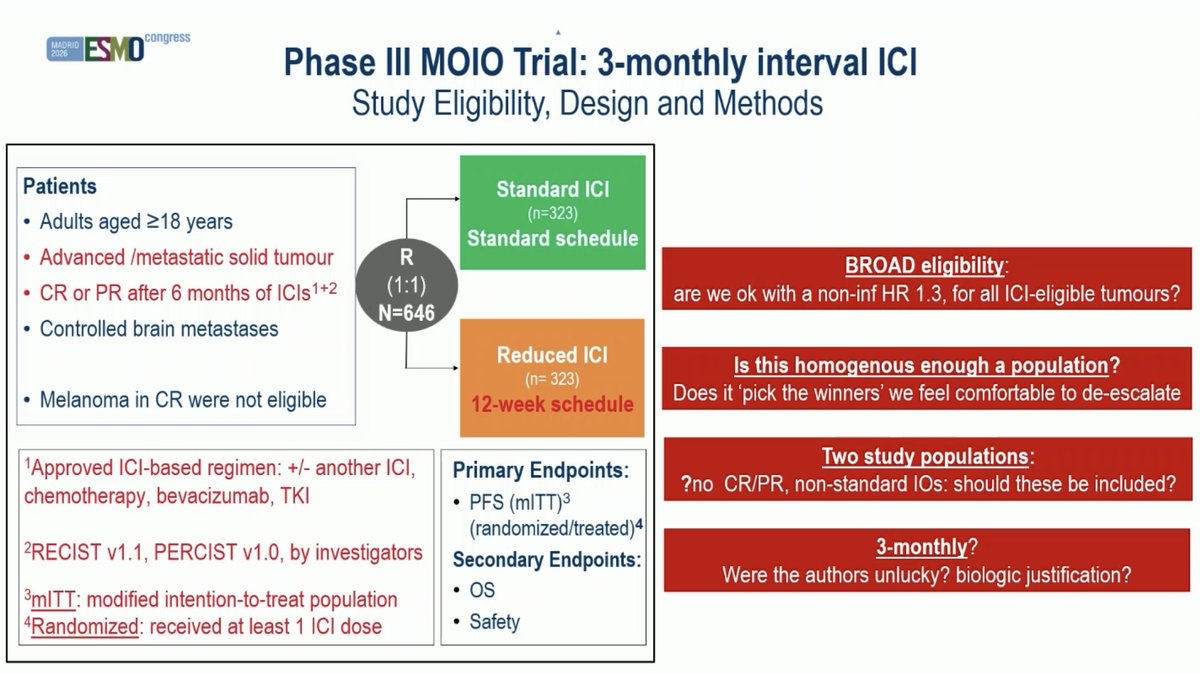
#ESMO26 Dr. Jarushka Naidoo @DrJNaidoo with a fantastic discussion on de-escalation trials in oncology. A call out on why de-escalation studies are important and their limitations. And for MOIO in particular - lessons on trial design, non-inferiority, and pragmatism. A must-listen to all involved in trial design. #ESMOAmbassadors
#ESMO26 One of my favorite discussant. Dr @JordiRemon discusses early stage immunotherapy abstracts. Many options in the neoadjuvant and perioperative space, summarized beautifully. What is the value of adjuvant immunotherapy? Is receipt of adjuvant therapy a surrogate for fitness? #ESMOAmbassadors