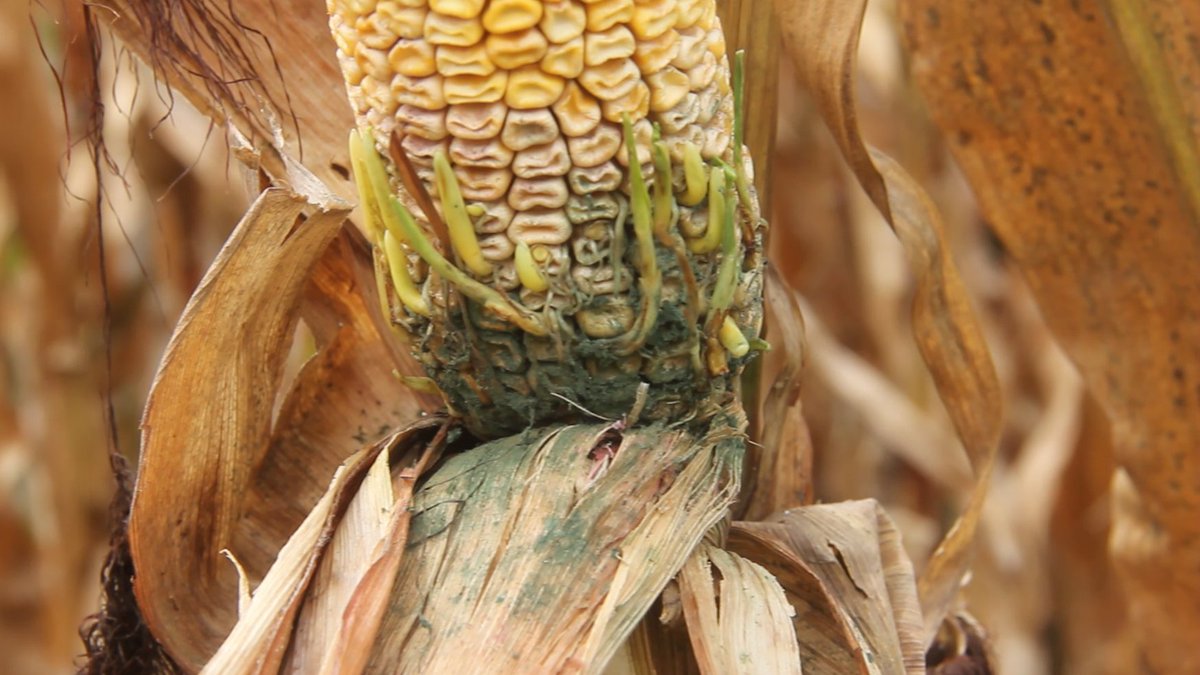
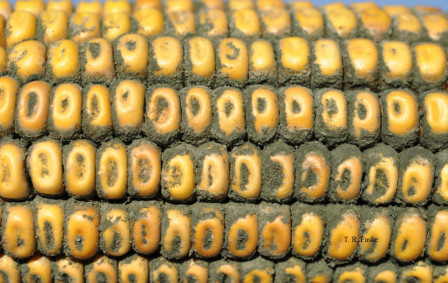
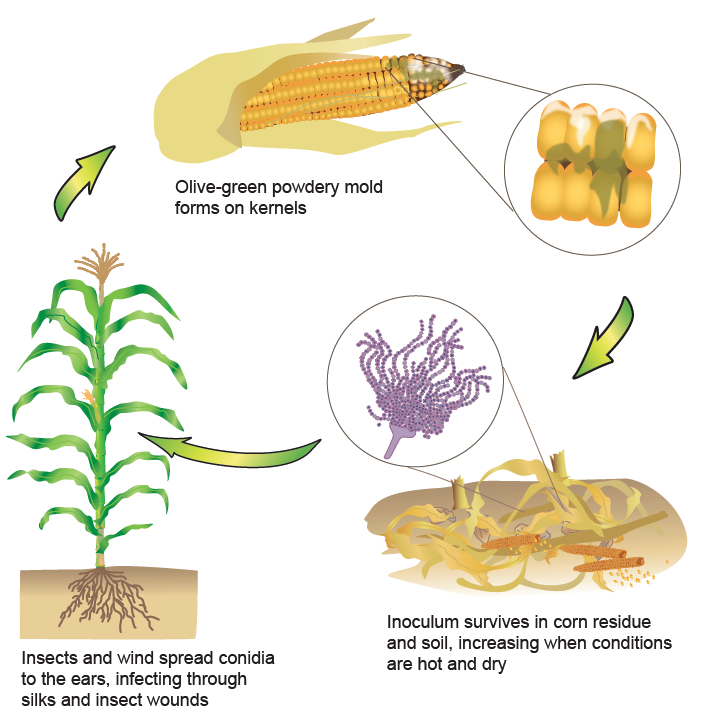
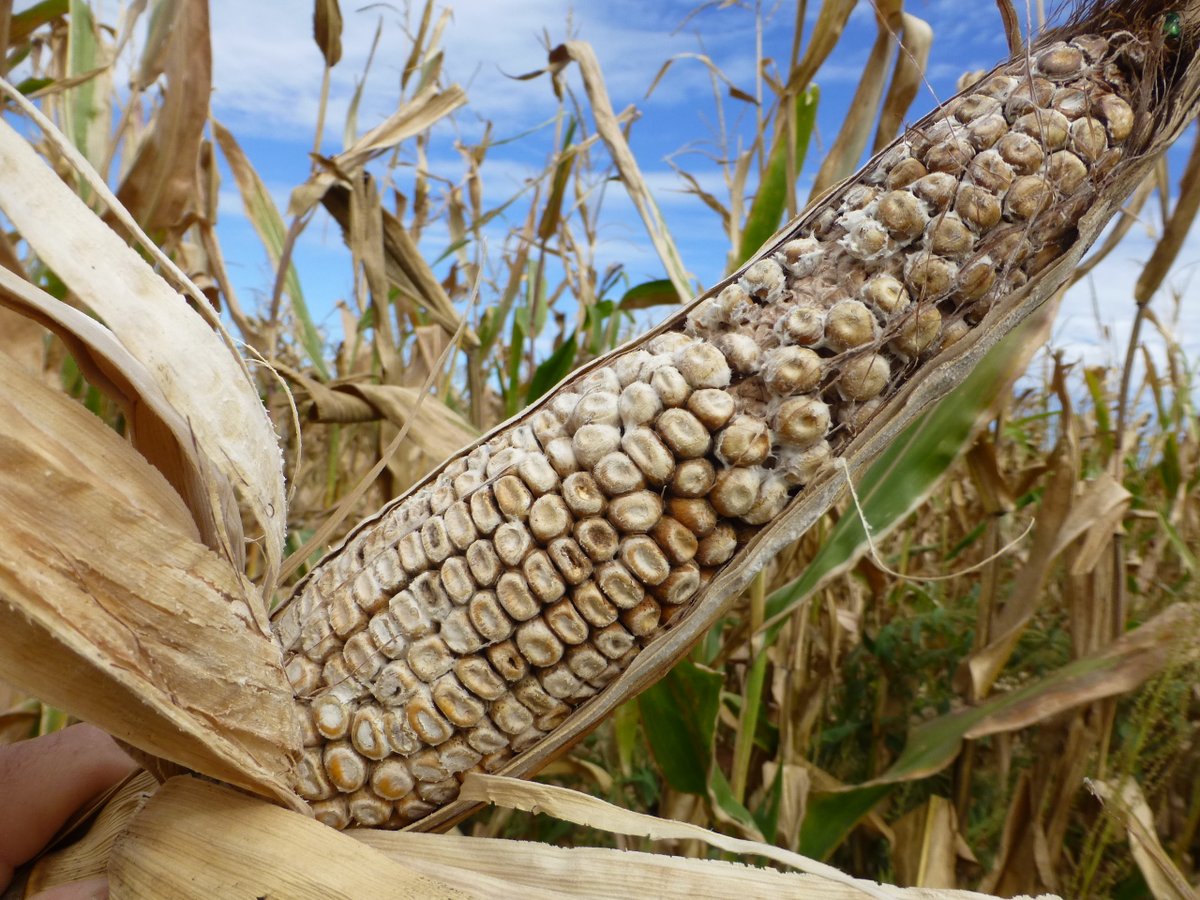
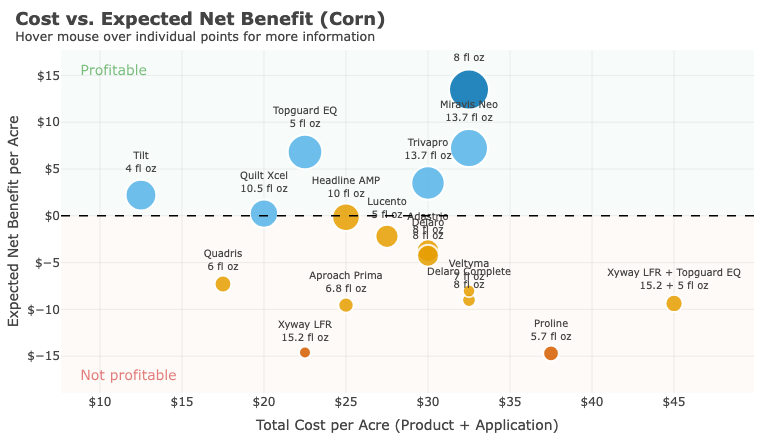
Scouting is similar for all corn ear rots. Starting at late dent stage (R5), choose 20 ears from five areas in the field. Pull back the husk to see the entire ear.
It's critical to identify ear rots in the field as many ear rot fungi produce mycotoxins, which can harm livestock and humans. Contaminated grain can be difficult to market and may be docked in price.
Find out more at Extension's https://t.co/A7snlWiJCi.
@cropdoc08@baldpathologist@MartinChilvers1@travisfaske@alisonrISU@ppp_trey@badgercropdoc@OnofreLab@DTelenko@NationalCorn@kscorn
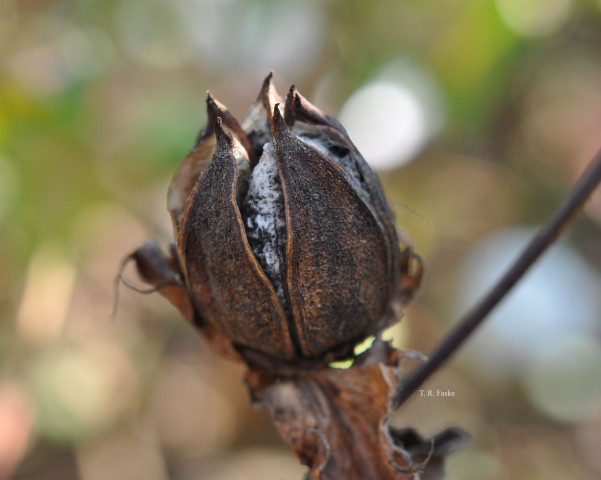
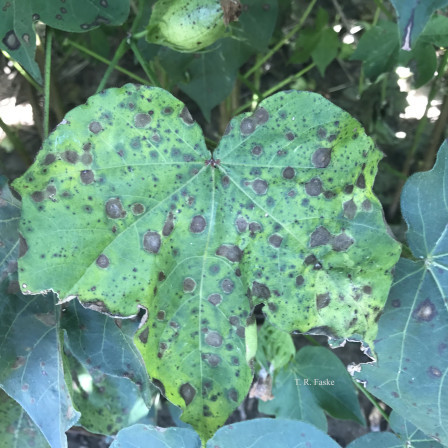
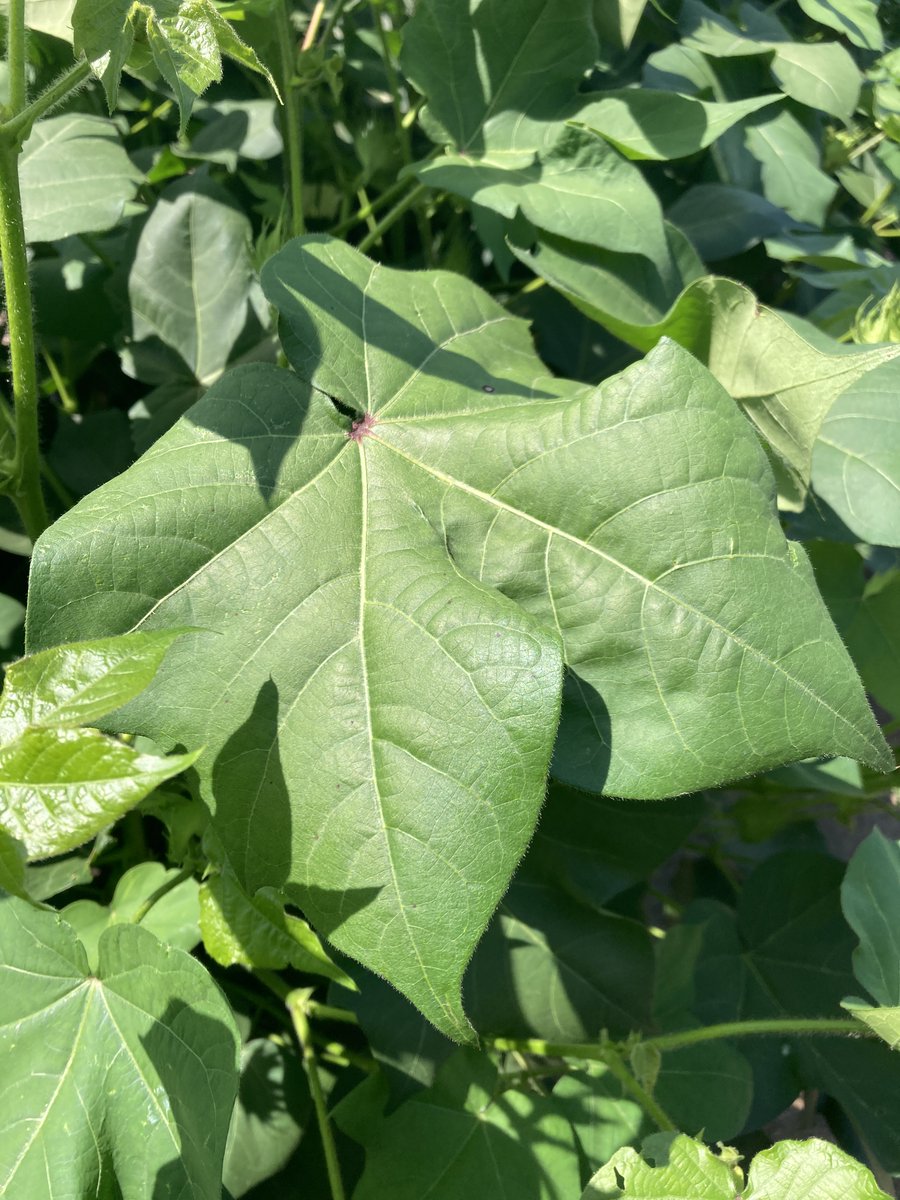
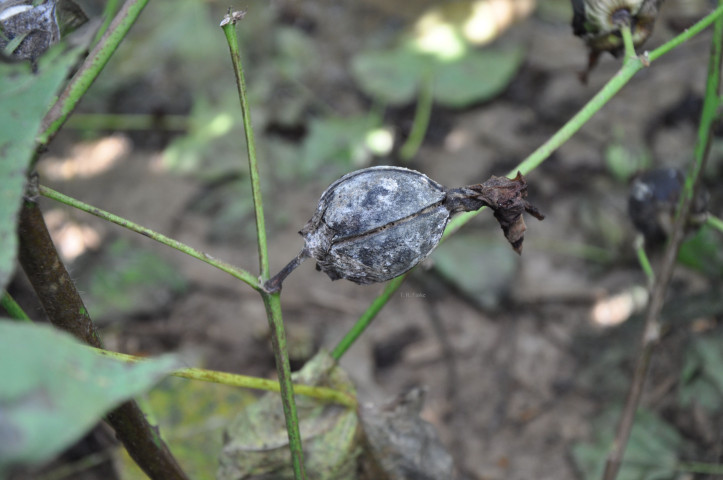
Cotton boll rots are caused by numerous fungi and bacteria. Identifying the primary pathogen is difficult due to non disease-causing fungi on rotten bolls. Yield losses are greater with frequent rainfall and dense crop canopies.
Fusarium boll rot is the most common boll rot in the U.S., causing bolls to turn brown to black with pink or orange masses under humid conditions. Phytophthora boll rot shows soft, watery, black rot symptoms, while Xanthomonas boll rot starts as small, circular, water-soaked lesions that turn black when dry. Seed from infected bolls are likely to carry bacteria that can impact the subsequent crop.
Managing plant growth, using pathogen-free seed, and controlling insects can reduce the impact of boll rots. Fungicide applications have limited efficacy in managing boll rots.
@travisfaske@baldpathologist@bobkemerait@ppp_trey@DaisyHAhumada@MahDuffeck@OnofreLab@Cotton_Guy@kmbiss@CottonInc #cotton
In general, chemical nematicides move more readily in coarse-textured soils than fine-textured soils, assuming adequate water infiltration.
As a result, chemical nematicides often have a larger zone of root protection in coarse-textured soils than in fine-textured soils such as silts and clays.
Moreover, the zone of protection is more vertical like a “chimney” to protect the developing taproot rather than horizontal to protect lateral roots.
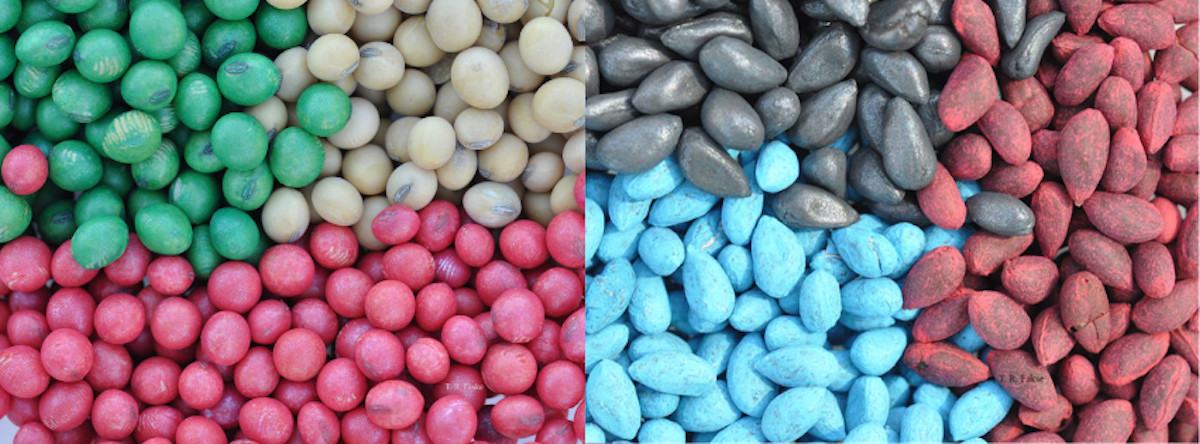
Therefore, seed-applied nematicides typically work better in strongly tap-rooted crops such as cotton and soybean compared to fibrous root systems like corn.
Read more in "How Seed-Applied Nematicides Work" at https://t.co/Wix4v46A5E.
From @travisfaske@MartinChilvers1@badgercropdoc@CFAES_OSU & @CUESNews. Funded by @CottonInc.
@UFcropnematodes@UFEntNem@UCDavisEntomolo@NematodeGuy #cotton #soybean #nematodes
“These results demonstrate that seed-applied nematicides provide minimal yield protection under high [root-knot nematode] population densities, whereas host plant resistance remains the most effective and reliable management strategy in soybean production.”
From @PlantDiseaseJ article https://t.co/WxmpcLfhiC by @BigBaker63@travisfaske +more
@AR_Extension@ArkAgResearch@arkansassoybean@TheSCNCoalition #soybean #USSoy
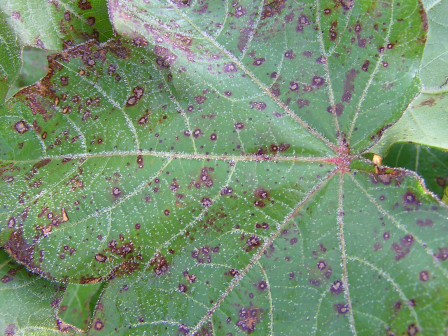
Rhizoctonia infection in cotton can cause seed rot and damping-off with sunken lesions on the hypocotyl (often referred to as sore shin).
Rhizoctonia is commonly found in cotton soils and can occur with other seedling pathogens, forming the “cotton seedling disease complex.”
Management for Rhizoctonia include planting high-quality seed in well-drained soils and using seed treatment fungicides. Certain fungicide products applied in the seed furrow at planting can reduce disease caused by Rhizoctonia.
@travisfaske@ppp_trey@baldpathologist@SpurlockLab #cotton #grow26
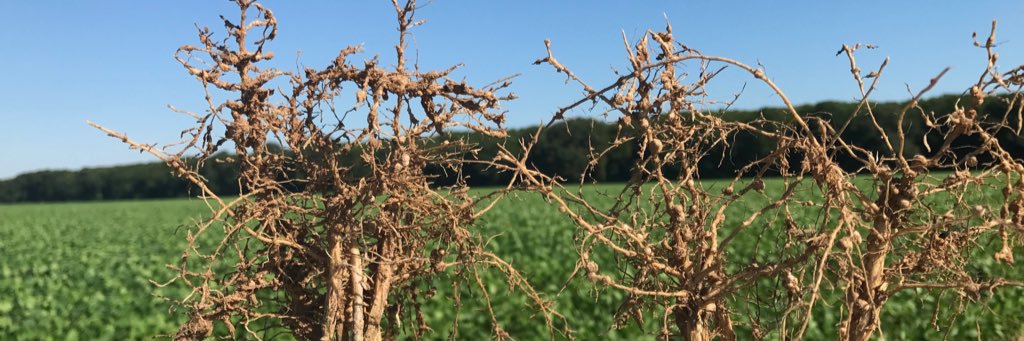
While it feeds belowground, signs of root-knot nematode pressure can appear above the soil line. Learn how to identify the above- and belowground symptoms of RKN. https://t.co/mRjcGIFmJQ @UnitedSoy
Lonoke #PlantPathology crew took a planting trip to NE Arkansas to plant a few acres of small plot #Cotton and #Peanut 🥜trials! We’re finally halfway through our planting season…Time to plant some #Soybeans 🌱
#Diseases#Nematodes It’s what we do🤘🏼





![CropNetwork's tweet photo. "Overall, cultivar resistance was the most consistent tool to manage nematode density and protect yield under moderate to high [root-knot and reniform nematode] pressure across the varying growing conditions of the U.S. Cotton Belt."
From the @PlantDiseaseJ article https://t.co/hc98KEpCnS by @msturdi @baldpathologist @bobkemerait @TNplantDR @LSUNematology @ppp_trey @UFcropnematodes @travisfaske +others.
@plantdisease @CottonInc @OSU_CottonIPM @NC_Cotton @kmbiss @NematodeGuy @TheSCNCoalition #cotton #nematodes](https://pbs.twimg.com/media/HLf-14jWQAAI1aH.jpg)







![CropNetwork's tweet photo. "Overall, cultivar resistance was the most consistent tool to manage nematode density and protect yield under moderate to high [root-knot and reniform nematode] pressure across the varying growing conditions of the U.S. Cotton Belt."
From the @PlantDiseaseJ article https://t.co/hc98KEpCnS by @msturdi @baldpathologist @bobkemerait @TNplantDR @LSUNematology @ppp_trey @UFcropnematodes @travisfaske +others.
@plantdisease @CottonInc @OSU_CottonIPM @NC_Cotton @kmbiss @NematodeGuy @TheSCNCoalition #cotton #nematodes](https://pbs.twimg.com/media/HLf-2O3XwAAFZ7c.jpg)

![CropNetwork's tweet photo. “These results demonstrate that seed-applied nematicides provide minimal yield protection under high [root-knot nematode] population densities, whereas host plant resistance remains the most effective and reliable management strategy in soybean production.”
From @PlantDiseaseJ article https://t.co/WxmpcLfhiC by @BigBaker63 @travisfaske +more
@AR_Extension @ArkAgResearch @arkansassoybean @TheSCNCoalition #soybean #USSoy](https://pbs.twimg.com/media/HI8HqskW4AECBwI.jpg)